


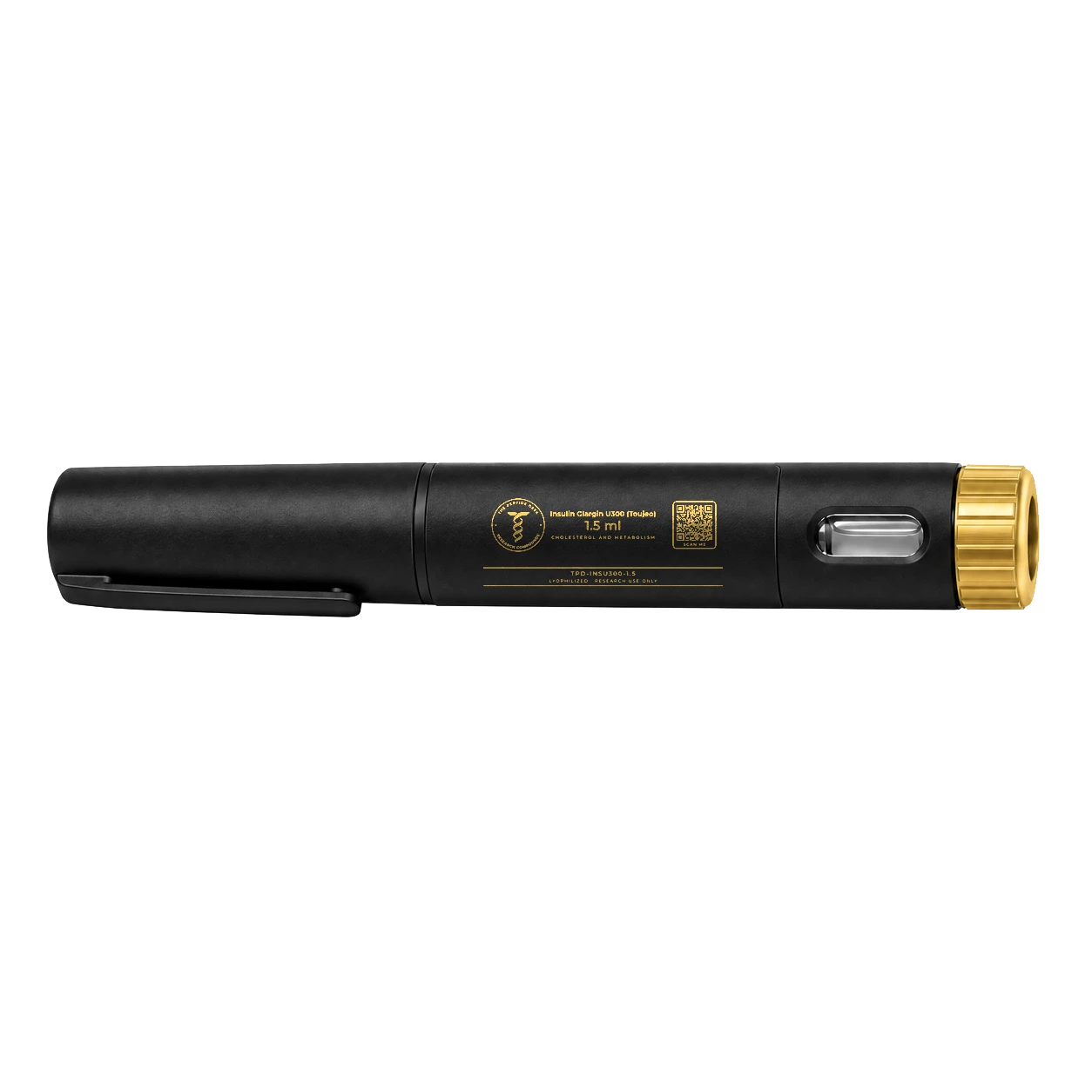
Insulin Glargin U300 (Toujeo)
Medication
- Németországból szállítjuk
Rendelés
- DHL nyomkövetéssel
- Diszkrét csomagolás
Egy pillantásra
Insulin Glargin U300 (Toujeo) számokban
A legfontosabb értékek a lexikonunkból.
Teljes lexikonbejegyzés- Class
- Long-acting basal insulinanalogue
- Use
- Subcutaneousonce daily, pen only
- Sizes
- 1.5ml/450iu1 size in the shop
What studies show
All 5 sources in the lexicon- Ritzel et al., Diabetes, Obesity and Metabolism, 2015
Értékelések
Mit mondanak a vásárlók
Csak valódi rendelések, amelyekben szerepelt: Insulin Glargin U300 (Toujeo).
Összes értékelésInsulin Glargin U300 (Toujeo): még nincs laborelemzés. Szavazz ráÖsszes laborelemzés
Tudás
Minden tudnivaló: Insulin Glargin U300 (Toujeo)
Részletes információk hamarosan.
How does U300 differ from U100?
Only the concentration: 300 instead of 100 units per millilitre, the same compound. The smaller depot releases it more evenly. In a 36-hour clamp level and effect ran flatter over 24 hours and tight glucose control lasted a median of about 30 hours, around 5 hours longer than with U100.
Why is a regular insulin syringe dangerous?
Regular insulin syringes are calibrated for U-100. With U300 solution the same mark holds three times the amount and you cannot see it. In the FDA drug database the 300 units/ml version is only listed as a prefilled injector with 1.5 or 3 ml, not as a vial.
Is Insulin Glargine U300 approved?
Yes. Drugs@FDA lists the 300 units/ml version since 25 February 2015. ChEMBL lists the compound insulin glargine with first approval in 2000. Everything here is the state of research, not a recommendation.
What did the EDITION trials show?
Same glucose control, less hypoglycaemia at night. In EDITION 1 (807 participants) 36 instead of 46 percent had night-time hypoglycaemia. The pooled analysis of EDITION 1 to 3 with 2,496 people found 31 percent less night-time and 14 percent less around-the-clock hypoglycaemia. Severe episodes stayed rare (2.3 versus 2.6 percent).
Does U300 need more units?
Slightly. In EDITION 2 U300 needed about 10 percent more units than U100 for the same reduction of the long-term value. Weight gain was lower with U300.
Does the time of day matter?
In EDITION 4 with 549 people with type 1 diabetes the result was the same in the morning and in the evening, including hypoglycaemia. Fewer night-time episodes than with U100 were only seen there in the first eight weeks, weight gain was lower.
Kapcsolódó
Kapcsolódó termékek

Telmisartan
Gyógyszerek · Szív és érrendszer Szív és érrendszer
2 kiszerelés
Laborban tesztelt

Ivermectin
Gyógyszerek · Gyomor és máj Gyomor és máj
1 kiszerelés
Fenbendazol
Gyógyszerek · Gyomor és máj Gyomor és máj
1 kiszerelés

Prednisone
Gyógyszerek · Gyomor és máj Gyomor és máj
1 kiszerelés

Insulin Glargin U300 (Toujeo)

