

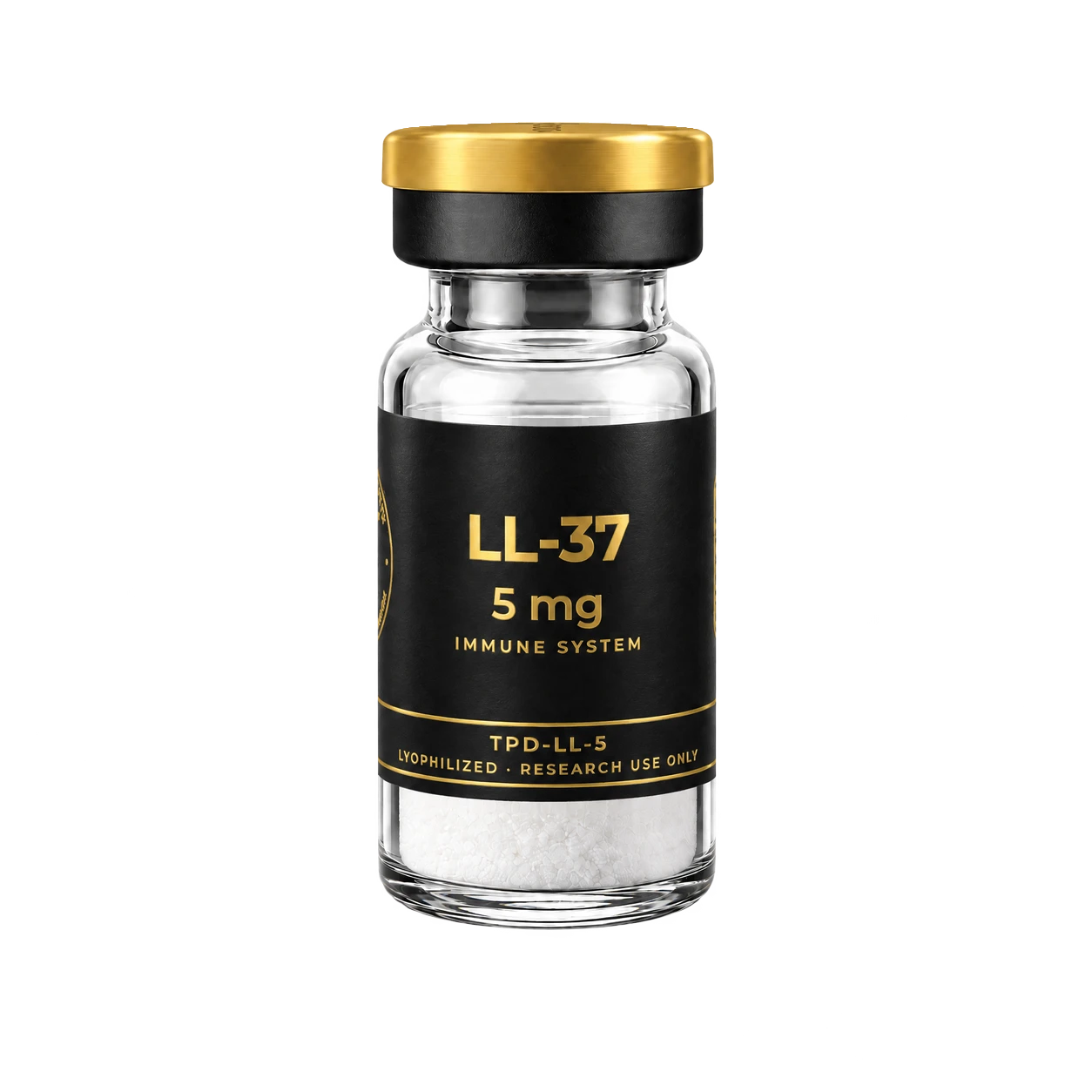
Kies je etiket
direct zichtbaar op de vialLL-37
Immune System
- Verzonden vanuit Duitsland
Bestelling
- DHL met tracking
- Discrete verpakking
In één oogopslag
LL-37 in cijfers
De kerncijfers uit ons lexicon.
Volledig lexiconartikel- Class
- Antimicrobial peptidecathelicidin
- Half-life
- short
- Use
- Subcutaneousin mcg
- Sizes
- 5 to 10 mg2 sizes in the shop
What studies show
All 3 sources in the lexiconLL-37, the only human member of the cathelicidin family (review) (opens in a new tab)
Dürr, Sudheendra & Ramamoorthy, Biochimica et Biophysica Acta, 2006- Grönberg et al., Wound Repair and Regeneration, 2014
- Mahlapuu et al., Wound Repair and Regeneration, 2021
Er is nog geen labanalyse voor LL-37. Stem eropLaat het zelf testen, wij betalen de helftAlle labanalyses
Kennis
Alles over LL-37
Uitgebreide informatie volgt binnenkort.
Dosering
Doseringsinformatie laden …
Handig om erbij te hebben
Wat je erbij nodig hebt
Bacteriostatisch water wordt automatisch aan je winkelwagen toegevoegd. Spuiten en doekjes met één klik.

Insulinespuiten
10 stuks · 5.50 €

Alcoholdoekjes
50 stuks · 10 €
Hoeveel water?
Eenheden op de spuit voor jouw vialgrootte.
Naar de calculator →Is LL-37 approved or studied in humans?
Not approved, but tested in humans. Only locally though: applied to hard-to-heal leg ulcers (one trial with 34 and one with 148 participants) and as an injection into melanoma metastases (4 participants). There is no trial with LL-37 injected under the skin. The information here describes the state of research.
Where does LL-37 come from in the body?
It is cleaved from the precursor hCAP18. Immune cells make it all the time, skin and mucous membranes mainly during inflammation and infection. In wounds the level rises until about 48 hours after the injury and falls again once the wound has closed. Immune cells also make it depending on vitamin D.
How does LL-37 work?
In two ways. It attaches to the membrane of bacteria and breaks it open. It also attracts immune cells such as neutrophils, monocytes and T cells, via the receptor FPR2 in cell studies. In a skin model it helps wounds close with new skin.
What did the wound trials show?
In the first trial with 34 participants leg ulcers healed about six and three times faster than with placebo at the two lower concentrations, the mean area fell by 68 and 50 percent. The highest concentration worked no better than placebo. The larger phase 2b trial with 148 participants found no overall difference, only a post hoc analysis of large wounds favoured LL-37.
Can LL-37 increase inflammation?
Yes, that has been described. In rosacea cathelicidin is strongly raised in the facial skin and cut differently, in mice these fragments triggered inflammation. In psoriasis LL-37 binds the body's own DNA and makes it visible to certain immune cells, which then release interferon. The entry points this out too.
Which side effects are known?
In both wound trials LL-37 was well tolerated, there were no safety concerns at the wound or in the body. There are no study data for LL-37 injected under the skin. The entry mentions possible reactions at the injection site because LL-37 attacks cell membranes.
Gerelateerd
Gerelateerde producten
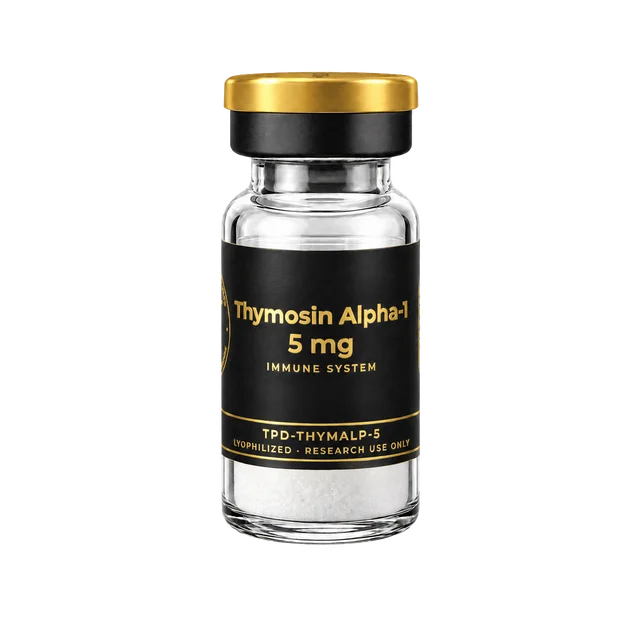
Thymosin Alpha-1
Peptiden · Immuunsysteem Immuunsysteem
2 maten
Laboratoriumgetest
= vanaf 22 €/vial
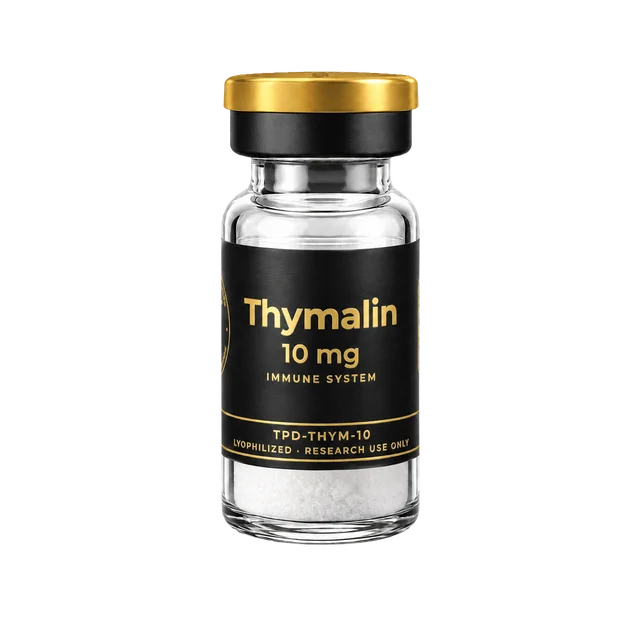
Thymalin
Peptiden · Immuunsysteem Immuunsysteem
2 maten
= vanaf 16 €/vial
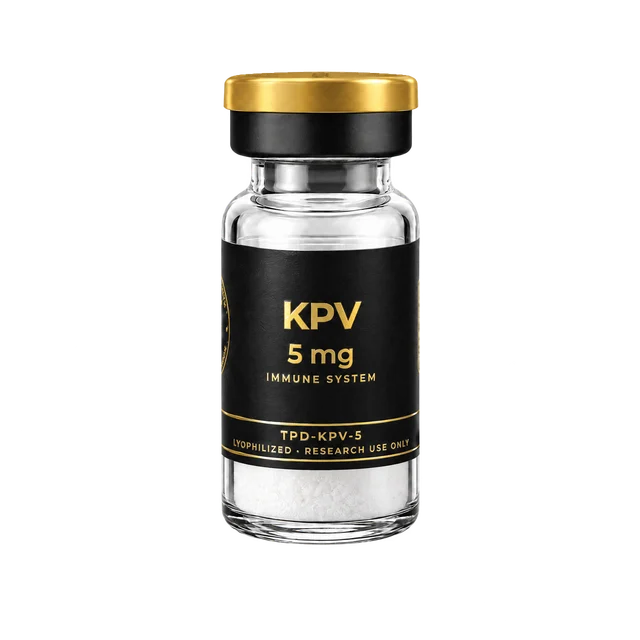
KPV
Peptiden · Immuunsysteem Immuunsysteem
4 maten
Laboratoriumgetest
= vanaf 11.6 €/vial
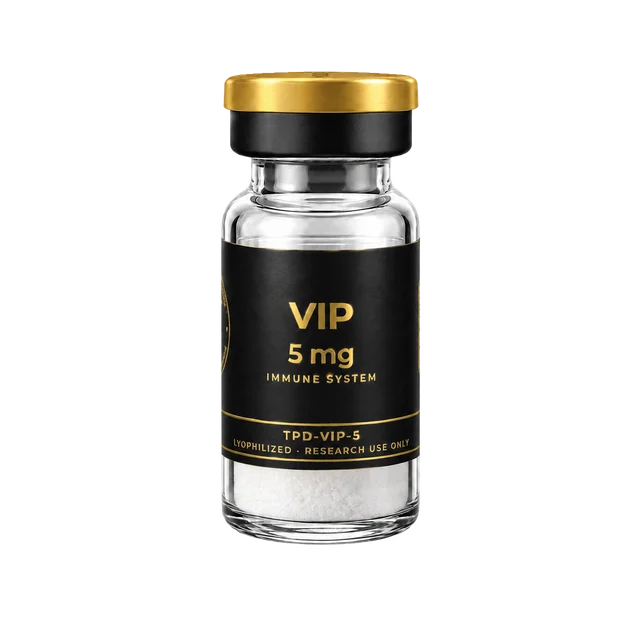
VIP
Peptiden · Immuunsysteem Immuunsysteem
2 maten
= vanaf 23.2 €/vial

LL-37

