


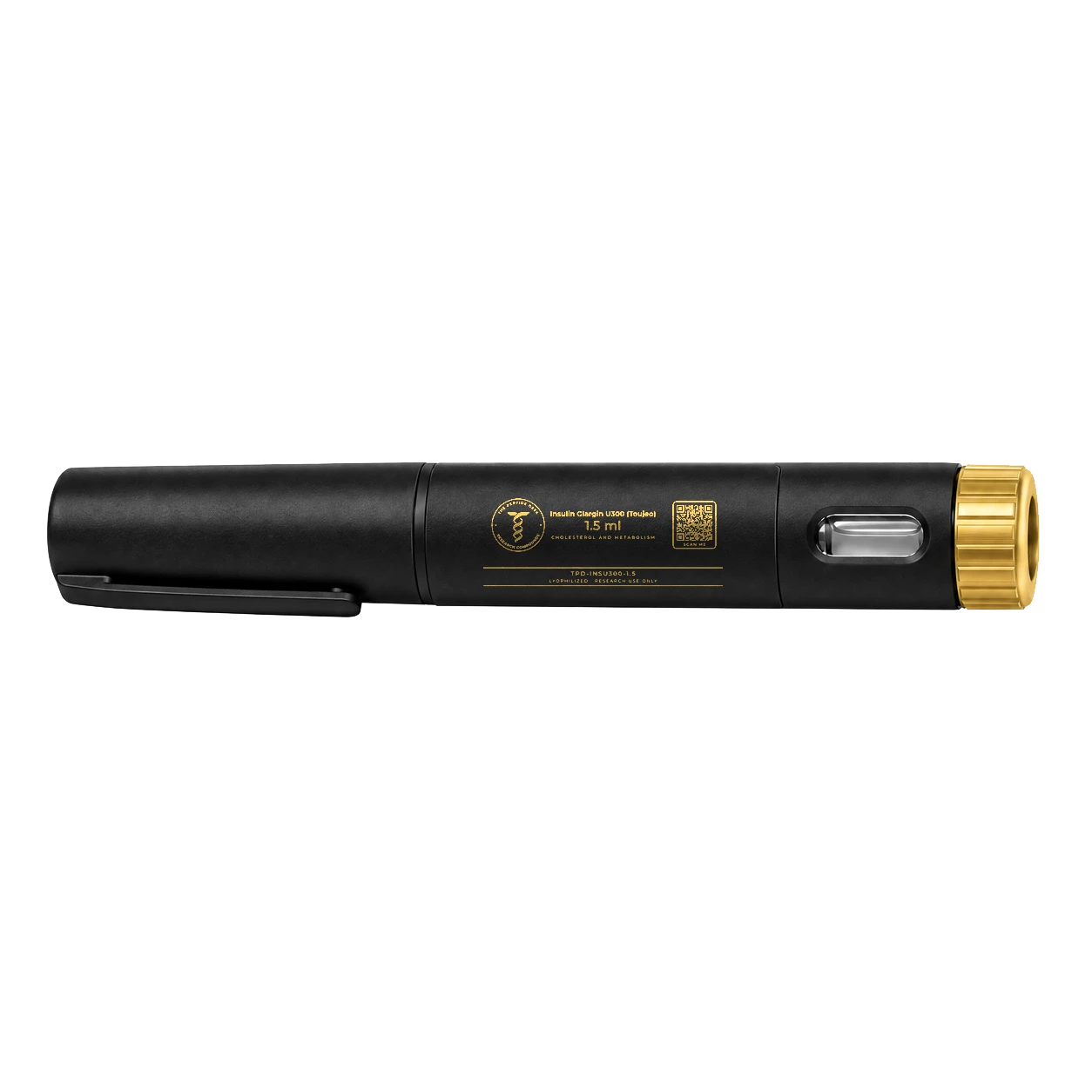
Insulin Glargin U300 (Toujeo)
Medication
- Skickas från Tyskland
Beställning
- DHL med spårning
- Diskret förpackning
I korthet
Insulin Glargin U300 (Toujeo) i siffror
Nyckeltalen från vårt lexikon.
Hela lexikonartikeln- Class
- Long-acting basal insulinanalogue
- Use
- Subcutaneousonce daily, pen only
- Sizes
- 1.5ml/450iu1 size in the shop
What studies show
All 5 sources in the lexicon- Ritzel et al., Diabetes, Obesity and Metabolism, 2015
Omdömen
Vad kunderna säger
Endast riktiga beställningar som innehöll Insulin Glargin U300 (Toujeo).
Alla omdömenDet finns ännu ingen labbanalys för Insulin Glargin U300 (Toujeo). Rösta på denAlla labbanalyser
Kunskap
Allt om Insulin Glargin U300 (Toujeo)
Detaljerad information kommer snart.
How does U300 differ from U100?
Only the concentration: 300 instead of 100 units per millilitre, the same compound. The smaller depot releases it more evenly. In a 36-hour clamp level and effect ran flatter over 24 hours and tight glucose control lasted a median of about 30 hours, around 5 hours longer than with U100.
Why is a regular insulin syringe dangerous?
Regular insulin syringes are calibrated for U-100. With U300 solution the same mark holds three times the amount and you cannot see it. In the FDA drug database the 300 units/ml version is only listed as a prefilled injector with 1.5 or 3 ml, not as a vial.
Is Insulin Glargine U300 approved?
Yes. Drugs@FDA lists the 300 units/ml version since 25 February 2015. ChEMBL lists the compound insulin glargine with first approval in 2000. Everything here is the state of research, not a recommendation.
What did the EDITION trials show?
Same glucose control, less hypoglycaemia at night. In EDITION 1 (807 participants) 36 instead of 46 percent had night-time hypoglycaemia. The pooled analysis of EDITION 1 to 3 with 2,496 people found 31 percent less night-time and 14 percent less around-the-clock hypoglycaemia. Severe episodes stayed rare (2.3 versus 2.6 percent).
Does U300 need more units?
Slightly. In EDITION 2 U300 needed about 10 percent more units than U100 for the same reduction of the long-term value. Weight gain was lower with U300.
Does the time of day matter?
In EDITION 4 with 549 people with type 1 diabetes the result was the same in the morning and in the evening, including hypoglycaemia. Fewer night-time episodes than with U100 were only seen there in the first eight weeks, weight gain was lower.
Relaterat
Relaterade produkter

Telmisartan
Läkemedel · Hjärta och kärl Hjärta och kärl
2 storlekar
Labbtestad

Ivermectin
Läkemedel · Mage och lever Mage och lever
1 storlek
Fenbendazol
Läkemedel · Mage och lever Mage och lever
1 storlek

Prednisone
Läkemedel · Mage och lever Mage och lever
1 storlek

Insulin Glargin U300 (Toujeo)

