Description
HGH Fragment 176-191 is a synthetic peptide that reconstructs amino acids 176-191 of human growth hormone. It belongs to the HGH fragment compound family and is closely related to AOD-9604, which covers sequence 177-191. Both address the C-terminal end of the HGH molecule, which has been associated with lipolysis properties in preclinical studies.
The research mechanism lies in fat mobilization. In animal models, HGH Frag 176-191 has been associated with increased hormone-sensitive lipase activity and enhanced beta-3 adrenoreceptor stimulation. The advantage over full HGH: the growth-promoting and insulin sensitivity modulating effects of the complete hormone are largely absent. This makes the fragment a research tool for isolated lipolysis studies.
In preclinical setups, HGH Frag 176-191 is typically used as a small peptide with short half-life. The frequent application interval (multiple times daily) is a research characteristic resulting from the rapid clearance of the fragment.
Structurally, with 16 amino acids, HGH Frag 176-191 is a substantially smaller molecule than the complete HGH (191 amino acids). This reduction in molecular complexity is part of the research hypothesis: by eliminating growth-axis activating sequences, the metabolic effect is isolated.
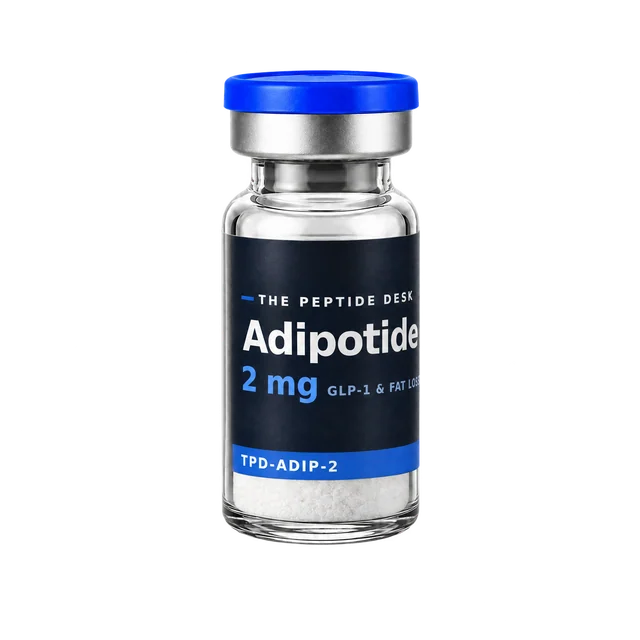
HGH Frag 176-191 is available in 5mg vials as 10-vial packs.
This information is for research and educational purposes only. No medical recommendations.
Risks & Safety
HGH Fragment 176-191 is considered well tolerated per study reports. Because the C-terminal fragment largely lacks the growth-promoting and insulin sensitivity modulating sequences of the full hormone, the profile is milder than that of complete HGH.
Observed in research and user reports:
- Injection site: mild redness, pressure or transient irritation at the injection site is the most common observation with subcutaneous use.
- Mild profile: because the fragment largely does not activate the growth axis, the GH-typical observations such as pronounced water retention or carpal-tunnel-type symptoms are largely absent from the literature.
- Short half-life: the small peptide is degraded quickly, requiring frequent application intervals - though the profile remains mild.
- Occasionally brief fatigue or a mild feeling of warmth shortly after application is reported.
- No long-term data: robust long-term human studies on research use do not exist. The profile rests primarily on animal models and short-term anecdotal experience.
This classification does not replace medical advice. Risk and responsibility for any actual use lie entirely with the buyer.
Studies
- Effects of oral administration of a synthetic fragment of human growth hormone on lipid metabolism - American Journal of Physiology - Endocrinology and Metabolism 2000: The synthetic hGH fragment AOD-9401 reduced body weight gain in obese mice after oral dosing, increased lipolysis and inhibited lipogenesis in adipose tissue, including isolated human adipose tissue.
- Increase of fat oxidation and weight loss in obese mice caused by chronic treatment with human growth hormone or a modified C-terminal fragment - International Journal of Obesity 2001: In obese mice, hGH and the C-terminal fragment AOD9604 reduced body weight gain and increased fat oxidation over 14 days, while the fragment did not bind the hGH receptor and induced neither hyperglycemia nor cell proliferation.
- The effects of human GH and its lipolytic fragment (AOD9604) on lipid metabolism following chronic treatment in obese mice and beta(3)-AR knock-out mice - Endocrinology 2001: hGH and its lipolytic fragment increased beta-3 adrenergic receptor expression in obese mice. In knockout mice lacking this receptor the weight effect of chronic dosing was absent.
- Metabolic studies of a synthetic lipolytic domain (AOD9604) of human growth hormone - Hormone Research 2000: In obese Zucker rats, a synthetic analogue of the lipolytic hGH domain given orally every day for 19 days reduced body weight gain by more than half without impairing insulin sensitivity.