Description
Ipamorelin is a synthetic pentapeptide belonging to the class of growth hormone secretagogues (GHS). It was described in 1998 as the first selective GH secretagogue: it triggers GH release via the GHS-R1a receptor (ghrelin receptor). In pigs, it did not raise ACTH or cortisol more than the body’s own GHRH, not even at very high doses, while GHRP-2 and GHRP-6 raised both hormones. Prolactin stayed unchanged with all compounds tested in that study. There are no published human data on cortisol, ACTH or prolactin under ipamorelin.
Compared to GHRP-6 or GHRP-2, Ipamorelin therefore stands out mainly for the missing ACTH and cortisol response in animal studies. It is not appetite-neutral: in mice, ipamorelin increased body weight and fat mass. Treatment with GH secretagogues (ipamorelin or GHRP-6) also raised leptin and food intake (Lall 2001). In rats after abdominal surgery, repeated ipamorelin increased food intake (Venkova 2009). A 2026 review describes the appetite effect as weaker than with GHRP-2 or GHRP-6. There are no human data on this.
In preclinical studies, ipamorelin released GH dose-dependently, in rat pituitary cells demonstrably via a GHRP-like receptor. The same was shown in anaesthetised rats and conscious pigs. In healthy men, a 15-minute intravenous infusion produced a single GH pulse peaking after about 40 minutes. Ipamorelin’s half-life was about two hours (Gobburu 1999).
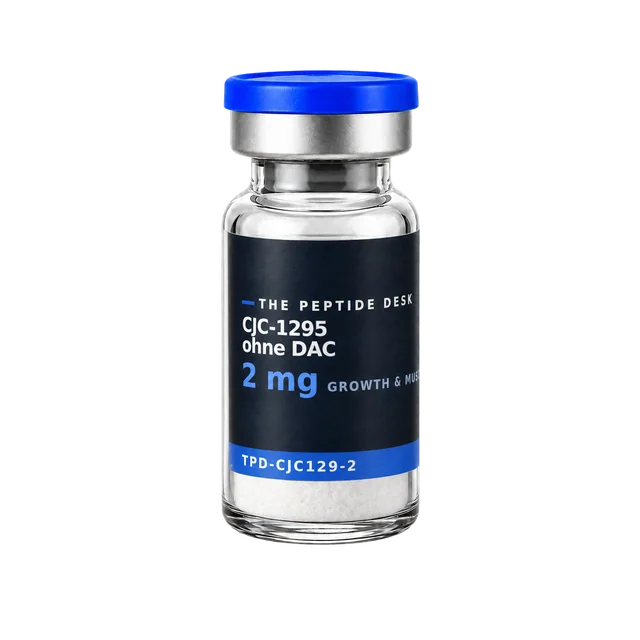
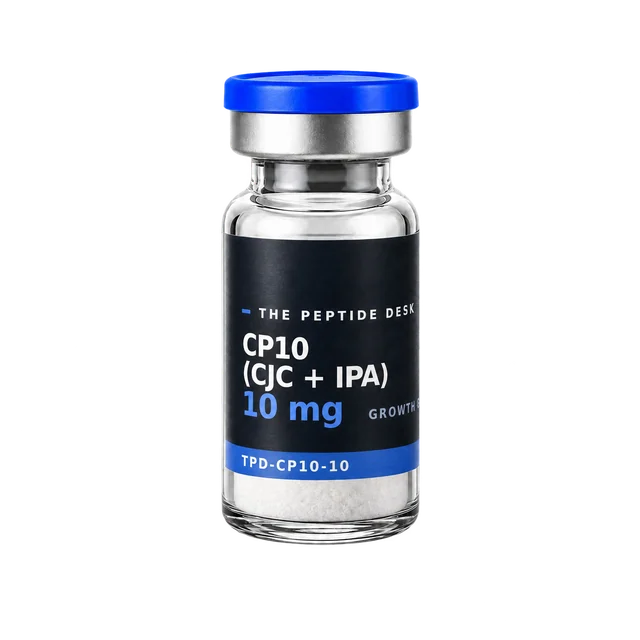
In the community, Ipamorelin is frequently combined with a GHRH analog such as CJC-1295 without DAC, because the two act on different receptors. No study has tested this combination. In humans, synergistic GH release has only been shown for related compounds together with natural GHRH, each as a single intravenous dose: for GHRP-6 (Bowers 1990) and for ghrelin itself (Arvat 2001).
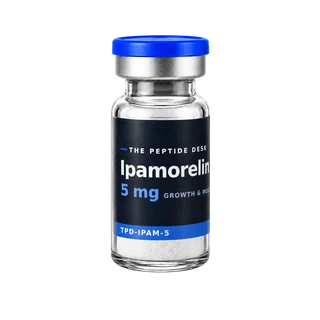
You can order Ipamorelin in 10-vial packs at 5mg and 10mg per vial.
This information is for research and educational purposes only. No medical recommendations.
Risks & Safety
Human data on ipamorelin are thin: one pharmacokinetic study with a single infusion in healthy men and one phase 2 trial in patients after bowel surgery. In the phase 2 trial (intravenous infusion twice daily for up to 7 days), ipamorelin was well tolerated. Adverse events were not more frequent than with placebo. There are no human studies on subcutaneous use or on longer periods. The selectivity regarding cortisol and ACTH has only been shown in animals.
Described in research and user reports:
- Injection site: mild redness, pressure or transient irritation at the injection site are generally possible with subcutaneous injections. There are no study data specific to ipamorelin.
- GH-typical effects: for GH and the compound class, transient water retention as well as numbness or tingling in the hands (carpal-tunnel-type symptoms) are described. For ipamorelin itself, they are not documented in studies.
- Glucose metabolism: elevated GH levels can raise fasting blood glucose and transiently reduce insulin sensitivity. This too is a general GH effect; human data for ipamorelin are lacking.
- Appetite and body fat: in animal studies, ipamorelin increased food intake, body weight and body fat (mice, rats). The appetite effect is considered weaker than with GHRP-2 or GHRP-6 and has not been studied in humans.
- No long-term data: robust long-term human studies for research use do not exist. The profile rests on animal studies and short human studies with intravenous infusions.
This classification does not replace medical advice. Risk and responsibility for any actual use lie entirely with the buyer.
Studies
- Ipamorelin, the first selective growth hormone secretagogue - European Journal of Endocrinology 1998: First description, with GH release via a GHRP-like receptor in rat pituitary cells; in pigs, unlike GHRP-2 and GHRP-6, ipamorelin did not raise ACTH or cortisol more than GHRH. Prolactin was unchanged with all compounds.
- Pharmacokinetic-pharmacodynamic modeling of ipamorelin, a growth hormone releasing peptide, in human volunteers - Pharmaceutical Research 1999: Single 15-minute intravenous infusion in healthy men (five dose levels with eight participants each): half-life about two hours, a single GH pulse peaking after about 40 minutes.
- The GH secretagogues ipamorelin and GH-releasing peptide-6 increase bone mineral content in adult female rats - Journal of Endocrinology 2000, Svensson et al: 12-week animal study: bone mineral content rose because the bones grew larger, while volumetric bone mineral density was unchanged.
- Growth hormone (GH)-independent stimulation of adiposity by GH secretagogues - Biochemical and Biophysical Research Communications 2001: In mice, ipamorelin increased body weight and fat mass independently of GH. Treatment with GH secretagogues (ipamorelin or GHRP-6) also raised leptin and food intake.
- Prospective, randomized, controlled, proof-of-concept study of the Ghrelin mimetic ipamorelin for the management of postoperative ileus in bowel resection patients - International Journal of Colorectal Disease 2014: Phase 2 trial in 114 patients after bowel resection: ipamorelin as an infusion twice daily for up to 7 days was well tolerated (adverse events 87.5% vs 94.8% with placebo), but did not significantly shorten the time to the first solid meal.