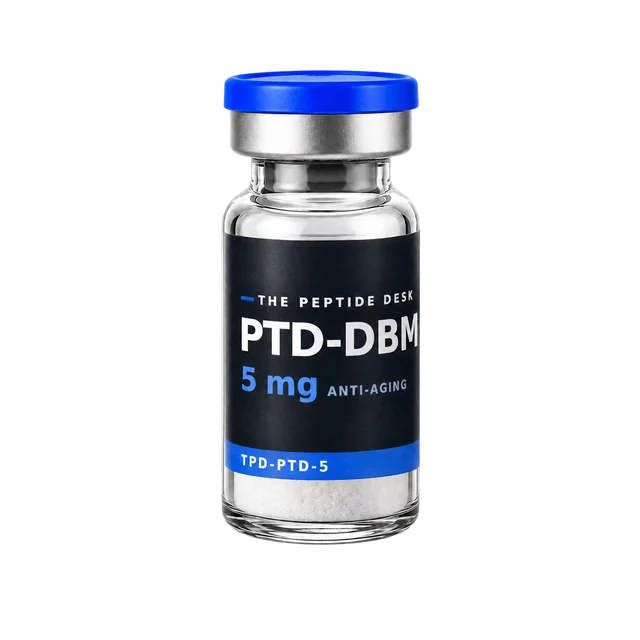
Description
Minoxidil is originally an antihypertensive, developed in the 1960s and approved in the 1980s as a topical solution (Rogaine) for androgenetic alopecia. In recent years, oral low-dose Minoxidil has become a strongly growing research trend in hair restoration.
Per study reports Minoxidil acts as a potassium channel opener with vasodilatory action. The exact mechanisms of hair growth stimulation aren’t fully clarified - improved microcirculation in the follicle area and direct action on anagen phase entry are suspected.
Topical application has been standard for decades. Oral low-dose research (2.5-5mg/day) emerged from the observation that many users with cardiac Minoxidil therapy developed unwanted generalized hair growth. Current research protocols use oral low doses with substantially better adherence than topical application.
A 2022 published study from Brazil (Vano-Galvan et al, JAAD) showed significant hair restoration under 5mg/day oral Minoxidil in androgenetic alopecia.
Pharmacokinetically orally bioavailable with about 4-hour half-life. A once-daily dose of 1.25-5mg is research standard.
Known effects in oral application: hypertrichosis (unwanted facial and body hair), mild tachycardia, water retention. At higher doses blood pressure lowering. Pericardial effects documented at high doses.
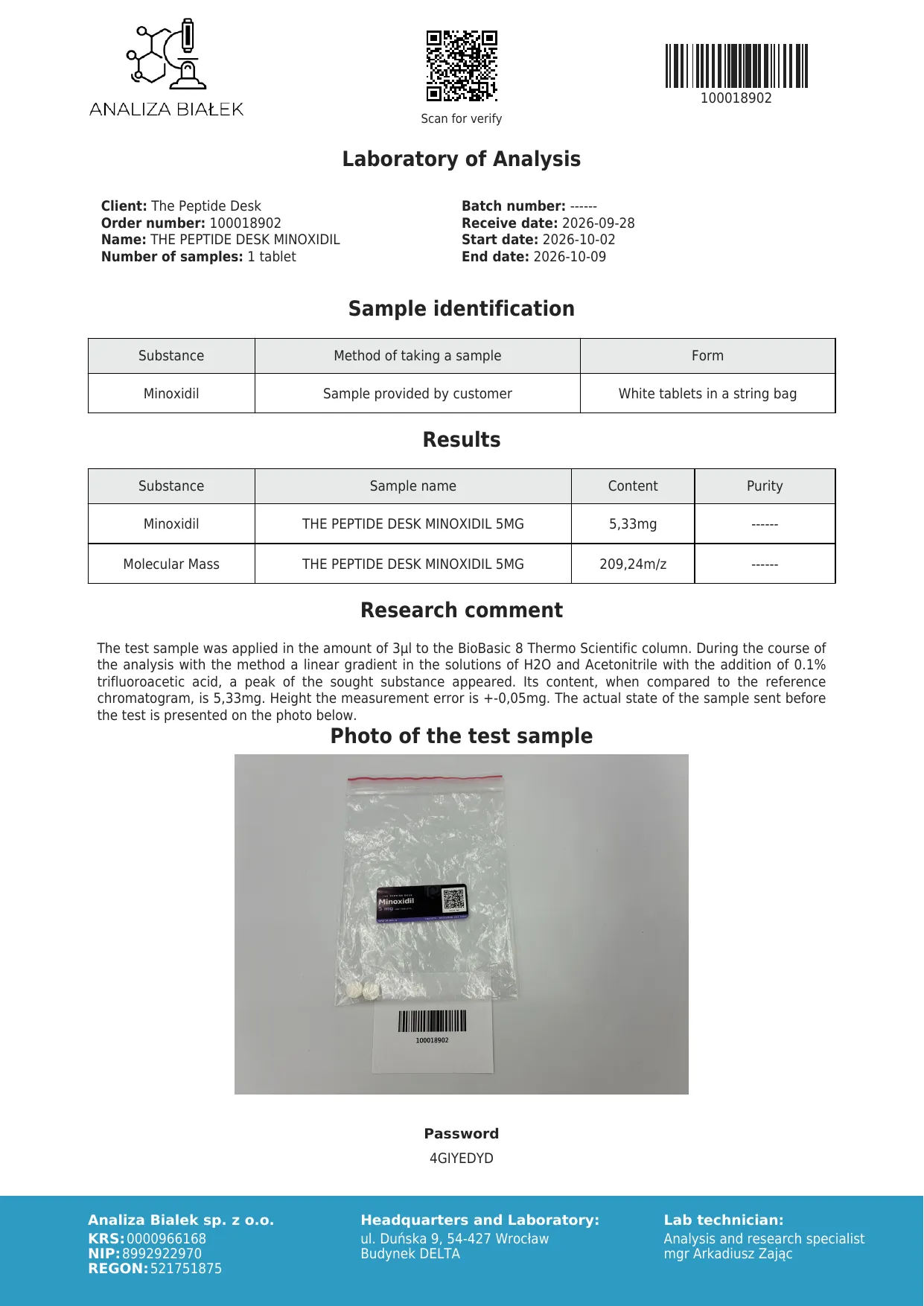
You can order Minoxidil as oral tablets, with 2.5mg or 10mg per tablet as a blister of 10 tablets and with 5mg as a bottle of 100 tablets.
This information is for research and educational purposes only. No medical recommendations.
Risks & Safety
Minoxidil is originally an antihypertensive. The documented effects of oral low-dose use stem directly from that origin. In the available safety studies, oral low-dose Minoxidil is considered largely well tolerated, with a clearly defined effect profile.
Documented in clinical studies:
- Hypertrichosis: unwanted hair growth on the face and body is the most commonly documented effect and follows directly from the systemic action.
- Water retention: fluid retention is described in the literature and is one of the main reasons for slow titration.
- Tachycardia: mild heart rate increase is documented as a cardiovascular effect of the vasodilatory action.
- Blood pressure lowering: at higher doses blood pressure falls. At high doses pericardial effects are documented. Low research doses are substantially better tolerated than the original cardiac doses.
This classification does not replace medical advice. Risk and responsibility for any actual use lie entirely with the buyer.
Studies
- Effectiveness and safety of low-dose oral minoxidil in male androgenetic alopecia - JAAD 2019, Jimenez-Cauhe et al: first sizeable real-world study of low-dose oral minoxidil in AGA.
- Safety of low-dose oral minoxidil treatment for hair loss. A systematic review and pooled-analysis of individual patient data - Dermatologic Therapy 2020, Jimenez-Cauhe et al: pooled safety analysis with the documented effect profile.
- Minoxidil 1 mg oral versus minoxidil 5% topical solution for the treatment of female-pattern hair loss: A randomized clinical trial - JAAD 2020, Ramos et al: randomized head-to-head comparison of oral vs topical in FPHL.
- Oral Minoxidil vs Topical Minoxidil for Male Androgenetic Alopecia - JAMA Dermatology 2024, Penha et al: recent RCT of oral vs topical application in male AGA.
- Expert Consensus Offers Guidance for Treating Hair Loss With Low-Dose Oral Minoxidil - JAMA 2025, Anderer: current expert consensus statement on clinical application.