Description
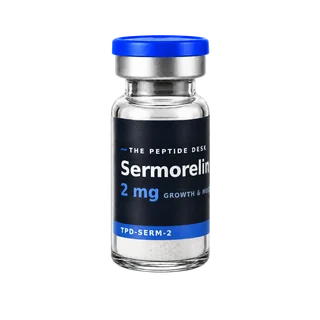
Sermorelin is a synthetic peptide that reconstructs the first 29 amino acids of human GHRH (Growth Hormone-Releasing Hormone). This 1-29 sequence contains the biologically active core of the natural GHRH molecule, produced in the hypothalamus and stimulating GH secretion in the anterior pituitary. Sermorelin is therefore the oldest and most clinically characterized GHRH analog.
In research setups, sermorelin acts through GHRH receptors of somatotrope cells of the pituitary and triggers pulsatile GH release. With a half-life of approximately 10-20 minutes, sermorelin most closely mimics the natural pulsatile GHRH secretion. In contrast to modified variants like CJC-1295 or tesamorelin, sermorelin lacks the amino acid modifications that protect against DPP-IV degradation, making the compound the fastest in the GHRH analog family.
This characteristic makes sermorelin particularly interesting for research setups that require maximally physiological conditions. Endogenous GHRH secretion is pulsatile and rapid. Sermorelin best mimics this pattern.
In preclinical studies, sermorelin has been extensively investigated in pediatric GH deficiency research, generating an extensive safety and efficacy database. Today the compound is primarily used in the community for GH axis studies.
Sermorelin is available in 5mg vials as 10-vial packs.
This information is for research and educational purposes only. No medical recommendations.
Risks & Safety
Sermorelin is considered well tolerated per study reports. As the oldest GHRH analog, the compound has an extensive safety database, particularly from pediatric GH deficiency research, with a consistently mild profile.
Observed in research and user reports:
- Injection site: mild redness, pressure or transient irritation at the injection site is the most common observation with subcutaneous use.
- GH-typical effects: as is common with GH secretagogues, the literature describes transient water retention as well as numbness or tingling in the hands (carpal-tunnel-type symptoms), usually dose-dependent and reversible. Due to the very short half-life, the profile tends to be mild.
- Glucose metabolism: elevated GH levels can raise fasting blood glucose and transiently reduce insulin sensitivity in studies.
- Occasionally flushing, headache or brief fatigue shortly after application is reported.
- No long-term data: despite extensive pediatric data, robust long-term human studies on research use do not exist.
This classification does not replace medical advice. Risk and responsibility for any actual use lie entirely with the buyer.
Studies
- Sermorelin: a review of its use in the diagnosis and treatment of children with idiopathic growth hormone deficiency - BioDrugs 1999: Review of sermorelin as the shortest synthetic peptide with full GHRH activity: covers the specific stimulation of pituitary GH secretion, its use as a diagnostic test and growth data in children with GH deficiency.
- Once daily subcutaneous growth hormone-releasing hormone therapy accelerates growth in growth hormone-deficient children during the first year of therapy - Journal of Clinical Endocrinology & Metabolism 1996: Open-label multicenter study in 110 GH-deficient children: with one daily bedtime dose, mean height velocity rose from 4.1 to 7.2 cm per year after 12 months.
- Growth hormone (GH)-releasing hormone-(1-29) twice daily reverses the decreased GH and insulin-like growth factor-I levels in old men - Journal of Clinical Endocrinology & Metabolism 1992: In healthy old men, twice-daily subcutaneous injections for 14 days raised GH and IGF-1 levels dose-dependently to those of young men.
- Effects of single nightly injections of growth hormone-releasing hormone (GHRH 1-29) in healthy elderly men - Metabolism 1997: Six weeks of single nightly injections in 11 elderly men increased nocturnal GH release, while IGF-1, body composition and metabolic measures remained unchanged.