

Vali oma silt
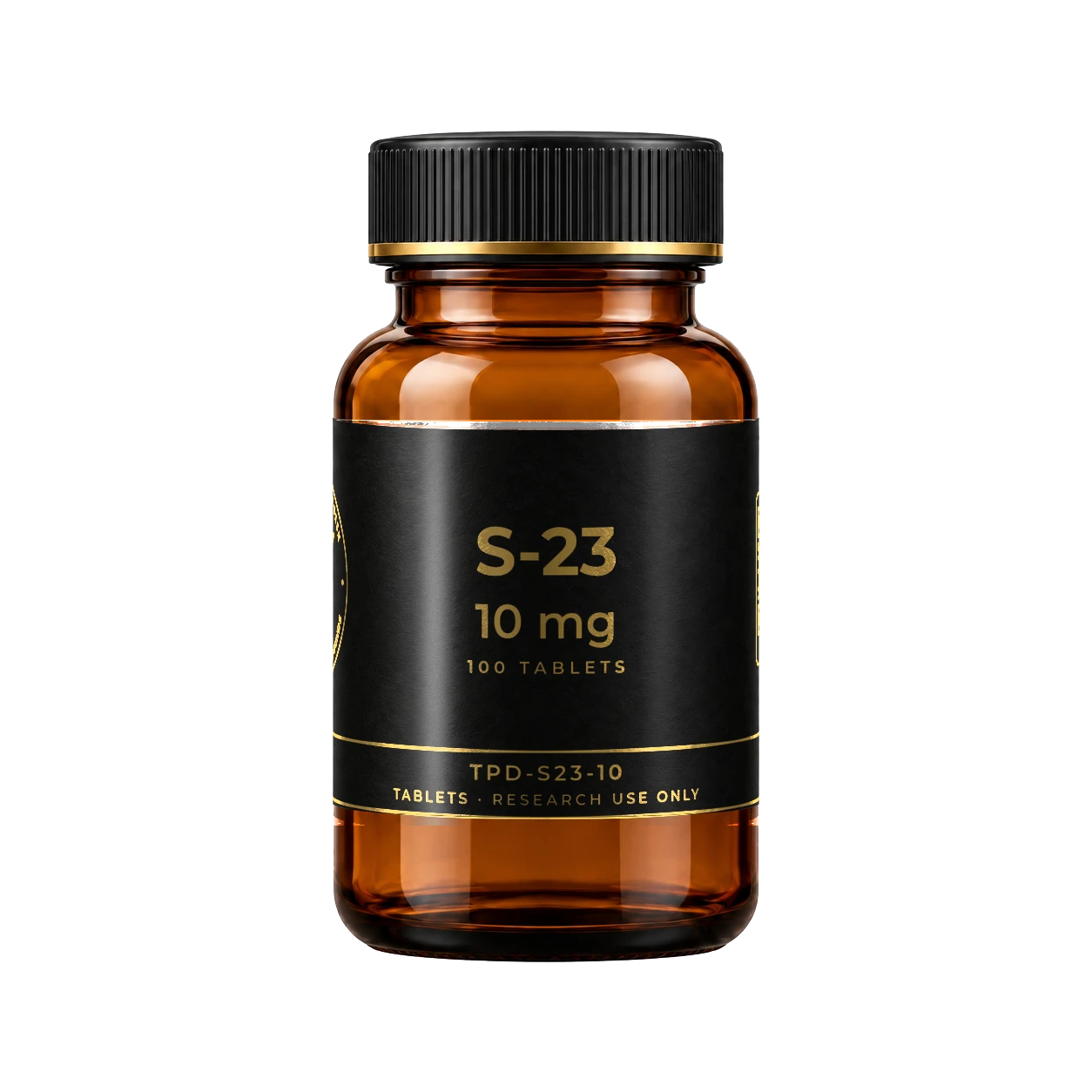
näidatakse otse viaalilS-23
SARMs
- Saadetakse Saksamaalt
Tellimus
- DHL koos jälgimisega
- Diskreetne pakend
Lühidalt
S-23 arvudes
Põhinäitajad meie leksikonist.
Täielik leksikoni artikkel- Class
- SARMnon-steroidal, full agonist at the androgen receptor
- Half-life
- Not determined in humans
- Use
- Oraldaily
- Form
- Tablet10 or 20 mg
- Sizes
- 10 mg1 size in the shop
What studies show
All 4 sources in the lexicon- Jones et al., Endocrinology, 2008
- Ameline et al., J Pharm Biomed Anal, 2022
- Alhalabi et al., Biomed Chromatogr, 2025
S-23 jaoks pole veel laborianalüüsi. Hääleta selle pooltLase ise testida, meie maksame pooleKõik laborianalüüsid
Teadmised
Kõik teemal S-23
Üksikasjalik teave tuleb peagi.
What was S-23 developed for?
As oral contraception for men. The idea: slow the hormone axis via the androgen receptor so strongly that sperm production stops, while muscle and bone remain supplied. S-23 never got beyond experiments in rats.
Is S-23 approved or tested in humans?
No. There is no study on S-23 on ClinicalTrials.gov (as of 26 October 2026). The only human data come from doping labs that gave single and micro doses to improve detection. Everything here is the state of research, not a recommendation.
What did the rat study show?
S-23 bound very tightly to the receptor with a Ki of 1.7 nM. Given alone it lowered LH by more than half over 14 days. Together with oestradiol four of six rats in one group had no sperm, there was no pregnancy. 100 days after stopping the pregnancy rate was back at 100 percent.
Why did the rats also receive oestradiol?
Because S-23 slows the hormone axis, the body's own testosterone falls and with it the oestradiol made from it. Without oestradiol the rats lost their sexual behaviour. Oestradiol alone did not change sperm production.
How long is S-23 detectable?
After a single tablet Ameline and colleagues found S-23 in urine for up to 28 days. Alhalabi and colleagues gave only microgram amounts: even the smallest remained detectable for about 253 hours on average, the largest for about 544 hours. In 2022 S-23 appeared in five positive doping samples.
What is known about side effects?
There are no human safety data on S-23 itself. A systematic review of SARMs in healthy people found 15 case reports of liver injury and raised ALT in an average of 7.1 percent in clinical trials. That applies to the class, not specifically to S-23.
Seotud
Seotud tooted
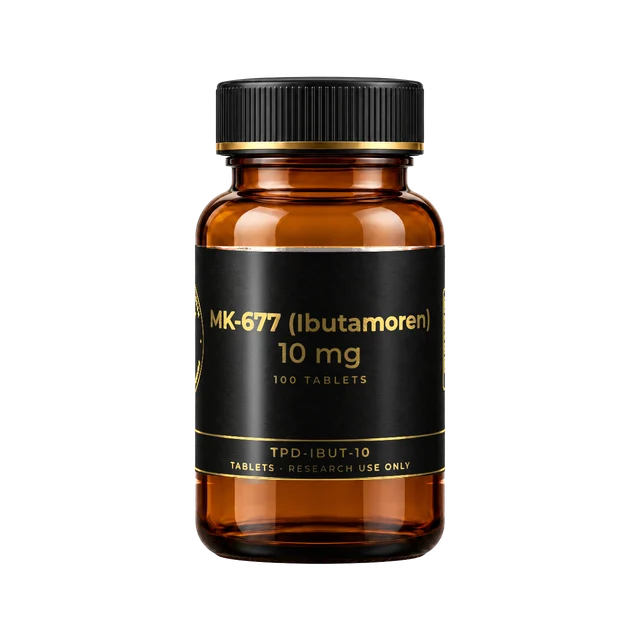
MK-677 (Ibutamoren)
SARM-id ja rasvapõletajad · SARMs SARM-id ja rasvapõletajad · SARMs
1 suurus

LGD-4033 (Ligandrol)
SARM-id ja rasvapõletajad · SARMs SARM-id ja rasvapõletajad · SARMs
1 suurus
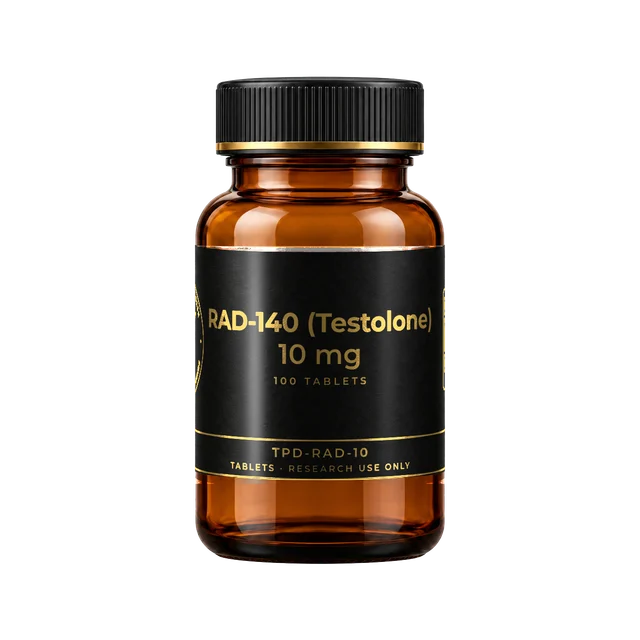
RAD-140 (Testolone)
SARM-id ja rasvapõletajad · SARMs SARM-id ja rasvapõletajad · SARMs
1 suurus
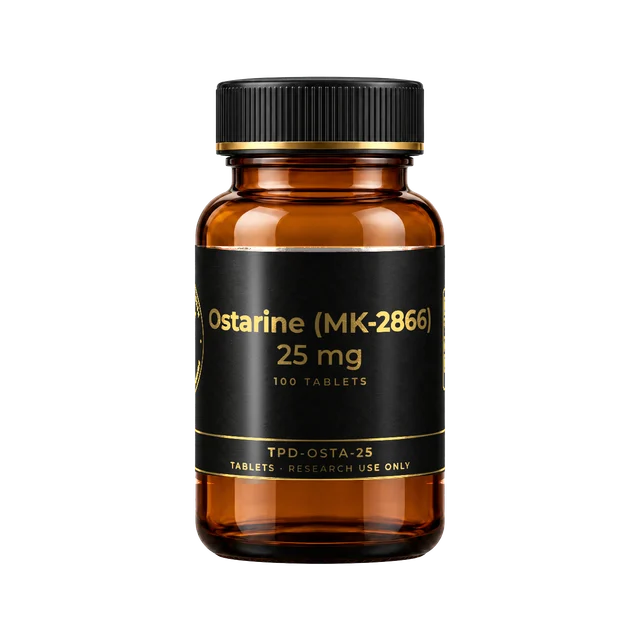
Ostarine (MK-2866)
SARM-id ja rasvapõletajad · SARMs SARM-id ja rasvapõletajad · SARMs
1 suurus

S-23

