


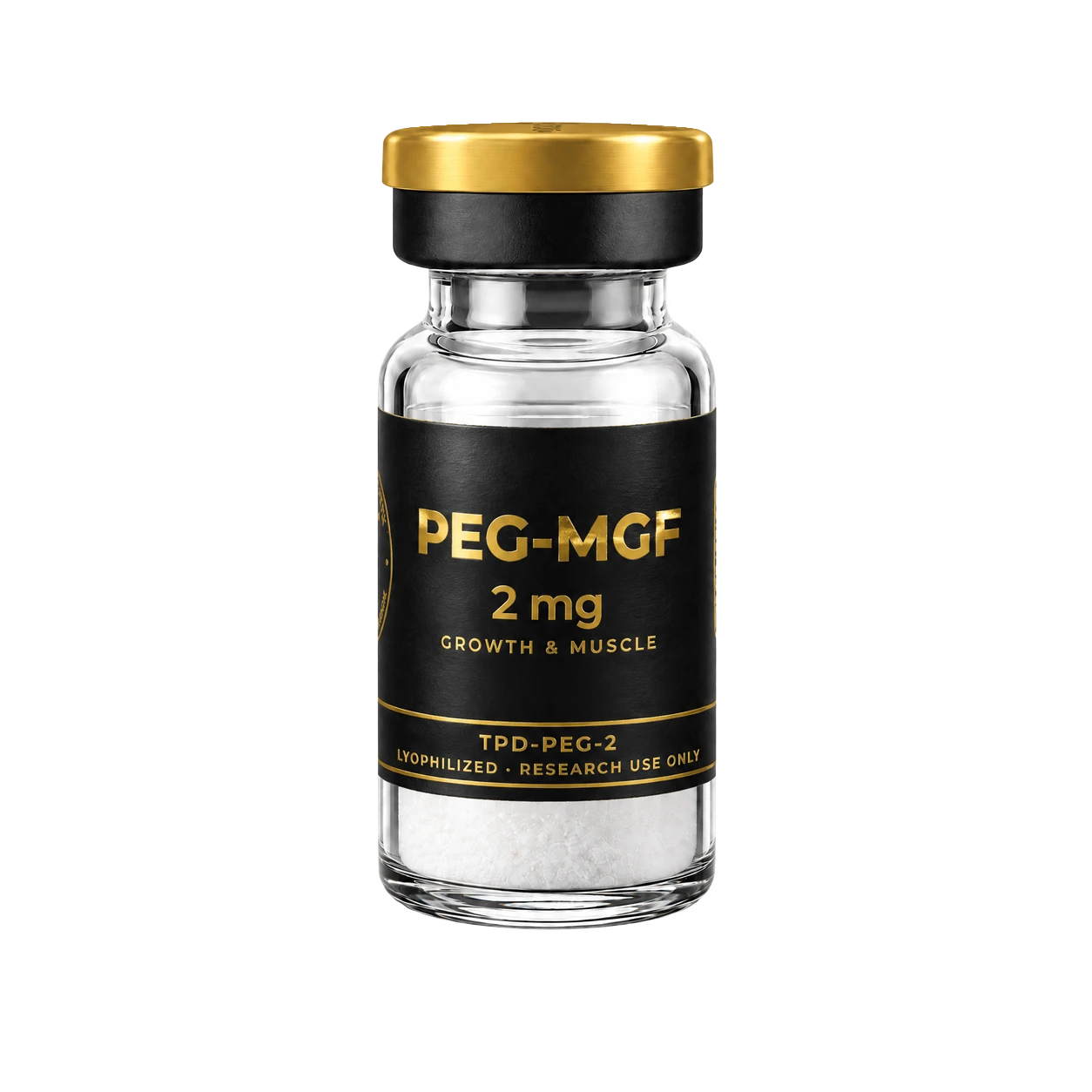
Válaszd ki a címkédet
közvetlenül a fiolán láthatóPEG-MGF
Muscle Building
- Németországból szállítjuk
Rendelés
- DHL nyomkövetéssel
- Diszkrét csomagolás
Egy pillantásra
PEG-MGF számokban
A legfontosabb értékek a lexikonunkból.
Teljes lexikonbejegyzés- Class
- PEGylated IGF-1EcMGF
- Half-life
- longer than MGFPEGylated
- Use
- Subcutaneousin mcg
- Sizes
- 2 mg1 size in the shop
What studies show
The source in the lexicon- Hill & Goldspink, The Journal of Physiology, 2003
Értékelések
Mit mondanak a vásárlók
Csak valódi rendelések, amelyekben szerepelt: PEG-MGF.
Összes értékelésPEG-MGF: még nincs laborelemzés. Szavazz ráTeszteltesd magad, a felét mi fizetjükÖsszes laborelemzés
Tudás
Minden tudnivaló: PEG-MGF
Részletes információk hamarosan.
Adagolás
Adagolási információk betöltése …
Érdemes mellé
Amire szükséged lesz hozzá
A bakteriosztatikus vizet automatikusan a kosaradba tesszük. Fecskendők és törlőkendők egy kattintással.

Inzulinfecskendők
10 db · 5.50 €

Alkoholos törlőkendők
50 db · 10 €
Mennyi víz?
Egységek a fecskendőn a fiolád méretéhez.
Kalkulátor megnyitása →Is PEG-MGF approved or studied in humans?
No. There is no approval and no published study on PEG-MGF, not even in animals. As of 26 October 2026 ClinicalTrials.gov lists no trial with it. All data here concern the MGF peptide without PEG.
What exactly is MGF?
The IGF-1 gene is read in different ways as needed. One variant, IGF-1Ec in humans, rises in muscle after load or damage and was named mechano growth factor. The MGF peptide used is usually the synthetic end piece of 24 amino acids. According to a review from 2010 such a peptide has never been found in the body.
What did the muscle studies show?
In rats the MGF variant rose early after a muscle injury and fell again after a few days, at the same time as markers of activated satellite cells. In cell cultures the end piece promoted the division of muscle precursor cells and slowed their maturation, independently of the IGF-1 receptor. In human muscle cells it acted in cells from young donors, not in those from older ones.
Are there doubts about these results?
Yes. In 2014 two pharmaceutical companies tried to reproduce the findings. The MGF peptide neither increased the division of muscle cells nor slowed their maturation, not even in muscle stem cells from mice. A stabilised form did not work either. The authors question whether MGF has any role in the body at all.
What is known about heart and brain?
In sheep after a heart attack about 35 percent less heart muscle was damaged with the MGF peptide. In mice pump function was better preserved after an infarction, tested with a stabilised form without PEG. In gerbils the peptide protected nerve cells after a brief disruption of blood flow in the brain.
What is PEGylation supposed to achieve?
PEG chains are meant to protect a peptide from rapid breakdown and keep it in the body longer. Whether this works for MGF and what then happens in the body has not been tested by any published study. A review from 2026 lists PEG-MGF among the peptides with no human studies.
Which side effects are known?
There are no solid data. A review of peptides around growth hormone and IGF-1 lists hormonal and metabolic disturbances, fluid retention, muscle and joint pain and injection site reactions as reported problems. A growth-promoting signal is considered a plausible but unproven risk there.
Kapcsolódó
Kapcsolódó termékek
IGF-1 LR3
Peptidek · Növekedés és izomzat Növekedés és izomzat
2 kiszerelés
= már 11.6 €/fiola
MGF
Peptidek · Növekedés és izomzat Növekedés és izomzat
1 kiszerelés
= 13.2 €/fiola
ACE-031
Peptidek · Növekedés és izomzat Növekedés és izomzat
1 kiszerelés
= 23.2 €/fiola
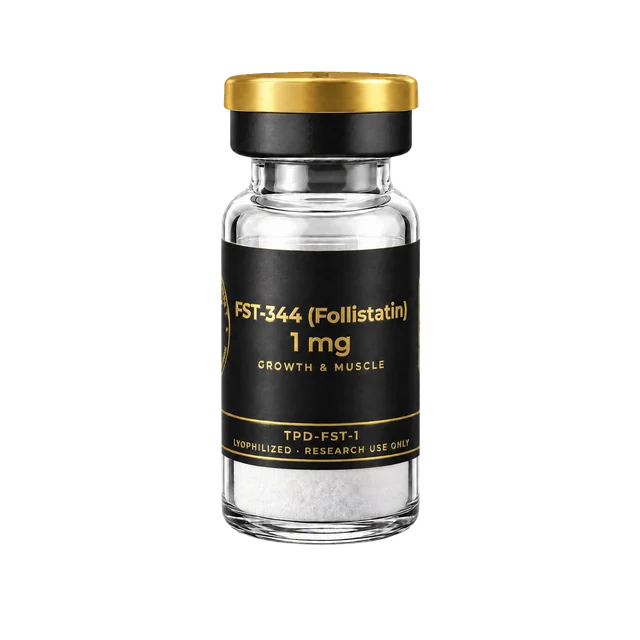
FST-344 (Follistatin)
Peptidek · Növekedés és izomzat Növekedés és izomzat
1 kiszerelés
= 53.2 €/fiola

PEG-MGF

