


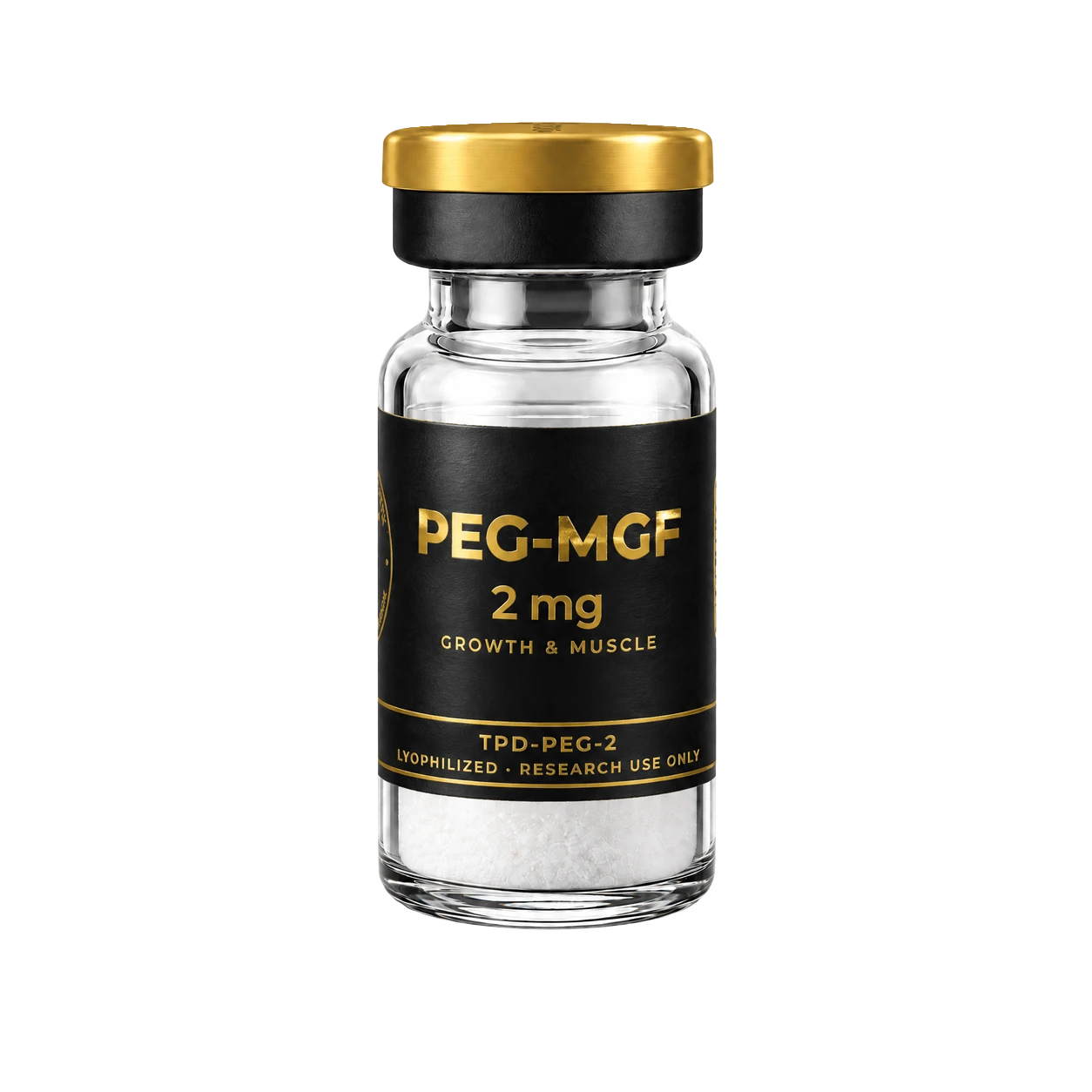
Pasirinkite etiketę
rodoma tiesiai ant flakonoPEG-MGF
Muscle Building
- Siunčiame iš Vokietijos
Užsakymas
- DHL su sekimu
- Diskreti pakuotė
Trumpai
PEG-MGF skaičiais
Pagrindiniai rodikliai iš mūsų žinyno.
Visas žinyno įrašas- Class
- PEGylated IGF-1EcMGF
- Half-life
- longer than MGFPEGylated
- Use
- Subcutaneousin mcg
- Sizes
- 2 mg1 size in the shop
What studies show
The source in the lexicon- Hill & Goldspink, The Journal of Physiology, 2003
Produktui PEG-MGF laboratorinės analizės dar nėra. Balsuoti už taiUžsakykite tyrimą, mes apmokame pusęVisos laboratorinės analizės
Žinios
Viskas apie PEG-MGF
Išsami informacija netrukus.
Dozavimas
Įkeliama dozavimo informacija …
Pravers
Ko dar jums reikės
Bakteriostatinis vanduo į krepšelį pridedamas automatiškai. Švirkštai ir servetėlės - vienu paspaudimu.

Insulino švirkštai
10 vnt. · 5.50 €

Spiritinės servetėlės
50 vnt. · 10 €
Kiek vandens?
Vienetai ant švirkšto jūsų flakono dydžiui.
Atidaryti skaičiuoklę →Is PEG-MGF approved or studied in humans?
No. There is no approval and no published study on PEG-MGF, not even in animals. As of 26 October 2026 ClinicalTrials.gov lists no trial with it. All data here concern the MGF peptide without PEG.
What exactly is MGF?
The IGF-1 gene is read in different ways as needed. One variant, IGF-1Ec in humans, rises in muscle after load or damage and was named mechano growth factor. The MGF peptide used is usually the synthetic end piece of 24 amino acids. According to a review from 2010 such a peptide has never been found in the body.
What did the muscle studies show?
In rats the MGF variant rose early after a muscle injury and fell again after a few days, at the same time as markers of activated satellite cells. In cell cultures the end piece promoted the division of muscle precursor cells and slowed their maturation, independently of the IGF-1 receptor. In human muscle cells it acted in cells from young donors, not in those from older ones.
Are there doubts about these results?
Yes. In 2014 two pharmaceutical companies tried to reproduce the findings. The MGF peptide neither increased the division of muscle cells nor slowed their maturation, not even in muscle stem cells from mice. A stabilised form did not work either. The authors question whether MGF has any role in the body at all.
What is known about heart and brain?
In sheep after a heart attack about 35 percent less heart muscle was damaged with the MGF peptide. In mice pump function was better preserved after an infarction, tested with a stabilised form without PEG. In gerbils the peptide protected nerve cells after a brief disruption of blood flow in the brain.
What is PEGylation supposed to achieve?
PEG chains are meant to protect a peptide from rapid breakdown and keep it in the body longer. Whether this works for MGF and what then happens in the body has not been tested by any published study. A review from 2026 lists PEG-MGF among the peptides with no human studies.
Which side effects are known?
There are no solid data. A review of peptides around growth hormone and IGF-1 lists hormonal and metabolic disturbances, fluid retention, muscle and joint pain and injection site reactions as reported problems. A growth-promoting signal is considered a plausible but unproven risk there.
Susiję
Susiję produktai
IGF-1 LR3
Peptidai · Augimas ir raumenys Augimas ir raumenys
Dydžių: 2
= nuo 11.6 €/flakonas
MGF
Peptidai · Augimas ir raumenys Augimas ir raumenys
1 dydis
= 13.2 €/flakonas
ACE-031
Peptidai · Augimas ir raumenys Augimas ir raumenys
1 dydis
= 23.2 €/flakonas
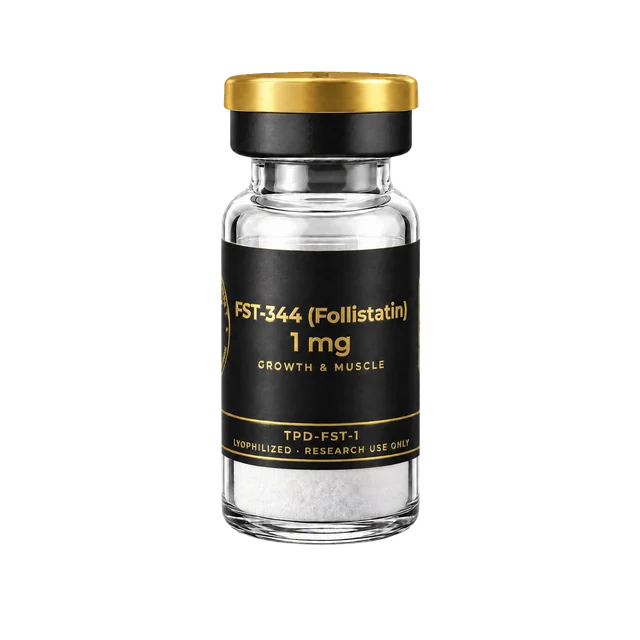
FST-344 (Follistatin)
Peptidai · Augimas ir raumenys Augimas ir raumenys
1 dydis
= 53.2 €/flakonas

PEG-MGF

