

Pasirinkite etiketę
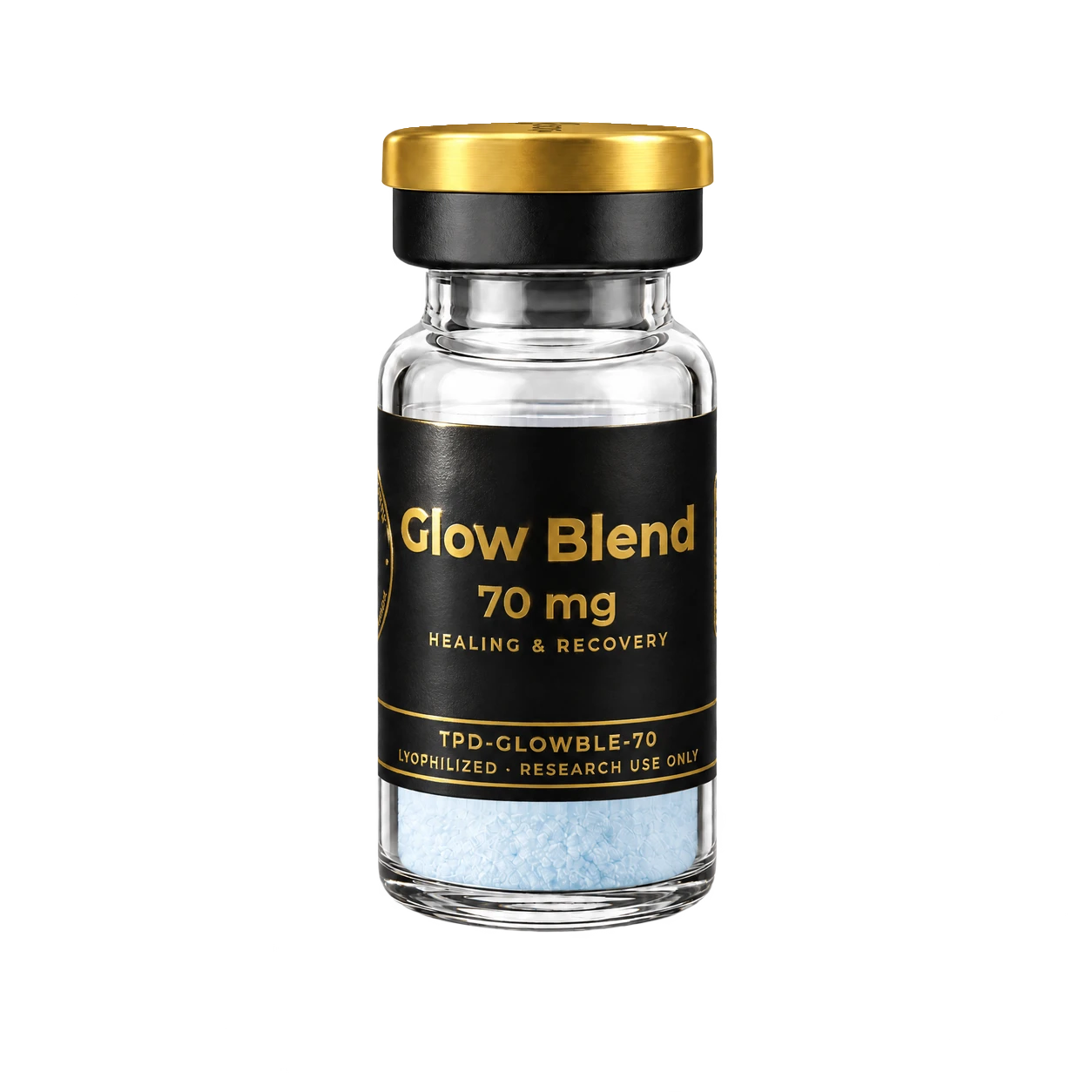
rodoma tiesiai ant flakonoGlow Blend
Healing
- Siunčiame iš Vokietijos
Užsakymas
- DHL su sekimu
- Diskreti pakuotė
Trumpai
Glow Blend skaičiais
Pagrindiniai rodikliai iš mūsų žinyno.
Visas žinyno įrašas- Class
- Healing/beauty blend
- Use
- Subcutaneousin mg
- Sizes
- 70 to 90 mg2 sizes in the shop
What studies show
All 3 sources in the lexicon- Crockford et al., Annals of the New York Academy of Sciences, 2010
Randomised trial of GHK-Cu gel in diabetic foot ulcers (opens in a new tab)
Mulder et al., Wound Repair and Regeneration, 1994- Malinda et al., Journal of Investigative Dermatology, 1999
Produktui Glow Blend laboratorinės analizės dar nėra. Balsuoti už taiUžsakykite tyrimą, mes apmokame pusęVisos laboratorinės analizės
Žinios
Viskas apie Glow Blend
Išsami informacija netrukus.
Dozavimas
Įkeliama dozavimo informacija …
Pravers
Ko dar jums reikės
Bakteriostatinis vanduo į krepšelį pridedamas automatiškai. Švirkštai ir servetėlės - vienu paspaudimu.

Insulino švirkštai
10 vnt. · 5.50 €

Spiritinės servetėlės
50 vnt. · 10 €
Kiek vandens?
Vienetai ant švirkšto jūsų flakono dydžiui.
Atidaryti skaičiuoklę →Are there studies on the Glow Blend?
No. As of 26 October 2026 there is no study on the ready-made blend, neither on ClinicalTrials.gov nor in PubMed. All three compounds together only appear in reviews. The components have been studied, almost always each on its own.
What is the difference from the Glow Blend (Mini)?
Both contain BPC-157, TB-500 and GHK-Cu. The Glow Blend is the larger vial. Its largest size holds more GHK-Cu. The evidence is identical for all of them, since only the single components have been studied.
Is the combination stronger than the single compounds?
That has not been studied. In the only study with two of the three components (tendon healing in rats), BPC-157 plus TB-500 gave no advantage over either compound alone. The authors suspect that both act on shared pathways. There are no data on GHK-Cu in combination.
How well has BPC-157 been studied in humans?
Barely. A systematic review found 36 studies: 35 in animals or cells and one retrospective analysis of 12 people with knee pain. A second review from 2026 counted three small human studies with 30 people in total and rated the evidence as very low.
Is TB-500 the same as thymosin beta-4?
Not quite. TB-500 is described as a fragment of thymosin beta-4. The studies, including the wound healing in rats and the phase 1 trial into a vein, used full thymosin beta-4. We found no study with TB-500 itself.
Which side effects are known?
There are no data for the blend. The three small BPC-157 human studies reported no treatment-related side effects. Thymosin beta-4 was well tolerated in a phase 1 trial into a vein. Solid long-term data are missing for all three. Reviews also warn about contamination from unregulated manufacturing.
Is the Glow Blend approved?
No. Neither the blend nor any of the three components is approved as a medicine (as of October 2026). The least studied are BPC-157 (phase 1 as the highest phase in ChEMBL) and GHK-Cu (only an early phase 1 trial in the registry), which is why phase 1 is shown as the stage here.
Susiję
Susiję produktai
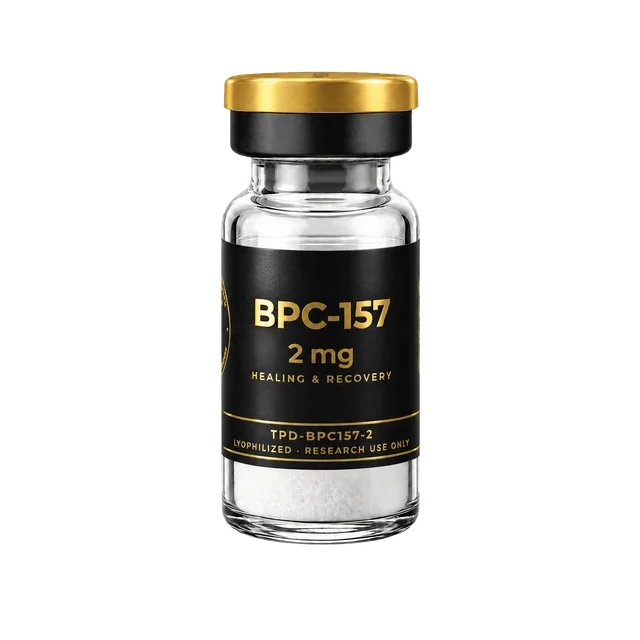
BPC-157
Peptidai · Gijimas ir atsistatymas Gijimas ir atsistatymas
Dydžių: 4
Patikrinta laboratorijoje
= nuo 5.2 €/flakonas
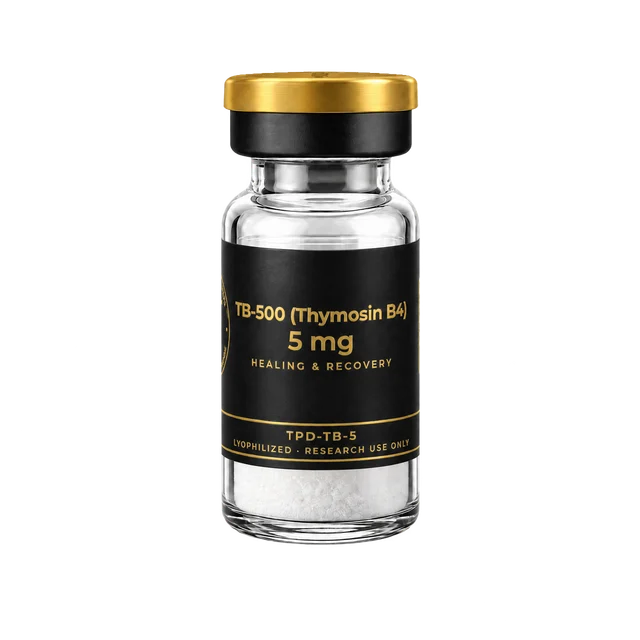
TB-500 (Thymosin B4)
Peptidai · Gijimas ir atsistatymas Gijimas ir atsistatymas
Dydžių: 3
Patikrinta laboratorijoje
= nuo 18.8 €/flakonas
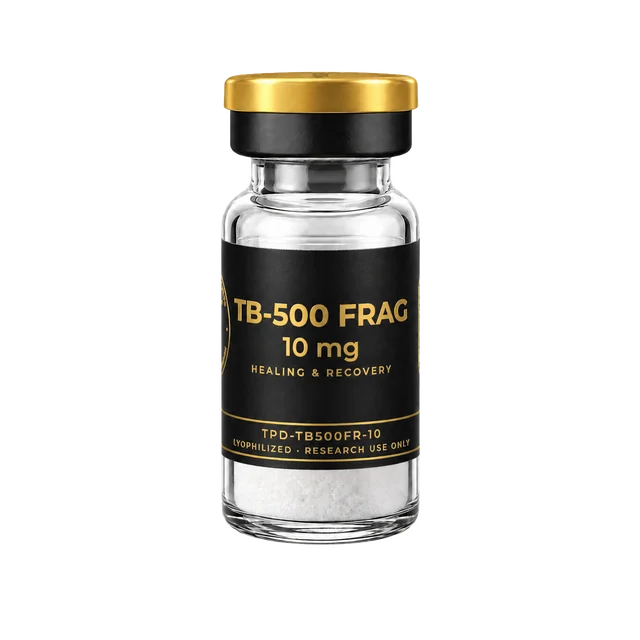
TB-500 FRAG
Peptidai · Gijimas ir atsistatymas Gijimas ir atsistatymas
1 dydis
= 24.8 €/flakonas
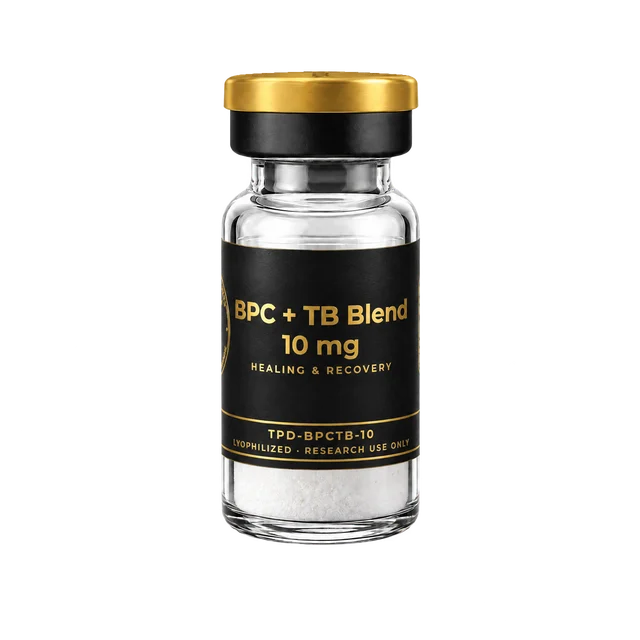
BPC + TB Blend
Peptidai · Gijimas ir atsistatymas Gijimas ir atsistatymas
Dydžių: 3
Patikrinta laboratorijoje
= nuo 24.8 €/flakonas

Glow Blend

