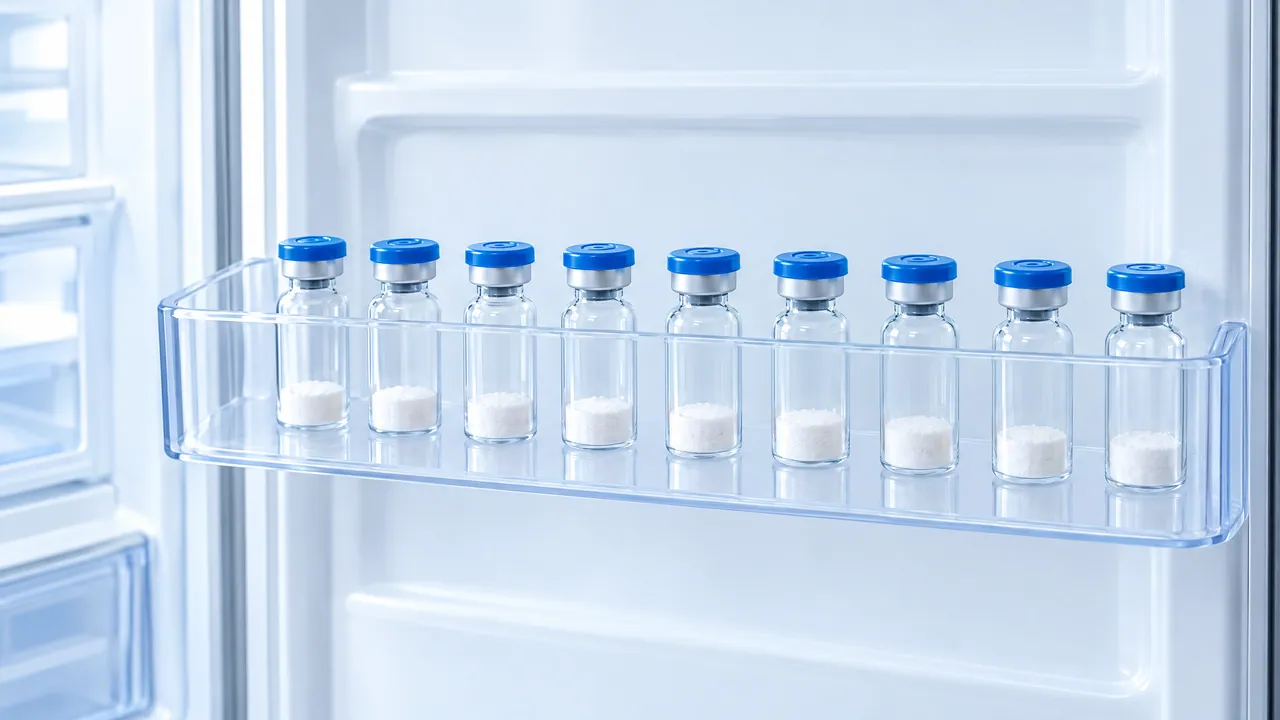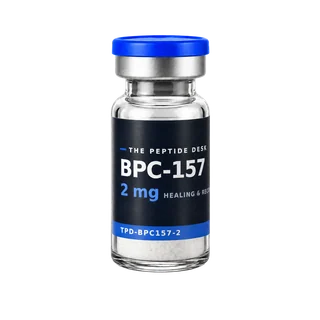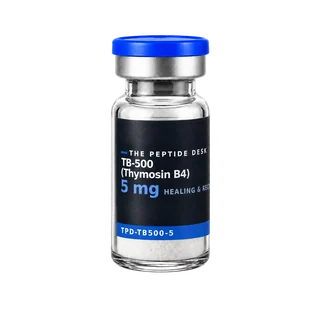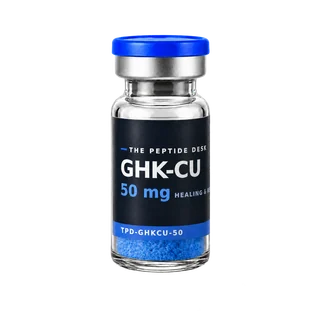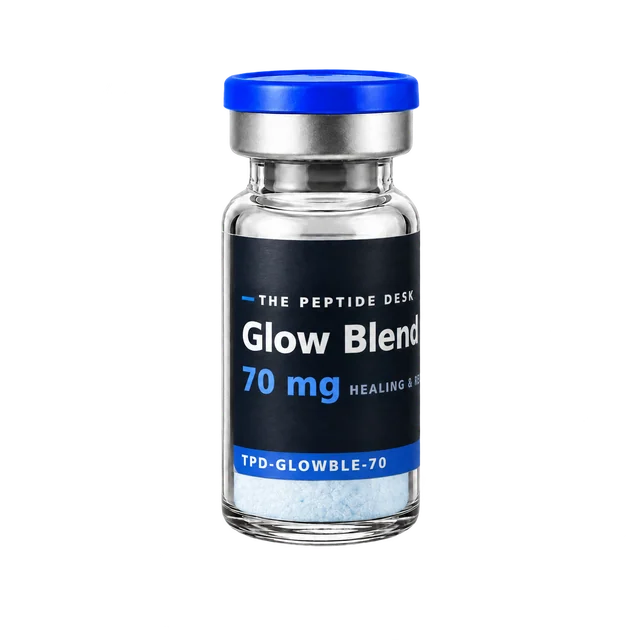
What is the Glow Blend?
The Glow Blend is the full version of the Glow stack: BPC-157 and TB-500 for healing plus GHK-Cu for skin and collagen, in a 70mg vial (50mg GHK-Cu) or a 90mg vial (70mg GHK-Cu, BPC-157 and TB-500 at 10mg each as in the 70mg vial). It is essentially the bigger sister of the Glow Blend (Mini). You also find all three compounds individually in the lexicon.
Comparison
Two, three or four compounds
Which compounds each blend contains, as stated in the TPD lexicon. Tap a card to open its entry.
Simplified: more compounds in one vial does not automatically mean better. There is no study on the blend itself. 11
How it works
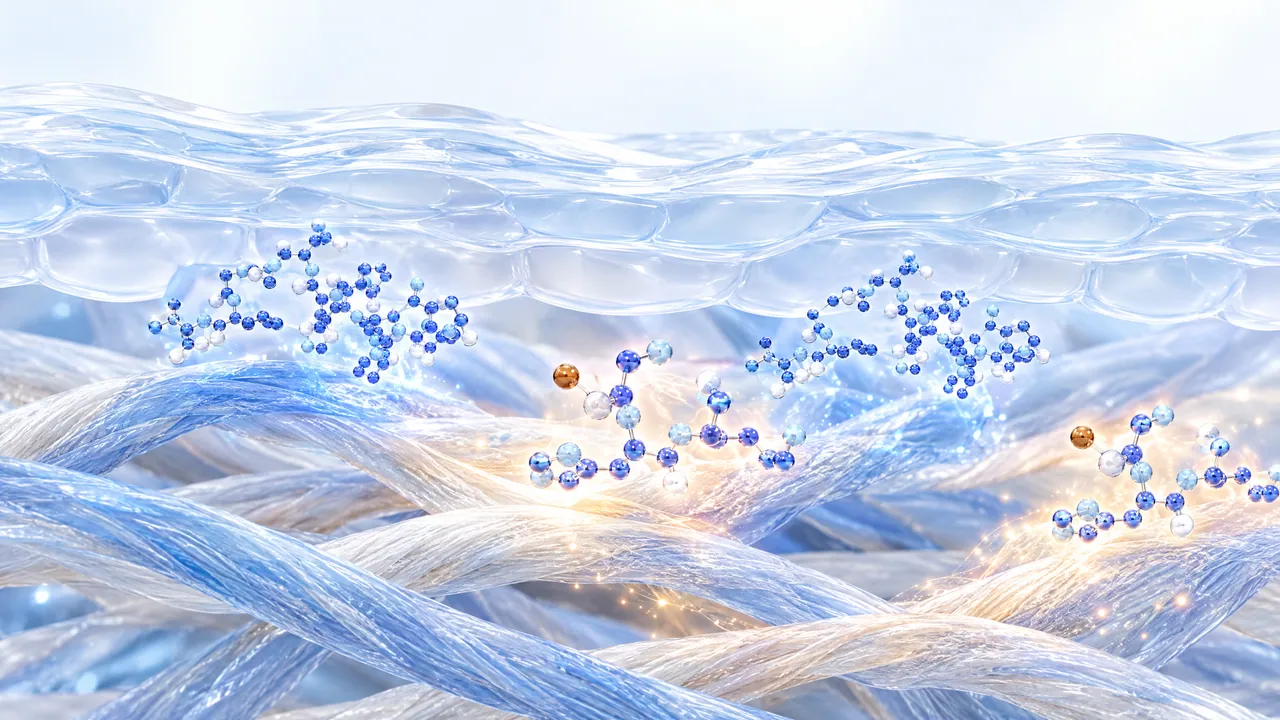
BPC-157 and TB-500 drive repair and cell migration, GHK-Cu promotes collagen and skin regeneration. The combination targets comprehensive tissue recovery plus a better skin appearance.
The individual mechanisms are in the lexicon entries for BPC-157, TB-500 and GHK-Cu.
Where it acts
Components and where they act
Tap a point or a card. Colour = component, data from studies on the single compound.
- Skin and wounds
Gel: diabetic foot ulcers closed by a median 98.5% (vehicle gel 60.8%)7
GHK-Cu - Tendons
Achilles tendon in rats: stronger with TB-500, the combination with BPC-157 added no benefit2
TB-500BPC-157 - Muscle, ligament and bone
Better healing of muscle, ligament and bone injuries in animal models4
BPC-157
What you need
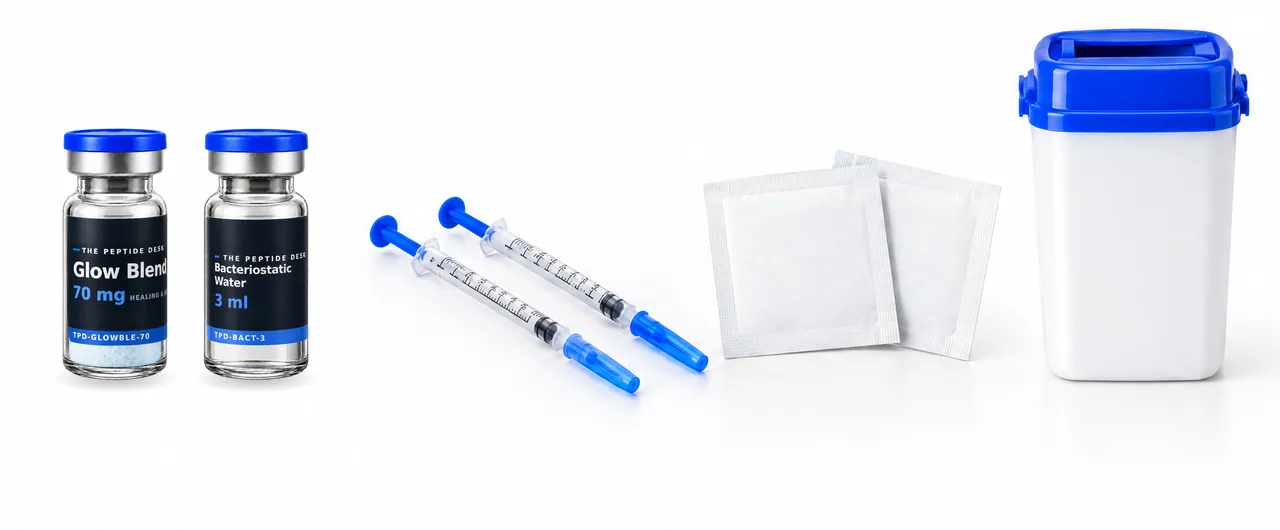
Supplies
2 things, numbered as in the picture
Tick off what you already have. Vial and BAC water are our real shop photos at the same size.
-
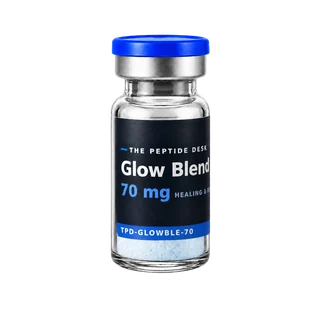
Glow vial
The Glow vial (lyophilized powder, three compounds).
-
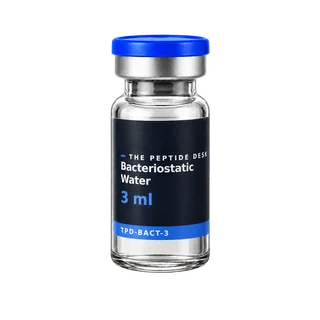
BAC water, syringes and swabs
Bacteriostatic water, U-100 insulin syringes, alcohol swabs.
As an Amazon associate we earn from qualifying purchases. Links open Amazon - no extra cost for you.
Reconstitution
Use the peptide calculator. The values refer to the total amount. A 70mg vial with 3ml water gives roughly 23mg per ml, a 90mg vial 30mg per ml. Just add the water to the vial and let it dissolve.
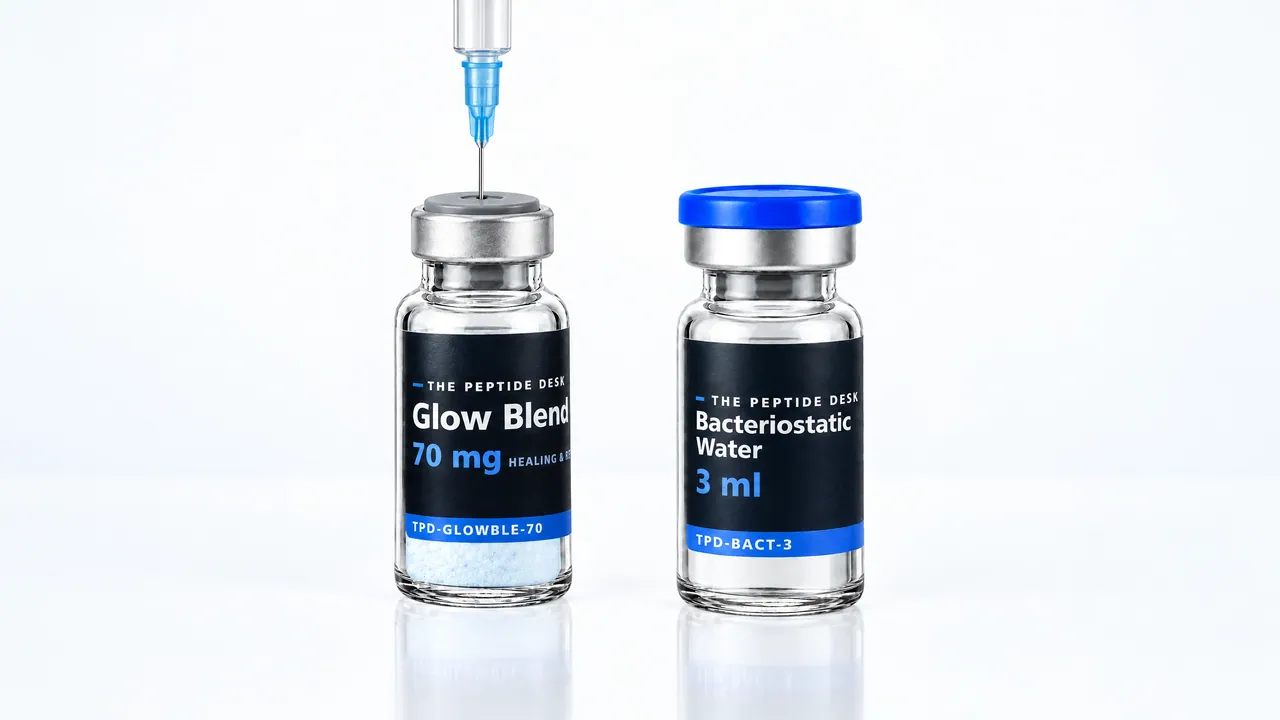
Step by step
Dissolving the powder
Four steps, the same for every vial size.
- 1Wipe the cap
Clean the rubber stopper with an alcohol swab.
- 2Add BAC water
Just add it, it does not matter if it hits the powder directly.
- 3Swirl or shake
Until everything has dissolved, both are fine.
- 4Draw up
With the U-100 insulin syringe.
Dosing
Dosing
Dosing, titration and syringe
Loading the dosing information …
- Getting started and stepping up, drawn as a staircase
- Units on the U-100 syringe for every step
- How long one vial lasts
Injection
The injection is subcutaneous, into the fat layer under the skin. Common spots are the abdomen (keep about two finger-widths clear of the navel), the front and the inner side of the thigh, or the back of the upper arm.
The short version:
Injection
Where and at what angle
Pick a spot or switch the angle. Subcutaneous means: into the fat layer, not the muscle.
Rotate the spot each time, never the same one twice in a row.
Rule of thumb: where there is more fat under the skin, insert straight at 90 degrees. In lean people with little fat, 45 degrees, so the needle stays in the fat layer. Simplified diagram.
-
Clean the spot with an alcohol swab and let it dry
-
Pinch up a small fold of skin
-
Insert the needle: at 90 degrees where there is more fat under the skin, at 45 degrees in lean people with little fat
-
Inject slowly, wait a moment, then withdraw
-
Put the needle straight into the sharps container
Rotate the site each time so the tissue does not get irritated. Never the same spot twice in a row.
What the research shows
The components are individually well described preclinically (thymosin beta-4: Crockford, 2010). For the fixed combination in humans there are no controlled studies, the benefit derives from the complementary mechanisms.
Study results
What the trials measured
Interactive: switch tabs, tap points, show or hide arms. Arms are named relative to each other, no dosing advice.
Wound healing in rats with thymosin beta-45
More skin closure or wound contraction versus the saline control
Thymosin beta-4 was applied to the wound or into the abdominal cavity. TB-500 is derived from it. These values are not shown for TB-500 alone or for the blend.
Wound closure in diabetic foot ulcers7
Median closed wound area, randomised trial with GHK-Cu gel
Only GHK-Cu as a gel on the skin, without BPC-157 and TB-500 and not as an injection.
Where the knowledge on BPC-157 comes from4
Share of the 36 studies in a systematic review (literature up to June 2024)
The only clinical paper in the review was a retrospective analysis of 12 people. The authors found no clinical safety data.
Research status
Where the research stands
There is no study on the blend itself. Shown are registered trials on single components: thymosin beta-4 into a vein and a skin serum with GHK-Cu. The BPC-157 trials in the registry have not started yet or have an unknown status. As of 26 Oct 2026. 10
- Preclinical Animal and cell studies on each component
- Phase 1 3 trials on components, 2 completed
- Phase 2 2 trials on components, 2 completed
- Phase 3 no registered trial
- Approval not yet
Show all 2 phase 2 trials on a timelineHide timeline
NCT05485818 · 62 participants, started Nov 2020, primary endpoint reached Sept 2021.
Registry entry ↗ · Results not yet in PubMed
NCT05984134 · 90 participants, started Jul 2022, primary endpoint reached May 2023.
Registry entry ↗ · Results not yet in PubMed
Bar: start to primary endpoint (planned for running trials). Green = completed, blue = progress until 26 Oct 2026. Phase 1: 3 trials on safety and pharmacokinetics, not shown as bars.
On the skin
Two components have also been studied applied directly. In humans GHK-Cu was used as a gel on foot ulcers in diabetes; the wounds closed better than with a gel without active ingredient (Mulder 1994). Thymosin beta-4, the model for TB-500, sped up wound closure in rats as a solution put on the wound (Malinda 1999). Applying the blend itself to the skin has not been studied.
Side effects
- Generally well tolerated, mainly local reactions at the injection site.
- Solid long-term human data are missing.
Storage
Before mixing the powder is robust, normal room temperature (around 20 to 25 degrees) is fine, ideally kept in the dark. After mixing, keep in the fridge (2 to 8 degrees), do not freeze. It stays good there for at least 4 to 6 months with barely any loss of potency, in practice considerably longer. Swirl or shake to mix, both are fine.
Shelf life
How long it keeps
Robust, no fridge needed. Best kept in the dark.
At least 4 to 6 months with barely any loss of potency.
- Keep it dark
- Dissolved: 2 to 8 degrees
- Note the mixing date on the vial