

Escolha o seu rótulo
visível diretamente no frasco2 relatórios laboratoriais
 PDF
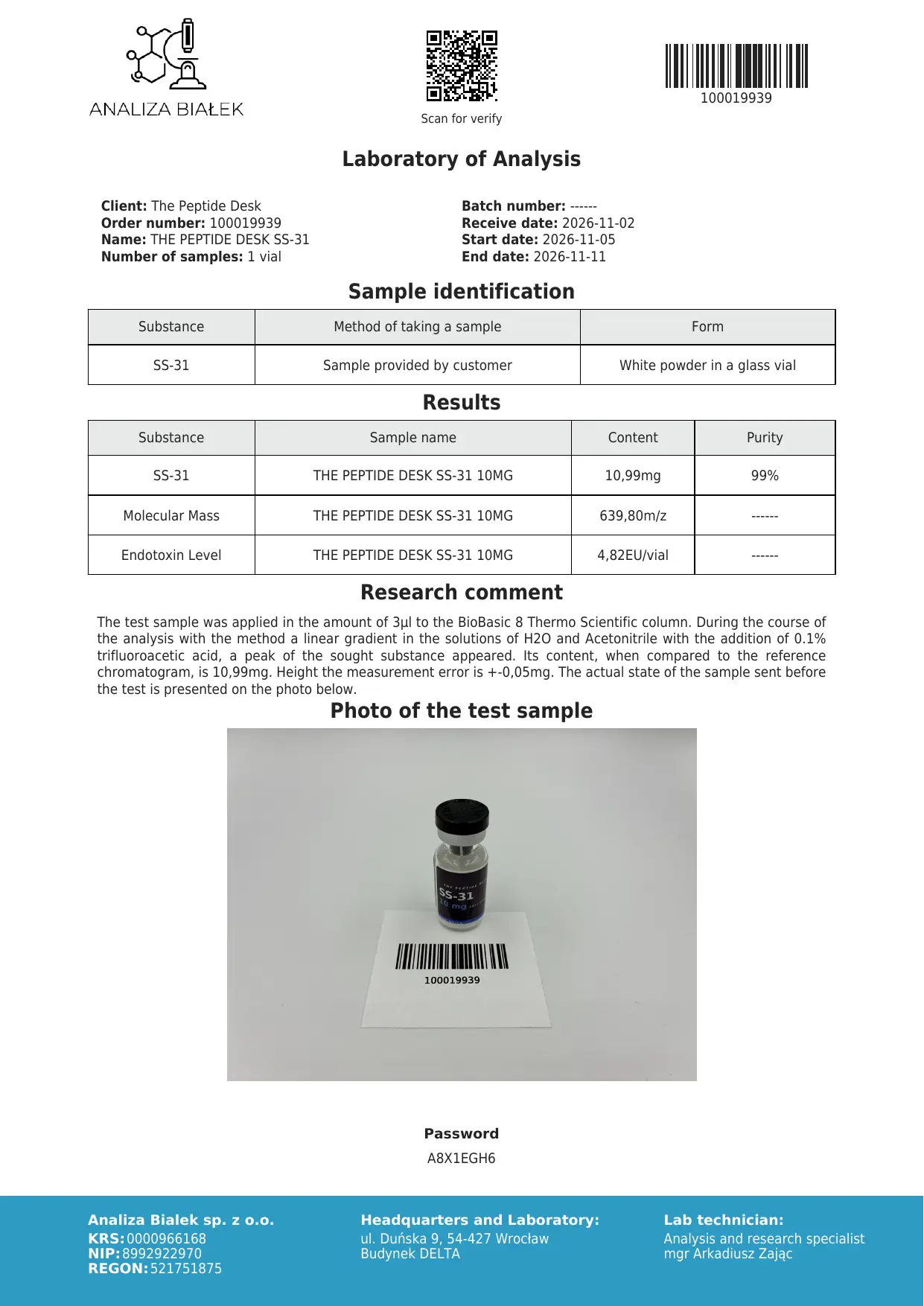
- Testado
- SS-31 10mg
- Laboratório
- Analiza Białek
- Data
- November 2026
- Resultado
- 99% purity (10.99 mg measured)
- Endotoxinas
- 4.82 EU/vial
- N.º da encomenda
- Palavra-passe
 PDF
- Testado
- SS-31 50mg
- Laboratório
- Analiza Białek
- Data
- July 2026
- Resultado
- 99% purity (55.08 mg measured)
- N.º da encomenda
- Palavra-passe
Testado de forma independente, verificável com a palavra-passe diretamente no laboratório.
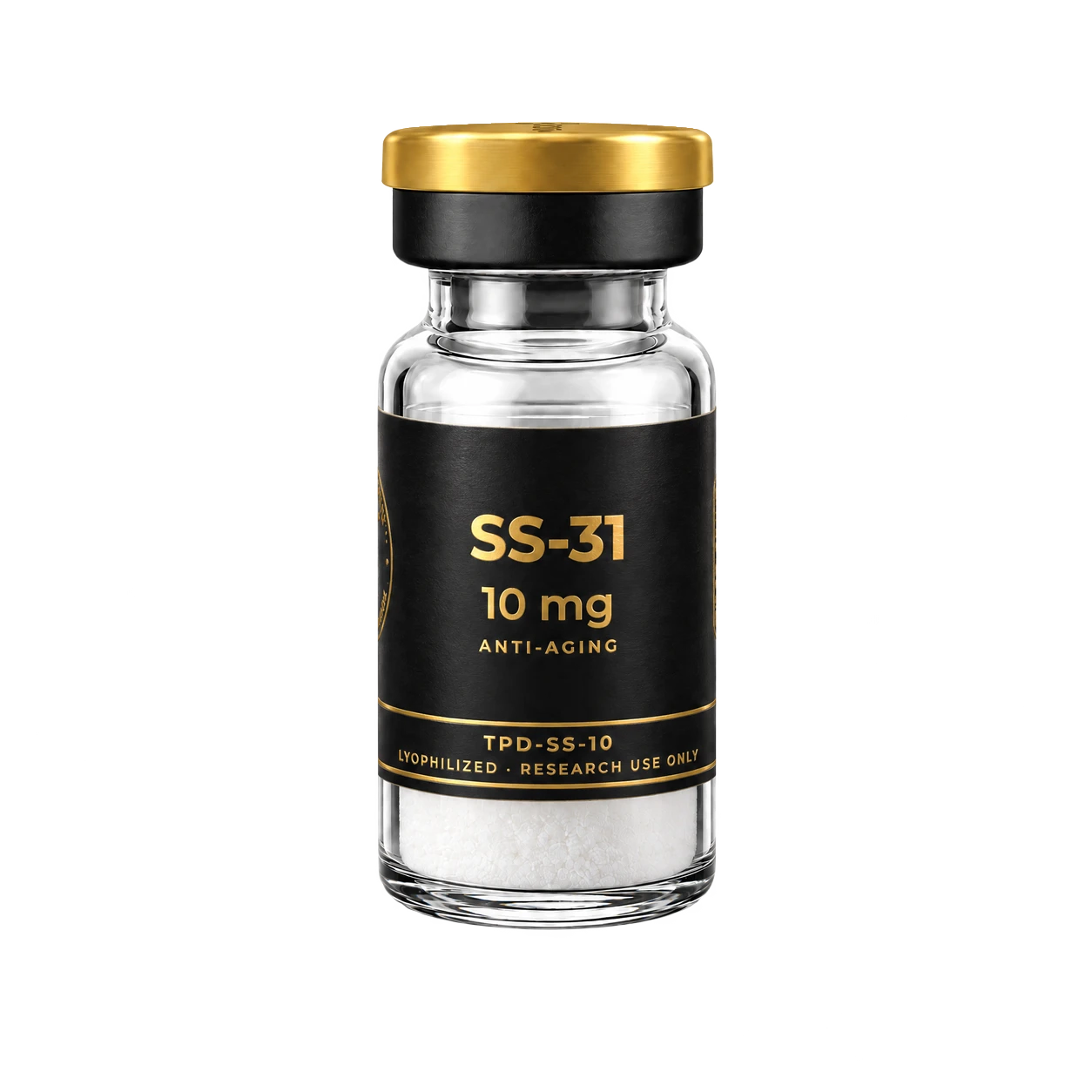
SS-31
Anti-Aging
- Testado em laboratório · 99% de pureza
- Enviado da Alemanha
Encomenda
- DHL com seguimento
- Embalagem discreta
Num relance
SS-31 em números
Os valores-chave da nossa enciclopédia.
Entrada completa da enciclopédia- Class
- Mitochondria-targeted peptide
- Half-life
- short
- Use
- Subcutaneousin mg
- Sizes
- 10 to 50 mg2 sizes in the shop
What studies show
The source in the lexicon- Karaa et al., Neurology, 2018
Conhecimento
Tudo sobre SS-31
Informação detalhada disponível em breve.
Dosagem
A carregar informação de dosagem …
Convém ter
O que precisa para isto
A água bacteriostática é adicionada automaticamente ao carrinho. Seringas e toalhetes com um clique.

Seringas de insulina
10 un. · 5.50 €

Toalhetes com álcool
50 un. · 10 €
Quanta água?
Unidades na seringa para o tamanho do seu frasco.
Abrir calculadora →Is SS-31 approved?
In the USA yes, but narrowly: since September 2025 there is an accelerated approval for Barth syndrome in people weighing at least 30 kg. It rests on more strength in the knee extensor muscle, full approval depends on a confirmatory trial that is currently recruiting according to the registry. Elamipretide is not listed in the medicines data of the European Medicines Agency (as of 25 October 2026).
How does SS-31 work?
SS-31 binds cardiolipin, a lipid of the inner mitochondrial membrane that shapes the cristae. In cell assays the peptide family SS-31 belongs to concentrated about 1,000-fold in this membrane. In animal models SS-31 protected the cristae during oxygen shortage, curbed a harmful reaction of cytochrome c and the cell rebuilt ATP faster afterwards.
What did research in mitochondrial myopathy show?
In the first trial (5 days of infusion, 36 participants) people at the highest study dose walked 64.5 m further on average in the 6-minute walk test, 20.4 m on placebo. The crossover trial with 30 people saw a 19.8 m difference, not statistically significant, but less fatigue. The phase 3 trial with 218 people over 24 weeks found no difference: minus 3.2 m versus placebo.
What came out in Barth syndrome?
In the crossover trial with 12 people (12 weeks each on the compound and on placebo) neither primary endpoint was met. In the open-label extension without placebo walking distance rose: by 95.9 m after 36 weeks and by 96.1 m in total after 168 weeks in the 8 remaining people. Fatigue was below baseline at every time point.
And for heart and eye?
In heart failure a single high infusion reduced the heart chamber volumes (minus 18 ml end-diastolic versus placebo), after 4 weeks of daily dosing there was no difference in 71 people. In heart attack the infarct did not get smaller. In dry macular degeneration the phase 2 trial missed its primary endpoints, but the photoreceptor layer was lost 43 to 47% more slowly. A phase 3 trial on this runs until 2027.
Which side effects were seen?
Most often injection-site reactions such as redness, pain, itching and induration, mostly mild. In the myopathy crossover trial 80% had such reactions. In trials of 30 days or longer eosinophils in the blood often rose and fell back after 6 to 12 months or after stopping. In the eye trial 86% on the compound and 71% on placebo reported some adverse event.
How long does SS-31 stay in the body?
Only briefly. Injected under the skin the level peaks after 0.5 to 1 hour, about 92% reaches the blood. SS-31 is broken down step by step into inactive fragments and almost completely excreted in the urine within 48 hours. After a single infusion it was no longer detectable 24 hours later. That is why the trials gave it daily.
Relacionados
Produtos relacionados
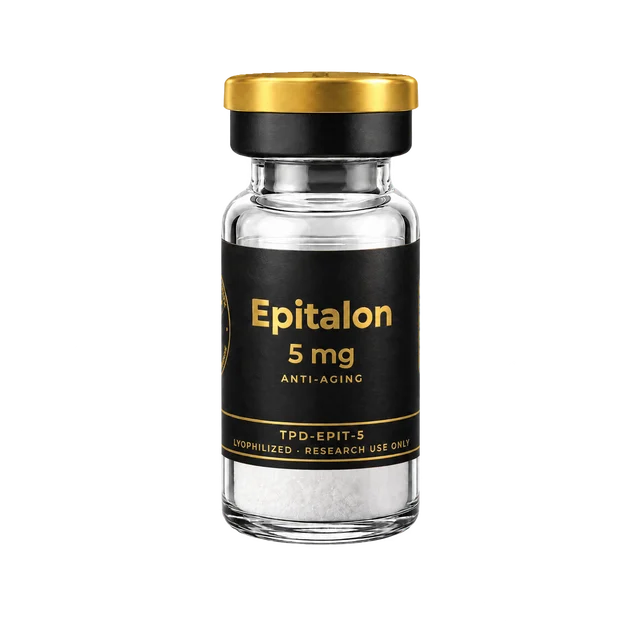
Epitalon
Péptidos · Antienvelhecimento Antienvelhecimento
5 tamanhos
Testado em laboratório
= a partir de 11.6 €/frasco

Epitalon Nasal
Péptidos · Antienvelhecimento Antienvelhecimento
1 tamanho
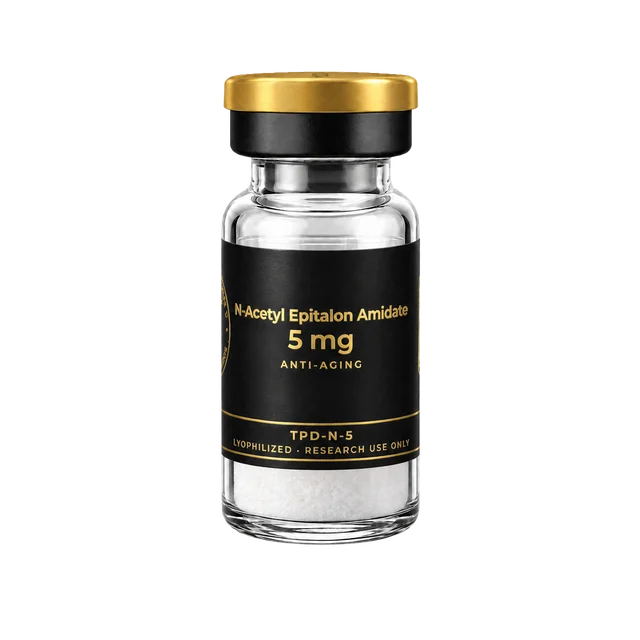
N-Acetyl Epitalon Amidate
Péptidos · Antienvelhecimento Antienvelhecimento
2 tamanhos
= a partir de 13.2 €/frasco
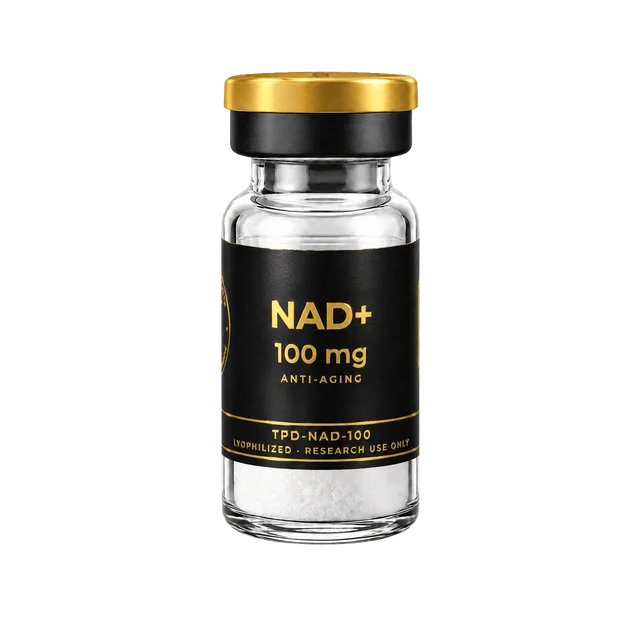
NAD+
Péptidos · Antienvelhecimento Antienvelhecimento
4 tamanhos
Testado em laboratório
= a partir de 10 €/frasco

SS-31

