This information is for research and educational purposes only. No medical recommendations. Products are not approved for human use. For health questions, consult a doctor.

Lexicon

SS-31 (Elamipretide)

A mitochondria-targeted peptide that binds cardiolipin and is meant to support the cell's energy production, with real clinical studies.

2 min read 19 sources

Still from the explainer video about this entry
Approved · in the USA since 2025, Barth syndrome onlyLab tested in the shop

No time to read it all? The video sums up the whole entry in about a minute, from how it works to the studies and storage.

Summary

At a glance

Sources checked on 25 Oct 2026

Tetrapeptide
4 amino acids

small and cell-permeable, associates with cardiolipin1

Enrichment in the inner membrane
~1,000 -fold

Cell assays with the peptide family SS-31 belongs to12

Walk test in phase 3
-3.2 m

Myopathy, 24 weeks: difference to placebo, primary endpoint missed3

Walking distance in Barth syndrome
+96.1 m

after 168 weeks of open-label extension, 8 people, no placebo5

Phase 3 in the registry
4 trials

including phase 2/3, 3 of them finished, as of 25 Oct 202618

  • SS-31 (elamipretide) is a tetrapeptide: four amino acids that concentrate in the inner mitochondrial membrane and bind cardiolipin there.11213
  • In cells and animal models it protected the mitochondrial cristae and helped the cell rebuild ATP faster after oxygen shortage.1314
  • In humans the results are mixed: the phase 3 trial in mitochondrial myopathy missed its primary endpoints, as did the trials in heart failure and dry macular degeneration.386
  • In the rare Barth syndrome, walking distance and muscle strength rose during the open-label long-term phase. A US accelerated approval since September 2025 rests on this.516
  • Injection-site reactions were the most common effect. There is no approval in the EU. Everything here is the state of research, not a recommendation.1617
Profile

Updated May 2026

Class
Mitochondria-targeted peptide
Use
Subcutaneous

in mg

Half-life
short
Status
Clinical studies

mitochondrial disease

Sizes
10 to 100 mg

3 sizes in the shop

Contents 15 sections
  1. At a glance
  2. What is SS-31?
  3. How it works
  4. What you need
  5. Reconstitution
  6. Dosing
  7. Injection
  8. What the research shows
  9. Research status
  10. Side effects
  11. Storage
  12. Related compounds
  13. FAQ
  14. Glossary
  15. Sources

What is SS-31?

SS-31, also elamipretide, is a small peptide that travels specifically into the mitochondria and binds cardiolipin there, an important building block of the inner mitochondrial membrane. The idea: stabilize the cell's energy production, especially when the mitochondria are weakened.

Comparison

Compared with related compounds

Where each compound acts, as stated in the TPD lexicon. Tap a card to open its entry.

How it works

By binding cardiolipin, SS-31 is meant to stabilize the inner membrane, make the electron transport chain more efficient and produce fewer harmful oxygen radicals. In models this improved mitochondrial function in stressed cells.

Where it acts

Effects seen in studies

Tap a point or a card. Grey = effect seen in trials.

  1. Eye (retina)

    Photoreceptor layer was lost more slowly, primary endpoints missed6

    Observed in trials
  2. Heart

    Smaller chamber volumes after a single high infusion7

    Observed in trials
  3. Kidney

    Less oxygen shortage after a stenting procedure (pilot trial)10

    Observed in trials
  4. Skeletal muscle

    More mitochondrial energy capacity right after an infusion11

    Observed in trials
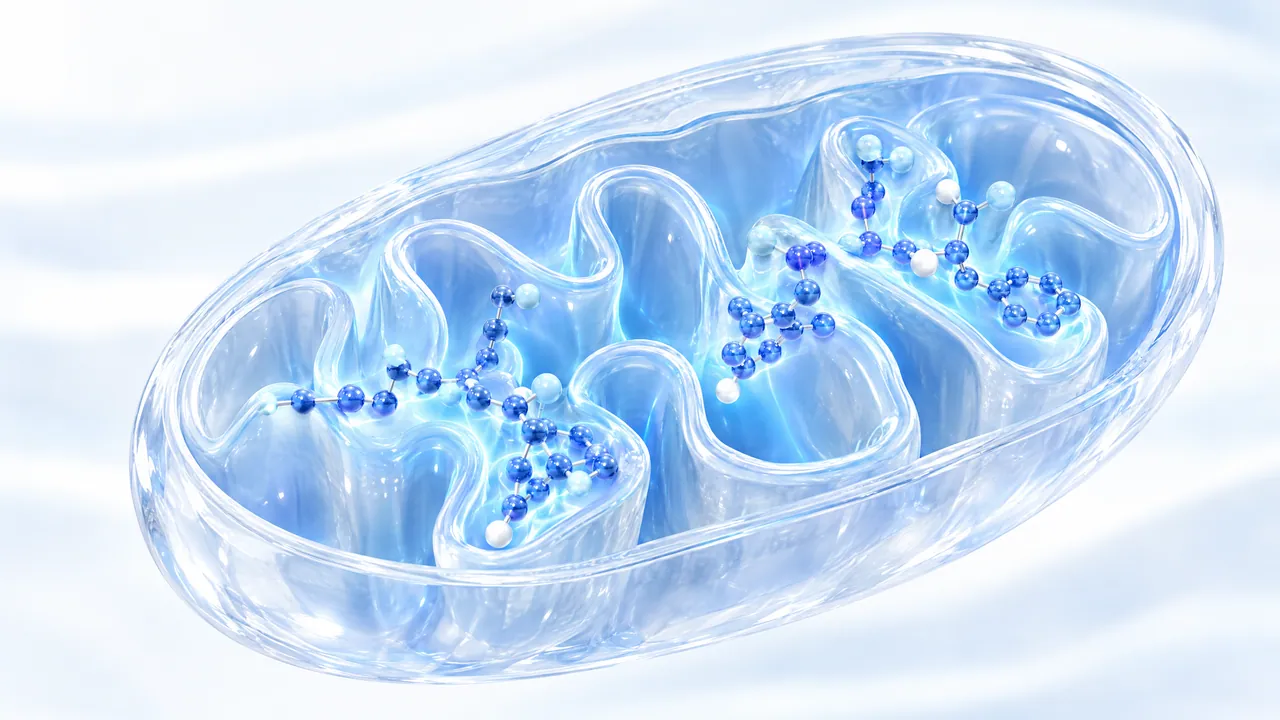
Cut-open glass mitochondrion with a folded inner membrane that blue 3D molecules rest on
Mitochondrion in cross-section: SS-31 gathers at the folded inner membrane. Symbolic image.

What you need

Supplies

2 things, numbered as in the picture

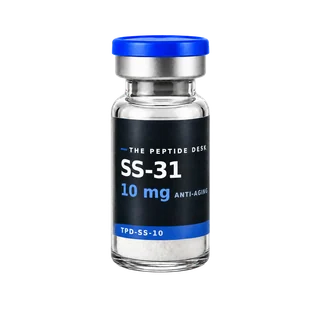
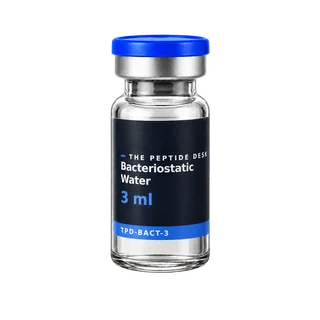
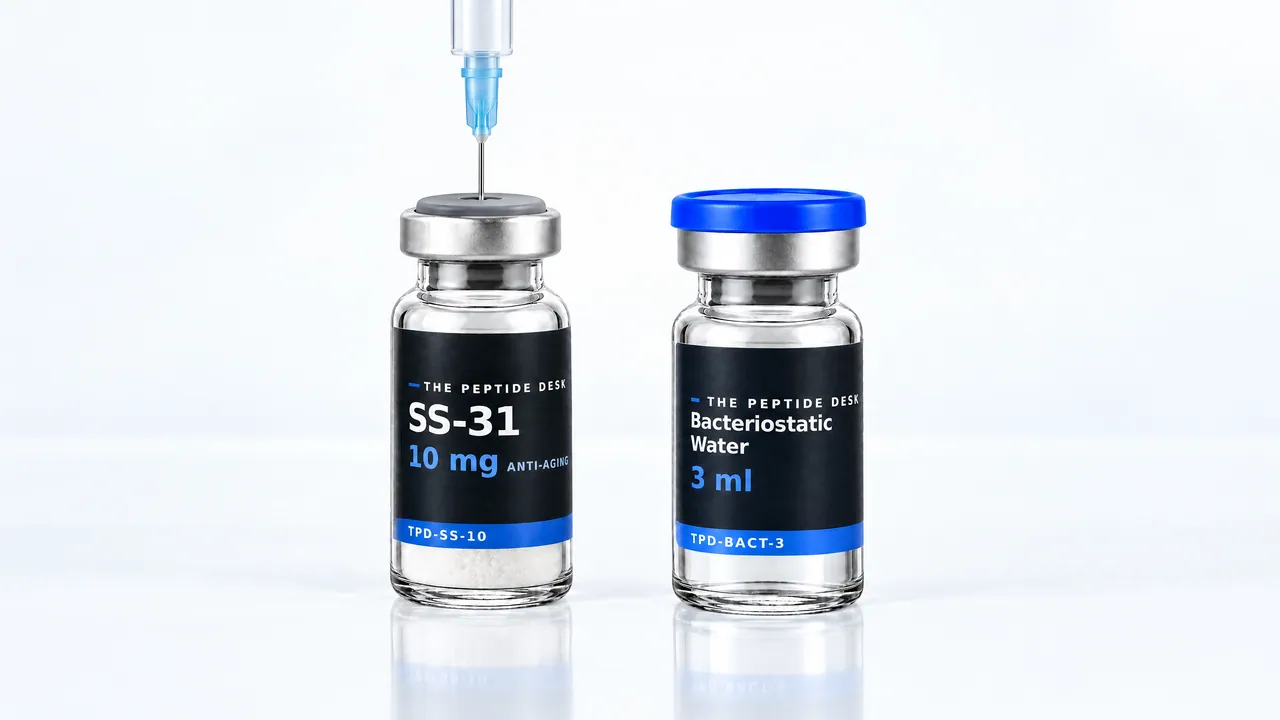
Tick off what you already have. Vial and BAC water are our real shop photos at the same size.
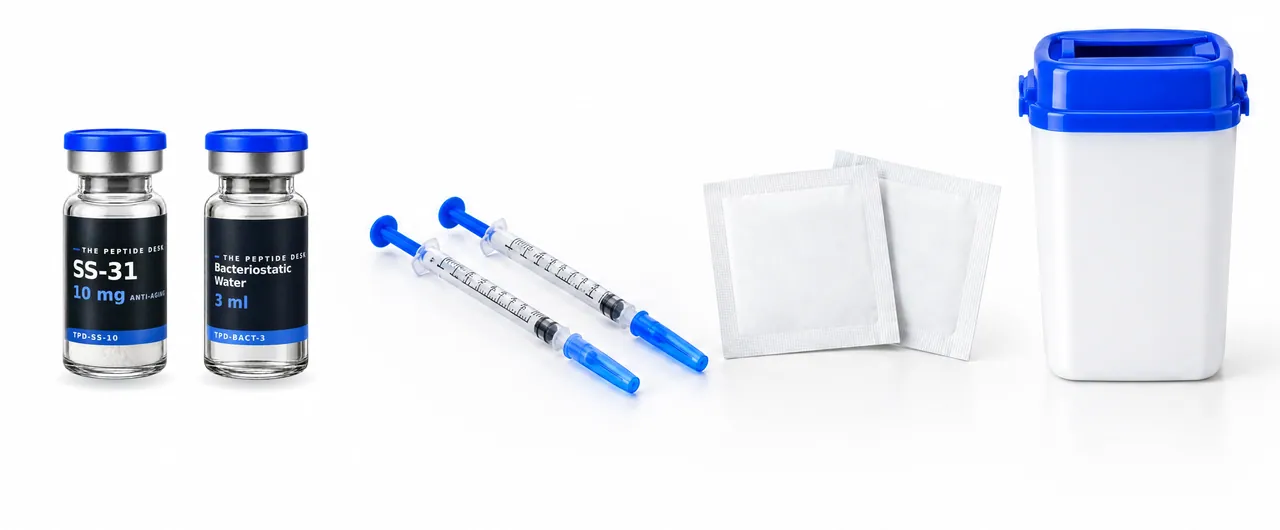
SS-31 vial and bacteriostatic water at the same size with the black TPD label, next to two U-100 insulin syringes, two alcohol swabs and a sharps container with a blue lid
  1. SS-31 vial

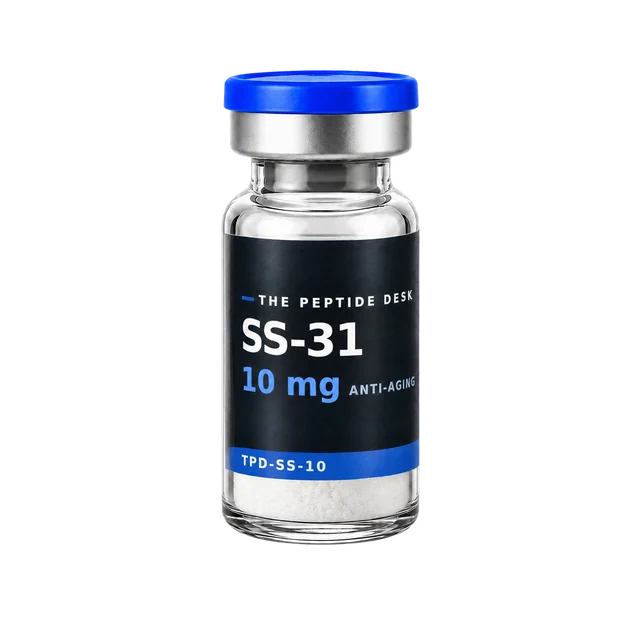
    The SS-31 vial (lyophilized powder).

    In the shop
  2. Water and supplies

    Bacteriostatic water, U-100 insulin syringes, alcohol swabs.

As an Amazon associate we earn from qualifying purchases. Links open Amazon - no extra cost for you.

Reconstitution

Use the peptide calculator. A 10mg vial with 2ml water gives 5mg per ml, 5mg is then 20 units on the U-100 syringe. Just add the water to the vial and let it dissolve.
Step by step

Dissolving the powder

Four steps, the same for every vial size.

  1. 1Wipe the cap

    Clean the rubber stopper with an alcohol swab.

  2. 2Add BAC water

    Just add it, it does not matter if it hits the powder directly.

  3. 3Swirl or shake

    Until everything has dissolved, both are fine.

  4. 4Draw up

    With the U-100 insulin syringe.

Less water higher concentration fewer units on the syringe Example: 10 mg + 2 ml = 5 mg/ml

Dosing

Dosing

Dosing, titration and syringe

Loading the dosing information …

  • Getting started and stepping up, drawn as a staircase
  • Units on the U-100 syringe for every step
  • How long one vial lasts

Injection

The injection is subcutaneous, into the fat layer under the skin. Common spots are the abdomen (keep about two finger-widths clear of the navel), the front and the inner side of the thigh, or the back of the upper arm.

The short version:

Injection

Where and at what angle

Pick a spot or switch the angle. Subcutaneous means: into the fat layer, not the muscle.

Rotate the spot each time, never the same one twice in a row.

90°More fat under the skin

Rule of thumb: where there is more fat under the skin, insert straight at 90 degrees. In lean people with little fat, 45 degrees, so the needle stays in the fat layer. Simplified diagram.

  1. Clean the spot with an alcohol swab and let it dry

  2. Pinch up a small fold of skin

  3. Insert the needle: at 90 degrees where there is more fat under the skin, at 45 degrees in lean people with little fat

  4. Inject slowly, wait a moment, then withdraw

  5. Put the needle straight into the sharps container

Rotate the site each time so the tissue does not get irritated. Never the same spot twice in a row.

What the research shows

A randomized dose-escalation study (Karaa, 2018) tested elamipretide in patients with primary mitochondrial myopathy and saw a dose-dependent trend toward better walking distance. Later larger studies were mixed. So SS-31 is seriously studied clinically but no guaranteed sure thing.

Study results

What the trials measured

Interactive: switch tabs, tap points, show or hide arms. Arms are named relative to each other, no dosing advice.

Low-light visual acuity at 48 weeks6

Share with a gain of 10 or more letters, phase 2 trial with 176 participants

ReCLAIM-26 Dry macular degeneration with geographic atrophy
Placebo 2%
Elamipretide (SS-31) 15%

Exactly 14.6% versus 2.1%, the bars show rounded values. The difference is nominal: both primary endpoints of the trial (mean visual acuity and size of the atrophy) were not met.

Slower loss of the photoreceptor layer6

Less progression than on placebo at 48 weeks, measured by OCT at the ellipsoid zone

ReCLAIM-26 Slowing compared with placebo
Complete loss of the layer 43%
Partial loss of the layer 47%

Relative slowing compared with placebo from prespecified additional endpoints, nominal values. This endpoint is the primary endpoint of the running phase 3 trial ReNEW.

Oxygen shortage in the kidney after stenting10

Change in the hypoxic fraction 24 hours after the procedure, 14 participants

Renal artery stenosis10 Infusion before and during the angioplasty
Placebo +47%
Elamipretide (SS-31) -6%

Small pilot trial with 6 people on the compound and 8 on placebo, measured by MRI. After 3 months both groups were back at baseline.
Petri dish with a glowing mitochondrion model under a microscope
Symbolic image.

Research status

Where the research stands

From experiments on isolated mitochondria to approval in the USA: registered trials with status, participants and results. As of 25 Oct 2026. 18

  1. Preclinical Isolated mitochondria and rat kidneys
  2. Phase 1 8 trials, 8 completed
  3. Phase 2 15 trials, 12 completed, 2 stopped early
  4. Phase 3 4 trials, 2 completed, 1 stopped early
  5. Approval in the USA since 2025, Barth syndrome only
645 participants in phase 3 USA: accelerated approval since September 2025, for Barth syndrome only. EU: no approval. ChEMBL still lists phase 3 as the highest phase.16
Show all 19 phase 2 and 3 trials on a timelineHide timeline 14 completed 2 running 3 stopped early 9 with results
Phase 2
Phase 3

Bar: start to primary endpoint (planned for running trials). Green = completed, blue = progress until 25 Oct 2026, grey = stopped early. Phase 1: 8 trials on safety and pharmacokinetics, not shown as bars.

Side effects

  • Injection-site reactions (redness, swelling) are the most common in the studies.
  • Headache, gastrointestinal complaints.

Tolerability

Injection site in the Barth syndrome trial

Each field is 100 dots for all 12 participants: how many had the event. Every person had 12 weeks on the compound and 12 weeks on placebo.

67 of 100 Placebo
100 of 100 Elamipretide (SS-31)
Event PlaceboElamipretide (SS-31)
Any injection-site reaction16 67%100%
Redness16 25%100%
Pain16 42%75%
Induration16 17%67%
Itching16 17%67%
Bruising16 0%25%

Rounded values from the US prescribing information (crossover trial, every person received both). In trials of 30 days or longer eosinophils in the blood often rose, most around day 90, then back to baseline.16

Storage

Before mixing the powder is robust, normal room temperature (around 20 to 25 degrees) is fine, ideally kept in the dark. After mixing, keep in the fridge (2 to 8 degrees), do not freeze. It stays good there for at least 4 to 6 months with barely any loss of potency, in practice considerably longer. Swirl or shake to mix, both are fine.

Shelf life

How long it keeps

Undissolved (powder) Room temperature, around 20 to 25 degrees, dark

Robust, no fridge needed. Keeps for several months without trouble.

Dissolved (mixed) Fridge, 2 to 8 degrees, do not freeze

At least 4 to 6 months with barely any loss of potency. The bacteriostatic water brings a preservative.

  • Keep it dark
  • Dissolved: 2 to 8 degrees
  • Note the mixing date on the vial
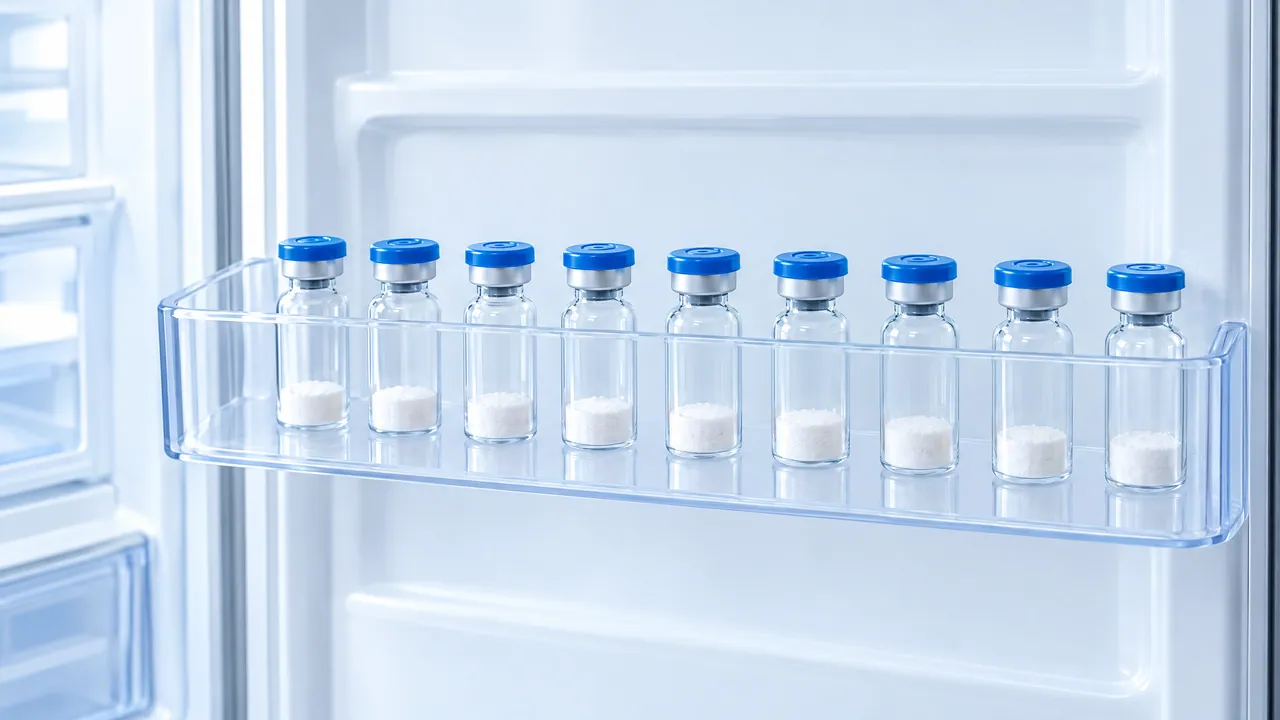
Nine vials with white powder and blue caps in the door shelf of a bright fridge
Powder dark at room temperature, once dissolved into the fridge (2 to 8 degrees), stable there for at least 4 to 6 months. Symbolic image.

Related

Related compounds

Same targets or a different path: all in the TPD lexicon.

FAQ

Common questions about SS-31 (Elamipretide)

Short answers, each backed by the sources below.

Is SS-31 approved?

In the USA yes, but narrowly: since September 2025 there is an accelerated approval for Barth syndrome in people weighing at least 30 kg. It rests on more strength in the knee extensor muscle, full approval depends on a confirmatory trial that is currently recruiting according to the registry. Elamipretide is not listed in the medicines data of the European Medicines Agency (as of 25 October 2026).16151817

How does SS-31 work?

SS-31 binds cardiolipin, a lipid of the inner mitochondrial membrane that shapes the cristae. In cell assays the peptide family SS-31 belongs to concentrated about 1,000-fold in this membrane. In animal models SS-31 protected the cristae during oxygen shortage, curbed a harmful reaction of cytochrome c and the cell rebuilt ATP faster afterwards.121314

What did research in mitochondrial myopathy show?

In the first trial (5 days of infusion, 36 participants) people at the highest study dose walked 64.5 m further on average in the 6-minute walk test, 20.4 m on placebo. The crossover trial with 30 people saw a 19.8 m difference, not statistically significant, but less fatigue. The phase 3 trial with 218 people over 24 weeks found no difference: minus 3.2 m versus placebo.123

What came out in Barth syndrome?

In the crossover trial with 12 people (12 weeks each on the compound and on placebo) neither primary endpoint was met. In the open-label extension without placebo walking distance rose: by 95.9 m after 36 weeks and by 96.1 m in total after 168 weeks in the 8 remaining people. Fatigue was below baseline at every time point.45

And for heart and eye?

In heart failure a single high infusion reduced the heart chamber volumes (minus 18 ml end-diastolic versus placebo), after 4 weeks of daily dosing there was no difference in 71 people. In heart attack the infarct did not get smaller. In dry macular degeneration the phase 2 trial missed its primary endpoints, but the photoreceptor layer was lost 43 to 47% more slowly. A phase 3 trial on this runs until 2027.789618

Which side effects were seen?

Most often injection-site reactions such as redness, pain, itching and induration, mostly mild. In the myopathy crossover trial 80% had such reactions. In trials of 30 days or longer eosinophils in the blood often rose and fell back after 6 to 12 months or after stopping. In the eye trial 86% on the compound and 71% on placebo reported some adverse event.1626

How long does SS-31 stay in the body?

Only briefly. Injected under the skin the level peaks after 0.5 to 1 hour, about 92% reaches the blood. SS-31 is broken down step by step into inactive fragments and almost completely excreted in the urine within 48 hours. After a single infusion it was no longer detectable 24 hours later. That is why the trials gave it daily.167

Glossary

Terms explained briefly

Dotted words in the text open these explanations directly.

6-minute walk test
How far someone walks in six minutes. A simple measure of physical capacity in trials.
Accelerated approval
A US approval based on an intermediate endpoint. The real benefit must then be shown in a confirmatory trial.
ATP
Adenosine triphosphate: the cell's energy carrier, made mainly in the mitochondria.
Barth syndrome
A very rare inherited disease, almost only in boys. A gene defect disturbs how cardiolipin is built, heart and muscles are affected.
Cardiolipin
A special lipid found almost only in the inner mitochondrial membrane. It shapes the cristae and holds the respiratory chain together.
Cristae
Folds of the inner mitochondrial membrane. The more intact they are, the better the cell can produce energy.
Electron transport chain
A series of protein complexes in the inner membrane. It passes electrons along and so drives ATP production.
Eosinophils
A group of white blood cells. Their share rises for example with allergies or reactions to foreign substances.
Inner mitochondrial membrane
The heavily folded inner envelope of the mitochondria. The respiratory chain sits in its folds (cristae).
Lyophilisate
Freeze-dried powder. Without water a peptide keeps much longer.
Macular degeneration
Age-related disease of the centre of the retina. In the dry form visual cells are slowly lost (geographic atrophy).
Mitochondria
The power plants of the cell. They produce most of the ATP, the energy every cell needs.
Mitochondrial myopathy
An inherited muscle disease in which the mitochondria deliver too little energy. Weakness and quick fatigue are typical.
Oxygen radicals
Reactive oxygen compounds that arise mainly in stressed mitochondria and can damage membranes.
Placebo
Dummy preparation without active substance. Comparing against it shows what is due to the substance itself.
Subcutaneous
Into the fat layer just under the skin.
Tetrapeptide
A peptide made of exactly four amino acids. SS-31 is small enough to enter cells easily.
Trial phases
Phase 1 tests tolerability in a few people, phase 2 looks for the dose and first effects, phase 3 confirms benefit and safety in many.

Evidence

Sources

Show all 19 sourcesHide sources 15 Studies1 Trial registry3 Database checked 25 Oct 2026

Studies

  1. Dose-escalation trial MMPOWER in mitochondrial myopathy

    Karaa et al., Neurology, 2018

    Checked 25 Oct 2026 via doi.org, Crossref, PubMed
  2. Crossover trial MMPOWER-2 in mitochondrial myopathy

    Karaa et al., Journal of Cachexia, Sarcopenia and Muscle, 2020

    Checked 25 Oct 2026 via doi.org, Crossref, PubMed
  3. Phase 3 trial MMPOWER-3 in mitochondrial myopathy

    Karaa et al., Neurology, 2023

    Checked 25 Oct 2026 via doi.org, Crossref, PubMed
  4. Phase 2/3 trial TAZPOWER in Barth syndrome

    Thompson et al., Genetics in Medicine, 2021

    Checked 25 Oct 2026 via doi.org, Crossref, PubMed
  5. Long-term data over 168 weeks in Barth syndrome

    Thompson et al., Genetics in Medicine, 2024

    Checked 25 Oct 2026 via doi.org, Crossref, PubMed
  6. Phase 2 trial ReCLAIM-2 in dry macular degeneration

    Ehlers et al., Ophthalmology Science, 2025

    Checked 25 Oct 2026 via doi.org, Crossref, PubMed
  7. Single infusion in heart failure

    Daubert et al., Circulation: Heart Failure, 2017

    Checked 25 Oct 2026 via doi.org, Crossref, PubMed
  8. Phase 2 trial PROGRESS-HF in heart failure

    Butler et al., Journal of Cardiac Failure, 2020

    Checked 25 Oct 2026 via doi.org, Crossref, PubMed
  9. Phase 2a trial EMBRACE STEMI in heart attack

    Gibson et al., European Heart Journal, 2016

    Checked 25 Oct 2026 via doi.org, Crossref, PubMed
  10. Pilot trial in renal artery stenosis

    Saad et al., Circulation: Cardiovascular Interventions, 2017

    Checked 25 Oct 2026 via doi.org, Crossref, PubMed
  11. Muscle energetics in older adults after one infusion

    Roshanravan et al., PLOS ONE, 2021

    Checked 25 Oct 2026 via doi.org, Crossref, PubMed
  12. First paper on the mitochondria-targeted SS peptides

    Zhao et al., Journal of Biological Chemistry, 2004

    Checked 25 Oct 2026 via doi.org, Crossref, PubMed
  13. Binding to cardiolipin and protection of the cristae

    Birk et al., Journal of the American Society of Nephrology, 2013

    Checked 25 Oct 2026 via doi.org, Crossref, PubMed
  14. Review of the mechanism at cardiolipin

    Szeto, British Journal of Pharmacology, 2014

    Checked 25 Oct 2026 via doi.org, Crossref, PubMed
  15. Review of the first approval

    Shirley, Drugs, 2026

    Checked 25 Oct 2026 via doi.org, Crossref, PubMed

Trial registry

  1. All trials on ClinicalTrials.gov

    ClinicalTrials.gov, U.S. National Library of Medicine

    Checked 25 Oct 2026 via ClinicalTrials.gov API v2

Database

  1. US approval and prescribing information (Drugs@FDA)

    U.S. Food and Drug Administration, Drugs@FDA (NDA 215244)

    Checked 25 Oct 2026 via openFDA
  2. Medicines data of the European Medicines Agency (no entry)

    European Medicines Agency, Medicines data

    Checked 25 Oct 2026 via EMA Medicines JSON
  3. Compound entry in ChEMBL

    ChEMBL, EMBL-EBI (CHEMBL3833370)

    Checked 25 Oct 2026 via ChEMBL

In the shop

SS-31 (Elamipretide) in the catalog

Sizes, prices and shipping times are on the product page.

To the product