Description
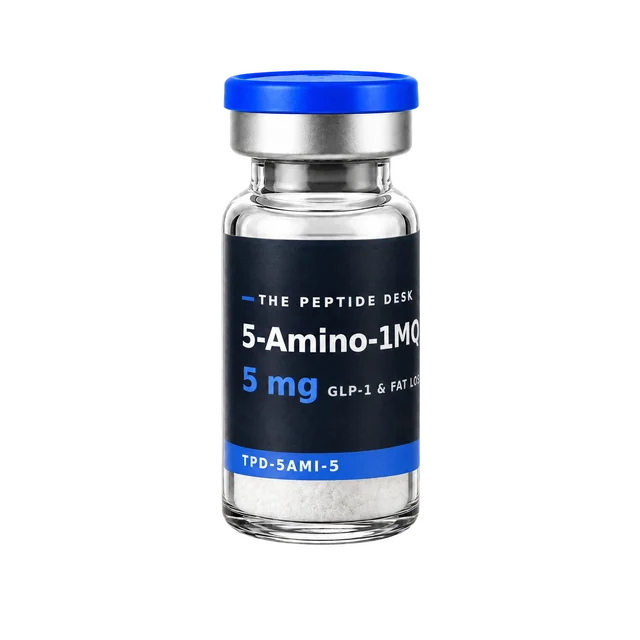
5-Amino + NAD+ (Oral) is a tablet blend of two components that both act on NAD+ metabolism, but from different angles. 5-Amino-1MQ (5-Amino-1-methylquinolinium) is a small molecule from the quinolinium class and acts in research as a selective inhibitor of the enzyme nicotinamide N-methyltransferase (NNMT). NNMT methylates nicotinamide (vitamin B3) and consumes the methyl donor SAM in the process. When NNMT is inhibited, more nicotinamide is preserved for NAD+ salvage. Cellular SAM levels rise as well. The second component supplies NAD+ or an NAD precursor directly from the outside, so the blend both spares the pathway (less consumption via NNMT) and feeds it.
NAD+ itself is poorly absorbed intact when taken orally, which is why NAD research mostly works with precursors such as nicotinamide riboside (NR) or nicotinamide mononucleotide (NMN), which refill the NAD+ pool via the salvage pathway. 5-Amino-1MQ was specifically developed as a membrane-permeable, orally available molecule carrying the quinolinium structure. The tablet formulation targets the oral uptake route. Precise pharmacokinetic data for this specific blend formulation in humans are not available.
Core research findings come predominantly from preclinical models. In a Nature paper, knocking out NNMT protected mice from diet-induced obesity by raising cellular energy expenditure, while simultaneously increasing SAM and NAD+ levels in adipose tissue. A later study with small-molecule NNMT inhibitors of the methylquinolinium class (to which 5-Amino-1MQ belongs) showed reduced lipogenesis in adipocytes along with increased intracellular NAD+ and SAM. In diet-induced obese mice it showed a reduction in body weight and white fat mass without any change in food intake. For the NAD-precursor side, human data on tolerability and pharmacokinetics exist. In a research context, the blend is therefore assigned to metabolic and longevity research.
5-Amino + NAD+ (Oral) is a research compound and intended exclusively for research and educational purposes. In the TPD catalog you get the blend as a tablet pack of 60 tablets at 100mg each.
This information is for research and educational purposes only. Not medical advice.
Studies
- Nicotinamide N-methyltransferase knockdown protects against diet-induced obesity - Nature 2014 (preclinical, mouse): NNMT knockdown in fat and liver tissue raises energy expenditure and increases SAM and NAD+ levels. Foundational work on the NNMT mechanism.
- Selective and membrane-permeable small molecule inhibitors of NNMT reverse high fat diet-induced obesity in mice - Biochemical Pharmacology 2018 (preclinical, adipocytes + mouse): Methylquinolinium inhibitors (5-Amino-1MQ class) lower lipogenesis and raise intracellular NAD+ and SAM. They also reduce body weight without changing food intake.
- Nicotinamide N-Methyltransferase (NNMT): A New Hope for Treating Aging and Age-Related Conditions - Metabolites 2024 (review): NNMT as a crossroads of metabolism, epigenetics and aging, with NNMT activity rising across the lifespan.
- Nicotinamide riboside is uniquely and orally bioavailable in mice and humans - Nature Communications 2016 (human, pharmacokinetics): An oral NAD precursor raises the blood NAD+ metabolome dose-dependently.
- Safety evaluation of beta-nicotinamide mononucleotide oral administration in healthy adult men and women - Scientific Reports 2022 (human, safety): An oral NAD precursor over four weeks was well tolerated in the studied cohort.