
Description
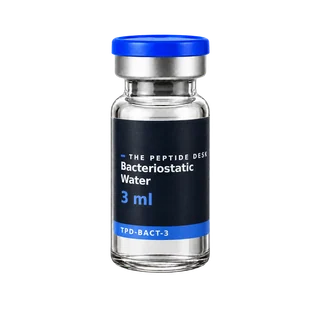
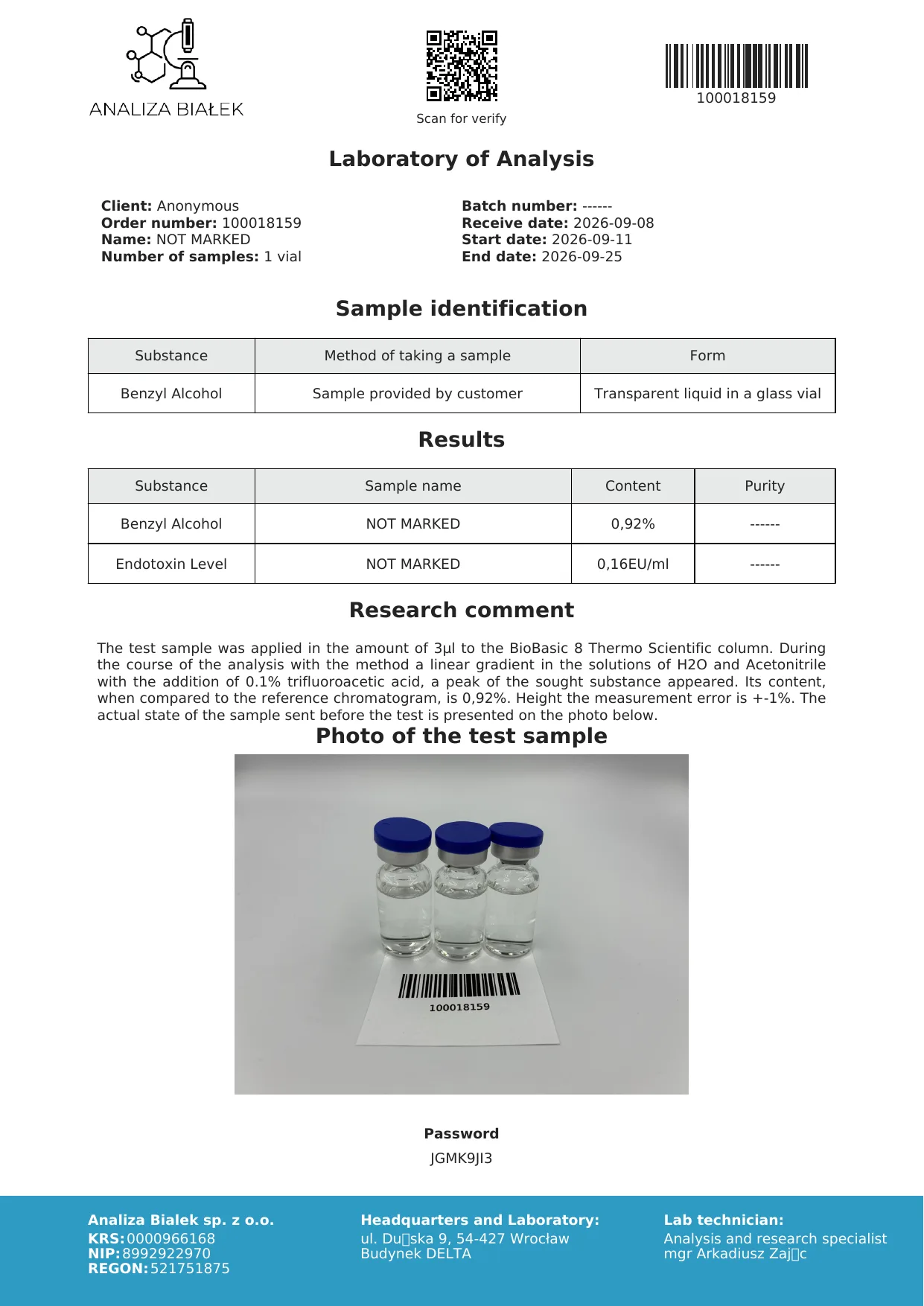
Bacteriostatic Water (BAC Water) is a sterile, non-pyrogenic water solution containing 0.9 percent benzyl alcohol as a bacteriostatic preservative. It is the standard solvent for reconstituting lyophilized peptides in research settings and a mandatory companion for nearly every compound in the TPD catalog.
The decisive advantage over plain sterile water lies in multi-week stability after first puncture. While sterile water vials must be used immediately after opening, the benzyl alcohol in Bacteriostatic Water protects against microbial contamination for up to 28 days. This enables multi-use application in research setups, which is essential for peptides such as Tirzepatide, BPC-157 or GH secretagogues with weekly or multi-daily use.
The mechanism of benzyl alcohol is based on disruption of bacterial cell membranes and inhibition of bacterial metabolism. At a concentration of 0.9 percent, antimicrobial activity is sufficient without compromising the stability of most peptides.
Important to know: a small group of compounds is sensitive to benzyl alcohol. Particularly with some GLP-1 analogs, individual research sources discuss sterile water as an alternative, although most customers use BAC water successfully. For very sensitive in vitro assays (e.g. neuronal cell cultures), plain sterile water may be preferred.
You can order Bacteriostatic Water in 10-vial packs at 10ml and 30ml.
This information is for research and educational purposes only. No medical recommendations.
How much bac water you get at TPD
We only ship as much bacteriostatic water as your reconstitution-required vials actually need - calculated at a maximum of 3ml per vial. Bacteriostatic water therefore cannot be bought “in stock”. That is exactly why our automated system always adds the right amount to your cart when you order.
The same applies to single vials: 3ml per vial is included. If you order, say, 30ml but only have 5 vials, you receive 15ml - the difference is credited to your account as balance.
Risks & Safety
Bacteriostatic Water is a reconstitution solvent and not an active compound, so the risk classification concerns handling and sterility rather than physiological effects.
What matters in handling:
- Sterility after first puncture: the benzyl alcohol content protects against microbial contamination after the first puncture, in the literature typically for up to 28 days. This protective effect is limited and does not replace clean technique.
- Contamination risk with mishandling: non-sterile technique, repeated puncture with used needles, or storage beyond the stability window increase the contamination risk. Visible cloudiness or particles mean the vial should no longer be used.
- Compound compatibility: a small group of compounds, in individual sources for example sensitive in vitro assays or certain GLP-1 analogs, is sensitive to benzyl alcohol. In these cases sterile water is discussed in the literature as an alternative.
This classification does not replace medical advice. Risk and responsibility for any actual use lie entirely with the buyer.
Studies
- Antimicrobial preservative use in parenteral products: past and present - Journal of Pharmaceutical Sciences 2007: Review of preservatives in licensed parenteral products: phenol and benzyl alcohol are the two most common in peptide and protein products, with selection guided by dose, antimicrobial functionality and effect on the active ingredient.
- Antimicrobial Preservatives for Protein and Peptide Formulations: An Overview - Pharmaceutics 2023: Review of preservatives in multi-dose protein and peptide formulations: they prevent microbial growth, but some increase particle formation, so compatibility with the active ingredient has to be checked.
- Factors affecting the physical stability (aggregation) of peptide therapeutics - Interface Focus 2017: Review of peptide aggregation in solution: describes how sequence, concentration, pH, excipients, temperature and agitation affect physical stability.
- The Gasping Syndrome and Benzyl Alcohol Poisoning - New England Journal of Medicine 1982, Gershanik et al: Landmark safety study on benzyl alcohol toxicity, basis of today’s concentration limits.