Description
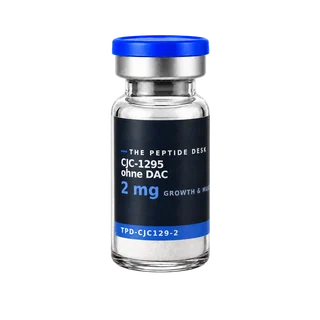
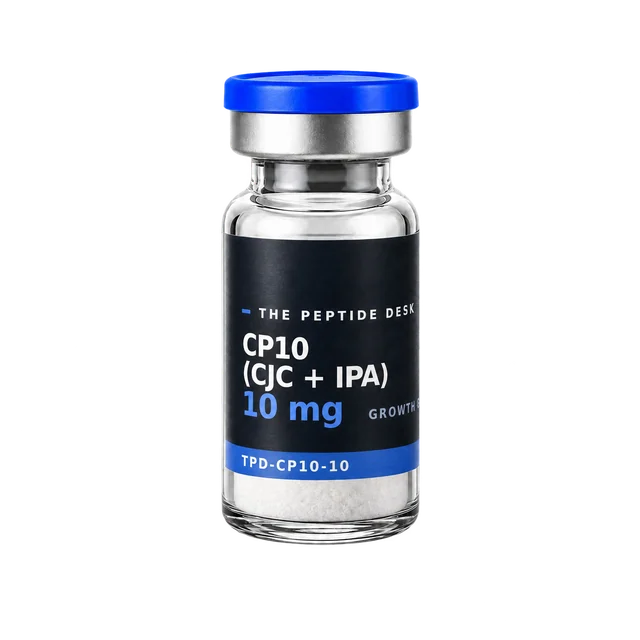
CJC-1295 without DAC, also known in research literature as Mod-GRF (1-29) or simply Modified GRF, is a synthetic GHRH analog with shortened sequence and targeted amino acid modifications. The modifications increase stability against enzymatic degradation but lack the covalent albumin binding of the DAC-modified counterpart. The result: a substantially shorter half-life than CJC-1295 with DAC, in the range of approximately 30 minutes.
In research settings, this short half-life makes the compound a valuable tool for investigating pulsatile GH secretion patterns. While CJC-1295 with DAC produces constant GHRH stimulation, Mod-GRF mimics natural pulse-organized GHRH secretion. This is relevant because endogenous GH secretion is characterized in science as pulsatile, which is regarded in preclinical studies as the physiologically relevant mode.
The mechanism: CJC-1295 without DAC binds to GHRH receptors of the anterior pituitary and induces acute, dose-dependent GH release. In contrast to sermorelin (GHRH 1-29), the amino acid modification at position 2 is more robust against DPP-IV degradation, extending the effective duration without compromising the pulsatile characteristic.
In research setups, Mod-GRF is typically combined with GH secretagogues like ipamorelin to investigate synergistic effects on GH pulsatility.
CJC-1295 without DAC is available in 5mg vials as 10-vial packs.
This information is for research and educational purposes only. No medical recommendations.
Risks & Safety
CJC-1295 without DAC is considered well tolerated per study reports. As a GHRH analog, the compound stimulates the body’s own GH secretion, preserving the natural feedback loop - the short half-life additionally limits the duration of action.
Observed in research and user reports:
- Injection site: mild redness, pressure or transient irritation at the injection site is the most common observation with subcutaneous use.
- GH-typical effects: as is common with GH secretagogues, the literature describes transient water retention as well as numbness or tingling in the hands (carpal-tunnel-type symptoms), usually dose-dependent and reversible.
- Glucose metabolism: elevated GH levels can raise fasting blood glucose and transiently reduce insulin sensitivity in studies.
- Fatigue: brief fatigue or grogginess after application is occasionally reported, consistent with the GH peak.
- No long-term data: robust long-term human studies for research use do not exist. The profile rests primarily on short-term studies and anecdotal experience.
This classification does not replace medical advice. Risk and responsibility for any actual use lie entirely with the buyer.
Studies
- Dipeptidylpeptidase IV and trypsin-like enzymatic degradation of human growth hormone-releasing hormone in plasma - Journal of Clinical Investigation 1989: Shows that native GHRH is cleaved in plasma mainly by DPP-IV between positions 2 and 3 and that a D-amino acid substitution at position 1 or 2 prevents this degradation, the rationale behind the modifications in Mod GRF (1-29).
- Incorporation of D-Ala2 in growth hormone-releasing hormone-(1-29)-NH2 increases the half-life and decreases metabolic clearance in normal men - Journal of Clinical Endocrinology & Metabolism 1994: Infusion study in 10 healthy men: the D-Ala2 substitution in GHRH-(1-29) lowered metabolic clearance and extended the half-life from 4.3 to 6.7 minutes.
- Human growth hormone-releasing factor (hGRF)1-29-albumin bioconjugates activate the GRF receptor on the anterior pituitary in rats: identification of CJC-1295 as a long-lasting GRF analog - Endocrinology 2005: Describes CJC-1295 as a tetrasubstituted hGRF(1-29) with an added maleimido group at the C terminus that binds albumin: in rats it was detectable in plasma beyond 72 hours. The variant without this group is Mod GRF (1-29).
- Prolonged stimulation of growth hormone (GH) and insulin-like growth factor I secretion by CJC-1295, a long-acting analog of GH-releasing hormone, in healthy adults - Journal of Clinical Endocrinology & Metabolism 2006: For comparison, the DAC variant in healthy adults: after a single injection, GH stayed elevated for at least 6 days and IGF-1 for 9 to 11 days, with a half-life of about 6 to 8 days.
- Pulsatile secretion of growth hormone (GH) persists during continuous stimulation by CJC-1295, a long-acting GH-releasing hormone analog - Journal of Clinical Endocrinology & Metabolism 2006: In healthy men, pulsatile GH secretion persisted even under continuous stimulation by the DAC variant, with mainly trough GH levels and IGF-1 being raised.