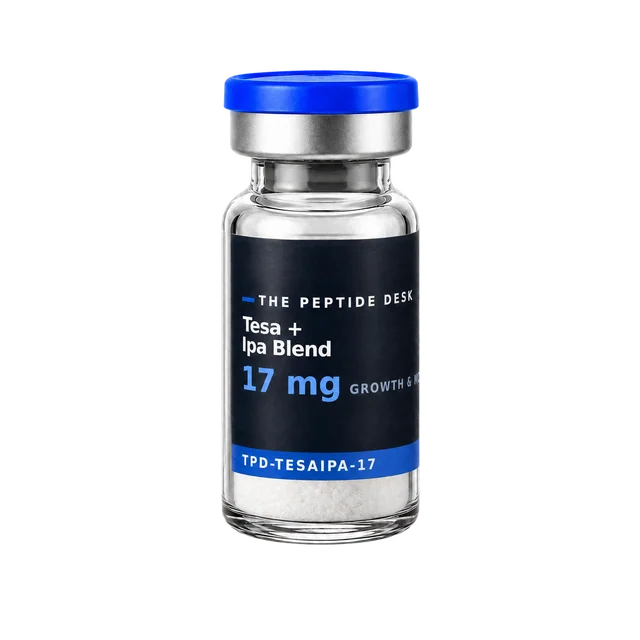
Description
GHRP-2 (Growth Hormone Releasing Peptide-2) is a synthetic hexapeptide that acts as an agonist at the ghrelin receptor (GHSR-1a) and thus belongs to the class of GH secretagogues. Structurally, GHRP-2 differs fundamentally from endogenous ghrelin, but functionally it activates the same receptor and triggers a comparable GH secretion response.
In research context, the central mechanism lies in activation of GHSR-1a in somatotrope cells of the anterior pituitary, leading to pulsatile GH release. In contrast to ipamorelin, which is highly selective for GHSR-1a, GHRP-2 has a slightly broader activity profile with moderate activity on cortisol and prolactin secretion. This characteristic makes the compound a distinct research tool within the GHRP family.
In preclinical studies, GHRP-2 has been documented with substantial GH level increases after application. With a half-life of approximately 15-60 minutes, it is short, requiring frequent application intervals in research setups. In animal models, GHRP-2 has been characterized as one of the most potent GH secretagogues in the GHRP family.
GHRP-2 is an older compound within the GH secretagogue class and has a substantial research history reaching back into the 1990s. In modern research setups, switching to ipamorelin is common due to better selectivity, but GHRP-2 remains relevant for comparative studies and potency-focused research questions.
GHRP-2 is available in 5mg vials as 10-vial packs.
This information is for research and educational purposes only. No medical recommendations.
Risks & Safety
GHRP-2 is considered well tolerated per study reports. As a ghrelin receptor agonist, the compound stimulates the body’s own GH secretion, but has a slightly broader activity profile compared to Ipamorelin.
Observed in research and user reports:
- Injection site: mild redness, pressure or transient irritation at the injection site is the most common observation with subcutaneous use.
- GH-typical effects: as is common with GH secretagogues, the literature describes transient water retention as well as numbness or tingling in the hands (carpal-tunnel-type symptoms), usually dose-dependent and reversible.
- Cortisol and prolactin: unlike the selective Ipamorelin, GHRP-2 shows a moderate elevation of cortisol and prolactin in studies, as well as increased hunger perception.
- Glucose metabolism: elevated GH levels can raise fasting blood glucose and transiently reduce insulin sensitivity in studies.
- No long-term data: robust long-term human studies for research use do not exist. The profile rests primarily on short-term studies and anecdotal experience.
This classification does not replace medical advice. Risk and responsibility for any actual use lie entirely with the buyer.
Studies
- Growth hormone-releasing peptide (GHRP) - Cellular and Molecular Life Sciences 1998: Review of the GHRP class: the peptides release GH through a dual, complementary action on hypothalamus and pituitary and probably mimic a natural hormone that had not yet been identified at the time.
- Effects of GHRP-2 and hexarelin, two synthetic GH-releasing peptides, on GH, prolactin, ACTH and cortisol levels in man. Comparison with the effects of GHRH, TRH and hCRH - Peptides 1997: Comparison in healthy adults: GHRP-2 and hexarelin elicited a similarly strong, dose-dependent GH response exceeding that of GHRH and also slightly raised prolactin, ACTH and cortisol.
- Growth hormone releasing peptide-2 (GHRP-2), like ghrelin, increases food intake in healthy men - Journal of Clinical Endocrinology & Metabolism 2005: Seven healthy men ate on average 35.9% more during a GHRP-2 infusion than with saline, while GH levels rose markedly.
- Treatment effects of intranasal growth hormone releasing peptide-2 in children with short stature - Journal of Endocrinology 1997: Intranasal GHRP-2 in 15 children with short stature: height velocity rose from 3.7 to 6.1 cm per year after 6 months, while IGF-1 was unchanged.