Description
Kisspeptin-10 is a synthetic decapeptide derived from the KISS1 gene product and characterized in research literature as a central activator of hypothalamic GnRH secretion. The kisspeptin family was identified in the early 2000s as an upstream regulator of the reproductive axis, making the compound class one of the most important discoveries in modern reproductive endocrinology.
The research mechanism lies in the activation of the GPR54 receptor (also KISS1R) on hypothalamic GnRH neurons. In preclinical studies, kisspeptin-10 has been associated with potent stimulation of GnRH release, which downstream leads to LH and FSH increases from the anterior pituitary. This makes kisspeptin-10 a central research tool for studies on the HPG axis (hypothalamic-pituitary-gonadal).
A particularity of the kisspeptin axis: it is essential for the initiation of puberty. Mutations in the KISS1R gene lead to hypogonadotropic hypogonadism, documenting the central role in reproductive activation. In research setups, kisspeptin-10 is therefore frequently used in studies on reproductive axis regulation.
Kisspeptin-10 is the shortest biologically active form of the kisspeptin family (full kisspeptin-54 contains the kisspeptin-10 sequence at the C-terminus). The short form enables more efficient synthetic production and better characterization.
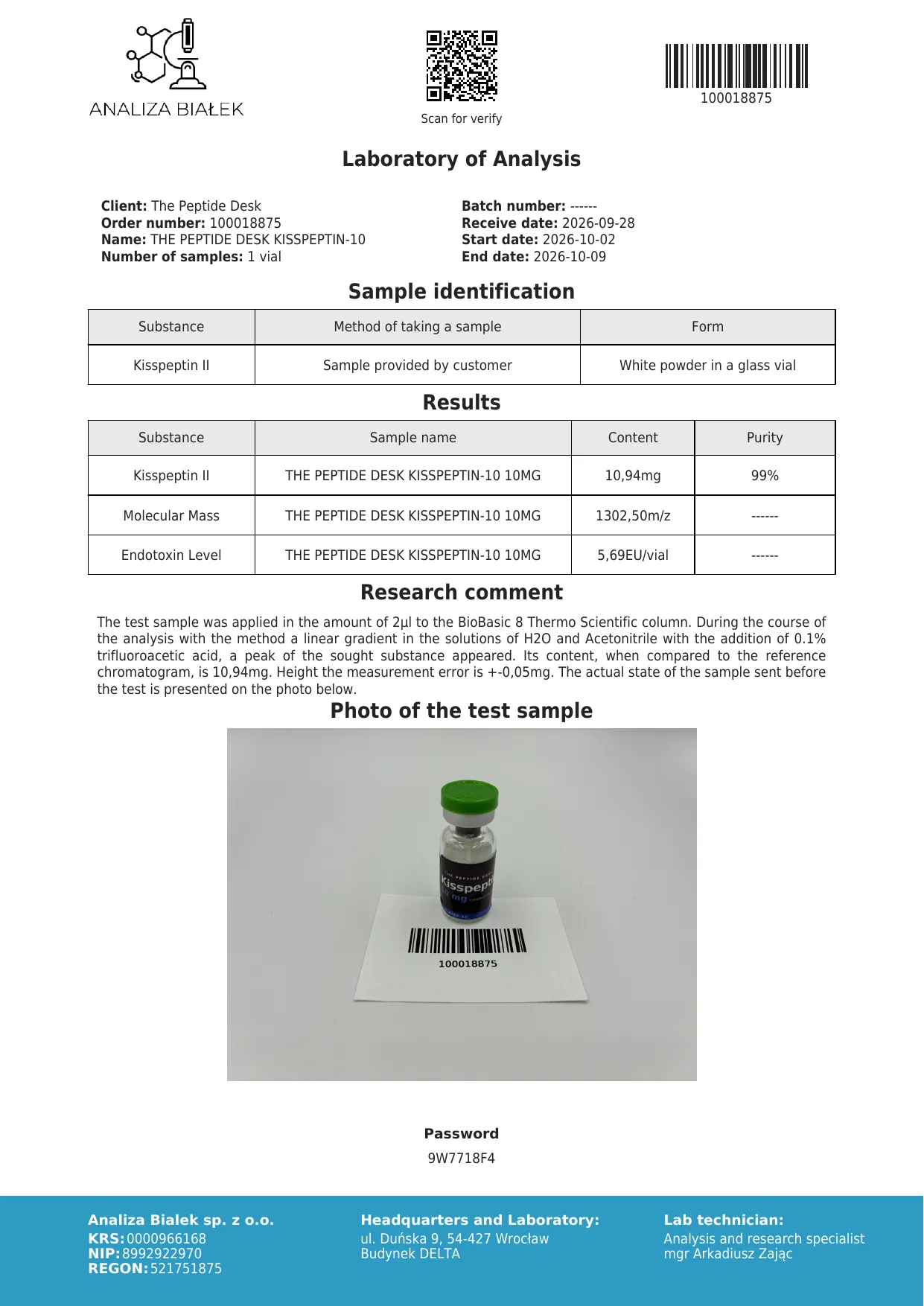
Kisspeptin-10 is available in 5mg vials as 10-vial packs.
This information is for research and educational purposes only. No medical recommendations.
Risks & Safety
Kisspeptin-10 is described as well tolerated per study reports, but through its direct intervention in the reproductive axis it has its own profile of effects to consider.
Observed in research and user reports:
- Reproductive hormones: kisspeptin-10 is documented in studies as a potent activator of GnRH, LH and FSH secretion. Noticeable shifts in the reproductive hormone axis are the central expected effect.
- Injection site: mild redness or pressure at the injection site is the most common local observation.
- Circulation: isolated reports of brief warmth or mild dizziness shortly after application.
- Very short half-life: the short duration of action of kisspeptin-10 makes pharmacokinetics difficult to control in systemic setups.
- Limited long-term data: robust human studies exist primarily for short-term endocrine endpoints. Long-term data are largely lacking.
This classification does not replace medical advice. Risk and responsibility for any actual use lie entirely with the buyer.
Studies
- The metastasis suppressor gene KiSS-1 encodes kisspeptins, the natural ligands of the orphan G protein-coupled receptor GPR54 - Journal of Biological Chemistry 2001: Identifies the kisspeptins, peptides of 54, 14 and 13 amino acids derived from the KiSS-1 gene product, as the natural ligands of the previously orphan receptor GPR54.
- The GPR54 gene as a regulator of puberty - New England Journal of Medicine 2003: Mutations in the receptor gene GPR54 cause hypogonadotropic hypogonadism in humans and mice, showing that the receptor is essential for normal GnRH physiology and puberty.
- Kisspeptin-10 is a potent stimulator of LH and increases pulse frequency in men - Journal of Clinical Endocrinology & Metabolism 2011: In healthy men, an intravenous kisspeptin-10 bolus triggered a rapid, dose-dependent rise in LH. An infusion increased testosterone as well as LH pulse frequency and size.
- The effects of kisspeptin-10 on reproductive hormone release show sexual dimorphism in humans - Journal of Clinical Endocrinology & Metabolism 2011: Kisspeptin-10 raised LH and FSH in men and in women during the preovulatory phase, but not in women during the follicular phase.