
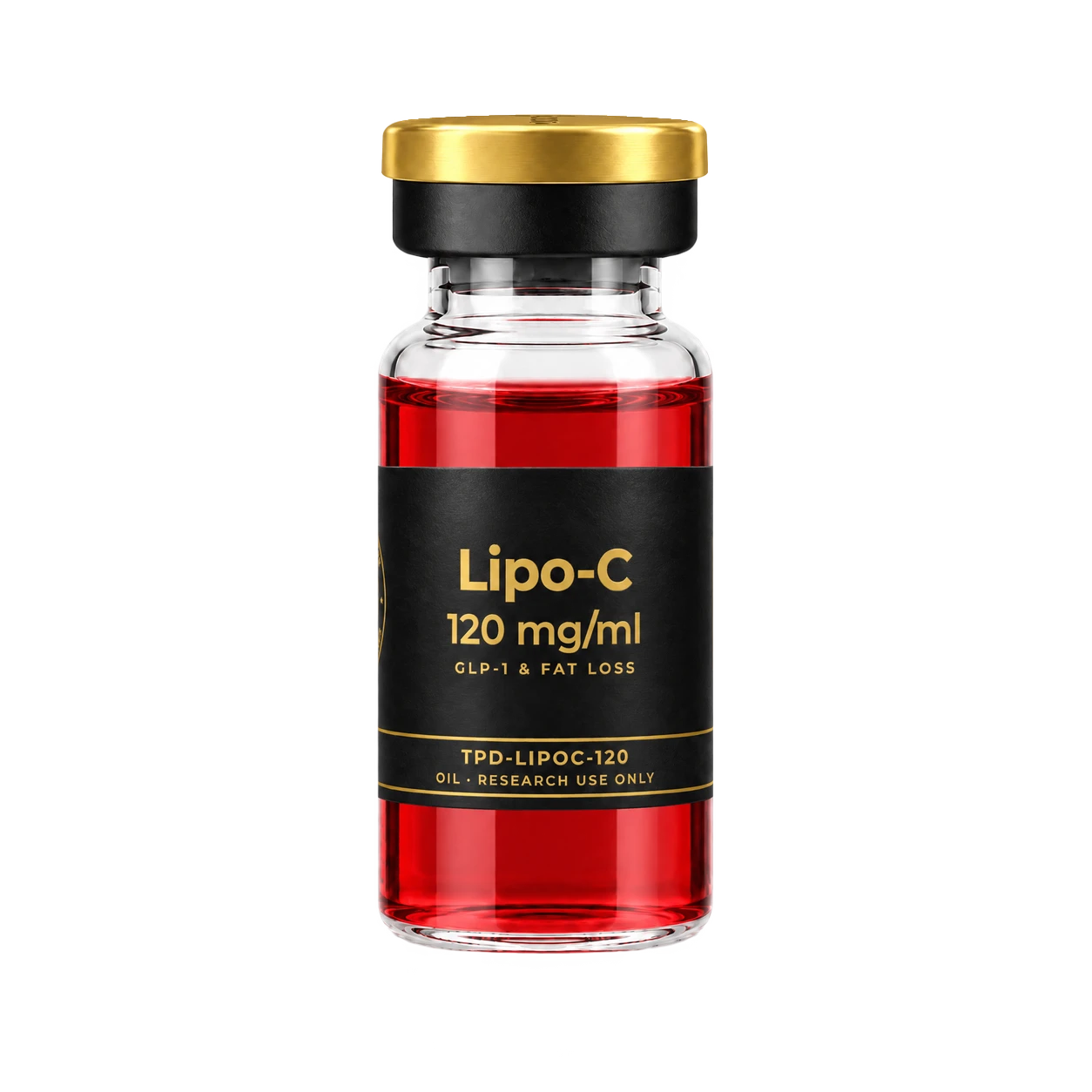
Description
Lipo-C is a blend of lipotropic substances that typically combines methionine, inositol, choline and cyanocobalamin (B12). The designation “Lipo” refers to lipotropy, the property of supporting hepatic fat metabolism. Structurally, Lipo-C is not a peptide but a defined amino acid-vitamin formulation, but has become established in the community as a recognized metabolic compound.
The research mechanism lies in the methylation axis and phospholipid metabolism. Choline and methionine are central methyl donors, inositol is an important component of phospholipid structures, B12 functions as a cofactor in multiple methylation reactions. In preclinical studies, the combination has been associated with effects on hepatic lipid metabolism, VLDL secretion and phosphatidylcholine synthesis.
In research setups, Lipo-C is particularly interesting for studies on hepatic steatosis, one-carbon metabolism and methylation pool regulation. The components are established and well-characterized; the research value lies in the defined combination.
In contrast to many peptide compounds, Lipo-C is not defined through a single receptor pathway, but through the parallel provision of multiple metabolic substrates. This makes the compound a complementary research tool to more mechanistically focused compounds.
Lipo-C is available in 30ml vials as 10-vial packs.
This information is for research and educational purposes only. No medical recommendations.
Risks & Safety
Lipo-C is considered predominantly mild per study reports, since the components methionine, inositol, choline and B12 are individually well-characterized metabolic substrates. The documented profile is markedly narrower than that of the GLP-1 agonists.
Observed in studies and user reports:
- Injection site: redness, pressure, mild burning or transient irritation at the injection site is the most common observation with this substance class.
- B12 component: a sensation of warmth or mild tingling shortly after application is occasionally reported, as is typical for B12-containing blends.
- Digestion: mild gastrointestinal discomfort is occasionally described with higher-dosed lipotropic blends.
- Limited data: direct comparative studies on Lipo-C as a specific formulation are lacking. The classification is derived from the individual component data. Robust long-term data on the blend do not exist.
This classification does not replace medical advice. Risk and responsibility for any actual use lie entirely with the buyer.
Studies
- Choline metabolism provides novel insights into nonalcoholic fatty liver disease and its progression - Current Opinion in Gastroenterology 2012: Work on the choline component: humans on low-choline diets develop fatty liver and liver damage. The review names abnormal phospholipid synthesis, defects in lipoprotein secretion and mitochondrial dysfunction as mechanisms.
- Choline deficiency causes reversible hepatic abnormalities in patients receiving parenteral nutrition: proof of a human choline requirement: a placebo-controlled trial - Journal of Parenteral and Enteral Nutrition 2001: Work on the choline component: placebo-controlled trial in 15 patients on long-term parenteral nutrition in whom added choline measurably reduced hepatic steatosis on CT within 4 weeks, with steatosis recurring after discontinuation.
- Methionine metabolism and liver disease - Annual Review of Nutrition 2008: Work on the methionine component: diets deficient in labile methyl groups (choline, methionine, betaine, folate) produce fatty liver in rodents, showing the importance of methyl balance for liver function.
- Potential role and therapeutic interests of myo-inositol in metabolic diseases - Biochimie 2013: Work on the inositol component: review of myo-inositol, its insulin-mimetic properties and the data in conditions associated with insulin resistance; the finished blend itself is not covered.