Description
Pregabalin is a gabapentinoid and binds to the alpha-2-delta subunit of voltage-gated calcium channels in the central nervous system. The name is misleading: despite the structural similarity to GABA, the substance does not act at the GABA receptor. Binding to alpha-2-delta dampens calcium influx into the nerve terminal and thereby reduces release of excitatory messengers such as glutamate, noradrenaline and substance P.
Pharmacokinetically pregabalin is unusually predictable. That is its defining feature. The comparison by Bockbrader and colleagues puts it directly next to gabapentin: pregabalin is absorbed rapidly and peak plasma concentration is reached within about an hour. Absolute bioavailability stays above 90 percent regardless of dose. Gabapentin, by contrast, drops from 60 to 33 percent as the daily dose rises, because its absorption is saturable. With pregabalin, plasma levels rise proportionally with dose.
What does not happen matters just as much. Pregabalin does not bind to plasma proteins, is not metabolized by the liver and neither inhibits nor induces CYP enzymes. Elimination is almost entirely renal with an elimination half-life of roughly six hours. Interactions via hepatic metabolism are therefore practically absent, while kidney function becomes the decisive factor for total exposure.
The efficacy data in neuropathic pain are extensive. The Cochrane review by Derry and colleagues analysed 45 studies with 11,906 participants. In postherpetic neuralgia, 50 percent on 300mg daily achieved at least a 30 percent pain reduction versus 25 percent on placebo; on 600mg it was 62 versus 24 percent. In painful diabetic neuropathy the effect was considerably smaller. The authors state plainly that some people derive substantial benefit while many derive none. Somnolence and dizziness were consistently the most common adverse effects and rose with dose.
In a research context pregabalin is therefore of interest mainly for its linear kinetics and absent hepatic interactions, less for its effect size.
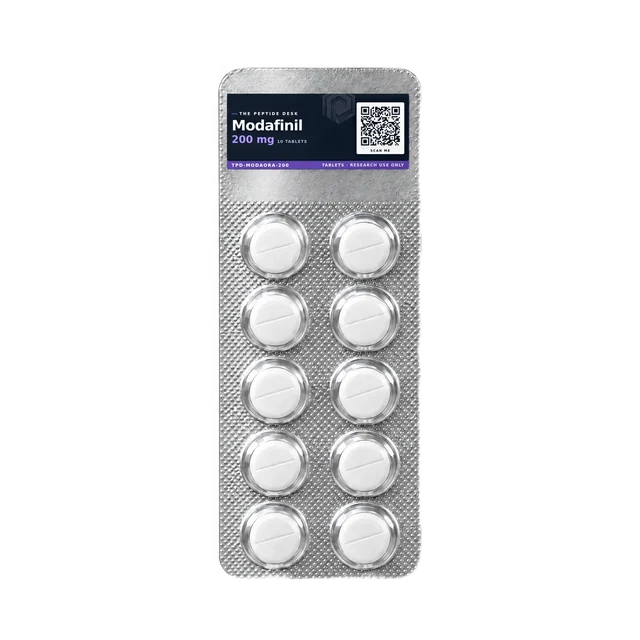
You can order Pregabalin as oral tablets with 50mg (10 tablets per blister), 300mg (blisters of 10 or 15 tablets) or 450mg per tablet (15 tablets per blister).
This information is for research and educational purposes only. No medical advice.
Risks & Safety
Pregabalin carries one issue that was long absent from public perception and is now well documented: a real abuse potential, particularly in people with an opioid history.
- Abuse and dependence: The systematic review by Evoy and colleagues analysed 59 studies. Prevalence of gabapentinoid abuse was 1.6 percent in the general population and between 3 and 68 percent among opioid users. An international database recorded close to 12,000 reports between 2004 and 2015, more than three quarters of them from 2012 onwards. Pregabalin is increasingly identified in post-mortem toxicology, usually alongside opioids.
- Combination with opioids and alcohol: Respiratory depressant effects add up. That is the main route by which gabapentinoids feature in fatalities and the reason a large part of those reports exist at all.
- Somnolence and dizziness: In the Cochrane review, somnolence on 600mg was 25 percent versus 5.8 percent on placebo, dizziness 35 versus 8.8 percent. Both are dose-dependent and affect reaction time and fitness to drive directly.
- Kidney function governs everything: Because elimination is almost entirely renal, exposure rises steeply with impaired kidney function. Failing to adjust effectively means dosing a multiple.
- Discontinuation: Withdrawal symptoms are described after prolonged use, including sleep disturbance, restlessness, sweating and nausea. Stopping abruptly is the worse option.
- Legal status: Pregabalin is subject to specific prescribing rules in several European countries. Check the situation where you live.
This classification does not replace medical advice. Risk and responsibility for any actual use lie entirely with the buyer.
Studies
- A comparison of the pharmacokinetics and pharmacodynamics of pregabalin and gabapentin - Clinical Pharmacokinetics 2010, Bockbrader et al: bioavailability above 90 percent independent of dose, Tmax around one hour, half-life roughly six hours, no plasma protein binding and no hepatic metabolism.
- Pregabalin for neuropathic pain in adults - Cochrane Database of Systematic Reviews 2019, Derry et al: 45 studies with 11,906 participants, efficacy in postherpetic neuralgia and mixed neuropathic pain, markedly weaker data in diabetic neuropathy, somnolence and dizziness dose-dependent.
- Abuse and misuse of pregabalin and gabapentin - Drugs 2017, Evoy et al: systematic review across 59 studies, abuse prevalence of 1.6 percent in the general population and 3 to 68 percent among opioid users, close to 12,000 reports between 2004 and 2015.