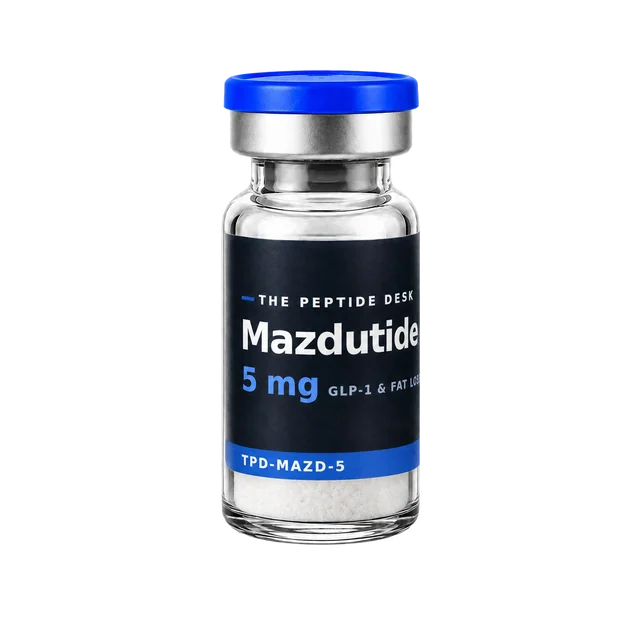
Description
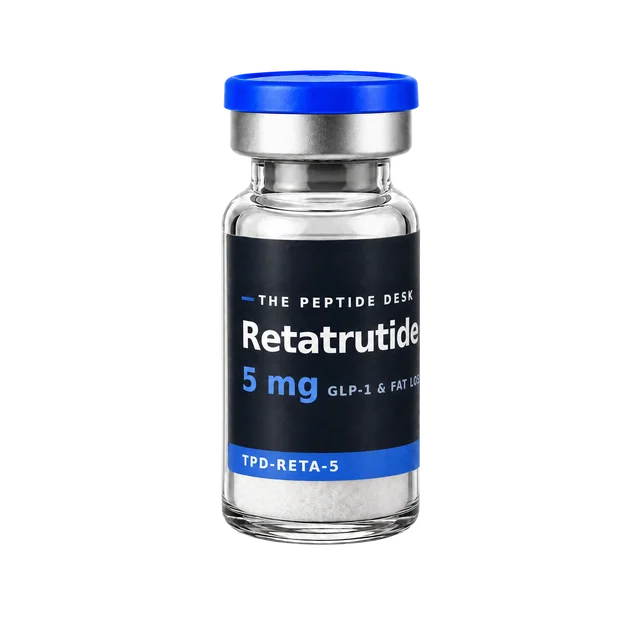
This blend combines two research compounds from two different signaling pathways of appetite and metabolic regulation in a single injectable vial. One is Retatrutide (LY3437943), a triple-incretin agonist that activates GLP-1, GIP and glucagon receptors at the same time. The other is Cagrilintide, a long-acting, lipidated analog of the beta-cell hormone amylin. Retatrutide addresses the incretin axis across three receptor systems, with the glucagon component associated in research with increased energy expenditure. Cagrilintide acts via amylin receptors, principally in the circumventricular organs of the brain. In studies it prolongs satiety through a pathway that is independent of the incretin receptors.
Both active ingredients are, in their clinically studied form, once-weekly subcutaneously injected peptides with a long half-life: 159 to 195 hours have been documented for Cagrilintide. Retatrutide is likewise dosed weekly in the trials. That is exactly how this blend ships: as a freeze-dried powder (lyophilizate) for reconstitution with bacteriostatic water. What needs framing honestly: there are no robust clinical data on precisely this combination of Retatrutide and Cagrilintide in one vial. The evidence stems from the individual compounds and from the related combination of Cagrilintide with semaglutide (CagriSema), which studies the incretin-plus-amylin principle in trials. The fixed ratio of 25 mg Retatrutide to 5 mg Cagrilintide is experimental and cannot be titrated separately.
The core research findings: for Retatrutide, phase 2 data showed body weight reductions of up to 24.2 percent after 48 weeks in study models with subjects who had obesity, plus reductions in liver fat content in MASLD research. For Cagrilintide, a phase 2 trial with 706 participants over 26 weeks documented dose-dependent weight reduction in mono application; in the phase 1b trial of the combination with semaglutide 2.4 mg, the reduction after 20 weeks was 17.1 percent versus 9.8 percent with semaglutide plus placebo. These findings apply to the compounds and combinations studied, not to this blend.
You receive this blend as a research compound in 10 vials of 30 mg per vial (25 mg Retatrutide plus 5 mg Cagrilintide) as a lyophilizate for reconstitution, on request also as a single vial from the express range. The format is intended for experimental research approaches.
This information is for research and educational purposes only. Not medical advice.
Risks & Safety
Both components are considered generally well tolerated per study reports. The documented profile of both is shaped by gastrointestinal effects. In combination, two satiety signals add up, which in the literature on incretin-plus-amylin combinations mainly amplifies nausea at the start.
Observed in studies and user reports:
- Gastrointestinal effects: nausea, vomiting, diarrhea and constipation are the most commonly documented observations for both Retatrutide and Cagrilintide, with a clear correlation to the speed of dose escalation. In combination with an incretin agonist they were mostly mild to moderate in the CagriSema trial. Slow titration reduces the incidence.
- Appetite and fluids: the strongly reduced food intake and prolonged satiety also lower fluid intake in studies. The literature describes an elevated risk of dehydration.
- Heart rate: mild increases in heart rate are documented for the glucagon component of Retatrutide.
- Muscle mass and gallbladder: weight loss involves a portion of muscle mass alongside fat mass. Gallbladder issues during rapid weight loss are documented.
- Fixed ratio: the dose of both components rises and falls together. Anyone wanting to keep one component lower cannot do so with this blend.
- No long-term data: Retatrutide is a comparatively new compound. No clinical studies exist for the combination of Retatrutide and Cagrilintide.
This classification does not replace medical advice. Risk and responsibility for any actual use lie entirely with the buyer.
Studies
- Triple-Hormone-Receptor Agonist Retatrutide for Obesity - A Phase 2 Trial - NEJM 2023: Phase 2 data on the Retatrutide component (triple agonist), including the documented body weight reductions (subcutaneous).
- Triple hormone receptor agonist retatrutide for MASLD - Nature Medicine 2024: Phase 2a study on the effects of the Retatrutide component on the liver fat profile.
- Once-weekly cagrilintide for weight management in people with overweight and obesity - The Lancet 2021: Phase 2 trial with 706 participants over 26 weeks, Cagrilintide in mono application.
- Concomitant administration of multiple doses of cagrilintide with semaglutide 2.4 mg for weight management - phase 1b trial - The Lancet 2021: Phase 1b trial on the incretin-plus-amylin principle: cagrilintide plus semaglutide 2.4 mg, 17.1 percent weight loss after 20 weeks versus 9.8 percent with semaglutide plus placebo, Cagrilintide half-life of 159 to 195 hours.