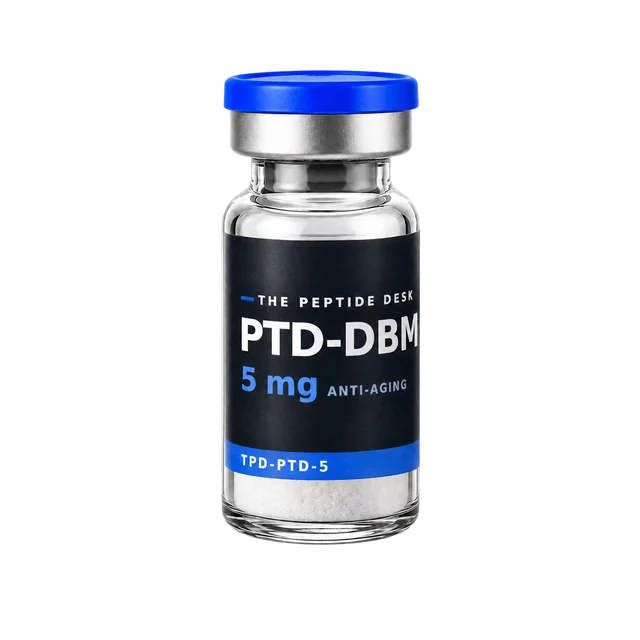
Description
Snap-8 (also designated acetyl octapeptide-3 or acetyl glutamyl octapeptide-3) is a synthetic acetyl octapeptide originally developed as a compound in dermatological science. Structurally it is an extended analog of the better-known Argireline (acetyl hexapeptide-3), with two additional amino acids at the C-terminus.
The research mechanism lies in the modulation of the SNARE complex (Soluble NSF Attachment Receptor). The SNARE complex is central to vesicular fusion in neurotransmitter release at presynaptic membranes. Snap-8 competitively inhibits complex formation in research models and thereby reduces acetylcholine release at neuromuscular synapses. The mechanism hypothesis: through reduced cholinergic signal transmission in dermal micro-muscles, mimic movements are locally attenuated.
In research settings, Snap-8 is characterized as an alternative compound to Argireline, with a longer sequence associated in some studies with higher potency. However, the data on Snap-8 is more limited than on Argireline, which has a more extensive research history.
Snap-8 is primarily established in topical research applications. In preclinical studies, the compound is typically applied locally. Systemic bioavailability is limited, focusing research on local skin research.
Snap-8 is available in 50mg vials as 10-vial packs.
This information is for research and educational purposes only. No medical recommendations.
Risks & Safety
Snap-8 is described as well tolerated per study reports. Since the compound is primarily used topically and systemic bioavailability is limited, the profile of observable effects remains largely local.
Observed in research and user reports:
- Skin irritation: with topical use, mild redness, dryness or irritation of the application area is the most common observation.
- Limited data base: Snap-8 is considerably less well studied than the related Argireline, which has a more extensive research history.
- SNARE modulation: the mechanism rests on competitive inhibition of SNARE complex formation. In topical research settings the effects remain confined to the treated skin area.
- No human data: robust human studies and long-term data do not exist.
This classification does not replace medical advice. Risk and responsibility for any actual use lie entirely with the buyer.
Studies
- A peptide that mimics the C-terminal sequence of SNAP-25 inhibits secretory vesicle docking in chromaffin cells - Journal of Biological Chemistry 1997: Mechanistic basis of the peptide class: a peptide patterned after the C terminus of SNAP-25 blocked secretory vesicle docking in chromaffin cells and thereby inhibited calcium-dependent exocytosis.
- A synthetic hexapeptide (Argireline) with antiwrinkle activity - International Journal of Cosmetic Science 2002: Study on the closely related hexapeptide Argireline, not on Snap-8 itself: the peptide interfered with SNARE complex formation, inhibited neurotransmitter release and, as a 10% emulsion, reduced wrinkle depth by up to 30% after 30 days.
- The anti-wrinkle efficacy of argireline, a synthetic hexapeptide, in Chinese subjects: a randomized, placebo-controlled study - American Journal of Clinical Dermatology 2013: Randomized, placebo-controlled study of argireline in 60 participants: after 4 weeks the subjectively assessed anti-wrinkle efficacy was 48.9% versus 0% with placebo. Measured skin roughness also decreased.
- Efficacy of bioactive peptides loaded on hyaluronic acid microneedle patches: A monocentric clinical study - Journal of Cosmetic Dermatology 2020: Clinical study with acetyl octapeptide-3 as one of several actives: hyaluronic acid microneedle patches reduced fine lines by 25.8% over 12 weeks. The contribution of the individual peptide cannot be derived from it.