Description
Testosterone Cypionate is a long-chain ester of the endogenous androgen testosterone, formed by esterification at the 17β-hydroxyl group with cyclopentanepropanoic acid. The eight-carbon side chain makes the compound substantially more lipophilic than free testosterone and therefore released slowly from the oily injection depot.
Per study reports this yields an intramuscular elimination half-life of about 8 days. Study data shows typical dosing intervals of 14-21 days; in clinical research the compound is administered every two to four weeks accordingly. After ester bond cleavage by non-specific esterases, free testosterone is released, acting via the androgen receptor.
In the United States, Cypionate is the standard ester of testosterone replacement research and the anabolic research literature. Its pharmacokinetics are nearly identical to Testosterone Enanthate; in direct comparison studies Cypionate shows a marginally longer plateau due to slightly different oil solubility.
The classic Bhasin study from 1996 established the dose-response relationship of testosterone on muscle mass and strength in the supraphysiologic range - still the most cited reference in anabolic research today.
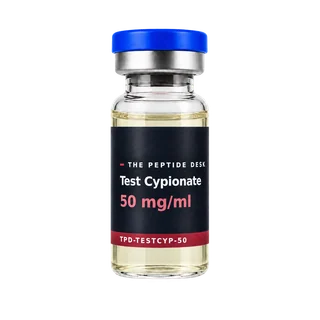
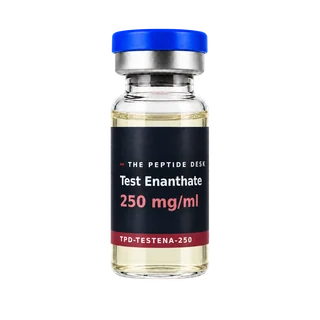
You can order Testosterone Cypionate as an oily injection solution in 10-vial packs at 50mg/ml or 250mg/ml. Concentration selection depends on volume tolerance and research protocol duration.
This information is for research and educational purposes only. No medical recommendations.
Risks & Safety
Testosterone Cypionate has a nearly identical risk profile to Enanthate - one of the best documented of all anabolics. Supraphysiologic doses intervene broadly in the hormonal system. The effects described in the literature are well documented and predictable.
Documented in studies and the application literature:
- Estrogen conversion: testosterone aromatizes to estradiol. Water retention, blood pressure rise and at higher doses gynecomastia risk are documented.
- Suppression of endogenous production: exogenous testosterone throttles the body’s own production via the HPTA axis. Testicular atrophy and reduced fertility are documented, recovery after discontinuation is not guaranteed.
- Cardiovascular: studies describe unfavorable shifts in the lipid profile (HDL falls), elevated hematocrit and an associated thrombosis risk.
- Other: acne, accelerated hair loss with genetic predisposition, mood swings and, with long-term use, strain on liver and kidneys.
Baseline bloodwork before, during and after a research protocol is strongly advised. This classification does not replace medical advice. Risk and responsibility for any actual use lie entirely with the buyer.
Studies
- Hormone kinetics after intramuscular testosterone cypionate - Fertility and Sterility 1987, Nankin: Tracks serum testosterone after a single intramuscular Cypionate injection - documents the peak at days 2-5 and the decline back to baseline by day 13-14.
- The Effects of Supraphysiologic Doses of Testosterone on Muscle Size and Strength in Normal Men - New England Journal of Medicine 1996, Bhasin et al: The classic study on testosterone dose-response on muscle mass - shows dose-dependent increase in lean mass and strength.
- Comparison of Outcomes for Hypogonadal Men Treated with Intramuscular Testosterone Cypionate versus Subcutaneous Testosterone Enanthate - Journal of Urology 2022, Choi et al: Compares intramuscular Cypionate directly against subcutaneous Enanthate for achieved testosterone levels and tolerability.
- Effects of Testosterone Treatment in Older Men - New England Journal of Medicine 2016, Snyder et al: Multi-center study (T-Trials) on the effects of 12 months of testosterone treatment in older men.
- Pharmacology of testosterone replacement therapy preparations - Translational Andrology and Urology 2016, Shoskes et al: Review of pharmacokinetics and adverse-effect profile of the common TRT delivery forms including the oil esters.