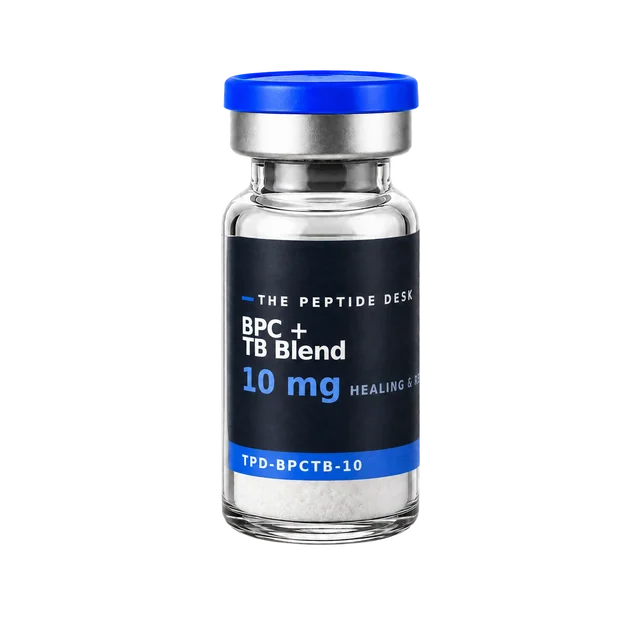
Description
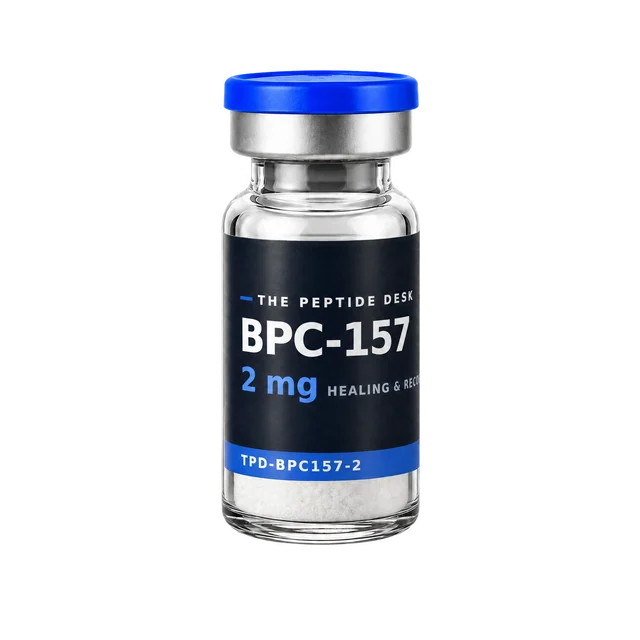
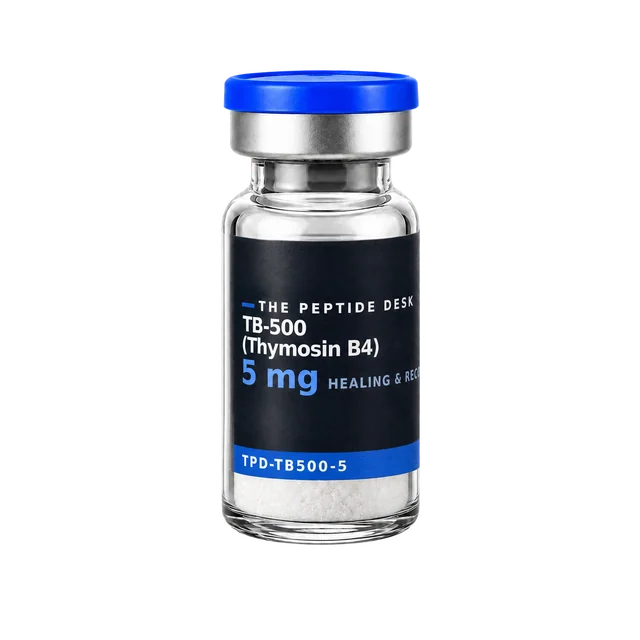
BPC + TB + KPV Blend is a research formulation with three different healing peptides in one injection: BPC-157, TB-500 (Thymosin Beta-4) and KPV (Lysine-Proline-Valine). Typical split is 10mg per compound, so 30mg total peptide per vial.
Per study reports the formulation combines three complementary action mechanisms:
- BPC-157 stimulates growth hormone receptors in tendon fibroblasts and accelerates connective tissue healing
- TB-500 modulates actin polymerization and accelerates cell migration and angiogenesis
- KPV as anti-inflammatory tripeptide with research application in inflammatory bowel disease and skin inflammation
The three-peptide combo thereby covers connective tissue repair, cell migration/angiogenesis and inflammation reduction - all three central pathways of tissue regeneration. Combined application as blend is newer and less well characterized than individual peptides.
Typical application is subcutaneous two to three times per week in 6-8 week healing courses.
You can order BPC + TB + KPV Blend as lyophilized peptide in 10-pack at 30mg per vial.
This information is for research and educational purposes only. No medical recommendations.
Risks & Safety
BPC + TB + KPV Blend is considered well tolerated per study reports. All three components - BPC-157, TB-500 and KPV - have a mild profile in the preclinical literature that carries over to the combined formulation.
Observed in research and user reports:
- Injection site: mild redness, pressure or transient irritation at the injection site is the most common observation with subcutaneous use.
- Circulation: isolated reports of brief warmth, mild dizziness or fatigue shortly after application.
- Angiogenesis effect of the TB-500 component: because TB-500 promotes the formation of new blood vessels in studies, the literature discusses a theoretical concern that existing abnormal tissue could also be supplied. No evidence supports this.
- No long-term data: robust long-term human studies do not exist for any of the three components. The three-peptide blend form is newer and substantially less well characterized than the individual compounds.
This classification does not replace medical advice. Risk and responsibility for any actual use lie entirely with the buyer.
Studies
- Stable gastric pentadecapeptide BPC 157 and wound healing - Frontiers in Pharmacology 2021, Seiwerth et al: broad mechanism review of BPC-157 healing action.
- The promoting effect of pentadecapeptide BPC 157 on tendon healing involves tendon outgrowth, cell survival, and cell migration - Journal of Applied Physiology 2011, Chang et al: BPC-157 in tendon-fibroblast migration.
- The regenerative peptide thymosin beta-4 accelerates the rate of dermal healing in preclinical animal models and in patients - Annals of the New York Academy of Sciences 2012, Treadwell et al: TB-500 in dermal healing.
- Melanocortin-derived tripeptide KPV has anti-inflammatory potential in murine models of inflammatory bowel disease - Inflammatory Bowel Diseases 2008, Kannengiesser et al: KPV anti-inflammatory action in IBD models.
- PepT1-mediated tripeptide KPV uptake reduces intestinal inflammation - Gastroenterology 2008, Dalmasso et al: KPV uptake and inflammation reduction.