Description
CagriSema is a pre-mixed combination of cagrilintide and semaglutide in a single vial. The formulation combines a GLP-1 receptor agonist (semaglutide) with an amylin analog (cagrilintide), simultaneously engaging two independent cellular pathways that have shown additive effects on satiety and gastric emptying in preclinical studies.
The research background: mono applications of GLP-1 agonists show substantial effects on body weight in studies, but the efficacy plateau is measurable. Parallel activation of the amylin pathway via cagrilintide can extend the reduction beyond the level of GLP-1 mono application in preclinical models. In phase 1b trials (Friedrichsen et al.), CagriSema showed additive effects with a reduction magnitude comparable to next-generation multi-agonists.
The advantage over two separate vials: one reconstitution step, one application volume, one defined mixing ratio. This reduces complexity in research setups.
In practice, CagriSema is typically used as a weekly research protocol since both components have similar half-lives (each in the range of several days). Concentration is increased slowly to minimize nausea effects from the GLP-1 component.
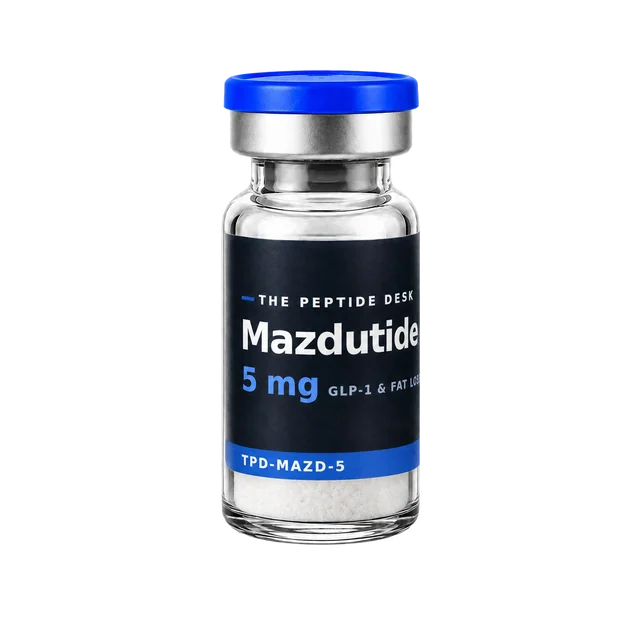
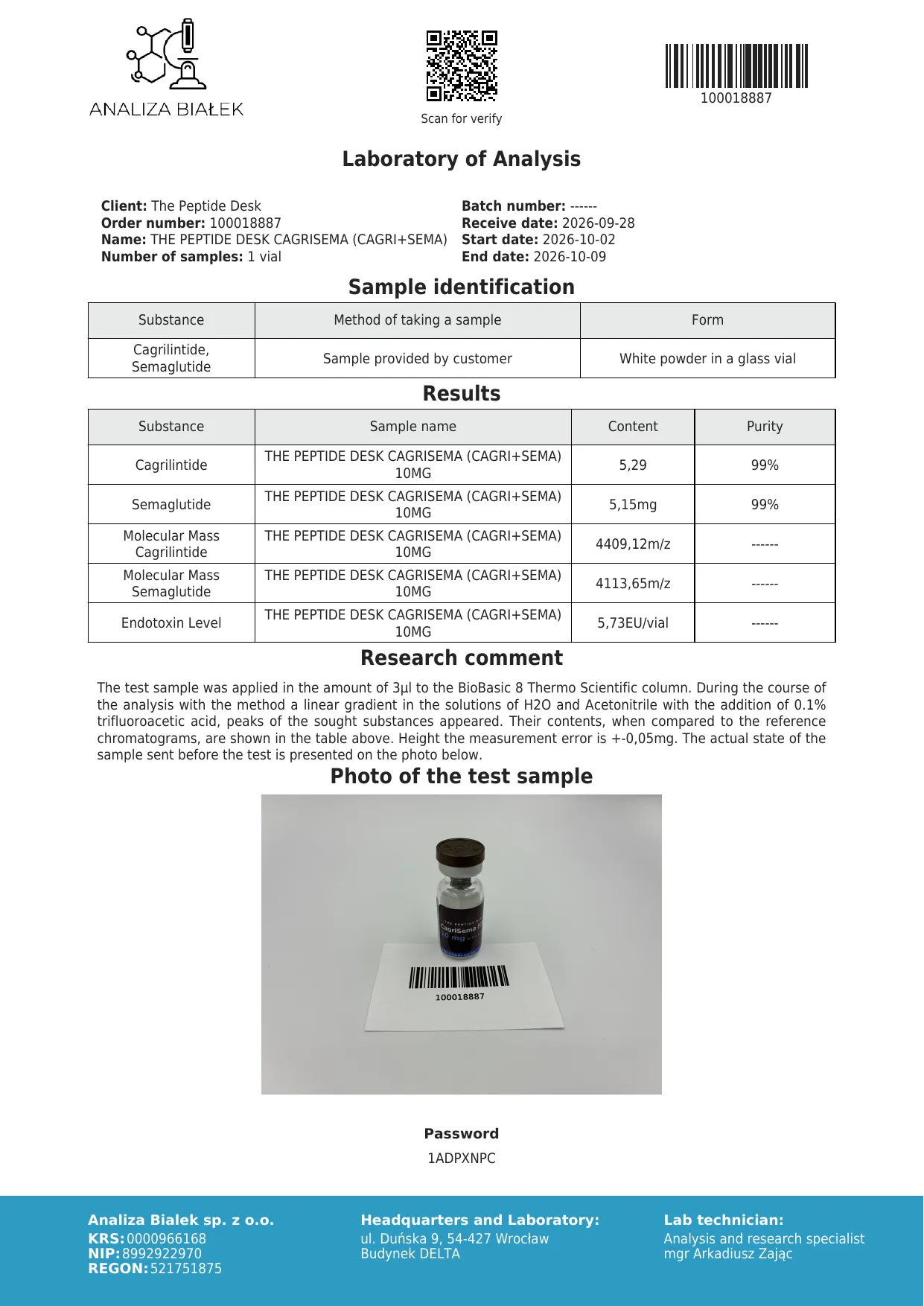
CagriSema is available in 10mg vials (combination of both compounds) as 10-vial packs.
This information is for research and educational purposes only. No medical recommendations.
Risks & Safety
CagriSema is considered generally well tolerated per study reports. Since the formulation combines a GLP-1 agonist with an amylin analog, the documented profile is dominated by gastrointestinal effects from both components.
Observed in studies and user reports:
- Gastrointestinal effects: nausea, vomiting, diarrhea and constipation are the most commonly documented observations, particularly at the start and during the titration phase. Slow concentration escalation reduces the incidence.
- Appetite and fluids: the combined activation of two satiety pathways markedly lowers food and fluid intake in studies. The literature describes an elevated risk of dehydration.
- Muscle mass: weight loss in studies involves a portion of muscle mass alongside fat mass.
- Gallbladder and injection site: gallbladder issues during rapid weight loss as well as mild irritation at the injection site are documented.
- No long-term data: CagriSema is a comparatively new combination. Robust data on very long-term use do not yet exist.
This classification does not replace medical advice. Risk and responsibility for any actual use lie entirely with the buyer.
Studies
- Safety, tolerability, pharmacokinetics, and pharmacodynamics of concomitant administration of multiple doses of cagrilintide with semaglutide 2·4 mg for weight management: a randomised, controlled, phase 1b trial - The Lancet 2021: Phase 1b trial of the combination with 95 participants: mostly mild to moderate, often gastrointestinal adverse events, no effect on semaglutide exposure and, after 20 weeks, 17.1% weight loss with 2.4 mg cagrilintide versus 9.8% with semaglutide plus placebo.
- Efficacy and safety of co-administered once-weekly cagrilintide 2·4 mg with once-weekly semaglutide 2·4 mg in type 2 diabetes: a multicentre, randomised, double-blind, active-controlled, phase 2 trial - The Lancet 2023: Phase 2 trial with 92 participants with type 2 diabetes over 32 weeks: body weight decreased by 15.6% with the combination, 5.1% with semaglutide alone and 8.1% with cagrilintide alone. HbA1c fell by 2.2 percentage points.
- Coadministered Cagrilintide and Semaglutide in Adults with Overweight or Obesity - New England Journal of Medicine 2025: Phase 3 REDEFINE 1 trial with 3417 adults without diabetes over 68 weeks: mean body weight change of -20.4% with the combination versus -3.0% with placebo, with gastrointestinal adverse events in 79.6% versus 39.9%.
- Cagrilintide-Semaglutide in Adults with Overweight or Obesity and Type 2 Diabetes - New England Journal of Medicine 2025: Phase 3 REDEFINE 2 trial with 1206 adults with type 2 diabetes over 68 weeks: mean body weight change of -13.7% with the combination versus -3.4% with placebo.
- Once-weekly cagrilintide for weight management - The Lancet 2021: Mono-component data as comparison baseline.