Description
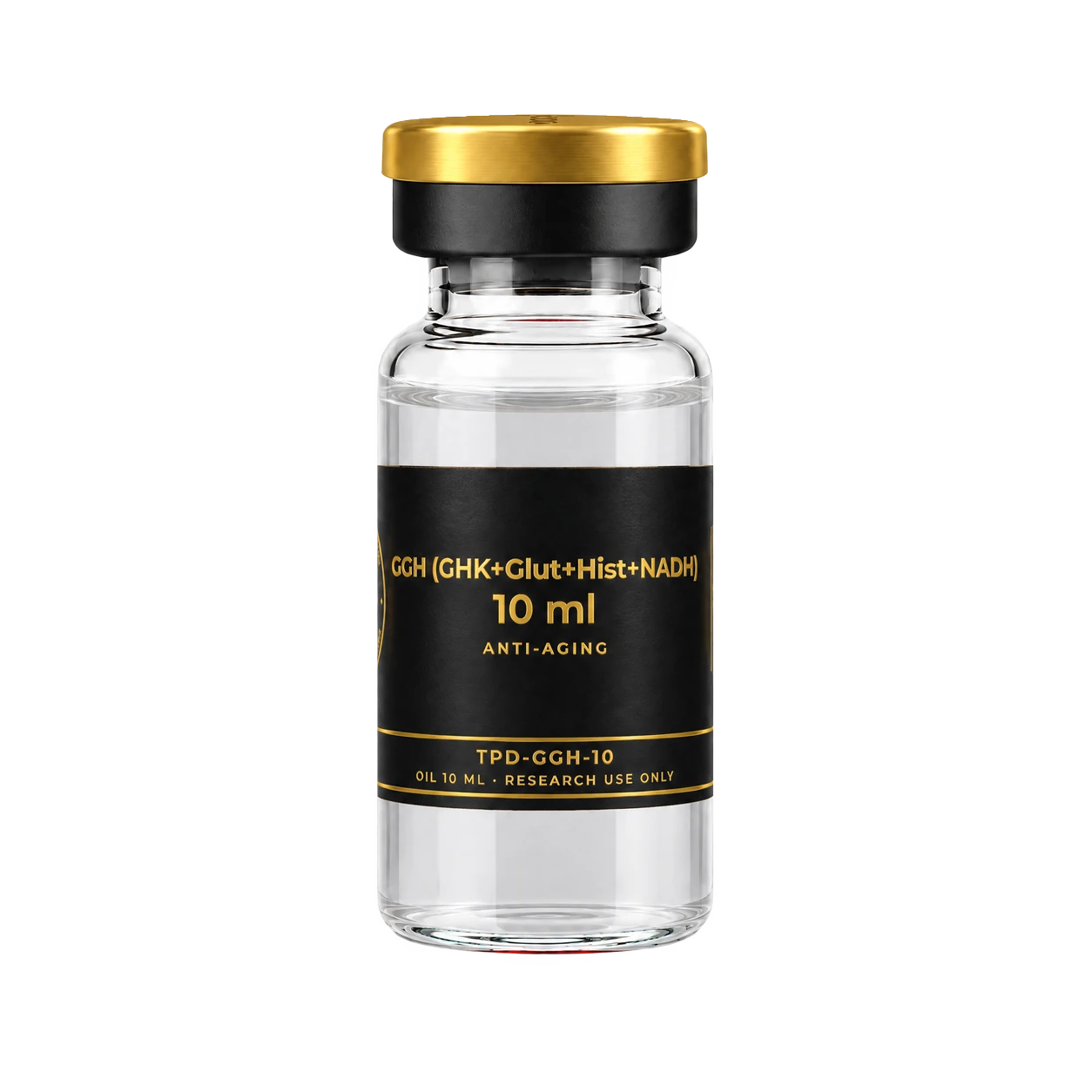
GGH is a multi-compound anti-aging research formulation with four active ingredients: GHK-Cu (Glycyl-L-Histidyl-L-Lysine copper complex), Glutathione (tripeptide and central antioxidant), Histidine (amino acid with radical scavenger function) and NADH (reduced form of NAD+).
Per study reports GGH combines four different anti-aging mechanisms:
- GHK-Cu stimulates collagen and glycosaminoglycan synthesis and regulates more than 4,000 genes
- Glutathione as the body’s master antioxidant, neutralizes oxygen radicals at cellular level
- Histidine as carnosine precursor and direct radical scavenger
- NADH as coenzyme for mitochondrial ATP production and sirtuin pathways
The blend form brings all four compounds together in one injection. Individual mechanisms are well characterized; combined application as blend is newer and less well investigated than individual compounds.
Typical application is subcutaneous once to twice per week in 6-12 week courses.
You can order GGH as lyophilized peptide in 10-pack at 50mg per vial.
This information is for research and educational purposes only. No medical recommendations.
Risks & Safety
GGH combines four anti-aging actives in one injection. The individual compounds are well characterized and considered predominantly mild, but the combined blend form is newer and less well investigated.
Observed in research and user reports:
- Injection site: mild redness, pressure or transient irritation at the injection site is the most common observation.
- Pigment effects: the glutathione component can, through the documented effects on skin pigmentation pathways, change skin tone with repeated application, described in the literature as reversible.
- Circulation: the NADH component can, like related NAD compounds, trigger warmth or restlessness with application that is too fast.
- Blend-specific data gap: the individual mechanisms are well established, but the combined application as a blend is barely systematically investigated. Interactions of the four compounds in this form are not well characterized.
- No long-term data: robust human studies on the blend form do not exist.
This classification does not replace medical advice. Risk and responsibility for any actual use lie entirely with the buyer.
Studies
- GHK and DNA: Resetting the Human Genome to Health - BioMed Research International 2014, Pickart et al: GHK gene-expression study with effects on >4,000 genes.
- GHK Peptide as a Natural Modulator of Multiple Cellular Pathways in Skin Regeneration - BioMed Research International 2015, Pickart et al: GHK in collagen synthesis, wound healing and skin regeneration.
- Regenerative and Protective Actions of the GHK-Cu Peptide in the Light of the New Gene Data - International Journal of Molecular Sciences 2018, Pickart, Margolina: updated review of GHK-Cu effects on skin regeneration and aging.
- Glutathione - Annual Review of Biochemistry 1983, Meister, Anderson: classic glutathione review covering antioxidant function and cellular pathways.
- Effects of oral glutathione on skin appearances: A randomized placebo-controlled study - Journal of the American Academy of Dermatology 2016: randomized placebo-controlled study on glutathione and skin pigmentation.