Description
GHK-Cu + KPV Blend combines two short tripeptides with complementary research profiles in a single formulation. GHK-Cu (glycine-histidine-lysine complexed with a copper ion) is a copper tripeptide naturally found in human plasma, isolated in the early 1970s, with body concentrations that decline with age. KPV (lysine-proline-valine) is the C-terminal tripeptide of alpha-melanocyte-stimulating hormone (alpha-MSH) and ranks among the best-characterized anti-inflammatory peptides in the literature. The blend therefore bundles a remodeling pathway and an anti-inflammatory pathway.
The two components act through distinct mechanisms. In preclinical and in vitro studies, GHK-Cu is associated with stimulation of collagen and glycosaminoglycan synthesis, modulation of metalloproteinases, promotion of angiogenesis and a broad shift in gene expression toward tissue repair. KPV instead intervenes primarily in inflammatory signaling cascades: in research models it suppresses activation of the transcription factor NF-kB and thereby reduces release of pro-inflammatory cytokines such as TNF-alpha and IL-6. A notable feature of KPV is that, despite its kinship to alpha-MSH, it shows no significant binding to the classical melanocortin receptors, with the effect described in research as intracellularly mediated.
Both tripeptides are short sequences with correspondingly short half-lives. GHK-Cu is sensitive to carboxypeptidases and is used in research both topically (especially in skin research) and subcutaneously. KPV is described in preclinical models via subcutaneous, topical and orally targeted formulations for local gut application. Combined use as a blend is newer and less well characterized than the individual tripeptides, whose standalone data are substantial.
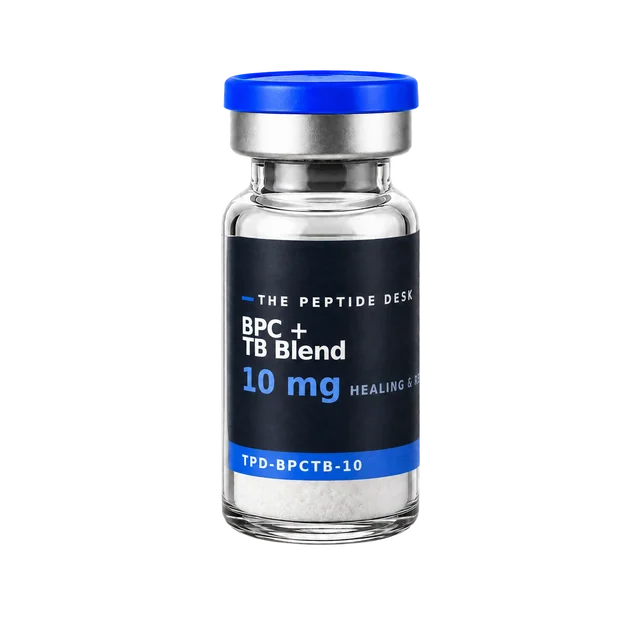
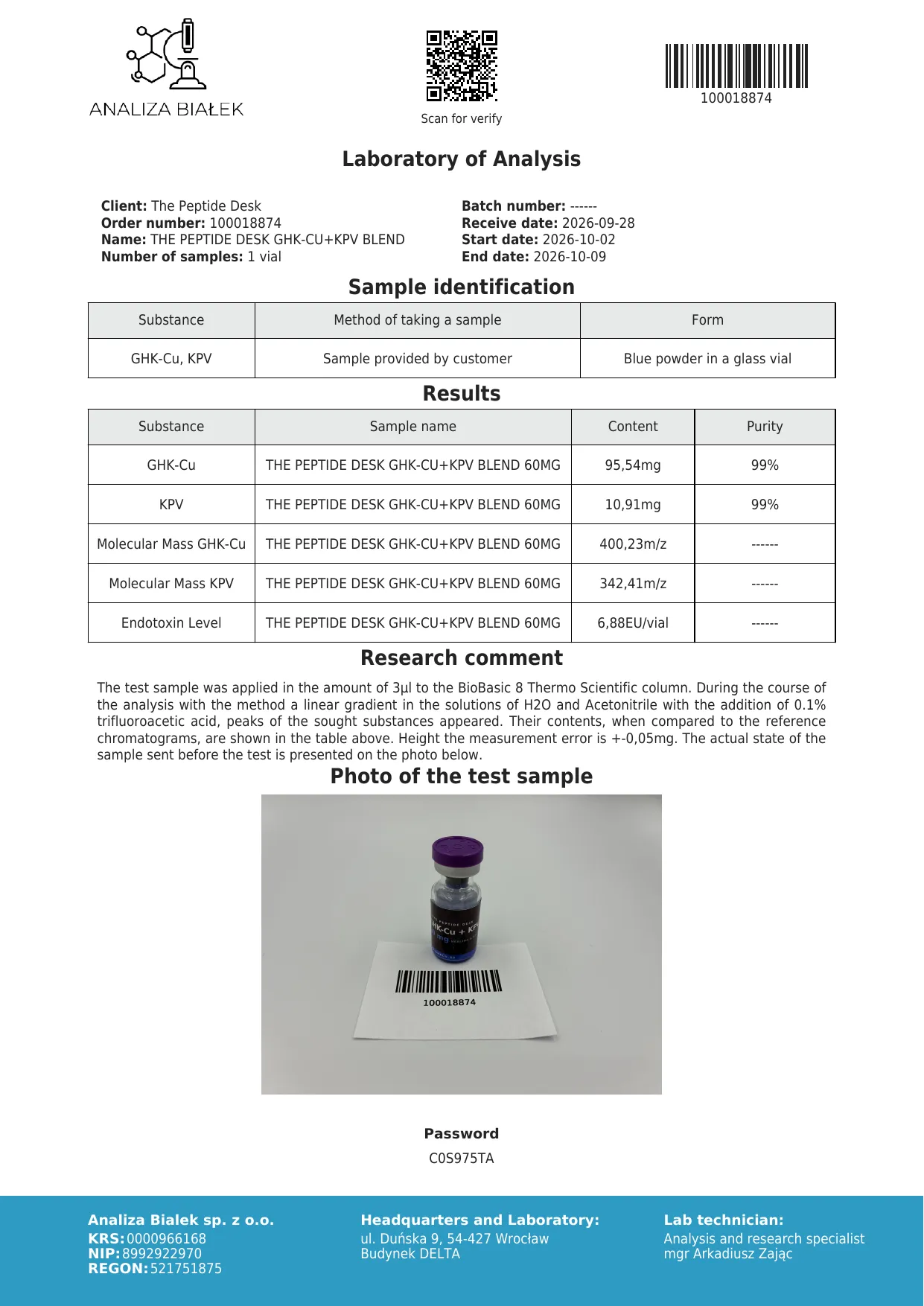
In recovery, skin and anti-aging contexts, the blend covers two pathways that are closely interwoven in tissue regeneration: structural remodeling via GHK-Cu and dampening of the inflammatory component via KPV. You can order GHK-Cu + KPV Blend as a lyophilized peptide in 10-vial packs at 60 mg total peptide per vial, that is 50 mg GHK-Cu and 10 mg KPV. The substances are offered exclusively as research compounds for research and educational purposes.
This information is for research and educational purposes only. Not medical advice.
Studies
- The human tri-peptide GHK and tissue remodeling - Journal of Biomaterials Science 2008, Pickart: Review of remodeling processes, collagen synthesis and anti-inflammatory effects of GHK-Cu (review of preclinical data).
- The Effect of the Human Peptide GHK on Gene Expression Relevant to Nervous System Function and Cognitive Decline - Brain Sciences 2017, Pickart et al: Gene-expression data on GHK and regenerative, antioxidant and anti-inflammatory pathways (Connectivity Map analysis).
- Effect of Gly-Gly-His, Gly-His-Lys and their copper complexes on TNF-alpha-dependent IL-6 secretion in normal human dermal fibroblasts - Acta Poloniae Pharmaceutica 2012, Gruchlik et al: In vitro study, GHK and GHK-Cu lower TNF-alpha-dependent IL-6 secretion in human dermal fibroblasts.
- Melanocortin-derived tripeptide KPV has anti-inflammatory potential in murine models of inflammatory bowel disease - Inflammatory Bowel Diseases 2008, Kannengiesser et al: Animal model, KPV reduces inflammatory markers and tissue damage in two colitis models, with the effect partly independent of the MC1 receptor.
- Effects of the COOH-terminal tripeptide alpha-MSH(11-13) on corneal epithelial wound healing: role of nitric oxide - Experimental Eye Research 2006, Bonfiglio et al: Animal model, topical KPV accelerates corneal epithelial wound healing through a nitric-oxide-dependent mechanism.