Description
Klow Blend is a pre-mixed research formulation that integrates KPV (lysine-proline-valine tripeptide) as an anti-inflammatory component into a classical healing stack. The configuration builds on the Glow Blend logic (BPC-157 + TB-500 + GHK-Cu), extended with KPV as an additional immune-modulatory axis. The name “Klow” derives from this KPV extension.
In research context, Klow Blend thus addresses four complementary pathways simultaneously: tissue repair and angiogenesis (BPC-157), cellular migration and stem cell mobilization (TB-500), collagen synthesis and microcirculation (GHK-Cu) and anti-inflammatory modulation (KPV). This combination is particularly established in research literature for chronic inflammation models in which the pure repair cascade is insufficient because persistent inflammatory signals counteract repair.
KPV is the C-terminal tripeptide of the alpha-MSH molecule and acts in research models through inhibition of pro-inflammatory transcription factors like NF-kB. The data on KPV in inflammation research is substantial, especially in models of chronic intestinal inflammation and skin inflammation.
The advantage of the pre-mixed blend: four compounds in one application routine, one reconstitution step, defined ratio. This substantially reduces operational complexity in multi-week research setups.
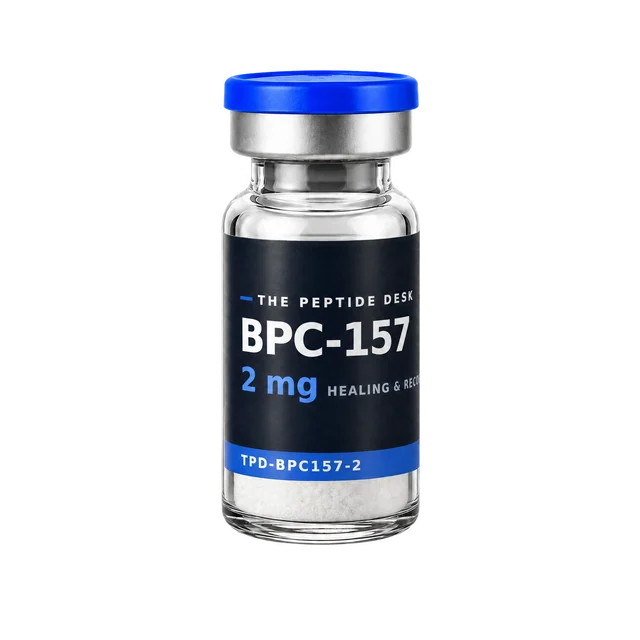
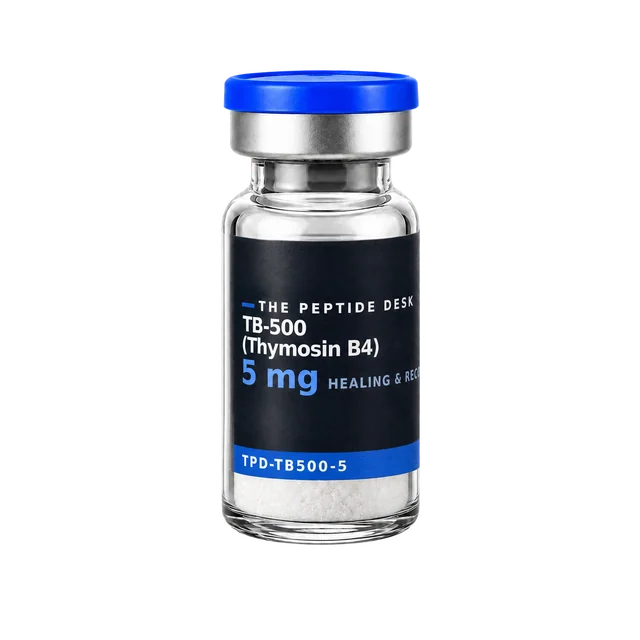
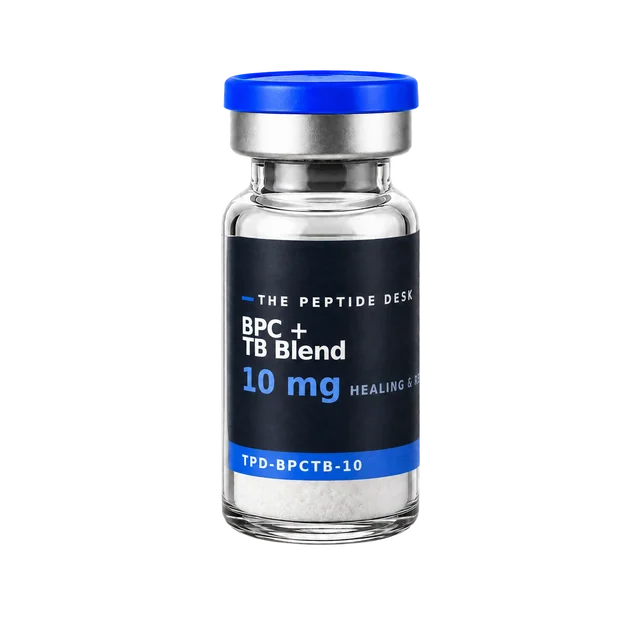
Klow Blend is available in 80mg vials as 10-vial packs (50mg GHK-Cu + 10mg BPC-157 + 10mg TB-500 + 10mg KPV per vial).
This information is for research and educational purposes only. No medical recommendations.
Risks & Safety
Klow Blend is considered well tolerated per study reports. All four components - BPC-157, TB-500, GHK-Cu and KPV - each have a mild profile in the preclinical literature that carries over to the combined formulation.
Observed in research and user reports:
- Injection site: mild redness, pressure or transient irritation at the injection site is the most common observation with subcutaneous use.
- Copper component: the GHK-Cu component can cause somewhat more pronounced local irritation at the injection site than pure peptide solutions.
- Angiogenesis effect of the TB-500 component: because TB-500 promotes the formation of new blood vessels in studies, a theoretical concern is discussed that existing abnormal tissue could also be supplied. No evidence supports this.
- No long-term data: robust long-term human studies do not exist for any of the four components. The four-compound blend form is additionally less well characterized than the separate peptides.
This classification does not replace medical advice. Risk and responsibility for any actual use lie entirely with the buyer.
Studies
- Gastric pentadecapeptide body protection compound BPC 157 and its role in accelerating musculoskeletal soft tissue healing - Cell and Tissue Research 2019: Critical review of the BPC-157 component in tendon, ligament and muscle models: consistently positive findings, but almost exclusively from rodent studies, with confirmation in humans still pending.
- Thymosin beta4 accelerates wound healing - Journal of Investigative Dermatology 1999: Study on the TB-500 component: in a rat wound model, thymosin β4 increased re-epithelialization by up to 61% over controls, with more collagen deposition and angiogenesis.
- PepT1-mediated tripeptide KPV uptake reduces intestinal inflammation - Gastroenterology 2008: Study on the KPV component: KPV enters intestinal epithelial and immune cells via the peptide transporter PepT1, inhibited NF-κB and MAP kinase signaling there and reduced inflammation in two mouse colitis models when given orally.
- Regenerative and Protective Actions of the GHK-Cu Peptide in the Light of the New Gene Data - International Journal of Molecular Sciences 2018: Review of the GHK-Cu component: describes increased collagen, elastin and glycosaminoglycan synthesis as well as blood vessel and nerve outgrowth and interprets these effects in light of gene expression data.