Description
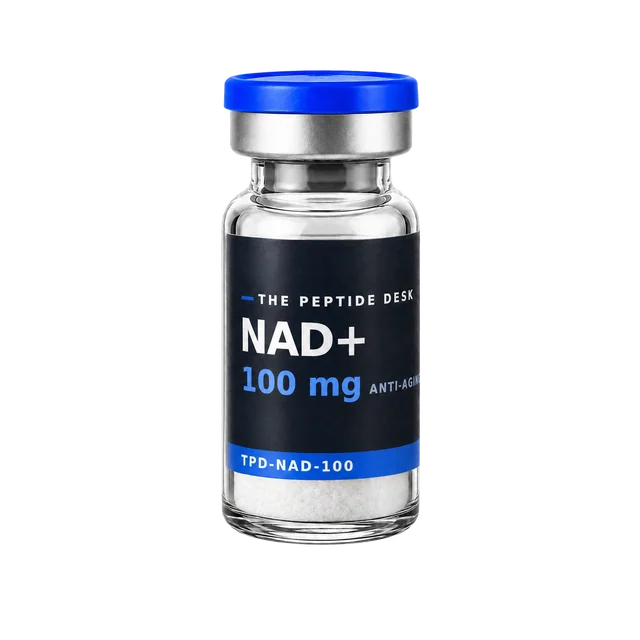
NAD+ (nicotinamide adenine dinucleotide) is an endogenous coenzyme that works in every cell as the central electron carrier of energy metabolism. It cycles between the oxidized form NAD+ and the reduced form NADH, driving glycolysis, the citric acid cycle and the mitochondrial respiratory chain. Beyond this redox role, NAD+ is the substrate for three enzyme classes at the heart of aging research: sirtuins (NAD+-dependent deacylases), PARPs (DNA repair) and CD38. This IV variant supplies NAD+ at 1000mg per vial.
NAD+ taken orally is largely broken down in the gastrointestinal tract, which is why research has looked at the intravenous form: it bypasses first-pass degradation. In a pilot study using a six-hour infusion, NAD+ was essentially undetectable in plasma directly during the first two hours and was instead rapidly and completely converted into metabolites (a profile consistent with NAD+ glycohydrolase and pyrophosphatase activity). Only afterward did metabolites rise measurably in plasma and urine. In a research context this suggests rapid, tissue-level metabolism rather than a simple plasma pool.
The background of the research interest: NAD+ levels decline with advancing age, which in animal models and cell studies is associated with mitochondrial dysfunction and declining sirtuin activity. Studies suggest that raising the NAD+ metabolome via precursors such as nicotinamide riboside (NR) or nicotinamide mononucleotide (NMN) can address the sirtuin and mitochondrial pathways. Direct IV administration of NAD+ itself is the least clinically characterized of these routes and rests on a few small human studies plus the broader precursor literature.
In the neuroprotection research field, the NADPARK study provides the cleanest current human signal: there, the NAD+ precursor NR raised cerebral NAD+ levels and altered brain metabolism in a research context. Formally this concerns the precursor, not the IV form, but it is relevant to understanding the NAD+ pathway. Data on direct IV NAD+ administration remain largely preclinical or anecdotal.
You get NAD+ in the IV variant at 1000mg per vial in a 10-pack. The high per-vial loading reflects the quantity windows used in infusion research.
This information is for research and educational purposes only. Not medical advice.
Studies
- A Pilot Study Investigating Changes in the Human Plasma and Urine NAD+ Metabolome During a 6 Hour Intravenous Infusion of NAD+ - Frontiers in Aging Neuroscience 2019: The central human study on the IV form. Shows that NAD+ is fully converted to metabolites during the first two hours, with plasma and urine markers rising only afterward.
- NAD+ and sirtuins in aging and disease - Trends in Cell Biology 2014: Mechanism review (Imai & Guarente) of the NAD+/sirtuin pathway, the age-related NAD+ decline and its coupling to mitochondrial function.
- The NADPARK study: A randomized phase I trial of nicotinamide riboside supplementation in Parkinson’s disease - Cell Metabolism 2022: Randomized phase I study of the NAD+ precursor NR. Cerebral NAD+ increase and altered brain metabolism in a research context (concerns the precursor, not IV NAD+).
- Clinical Evidence for Targeting NAD Therapeutically - Pharmaceuticals 2020: Review (Radenkovic & Verdin) of the evidence around raising NAD+ as a research strategy, including a sober assessment of the thin data on direct administration.
- Chronic nicotinamide mononucleotide supplementation elevates blood NAD levels and alters muscle function in healthy older men - npj Aging 2022: Human data on the precursor NMN. Confirms that the NAD+ metabolome can be raised and is associated with muscle parameters.