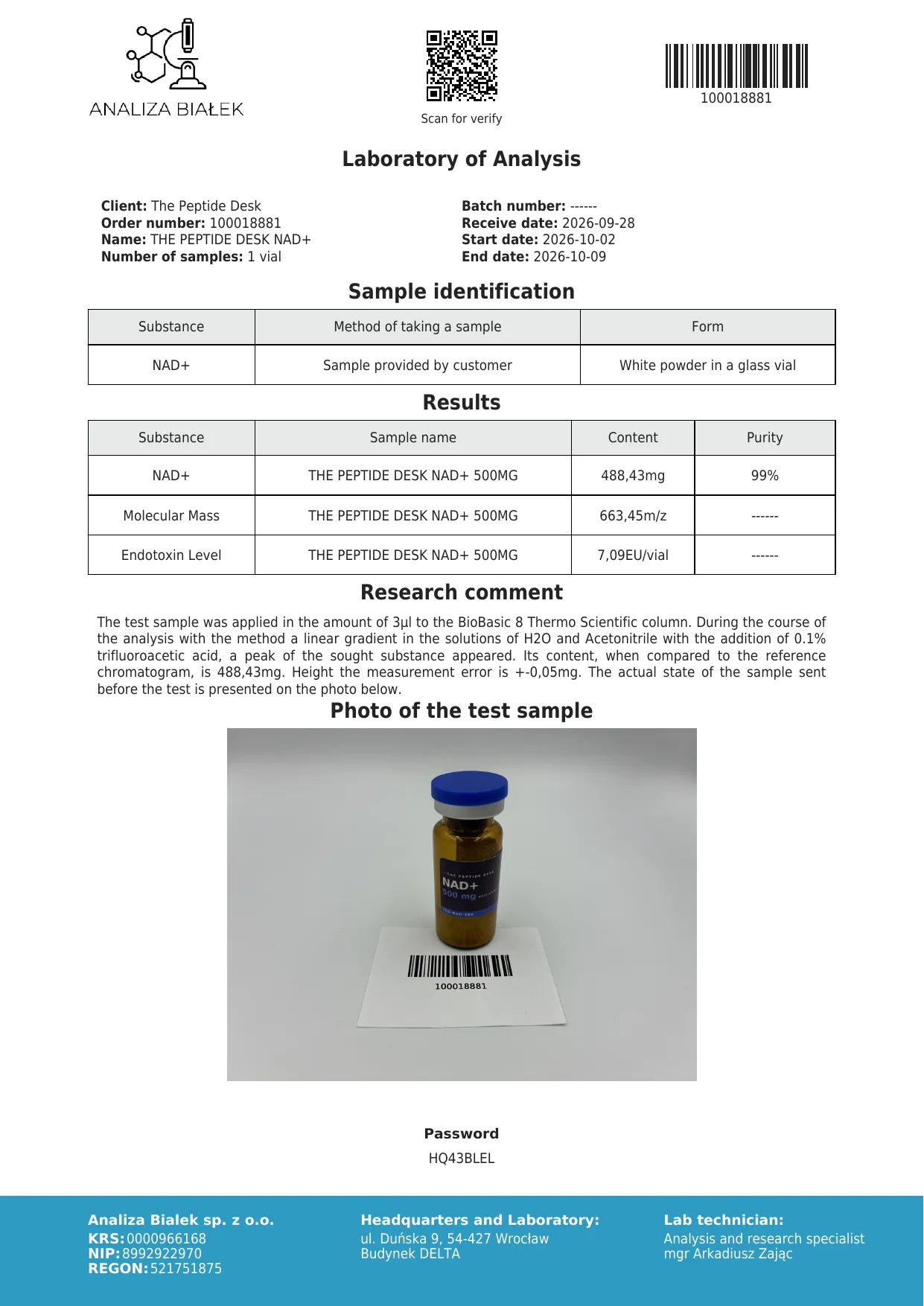
Description
NAD+ (Nicotinamide Adenine Dinucleotide) is a coenzyme present in every living cell, playing a central role in numerous metabolic processes. In the context of longevity research, NAD+ is currently at the center of many studies, since its availability declines significantly with age, restricting the activity of important cellular repair systems.
The central research mechanism runs through the sirtuin family. Sirtuins are NAD+-dependent deacetylases involved in regulating metabolism, DNA repair, mitochondrial function and stress response. As NAD+ levels drop, sirtuin activity decreases, which in preclinical studies is associated with accelerated cellular aging. Secondarily, the NAD+ pool is further taxed by PARP enzymes (DNA repair) and CD38, amplifying the age-related decline.
In animal models, restoration of physiological NAD+ levels via precursors such as NMN or NR leads to activation of the Sirt1/AMPK/PGC-1α axis with improvements in mitochondrial function, reduced oxidative stress, less inflammation and decreased cell senescence. The mitochondrial Unfolded Protein Response (UPRmt) and FOXO signaling pathways are linked to lifespan extension in C. elegans models.
In research settings, NAD+ is often used directly, frequently at higher dosages than typical for precursor compounds. Bioavailability via subcutaneous or intramuscular routes is investigated in preclinical models.
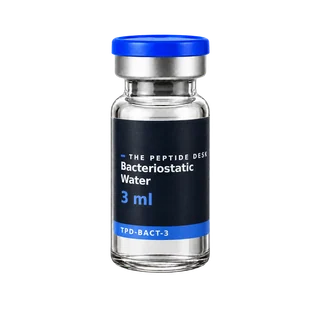
You can order NAD+ as a lyophilised powder in 10-vial packs at 100mg, 250mg, 500mg and 1000mg per vial. It is reconstituted with bacteriostatic water, so you set the concentration yourself. If you prefer to skip reconstitution, NAD+ Inject is available as a ready-to-use solution.
This information is for research and educational purposes only. No medical recommendations.
Risks & Safety
NAD+ is, as an endogenous coenzyme, generally well known, but parenteral application at higher dosages has a characteristic reaction profile per study reports that depends strongly on the pace of application.
Observed in research and user reports:
- Flushing and pressure: with application that is too fast, user reports describe intense flushing, a pressure sensation in the chest, nausea and restlessness. These reactions typically subside at a slower pace.
- Circulatory effects: brief changes in heart rate and sensation of warmth during application are regularly reported.
- Injection site: with the high vial sizes, irritation at the injection site is a common observation.
- No long-term data: robust human studies on longer-term high-dose parenteral use do not exist. The profile rests on animal models, precursor studies and anecdotal experience.
This classification does not replace medical advice. Risk and responsibility for any actual use lie entirely with the buyer.
Studies
- It takes two to tango: NAD+ and sirtuins in aging/longevity control - npj Aging 2016: Classical review on the NAD+-sirtuin axis by Imai and Guarente.
- The NAD+/sirtuin pathway modulates longevity through mitochondrial UPR and FOXO signaling - Cell 2013: Mechanism study on lifespan extension via mitochondrial pathways.
- NAD+ and Sirtuins in Aging and Disease - Trends in Cell Biology 2014: Review on disease pathways and aging mechanisms.