
Description
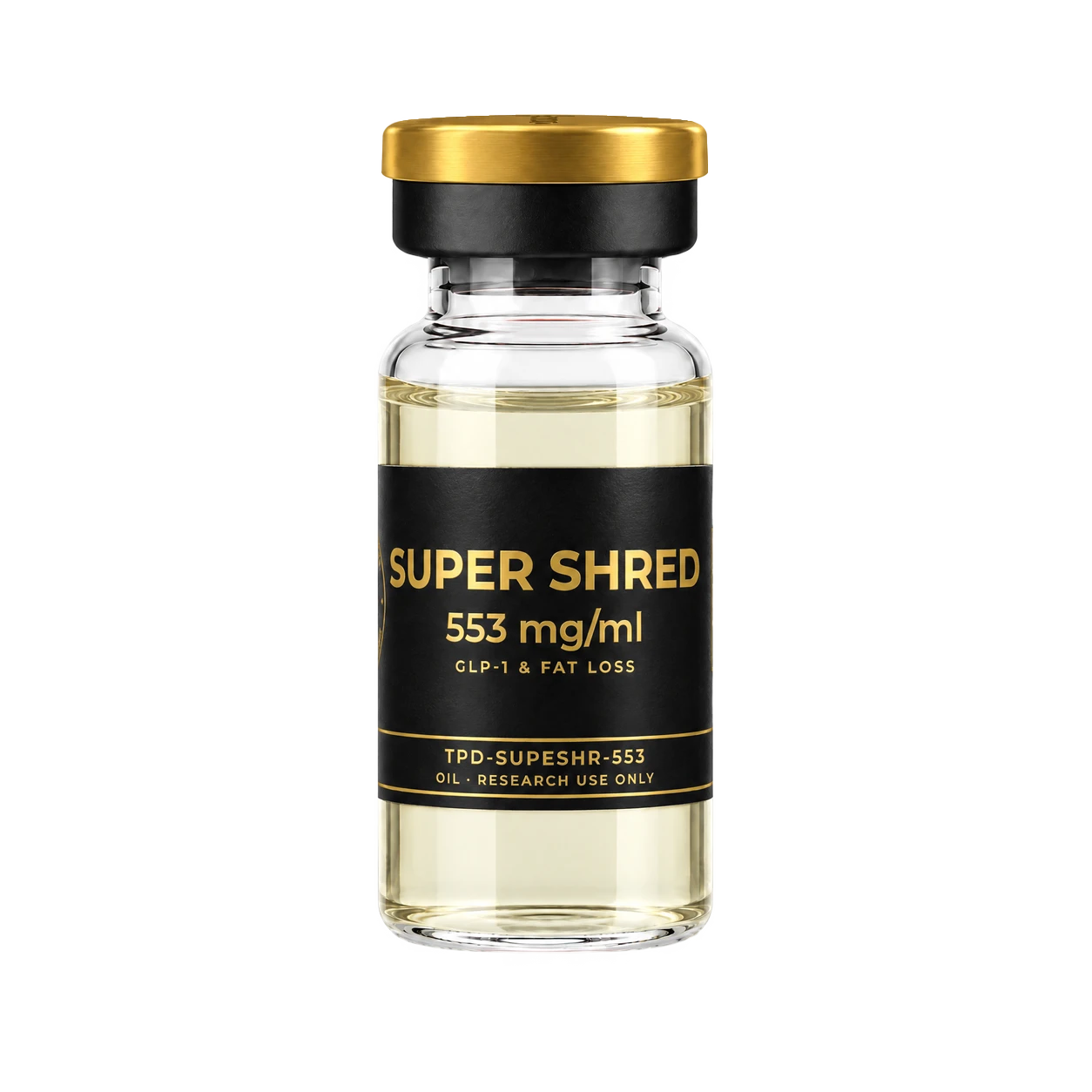
Super Shred is a pre-mixed research formulation combining multiple compounds from the metabolic and lipid area in one vial. Typical configurations include components like AOD-9604, tesofensine or other lipolytic compounds in a defined ratio. The exact composition varies by vendor and research batch.
In research context, Super Shred addresses multiple metabolic pathways simultaneously: lipolytic activation, adipocyte modulation and partially central appetite regulation, depending on the exact component configuration. This multi-pathway coverage makes the blend a tool for metabolism-focused research overviews.
As with other multi-component blends, the practical advantage is reduced operational complexity in multi-week setups. The trade-off is reduced mechanism clarity compared to mono-compound research.
In research setups with primary focus on lipid metabolism and metabolic effects, Super Shred is an efficient configuration. For isolated mechanism studies, however, the individual components should be used separately to enable clear pathway differentiation.
The exact component configuration of Super Shred is vendor-specific and should be verified before research application. Batch-to-batch variability can occur and affect the reproducibility of research results.
Super Shred is available in a multi-component configuration as 10-vial packs.
This information is for research and educational purposes only. No medical recommendations.
Risks & Safety
Super Shred is a pre-mixed multi-component blend whose tolerability per study reports depends strongly on the respective composition. Since the exact configuration is vendor-specific, the documented profile cannot be delineated as clearly as with mono-compounds.
Observed in studies and user reports:
- Injection site: redness, pressure or transient irritation at the injection site is the most common local observation.
- Component-dependent effects: depending on the configuration, centrally acting components can lead to reduced appetite, inner restlessness or sleep changes, while lipolytic portions bring their own respective profile.
- Batch variability: batch-to-batch variation is documented and can affect both effect and tolerability, which is why the composition should be verified before use.
- No long-term data: there are no robust human studies on Super Shred as a specific formulation. The classification is derived from the individual components.
This classification does not replace medical advice. Risk and responsibility for any actual use lie entirely with the buyer.
Studies
- Increase of fat oxidation and weight loss in obese mice caused by chronic treatment with human growth hormone or a modified C-terminal fragment - International Journal of Obesity 2001: Work on AOD-9604, one of the typical components named in the text: in obese mice, hGH and AOD9604 reduced body weight gain and increased fat oxidation over 14 days, while AOD9604 did not bind the hGH receptor.
- Metabolic studies of a synthetic lipolytic domain (AOD9604) of human growth hormone - Hormone Research 2000: Work on AOD-9604: in obese Zucker rats, daily oral dosing for 19 days reduced body weight gain by more than half without impairing insulin sensitivity.
- Safety and Efficacy of Approved and Unapproved Peptide Therapies for Musculoskeletal Injuries and Athletic Performance - Sports Medicine 2026: Narrative review of approved and unapproved peptides including AOD-9604: favorable findings mostly come from animal models, while rigorous human safety data are scarce. The finished blend itself is not covered.