Description
Thymosin Alpha-1 is a 28-amino-acid peptide naturally produced in the thymus and characterized in research literature as a central modulator of adaptive immunity. Structurally it is an N-acetylated peptide derived from the precursor protein prothymosin alpha. The compound was isolated in the 1970s by Allan Goldstein and is therefore among the longest-researched thymus peptides.
In research context, the central mechanism lies in modulation of T-cell maturation and function. In preclinical studies, thymosin alpha-1 has been associated with enhanced differentiation of thymocytes into mature T-cells, increased Toll-like receptor activity in dendritic cells and enhanced Th1 response. These properties make the compound an established research tool for studies on adaptive immunity, viral infection research and immune senescence.
The clinical database is substantial, with studies on chronic hepatitis B and C, sepsis research and immune reconstitution models. In COVID-19 research settings, thymosin alpha-1 was investigated as an immune-modulatory compound with focus on T-cell exhaustion markers.
Mechanistically, thymosin alpha-1 acts through Toll-like receptors (especially TLR9 and TLR2) on antigen-presenting cells. Downstream effects include modulation of cytokine patterns and enhancement of cellular immunity.
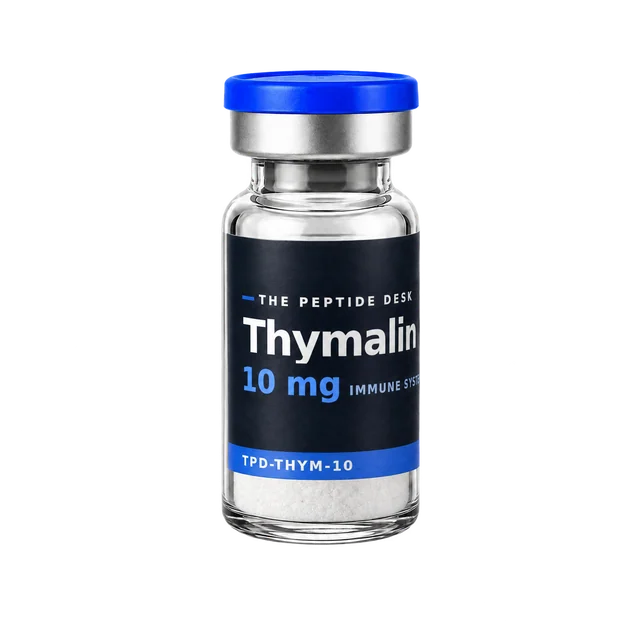
Thymosin Alpha-1 is available in 10mg vials as 10-vial packs.
This information is for research and educational purposes only. No medical recommendations.
Risks & Safety
Thymosin Alpha-1 is considered well tolerated per study reports and is among the longest and most extensively clinically studied thymus peptides.
Observed in research and user reports:
- Injection site: mild redness, pressure or transient irritation at the injection site is the most common observation, typical for subcutaneously applied peptides.
- Immune modulation: the compound modulates T-cell maturation and enhances the Th1 response, an active intervention in adaptive immunity that should be noted in autoimmune-relevant constellations.
- Flu-like reactions: the clinical literature occasionally describes mild, transient reactions such as slight fatigue.
- Long-term data: the clinical data base is substantial, but it focuses on defined indications and limited treatment periods.
This classification does not replace medical advice. Risk and responsibility for any actual use lie entirely with the buyer.
Studies
- Thymosin alpha1: isolation and sequence analysis of an immunologically active thymic polypeptide - PNAS 1977: First description: isolation from calf thymus and sequencing of the heat-stable 28-amino-acid peptide from thymosin fraction 5.
- Thymosin alpha 1 activates dendritic cells for antifungal Th1 resistance through toll-like receptor signaling - Blood 2004: Thymosin alpha 1 triggered dendritic cell maturation and IL-12 production via Toll-like receptors and MyD88 signaling and activated Th1-dependent antifungal immunity in a mouse model.
- Efficacy of thymosin alpha1 in patients with chronic hepatitis B: a randomized, controlled trial - Hepatology 1998: Randomized trial in 98 participants with chronic hepatitis B: 18 months after entry, the complete virological response rate after a 26-week course was 40.6% versus 9.4% in the control group.
- The efficacy of thymosin alpha 1 for severe sepsis (ETASS): a multicenter, single-blind, randomized and controlled trial - Critical Care 2013: Multicenter randomized trial in 361 participants with severe sepsis: 28-day mortality was 26.0% versus 35.0% in the control group, a difference of borderline statistical significance.
- Thymosin alpha 1: A comprehensive review of the literature - World Journal of Virology 2020: Review of the background and clinical uses of thymosin alpha 1 to date, from immunocompromised states and infections to vaccine response.