Description
KPV is a synthetic tripeptide consisting of the amino acids lysine-proline-valine. It corresponds to the C-terminal tripeptide of natural alpha-melanocyte-stimulating hormone (alpha-MSH) and is among the best-characterized anti-inflammatory peptides in research literature. The short sequence and conserved activity make KPV a mechanistically elegant research tool.
The research mechanism lies primarily in the inhibition of pro-inflammatory signaling pathways. In preclinical studies, KPV has been associated with suppression of NF-kB activation, a central transcription factor in inflammatory cascades. Through this inhibition, cytokines like TNF-alpha, IL-1, IL-6 and other pro-inflammatory mediators are reduced in research models. Mechanism coverage is well-documented.
A particularity of KPV: despite structural relatedness to alpha-MSH, the tripeptide shows no significant binding to classical melanocortin receptors. Instead, anti-inflammatory activity appears to be mediated intracellularly, presumably through direct modulation of the NF-kB cascade. This mechanism distinguishes KPV from receptor-mediated anti-inflammation compounds.
In research setups, KPV is particularly established in models of chronic intestinal inflammation, skin inflammation and atopic dermatitis. The data in inflammation research literature is substantial.
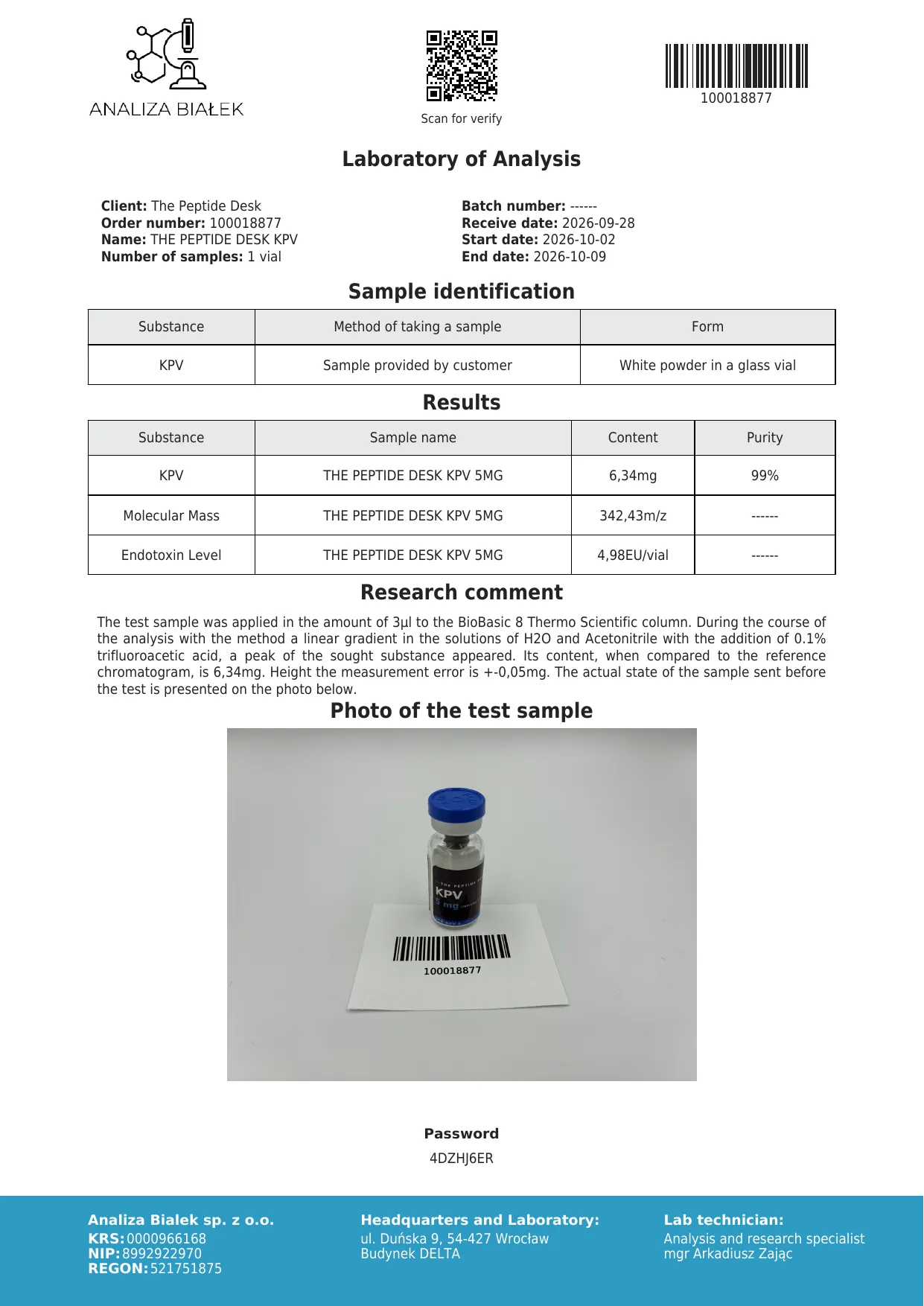
KPV is available in 5mg, 10mg, 20mg, 30mg and 60mg vials as 10-vial packs.
This information is for research and educational purposes only. No medical recommendations.
Risks & Safety
KPV is considered well tolerated per study reports and is among the best-characterized anti-inflammatory peptides in the literature.
Observed in research and user reports:
- Injection site: mild redness or pressure at the injection site is the most common local observation, typical for subcutaneously applied peptides.
- Mild profile: as a short tripeptide without significant binding to classical melanocortin receptors, KPV is described as low in side effects in preclinical studies.
- Immune modulation: KPV suppresses NF-kB activation and reduces pro-inflammatory cytokines, an active intervention in inflammatory pathways.
- No long-term data: the data in inflammation research is substantial, but it comes predominantly from preclinical models. Robust long-term human data do not exist.
This classification does not replace medical advice. Risk and responsibility for any actual use lie entirely with the buyer.
Studies
- PepT1-mediated tripeptide KPV uptake reduces intestinal inflammation - Gastroenterology 2008: KPV enters intestinal epithelial and immune cells via the peptide transporter PepT1, inhibited NF-κB and MAP kinase signaling there at nanomolar concentrations and reduced inflammation in two mouse colitis models when given orally.
- Melanocortin-derived tripeptide KPV has anti-inflammatory potential in murine models of inflammatory bowel disease - Inflammatory Bowel Diseases 2008: In two mouse colitis models, KPV led to faster recovery of body weight and fewer inflammatory infiltrates, including in animals without a functional MC1 receptor.
- Dissection of the anti-inflammatory effect of the core and C-terminal (KPV) alpha-melanocyte-stimulating hormone peptides - Journal of Pharmacology and Experimental Therapeutics 2003: Comparison of KPV with other MSH peptides in a mouse peritonitis model: KPV reduced leukocyte accumulation without raising cAMP, which argues against an action via melanocortin receptors.
- Alpha-melanocyte-stimulating hormone and related tripeptides: biochemistry, antiinflammatory and protective effects in vitro and in vivo, and future perspectives for the treatment of immune-mediated inflammatory diseases - Endocrine Reviews 2008: Review of alpha-MSH and the related tripeptides KPV and KdPT: KPV retains the anti-inflammatory effects seen in cell and animal models but lacks the pigmentary action.