This information is for research and educational purposes only. No medical recommendations. Products are not approved for human use. For health questions, consult a doctor.

Lexicon

Dihexa

An oral, brain-penetrant angiotensin IV analog from cognition research, with an exciting but now partly retracted evidence record.

1 min read 10 sources

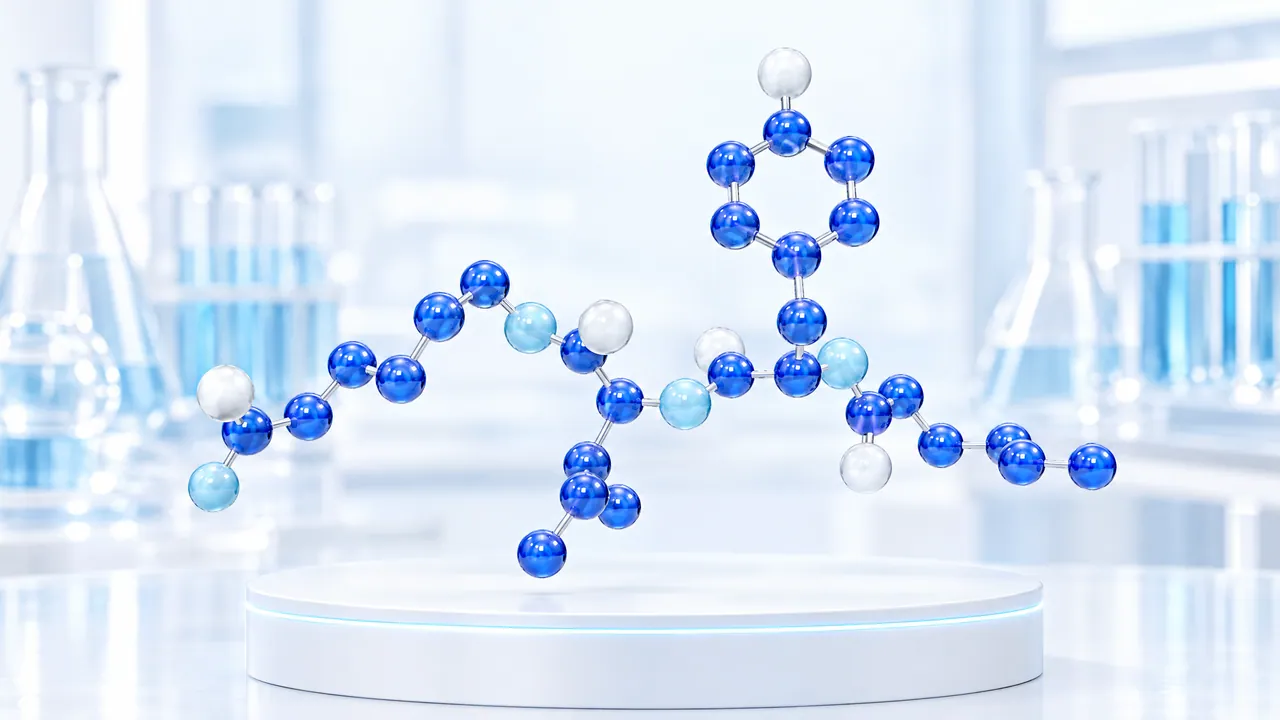
Molecule model of blue and white glass spheres with a ring group above a white podium with a glowing light blue rim in a bright lab
Preclinical · not approved

Summary

At a glance

Sources checked on 26 Oct 2026

Human trials in the registry
0 trials

no trial with Dihexa on ClinicalTrials.gov, as of 26 Oct 20269

Core taken from angiotensin IV
3 building blocks

the first three amino acids of an angiotensin IV analog, chemically stabilised1

Retracted (2025)
1 paper

the mechanism paper on HGF and c-Met, the developers' paper has carried a notice of concern since 20214

Molecular weight
504.7 g/mol

small molecule built from modified amino acids, not a classic peptide10

  • Dihexa is a small, chemically stabilised molecule derived from angiotensin IV. Its developers changed the core so that it stays stable in the body, works by mouth and crosses the blood-brain barrier.110
  • In their 2013 paper Dihexa reversed memory deficits caused by scopolamine and by ageing in rats and promoted new synapses in the hippocampus. This paper has carried a notice of concern since 2021.12
  • The paper that described the mechanism via HGF and c-Met was retracted in 2025. How Dihexa works exactly is therefore open.34
  • Later animal studies are mixed: in Alzheimer mice memory and inflammation markers improved, in rats with Huntington-like damage Dihexa did not protect.67
  • ClinicalTrials.gov lists no human trial (as of October 2026). Everything here is preclinical research, not a recommendation.9
Profile

Updated May 2026

Class
Angiotensin IV analog

nootropic

Use
Oral

daily

Half-life
unclear
Status
Preclinical

evidence partly retracted

Sizes
20 mg

1 size in the shop

Contents 14 sections
  1. At a glance
  2. What is Dihexa?
  3. How it works
  4. How to take it
  5. Dosing
  6. What the research shows
  7. Research status
  8. Side effects
  9. Practice
  10. Storage
  11. Related compounds
  12. FAQ
  13. Glossary
  14. Sources

What is Dihexa?

Dihexa is a small, chemically stabilized molecule derived from angiotensin IV and deliberately modified to act orally and cross the blood-brain barrier. In cognition research it was studied as a candidate against dementia.

Important and honest: a prominent paper on its mechanism was retracted in 2025. The evidence is therefore thinner and more uncertain than often portrayed.

Comparison

Dihexa and other nootropics

Compounds for memory and focus, as described in the TPD lexicon. Tap a card to open its entry.

Simplified: for Dihexa the mode of action is open since the mechanism paper was retracted. There is no comparison in humans. 14

How it works

Dihexa was associated with promoting synapse formation and cognitive performance. A widely cited mechanism via the HGF/c-Met system was, however, later retracted in the relevant publication, so the exact pathway is now open.

What remains: a preclinical profile as a brain-penetrant angiotensin IV analog, without a confirmed mechanism in humans.

Where it acts

Where Dihexa acted in animal studies

Tap a point or a card. Grey = observed, no confirmed receptor is known.

  1. Brain (hippocampus)

    Better memory in rats and Alzheimer mice, more synapses and nerve cells, fewer inflammatory messengers6

    Observed in trials
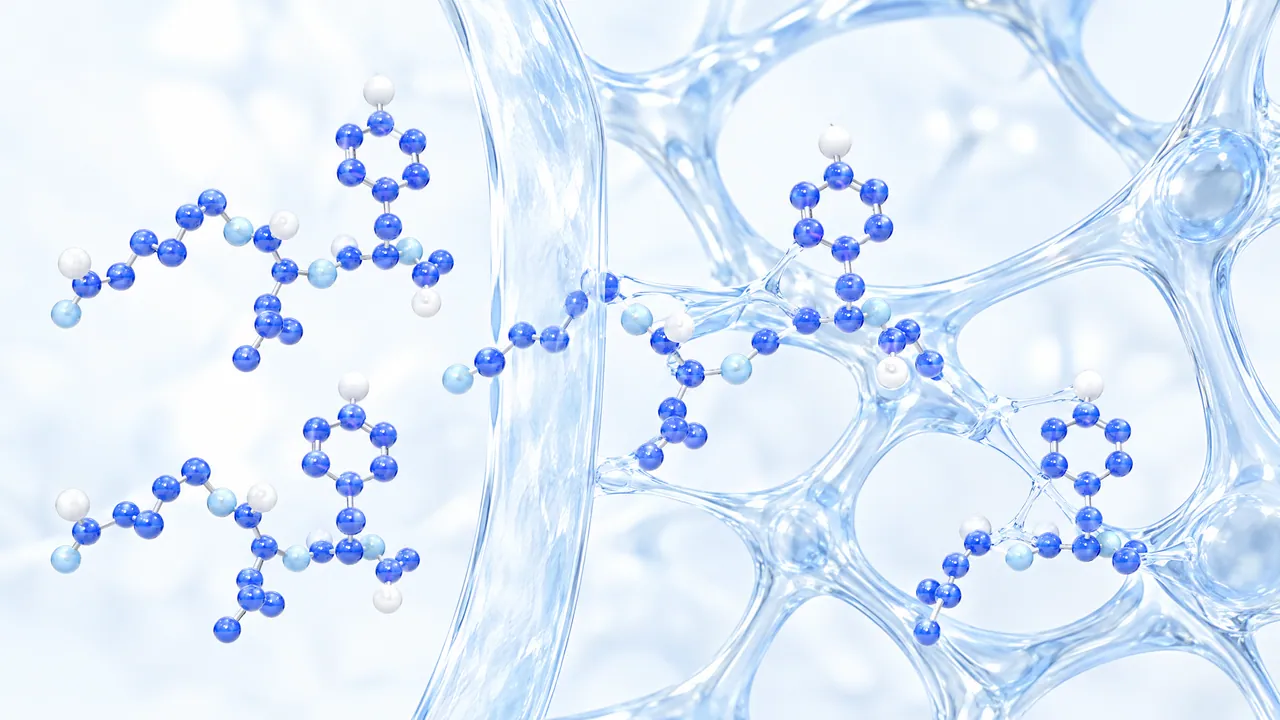
Several molecule models of blue glass spheres with ring groups floating in front of and inside a glass honeycomb network
New synapses in animal studies, the exact pathway is open. Symbolic image.

How to take it

Oral, once daily.

  • With some water, with or without food.
  • Rather during the day, since an activating effect is reported.
White folding box with the TPD logo next to a blister of ten round white tablets, two loose tablets in front on a bright lab bench
Tablets in a blister. Symbolic image.

Dosing

Dosing

Dosing, titration and syringe

Loading the dosing information …

  • Getting started and stepping up, drawn as a staircase
  • Units on the U-100 syringe for every step
  • How long one vial lasts

What the research shows

The developer work (McCoy, 2013) described dihexa as an orally available, brain-penetrant angiotensin IV analog with a memory-promoting effect in animal models. This work now carries an Expression of Concern. A later mechanism paper was retracted in 2025. That has to be honestly factored into any assessment.

Bright desk with a stack of books, a glass brain and a glass key in front of a window overlooking the city
So far only animal studies, two core papers under reservation. Symbolic image.

Research status

Where the research stands

Dihexa has never been tested in a registered human trial. The data come from animal studies, two of the core papers are under reservation. As of 26 Oct 2026. 9

  1. Preclinical Rats, mice and zebrafish larvae since 2013
  2. Phase 1 no registered trial
  3. Phase 2 no registered trial
  4. Phase 3 no registered trial
  5. Approval not yet
Not approved and no registered human trial. The mechanism paper has been retracted since 2025, the developers' paper has carried a notice of concern since 2021.9

So far there is no registered trial in humans. 9

Side effects

  • Solid human data are missing.
  • A growth- and synapse-promoting signal is not automatically harmless.
  • Because of the retracted research, the uncertainty here is especially large.

Practice

  1. Keep expectations low, the evidence is weaker than the hype.

  2. Start low, watch closely, when in doubt wait for better data.

Open blank notebook with a pen, a glass of water, a chessboard with white and blue pieces and a green plant on a white desk

Storage

Store dry, cool and protected from light, out of reach of children. Keep the original container closed and mind the expiry date.
Three white tablet bottles and a folded light blue towel on a white shelf
Dry, cool and protected from light in the closed original container. Symbolic image.

Related

Related compounds

A different path: all in the TPD lexicon.

FAQ

Common questions about Dihexa

Short answers, each backed by the sources below.

Is Dihexa approved or studied in humans?

No. There is no approval and as of 26 October 2026 the registry ClinicalTrials.gov lists no trial with Dihexa. All data come from animal studies and cell models.91

What did the developers' 2013 paper show?

The activity of an angiotensin IV analog sits in its first three amino acids. The researchers made this core more stable, more fat-soluble and more permeable. The result was Dihexa, which worked by mouth and crossed the blood-brain barrier. In rats it reversed memory deficits caused by scopolamine and by ageing in the water maze and promoted new synapses in the hippocampus. Since 2021 the paper has carried a notice of concern from the journal.12

What does the retraction of the mechanism paper mean?

In 2014 the same group described that Dihexa binds the growth factor HGF and thereby boosts its receptor c-Met. This paper received a notice of concern in 2021 and was retracted in 2025. The widely cited pathway via HGF and c-Met is therefore no longer considered established. Which mechanism applies instead is open.34

What do other animal studies show?

A group in China gave Dihexa to Alzheimer mice: memory in the water maze improved, there were more nerve cells and more of the synapse protein synaptophysin. Inflammatory messengers fell. The authors see the PI3K/AKT pathway involved. In rats with Huntington-like damage, by contrast, Dihexa did not protect against the deficits. In zebrafish larvae it protected hair cells from certain antibiotics.678

How well is Dihexa absorbed as a tablet?

The developers describe Dihexa as active by mouth and able to reach the brain, measured in rats. There are no data on absorption, half-life or distribution in humans.19

Which side effects are known?

There are no solid data because Dihexa has never been tested in humans. The developers themselves describe it as a molecule that triggers the formation of new synapses. Whether such a growth signal is harmless in the long run has not been studied.95

Glossary

Terms explained briefly

Dotted words in the text open these explanations directly.

Alzheimer mice
Mice with altered genes that form deposits like in Alzheimer's disease. A common animal model.
Angiotensin IV
Short fragment of the renin-angiotensin system. In the brain it is linked to learning and memory.
Blood-brain barrier
Tight cell layer of the brain's blood vessels. It lets only a few substances pass from the blood into the brain.
HGF and c-Met
The growth factor HGF and its receptor c-Met. Dihexa's pathway via this system comes from a retracted paper.
Hippocampus
Brain region that is important for learning and storing new memories.
Notice of concern
A note from a journal that it has doubts about the data of a published paper. A step before a possible retraction.
Preclinical
Research before first use in humans, in cell cultures and animal models.
Retracted paper
A publication that the journal has declared invalid. Its results are no longer considered established.
Scopolamine
Compound that causes memory deficits in animal studies. It is used to test whether a substance counters them.
Synapse
Contact point between two nerve cells through which signals are passed on.
Water maze
Memory test for rodents: they have to find a hidden platform in a pool again.

Evidence

Sources

Show all 10 sourcesHide sources 8 Studies1 Trial registry1 Database checked 26 Oct 2026

Studies

  1. Development of Dihexa as a stable, brain-penetrant angiotensin IV analog (rats)

    McCoy et al., Journal of Pharmacology and Experimental Therapeutics, 2013

    Checked 26 Oct 2026 via doi.org, Crossref, PubMed
  2. Notice of concern on the developers' 2013 paper

    Journal of Pharmacology and Experimental Therapeutics, 2021

    Checked 26 Oct 2026 via doi.org, Crossref, PubMed
  3. Retracted: effect via the HGF/c-Met system

    Benoist et al., Journal of Pharmacology and Experimental Therapeutics, 2014

    Checked 26 Oct 2026 via doi.org, Crossref, PubMed
  4. Retraction of the 2014 mechanism paper

    Journal of Pharmacology and Experimental Therapeutics, 2025

    Checked 26 Oct 2026 via doi.org, Crossref, PubMed
  5. Developers' review of angiotensin IV analogs

    Wright et al., Progress in Neurobiology, 2015

    Checked 26 Oct 2026 via doi.org, Crossref, PubMed
  6. Dihexa in Alzheimer mice: memory and inflammation

    Sun et al., Brain Sciences, 2021

    Checked 26 Oct 2026 via doi.org, Crossref, PubMed, PubMed Central
  7. No protection in Huntington-like damage (rats)

    Wells et al., Journal of Huntington's Disease, 2024

    Checked 26 Oct 2026 via doi.org, Crossref, PubMed
  8. Protection of hair cells from antibiotics (zebrafish larvae)

    Uribe et al., Frontiers in Cellular Neuroscience, 2015

    Checked 26 Oct 2026 via doi.org, Crossref, PubMed

Trial registry

  1. Search on ClinicalTrials.gov (no trial with Dihexa)

    ClinicalTrials.gov, U.S. National Library of Medicine

    Checked 26 Oct 2026 via ClinicalTrials.gov API v2

Database

  1. Structure of Dihexa in PubChem

    PubChem, U.S. National Library of Medicine (CID 129010512)

    Checked 26 Oct 2026 via PubChem

In the shop

Dihexa in the catalog

Sizes, prices and shipping times are on the product page.

To the product