This information is for research and educational purposes only. No medical recommendations. Products are not approved for human use. For health questions, consult a doctor.

Lexicon

Pinealon

A short cytogen peptide from the Khavinson program, meant to support brain and cell protection, with data mostly from one research group.

3 min read 11 sources

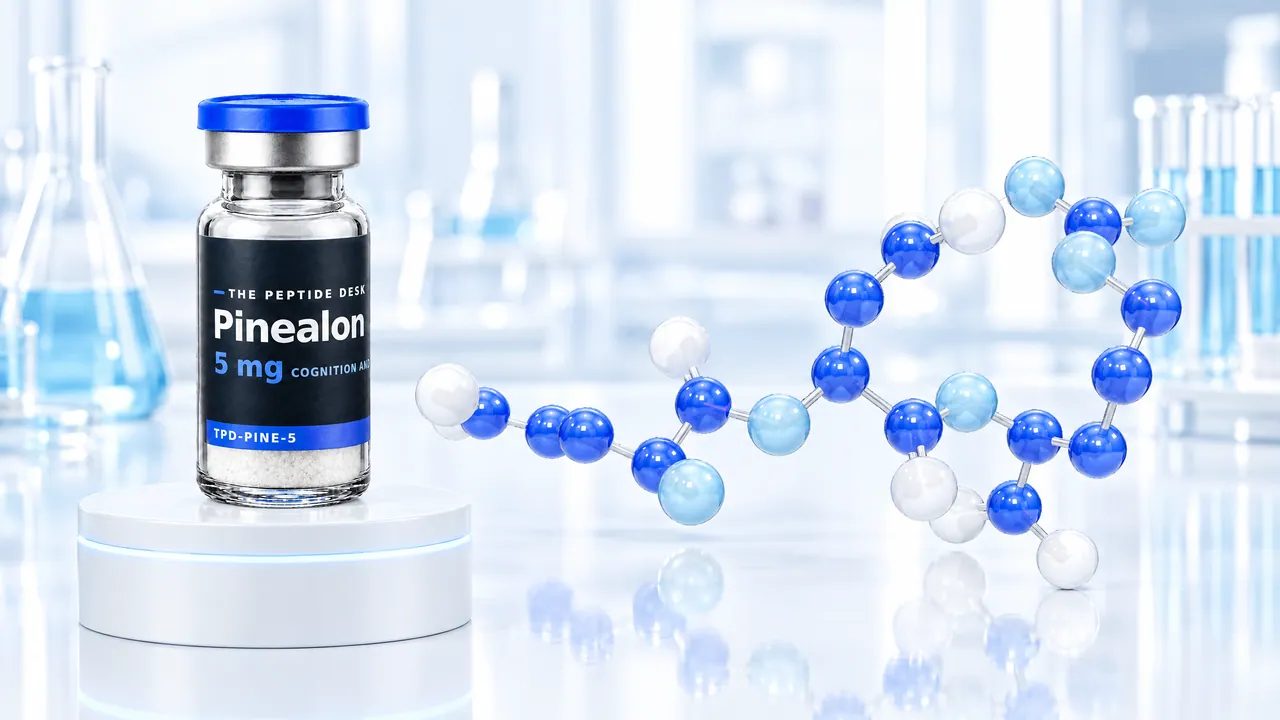
Vial with white powder, a blue cap and a black TPD label for Pinealon on a white podium, next to it a chain of blue and white glass spheres as a molecule model in a bright lab
No registered trial · not approvedLab tested in the shop

Summary

At a glance

Sources checked on 26 Oct 2026

Length
3 amino acids

Glu-Asp-Arg (EDR), a synthetic tripeptide11

Less oxidative stress
3 cell types

Cerebellar nerve cells, immune cells and PC12 cells in culture2

Report by the research group
72 people

After a traumatic brain injury, given as a tablet, not registered4

Human trials in the registry
0 trials

no trial with Pinealon on ClinicalTrials.gov, as of 26 Oct 202610

  • Pinealon is the synthetic tripeptide Glu-Asp-Arg (EDR) from the Russian Khavinson programme. There it is regarded as a bioregulator for the brain and nervous system.118
  • In cell cultures it curbed the formation of reactive oxygen species in nerve cells, immune cells and PC12 cells. Fewer cells died.2
  • Rats whose mothers received Pinealon during pregnancy learned better despite a metabolic burden. In Alzheimer mice more synaptic spines were preserved.35
  • The group explains the effect by binding to histones and DNA. On the computer EDR fits control regions of genes such as CASP3, SOD2 and APOE.45
  • ClinicalTrials.gov lists no trial with Pinealon (as of October 2026). Reports on humans come from the research group itself. Everything here is the state of research, not a recommendation.104
Profile

Updated May 2026

Class
Short bioregulator peptide

Khavinson

Use
Subcutaneous

in mg

Half-life
short
Status
Data mostly from one research group
Sizes
5 to 20 mg

3 sizes in the shop

Contents 16 sections
  1. At a glance
  2. What is Pinealon?
  3. How it works
  4. What you need
  5. Reconstitution
  6. Dosing
  7. Injection
  8. What the research shows
  9. Research status
  10. Side effects
  11. Practice
  12. Storage
  13. Related compounds
  14. FAQ
  15. Glossary
  16. Sources

What is Pinealon?

Pinealon is a short peptide (a tripeptide) from the Russian Khavinson program, which deals with so-called peptide bioregulators. These very short peptides are meant to act tissue-specifically, pinealon is aimed at the brain and nervous system.

Up front: most research comes from a single research group and mostly from Russia, large independent studies are missing.

Comparison

Same family, different building blocks

Short peptides from the Khavinson programme with their amino acid sequence according to a review. Tap a card to open its entry.

The assignment to a tissue comes from the Khavinson group itself. It has not been confirmed independently. 8

How it works

The theory behind the Khavinson peptides: they are meant to act at the level of gene regulation and restart age-related declining functions of a tissue. For pinealon, neuroprotective effects and protection from oxidative stress are described.

How well this concept transfers to humans is little established outside the originating research.

Where it acts

Where Pinealon acted in experiments

Tap a point or a card. From cell and animal studies, there is no confirmed receptor.

  1. Brain

    Nerve cells protected in culture, rat offspring learned better, more synaptic spines in Alzheimer mice3

    Observed in trials
  2. Immune cells in the blood

    Fewer reactive oxygen species in neutrophils (cell culture)2

    Observed in trials

Known targets9

Compound PubChem CID 10273502: two described targets, all Possible route into the cell, only modelled on the computer (docking).

Peptide transporter PepT1
Gene
SLC15A1
UniProt
P46059
ChEMBL
CHEMBL4605
Action
Possible route into the cell, only modelled on the computer (docking)
Amino acid transporter LAT1
Gene
SLC7A5
UniProt
Q01650
ChEMBL
CHEMBL4459
Action
Possible route into the cell, only modelled on the computer (docking)
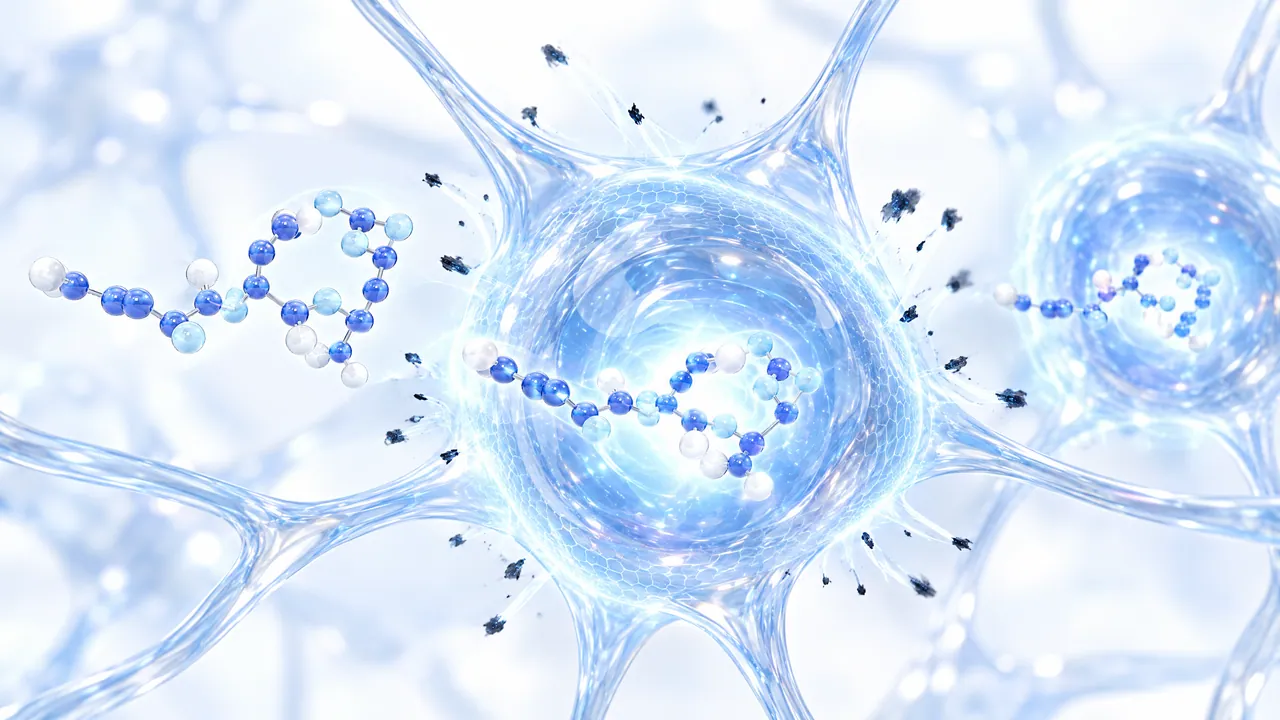
Glass nerve cell with a glowing nucleus, blue molecule chains moving in, dark particles bouncing off all around
Described effects are protection of nerve cells and against oxidative stress. Symbolic image.

What you need

Supplies

2 things, numbered as in the picture

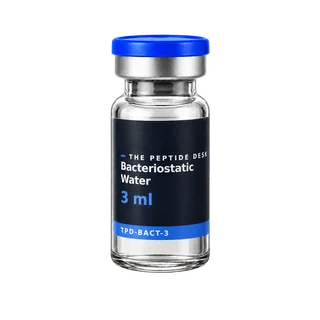
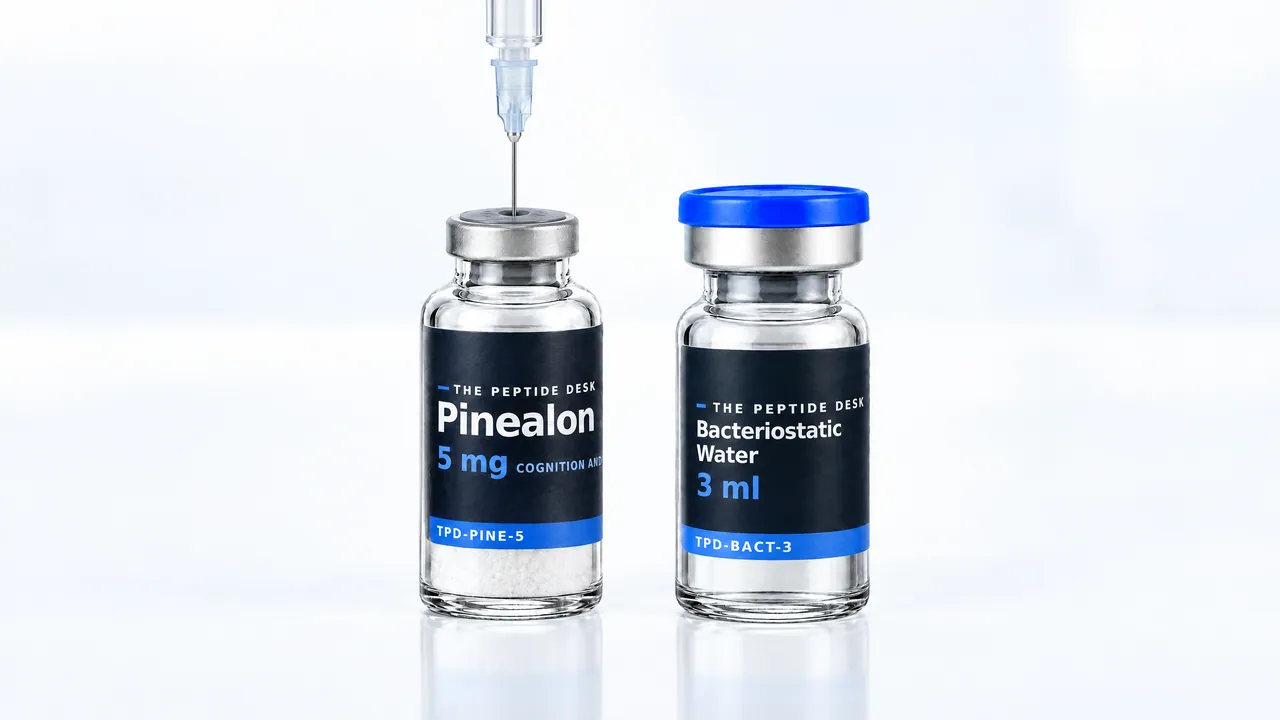
Tick off what you already have. Vial and BAC water are our real shop photos at the same size.
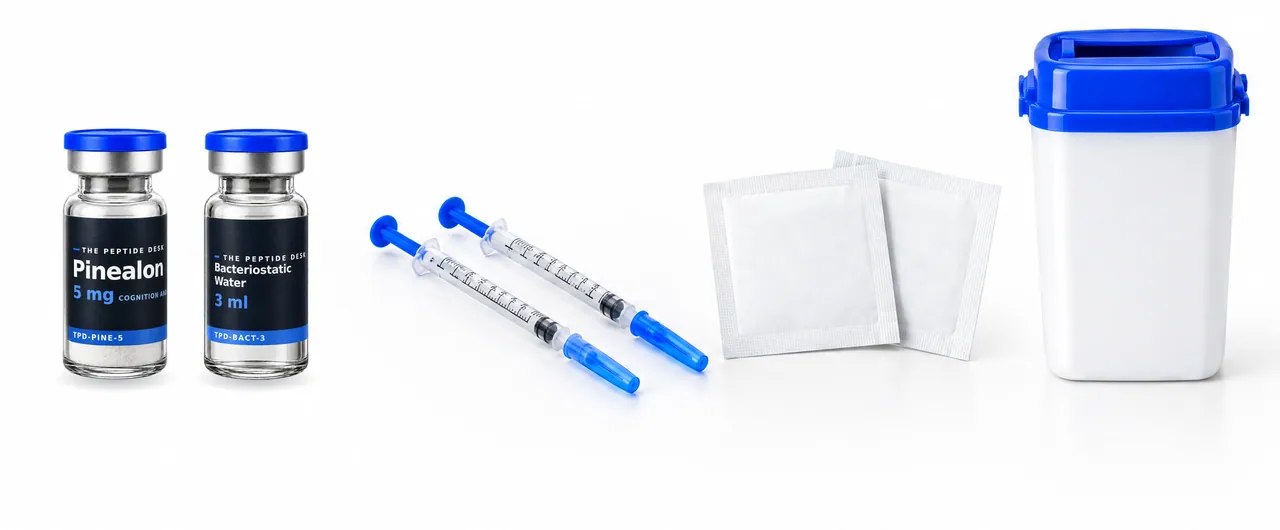
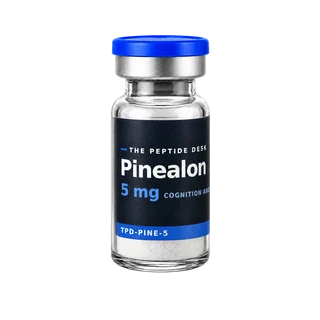
Pinealon vial and bacteriostatic water at the same size with the black TPD label, next to two U-100 insulin syringes, two alcohol swabs and a sharps container with a blue lid
  1. Pinealon vial

    The pinealon vial (lyophilized powder).

    In the shop
  2. Water and supplies

    Bacteriostatic water, U-100 insulin syringes, alcohol swabs.

    In the shop

Reconstitution

Use the peptide calculator. A 10mg vial with 2ml water gives 5mg per ml, 1mg is then 20 units on the U-100 syringe. Just add the water to the vial and let it dissolve.
Step by step

Dissolving the powder

Four steps, the same for every vial size.

  1. 1Wipe the cap

    Clean the rubber stopper with an alcohol swab.

  2. 2Add BAC water

    Just add it, it does not matter if it hits the powder directly.

  3. 3Swirl or shake

    Until everything has dissolved, both are fine.

  4. 4Draw up

    With the U-100 insulin syringe.

Less water higher concentration fewer units on the syringe Example: 5 mg + 2 ml = 2.5 mg/ml

Dosing

Dosing

Dosing, titration and syringe

Loading the dosing information …

  • Getting started and stepping up, drawn as a staircase
  • Units on the U-100 syringe for every step
  • How long one vial lasts

Injection

The injection is subcutaneous, into the fat layer under the skin. Common spots are the abdomen (keep about two finger-widths clear of the navel), the front and the inner side of the thigh, or the back of the upper arm.

The short version:

Injection

Where and at what angle

Pick a spot or switch the angle. Subcutaneous means: into the fat layer, not the muscle.

Rotate the spot each time, never the same one twice in a row.

90°More fat under the skin

Rule of thumb: where there is more fat under the skin, insert straight at 90 degrees. In lean people with little fat, 45 degrees, so the needle stays in the fat layer. Simplified diagram.

  1. Clean the spot with an alcohol swab and let it dry

  2. Pinch up a small fold of skin

  3. Insert the needle: at 90 degrees where there is more fat under the skin, at 45 degrees in lean people with little fat

  4. Inject slowly, wait a moment, then withdraw

  5. Put the needle straight into the sharps container

Rotate the site each time so the tissue does not get irritated. Never the same spot twice in a row.

What the research shows

The Khavinson program has published numerous works on short peptide bioregulators over decades (overview: Khavinson, 2002), including effects on lifespan and organ function in animal models. But the read must stay honest: the data come mostly from one research group, large independent studies are missing.
Petri dish with a small piece of glass brain cortex on the stage of a microscope
The data mostly come from one research group, large independent studies are missing. Symbolic image.

Research status

Where the research stands

So far Pinealon has been studied in cell cultures, rats and mice. Reports on older people and patients after brain injury come from the Khavinson group and are not recorded in any registry. As of 26 Oct 2026. 10

  1. Preclinical Cell cultures, rats and Alzheimer mice
  2. Phase 1 no registered trial
  3. Phase 2 no registered trial
  4. Phase 3 no registered trial
  5. Approval not yet
No registered human trial and no known approval as a medicine. Pinealon has mainly been studied preclinically.10

So far there is no registered trial in humans. 10

Side effects

  • Well tolerated in the available reports, mainly local reactions.
  • Solid, independent human safety data are limited.

Practice

  1. Use in short cycles, keep expectations realistic given the evidence.

  2. Dose low, watch closely.

Row of four white cubes, a cup of tea and a closed white notebook on a bright desk, a green plant behind them

Storage

Before mixing the powder is robust, normal room temperature (around 20 to 25 degrees) is fine, ideally kept in the dark. After mixing, keep in the fridge (2 to 8 degrees), do not freeze. It stays good there for at least 4 to 6 months with barely any loss of potency, in practice considerably longer. Swirl or shake to mix, both are fine.

Shelf life

How long it keeps

Undissolved (powder) Room temperature, around 20 to 25 degrees, dark

Robust, no fridge needed.

Dissolved (mixed) Fridge, 2 to 8 degrees, do not freeze

At least 4 to 6 months with barely any loss of potency.

  • Keep it dark
  • Dissolved: 2 to 8 degrees
  • Note the mixing date on the vial
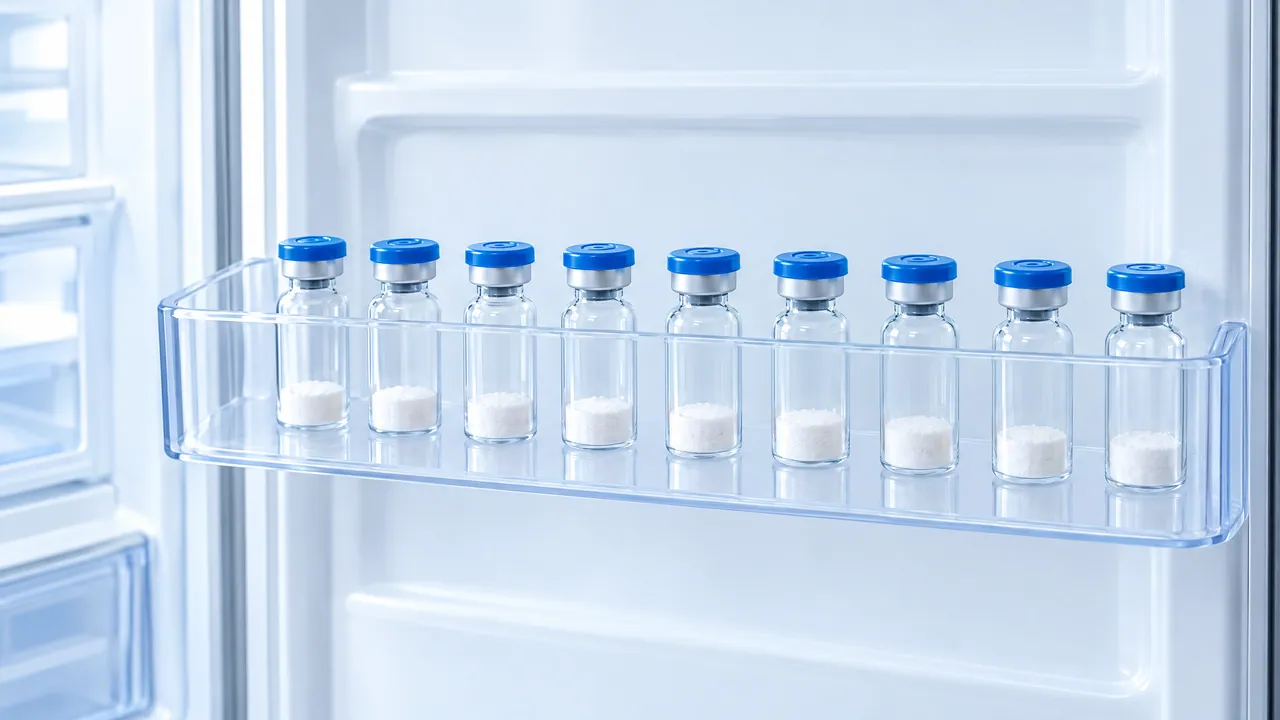
Nine vials with white powder and blue caps in the door shelf of a bright fridge
Powder dark at room temperature, once dissolved into the fridge (2 to 8 degrees), stable there for at least 4 to 6 months. Symbolic image.

Related

Related compounds

Same common ground or a different path: all in the TPD lexicon.

FAQ

Common questions about Pinealon

Short answers, each backed by the sources below.

Is Pinealon approved or studied in humans?

As of 26 October 2026 ClinicalTrials.gov lists no trial with Pinealon. A review by the Khavinson group mentions use as a tablet in older people and in 72 patients after a traumatic brain injury. These reports are neither registered nor independently checked. No approval as a medicine is known.104

What is Pinealon made of?

Of three amino acids: glutamic acid, aspartic acid and arginine, EDR for short. The molecular formula is C15H26N6O8. According to the research group the sequence comes from a peptide mixture from brain tissue that is used as a medicine in Russia.114

What did the cell experiments show?

In cerebellar nerve cells, neutrophils and PC12 cells Pinealon curbed the formation of reactive oxygen species under oxidative stress, depending on the amount. Fewer cells died. There was also a delayed activation of the ERK 1/2 pathway and a changed cell cycle.2

What did the animal studies show?

Pregnant rats received a lot of methionine, which raises homocysteine levels. When they also received Pinealon, their offspring oriented better in space and learned faster. Their cerebellar cells withstood oxidative stress better. In an Alzheimer model in mice EDR prevented the loss of synaptic spines.35

How is such a short peptide supposed to work?

The Khavinson group assumes that EDR enters the cell and binds to histones or DNA. On the computer it found binding sites in the control regions of genes such as CASP3, SOD2, APOE and PPARA. Another model shows that EDR fits into the transporters PepT1 and LAT1. Whether this happens in the body has not been shown.4579

What about nerve cells of older people?

A paper from 2024 converted skin cells from older donors into nerve cells in the lab. There EDR promoted branching of the dendrites and lowered oxidative damage to DNA. It had no effect on mitochondria, lysosomes or the ageing marker p16.6

Which side effects are known?

There are no solid data because Pinealon has never been tested in a registered human trial. Statements about good tolerability come from the research group itself.101

Glossary

Terms explained briefly

Dotted words in the text open these explanations directly.

Bioregulator
Term from the Khavinson programme for short peptides that are meant to target a specific tissue. Not a term used in drug approval.
Dendrites
Branched extensions of a nerve cell through which it receives signals. Small spines on them form the contact points to other cells.
Gene regulation
Control of which genes a cell is currently reading and turning into proteins.
Khavinson programme
Research on peptide bioregulators that Vladimir Khavinson has built up in Russia since the 1970s. Most papers come from this group.
Lyophilisate
Freeze-dried powder. Without water a peptide keeps much longer.
Neuroprotective
Protective for nerve cells, for example against dying under stress. In research usually measured in cells or animals.
Oxidative stress
Too many reactive oxygen species in the cell. They damage proteins, fats and DNA.
Preclinical
Research before first use in humans, in cell cultures and animal models. Results cannot be transferred directly to humans.
Subcutaneous
Into the fat layer just under the skin.
Tripeptide
A chain of exactly three amino acids. For Pinealon these are glutamic acid, aspartic acid and arginine.

Evidence

Sources

Show all 11 sourcesHide sources 7 Studies1 Trial registry3 Database checked 26 Oct 2026

Studies

  1. Pinealon lowers free radicals and protects cells in culture

    Khavinson et al., Rejuvenation Research, 2011

    Checked 26 Oct 2026 via doi.org, Crossref, PubMed
  2. Review by the Khavinson group on the EDR peptide and gene regulation

    Khavinson et al., Molecules, 2020

    Checked 26 Oct 2026 via doi.org, Crossref, PubMed, PMC (Volltext)
  3. EDR and KED in an Alzheimer model in mice, plus DNA docking

    Khavinson et al., Pharmaceuticals, 2021

    Checked 26 Oct 2026 via doi.org, Crossref, PubMed
  4. Short peptides on nerve cells made from skin cells of older donors

    Kraskovskaya et al., International Journal of Molecular Sciences, 2024

    Checked 26 Oct 2026 via doi.org, Crossref, PubMed
  5. Short peptides in the cell nucleus and their binding to DNA

    Fedoreyeva et al., Biochemistry (Moscow), 2011

    Checked 26 Oct 2026 via doi.org, Crossref, PubMed
  6. Review with names and amino acid sequences of the short peptides

    Khavinson et al., International Journal of Molecular Sciences, 2022

    Checked 26 Oct 2026 via doi.org, Crossref, PubMed, PMC (Volltext)
  7. Transport of short peptides via PepT1 and LAT1, computer model

    Khavinson et al., Biomolecules, 2023

    Checked 26 Oct 2026 via doi.org, Crossref, PubMed, PMC (Volltext)

Trial registry

  1. Search on ClinicalTrials.gov (no trial with the peptide)

    ClinicalTrials.gov, U.S. National Library of Medicine

    Checked 26 Oct 2026 via ClinicalTrials.gov API v2

Database

  1. Review of peptides and ageing from the Khavinson programme (PubMed record)

    Khavinson, Neuro Endocrinology Letters, 2002 (ohne DOI)

    Checked 26 Oct 2026 via PubMed
  2. Pinealon protects rat offspring from maternal hyperhomocysteinaemia (PubMed record)

    Arutjunyan et al., International Journal of Clinical and Experimental Medicine, 2012 (ohne DOI, Volltext PMC3342713)

    Checked 26 Oct 2026 via PubMed, PMC (Volltext)
  3. Structure of Pinealon (Glu-Asp-Arg) in PubChem

    PubChem, U.S. National Library of Medicine (CID 10273502)

    Checked 26 Oct 2026 via PubChem

In the shop

Pinealon in the catalog

Sizes, prices and shipping times are on the product page.

To the product