This information is for research and educational purposes only. No medical recommendations. Products are not approved for human use. For health questions, consult a doctor.

Lexicon

Immunological Enhancement

An injectable immune-support blend of glutathione, vitamin C and zinc.

1 min read 5 sources

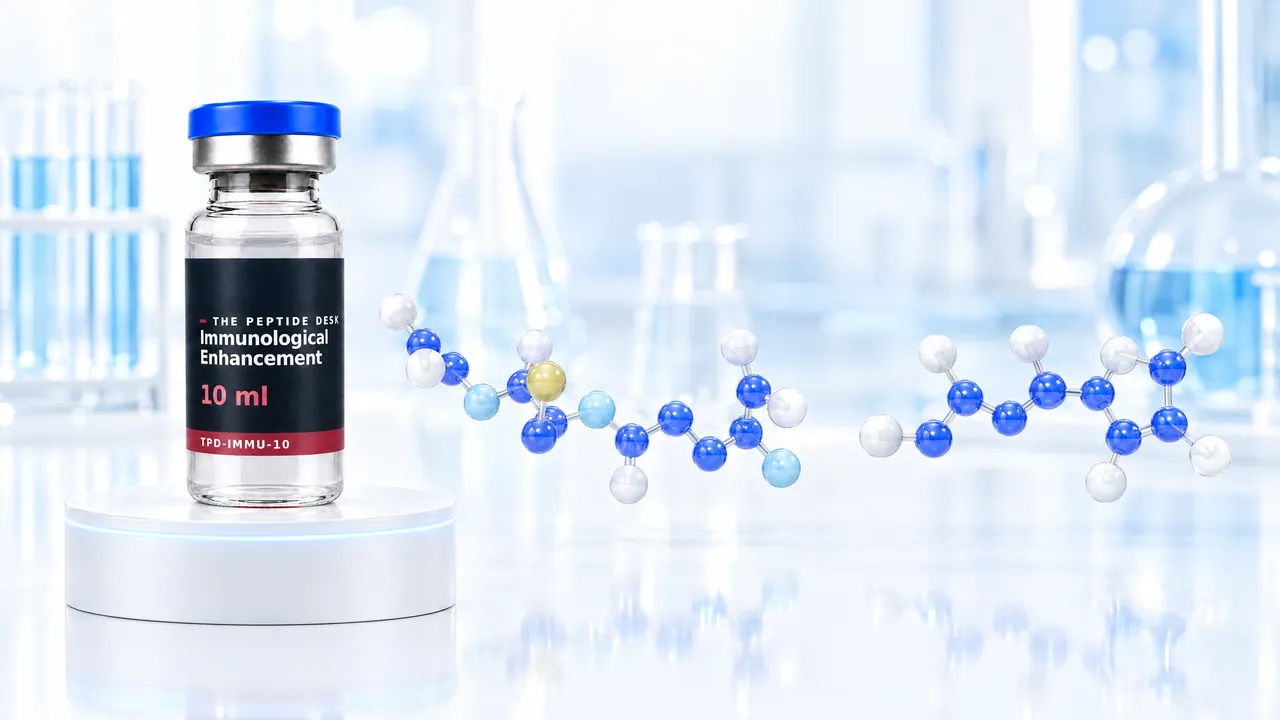
Glass vial with clear liquid, a blue cap and a black TPD label for Immunological Enhancement on a white podium, next to it two molecule chains of blue, white and one yellow glass sphere in a bright lab
No study of its own · not approved

Summary

At a glance

Sources checked on 26 Oct 2026

On the blend itself
0 trials

no trial of glutathione, vitamin C and zinc as an injectable blend on ClinicalTrials.gov, as of 26 Oct 20265

Natural killer cell activity
>2 -fold

after 3 months of oral glutathione, higher of two amounts, against placebo1

Cold duration with zinc
-33 %

zinc lozenges, 7 trials with 575 people3

Cold duration with vitamin C
-8 %

adults, taken regularly by mouth, in children 14 percent2

Vitamin C into a vein
885 µmol/l

peak blood level, 135 µmol/l when the same amount is swallowed, 17 healthy volunteers4

  • According to the entry Immunological Enhancement combines glutathione, vitamin C and zinc. Glutathione is the body's most abundant antioxidant and also helps regulate immune function.1
  • ClinicalTrials.gov lists no trial of the blend. The numbers here come from studies on single components, mostly swallowed.5
  • Regular vitamin C shortened colds in adults by 8 percent, zinc lozenges by 33 percent. Only people under heavy physical stress caught fewer colds.23
  • Swallowed glutathione raised the stores in blood cells and plasma by 30 to 35 percent after 6 months, at the higher of two amounts. Natural killer cell activity more than doubled after 3 months.1
  • Given into a vein, vitamin C reaches much higher levels than when swallowed. The studies here give no values for injection under the skin or into the muscle.4
Profile

Updated May 2026

Class
Immune-support blend
Use
Subcutaneous/intramuscular
Contents
Glutathione + vitamin C + zinc
Status
Supplement blend

not a medical product

Sizes
10 ml

1 size in the shop

Contents 13 sections
  1. At a glance
  2. What is Immunological Enhancement?
  3. How it works
  4. Use
  5. Dosing
  6. What the research shows
  7. Research status
  8. Side effects
  9. Storage
  10. Related compounds
  11. FAQ
  12. Glossary
  13. Sources

What is Immunological Enhancement?

Immunological Enhancement is an injectable blend to support the immune system, combining glutathione, vitamin C and zinc. All three are classic building blocks around antioxidation and immune function. You also find glutathione individually in the lexicon.

Comparison

Other routes for the immune system

What the blend is made of and where related entries act, as described in the TPD lexicon. Tap a card to open its entry.

Simplified: nutrients such as vitamin C and zinc act differently from peptides from the thymus or immune defence.

How it works

Glutathione is the body's most important antioxidant, vitamin C supports antioxidant processes and regenerates glutathione, zinc is an important trace element for immune function. Together they target antioxidant and immune-supporting effects.

Details on glutathione are in its own lexicon entry.

Where it acts

Where the components act

Tap a point or a card. Colour = component. All from studies on single components, not on the blend.

  1. Blood and immune cells

    Glutathione in blood cells and plasma 30 to 35 percent higher after 6 months, natural killer cells more active (swallowed, higher amount)1

    Glutathione
  2. Airways

    Regular vitamin C shortened colds in adults by 8 percent2

    Vitamin C
  3. Kidney

    Vitamin C is lost in the urine, given into a vein up to 140-fold higher urine levels according to a model4

    Vitamin C
Translucent glass immune cells, blue molecules capturing grey, jagged particles around them
Glutathione, vitamin C and zinc aim at antioxidant effects and immune function. Symbolic image.

Use

Dosing. Loading the dosing information …
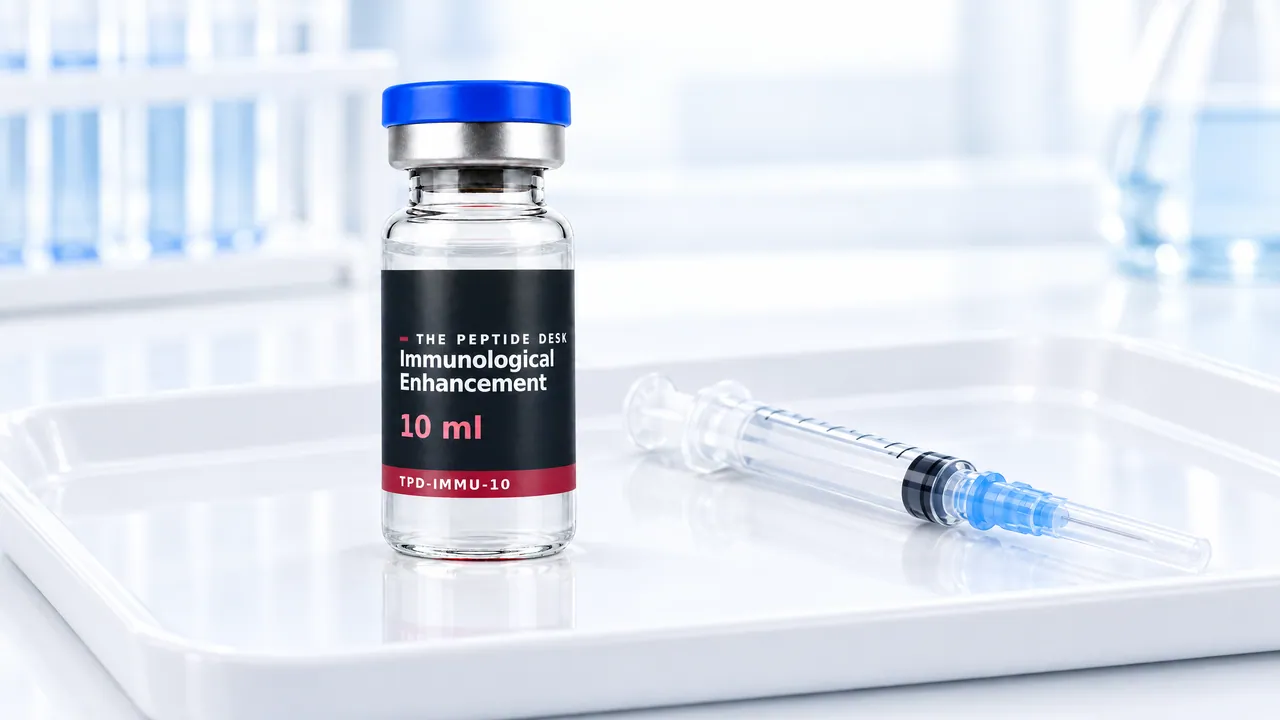
Glass vial with clear liquid, a blue cap and a black TPD label for Immunological Enhancement on a white tray, a disposable syringe beside it
Ready-made solution, subcutaneous or intramuscular as specified for the product. Symbolic image.

Dosing

Dosing

Dosing, titration and syringe

Loading the dosing information …

  • Getting started and stepping up, drawn as a staircase
  • Units on the U-100 syringe for every step
  • How long one vial lasts

What the research shows

The individual building blocks (glutathione, vitamin C, zinc) are well described in nutrition and immune research. For this specific injectable blend there is no separate study. With normal supply, extra dosing often does little, a genuine deficiency is more relevant.

Study results

What the trials measured

Interactive: switch tabs, tap points, show or hide arms. Arms are named relative to each other, no dosing advice.

How long a cold lasted23

Change in duration compared with placebo, in percent

Vitamin C, adults2 taken regularly by mouth
With component, compared with placebo -8%
Vitamin C, children2 taken regularly by mouth
With component, compared with placebo -14%
Zinc lozenges3 7 trials, 575 people
With component, compared with placebo -33%

All swallowed or sucked, not injected. In the general population vitamin C did not lower the risk of a cold (relative risk 0.97), under heavy physical stress by about half (0.48). Taken only at the start of a cold, vitamin C showed no consistent effect.

Peak blood level of vitamin C4

Same amount, once swallowed, once into a vein, in µmol/l

Peak level in the blood4 17 healthy volunteers
Swallowed 135 µmol/l
Into a vein 885 µmol/l

Measured 134.8 versus 885 µmol/l. When swallowed the body keeps the level tightly limited. The study looked at giving it into a vein, not under the skin or into the muscle.

Glass lymph node with a glowing core, surrounded by light trails, half an orange beside it
The components are well described individually, there is no study on the blend itself. Symbolic image.

Research status

Where the research stands

There is no registered trial of the blend. Studies on single components are shown above under the results. As of 26 Oct 2026. 5

  1. Preclinical No study of the blend, components known from nutrition and immune research
  2. Phase 1 no registered trial
  3. Phase 2 no registered trial
  4. Phase 3 no registered trial
  5. Approval not yet
Not approved and no registered trial of the blend. According to the entry a supplement blend, not a medical product.5

So far there is no registered trial in humans. 5

Side effects

  • Generally well tolerated, mainly local reactions at the injection site.
  • Very high vitamin C or zinc doses can cause gastrointestinal complaints.

Storage

Store cool and protected from light, out of reach of children. Keep the original bottle closed and mind the expiry date.

Related

Related compounds

Same components or a different path: all in the TPD lexicon.

FAQ

Common questions about Immunological Enhancement

Short answers, each backed by the sources below.

What is in Immunological Enhancement?

According to the entry glutathione, vitamin C and zinc. As of 26 October 2026 the registry ClinicalTrials.gov lists no trial of the blend itself. Everything here comes from studies on single components.5

What do studies on vitamin C and zinc show for colds?

According to a Cochrane review regular vitamin C shortened colds by 8 percent in adults and 14 percent in children. In 29 comparisons with 11,306 people only those under heavy physical stress caught fewer colds. Zinc lozenges shortened colds by 33 percent in 7 trials.23

Does extra glutathione do anything?

In a study with 54 adults swallowed glutathione raised the stores in red blood cells, plasma and lymphocytes by 30 to 35 percent after 6 months, at the higher of two amounts. Natural killer cell activity more than doubled after 3 months. One month after stopping, the values were back at baseline.1

Does it matter whether it is injected or swallowed?

For vitamin C, yes: given into a vein the peak level at the same amount was 885 instead of 134.8 µmol/l. When swallowed the body keeps the level tightly limited. This study gives no values for injection under the skin or into the muscle.4

Does it help with normal intake?

Rather little, as the entry also says. In the general population regular vitamin C did not lower the risk of a cold. The authors of the analysis therefore do not consider routine intake justified.2

Which side effects are known?

There are no study data on the tolerability of the blend. The entry mainly names reactions at the injection site and stomach complaints with very high amounts of vitamin C or zinc.5

Glossary

Terms explained briefly

Dotted words in the text open these explanations directly.

Antioxidant
A substance that neutralises aggressive oxygen compounds and so protects cells from damage.
Glutathione
The body's own tripeptide and the most abundant antioxidant in the cell.
Lymphocytes
White blood cells of targeted defence, including natural killer cells.
Natural killer cells
Immune cells that attack infected or abnormal cells without prior warning.
Peak level
The highest level of a substance in the blood after a dose.
Placebo
Dummy preparation without active substance. Comparing against it shows what is due to the substance itself.
Relative risk
The ratio of risk with and without a substance. 1 means no difference, 0.5 means half as often.
Subcutaneous
Into the fat layer just under the skin.
Trace element
A mineral the body needs only in tiny amounts, such as zinc.

Evidence

Sources

Show all 5 sourcesHide sources 4 Studies1 Trial registry checked 26 Oct 2026

Studies

  1. Oral glutathione and the body's stores, 6 months, placebo-controlled

    Richie et al., European Journal of Nutrition, 2015

    Checked 26 Oct 2026 via doi.org, Crossref, PubMed
  2. Vitamin C for colds, Cochrane review

    Hemilä und Chalker, Cochrane Database of Systematic Reviews, 2013

    Checked 26 Oct 2026 via doi.org, Crossref, PubMed
  3. Zinc lozenges and cold duration, meta-analysis

    Hemilä, JRSM Open, 2017

    Checked 26 Oct 2026 via doi.org, Crossref, PubMed
  4. Vitamin C swallowed and into a vein, blood levels compared

    Padayatty et al., Annals of Internal Medicine, 2004

    Checked 26 Oct 2026 via doi.org, Crossref, PubMed

Trial registry

  1. Search on ClinicalTrials.gov (no trial with the blend)

    ClinicalTrials.gov, U.S. National Library of Medicine

    Checked 26 Oct 2026 via ClinicalTrials.gov API v2

In the shop

Immunological Enhancement in the catalog

Sizes, prices and shipping times are on the product page.

To the product