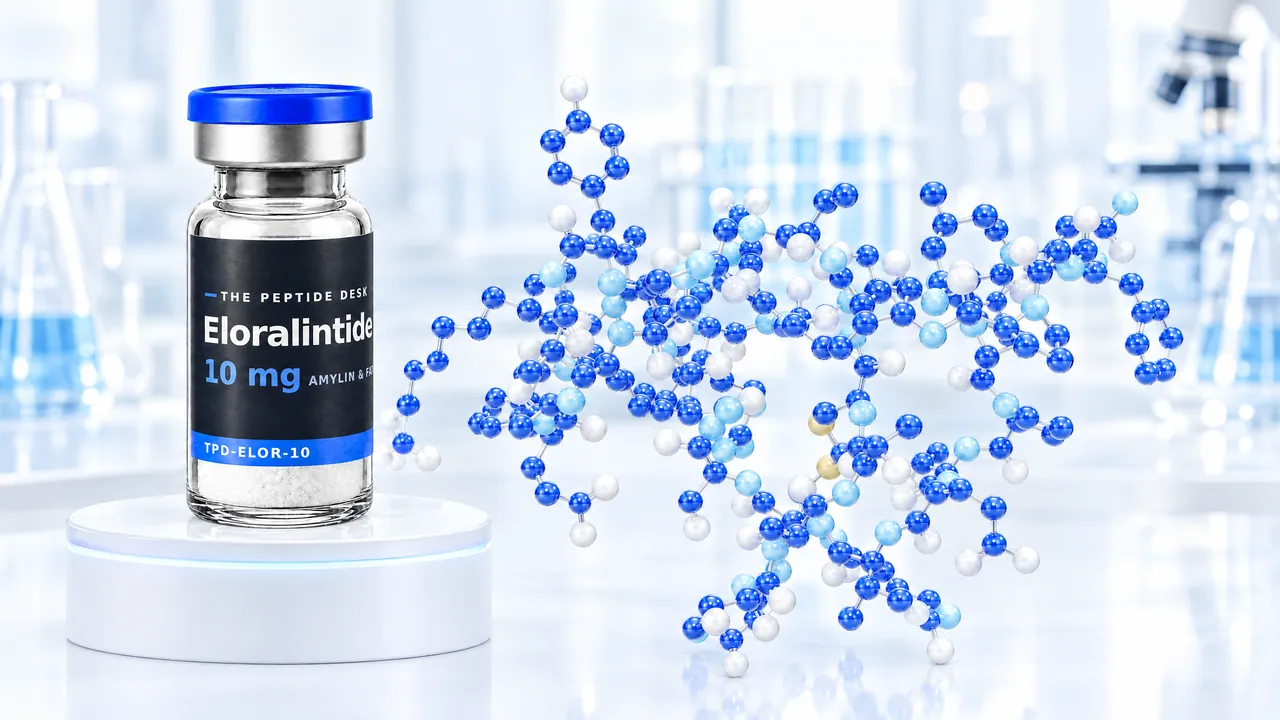
What is Eloralintide?
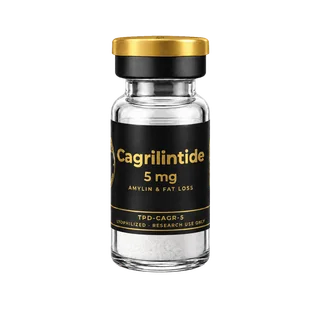
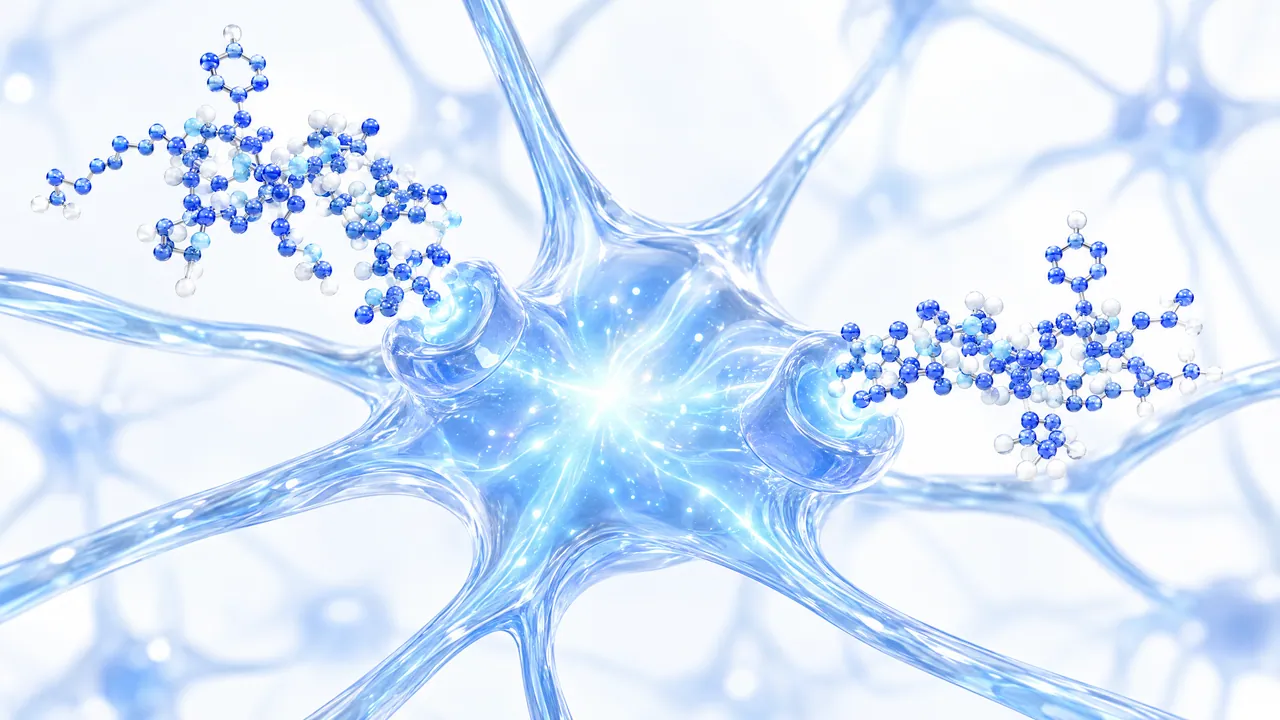
Eloralintide (development name LY3841136) is a long-acting analogue of amylin, the hormone the pancreas releases together with insulin to tell the brain that food has arrived. It comes out of Eli Lilly's pipeline and sits next to cagrilintide among the once-weekly amylin analogues. The difference is in the receptor profile: eloralintide prefers the amylin 1 receptor and activates the calcitonin receptor far less, while cagrilintide is non-selective and activates the calcitonin receptor as well.
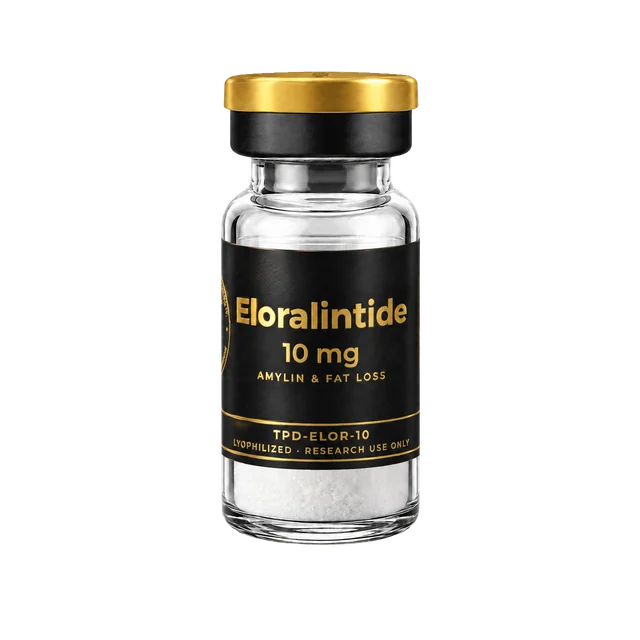
The molecule is a linear peptide carrying a C20 fatty acid at position 26, which binds it to albumin. That gives a half-life of around 13 to 15 days, roughly twice that of cagrilintide. It is injected subcutaneously once a week and ships as a freeze-dried powder in a 10mg vial that you dissolve in bacteriostatic water.
Eloralintide is not approved. The phase 2 data came out in late 2025. The first phase 3 trials have been running since then. There are no long-term data beyond 48 weeks yet.
This information is for research and educational purposes only. No medical advice.
Comparison
One, two or three receptors
Which receptors each compound targets, as stated in the TPD lexicon. Tap a card to open its entry.
In cell assays eloralintide also activates the calcitonin receptor, but about twelve times more weakly than the amylin 1 receptor. That is why it is listed under amylin only. 4
How it works
Amylin acts mainly in the brainstem and the hypothalamus. There it signals that a meal is under way: fullness sets in earlier and lasts longer. The urge to eat between meals drops. Amylin also curbs glucagon release after eating and slows gastric emptying. GLP-1 compounds use a different path, which is why research treats the amylin route as a complement rather than a copy.
Amylin receptors are composite receptors built from the calcitonin receptor plus a helper protein (RAMP). In cell assays eloralintide activates the human AMY1R roughly twelve times more strongly than the plain calcitonin receptor and roughly eleven times more strongly than the AMY3R. The developers' working hypothesis: less activation at the calcitonin receptor means less nausea for the same satiety. In rats eloralintide did cause less taste aversion than cagrilintide. In phase 2 nausea at 1 and 3mg sat at placebo level.
One observation stands apart from the incretin class: pulse rate dropped from the first week on and after 12 weeks at 12mg sat around 14 beats per minute below baseline on average (placebo around 3), instead of rising as it does under GLP-1 agonists. In rats, the weight lost also came mainly from fat mass. Studies suggest this could add up to a distinct cardiovascular profile, but so far that rests on surrogate markers only.
Where it acts
Amylin path, several organs
Tap a point or a card. Colour = receptor, grey = effect seen in trials.
- Brain
Less food intake in rats, satiety via amylin receptors4
Amylin - Stomach
Gastric emptying slowed at first, back close to baseline after 12 weeks (paracetamol test)3
Observed in trials - Fat tissue
Weight loss in rats mainly from fat mass4
Observed in trials - Heart
Pulse at the highest level down by 14.4 beats per minute after 12 weeks (placebo 3.4)3
Observed in trials
Known targets4
Compound CHEMBL6068462: three described targets, type of action on each card.
- Gene
- CALCR + RAMP1
- UniProt
- P30988, O60894
- ChEMBL
- CHEMBL2111189
- Action
- Full agonist, preferred target
- Gene
- CALCR + RAMP3
- UniProt
- P30988, O60896
- ChEMBL
- CHEMBL2111190
- Action
- Full agonist, about eleven times weaker than at AMY1
- Gene
- CALCR
- UniProt
- P30988
- ChEMBL
- CHEMBL1832
- Action
- Full agonist, about twelve times weaker than at AMY1
What you need
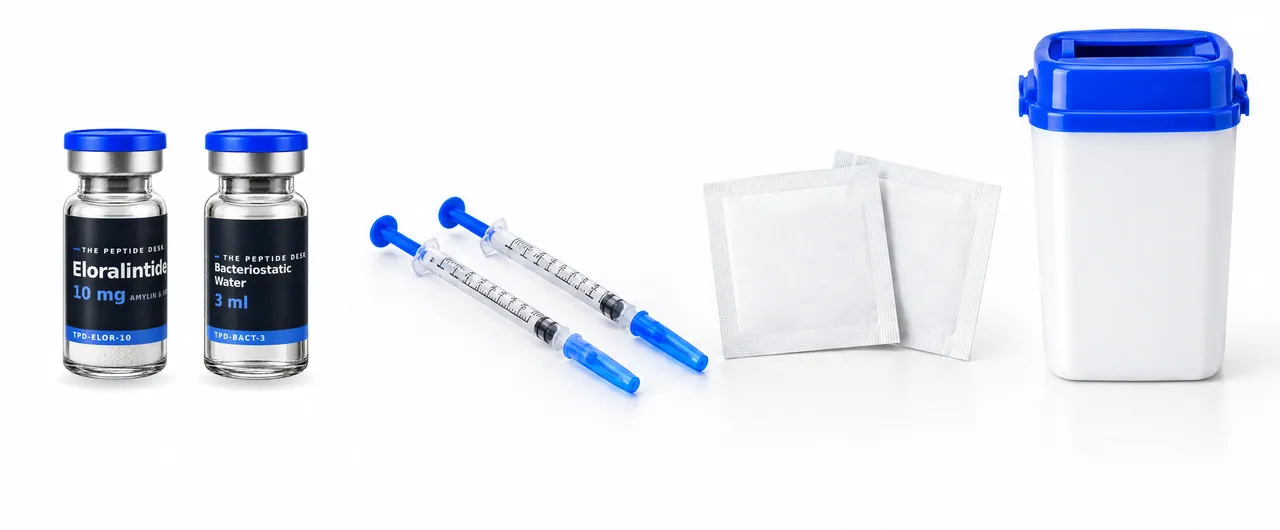
The list is the same as for the other weekly peptides:
Supplies
5 things, numbered as in the picture
Tick off what you already have. Vial and BAC water are our real shop photos at the same size.
-
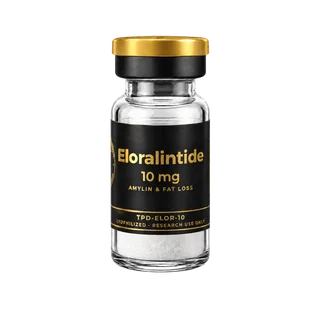
Eloralintide vial
The Eloralintide vial with the freeze-dried powder
-
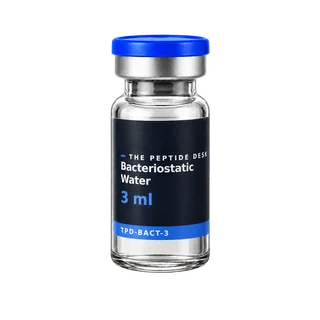
Bacteriostatic water
Bacteriostatic water to dissolve it
-
U-100 insulin syringes
U-100 insulin syringes
-
Alcohol swabs
Alcohol swabs for the vial cap and the skin
-
Sharps container
A sealable sharps container for used needles
As an Amazon associate we earn from qualifying purchases. Links open Amazon - no extra cost for you.
A 1ml syringe (100 units) covers every step up to 3mg. With 2ml of water in the 10mg vial each step lands on whole units, so you do not need half-unit marks.
Reconstitution
The powder is dissolved in bacteriostatic water. The volume of water sets the concentration and with it the units you later draw for your dose on the insulin syringe. With 2ml on 10mg you get 5mg per ml: 0.5mg is then 10 units, 1mg 20, 2mg 40 and 3mg 60 units.
The peptide calculator works this out for any water volume: pick the vial size and the water. The concentration and units per dose then appear straight away. For the small starting doses, 2 or 3ml are more comfortable than 1ml, otherwise the dose gets tiny and hard to read.
Just add the bac water to the vial, it does not matter if it hits the powder directly. Then swirl or shake until everything is clearly dissolved, both are fine.
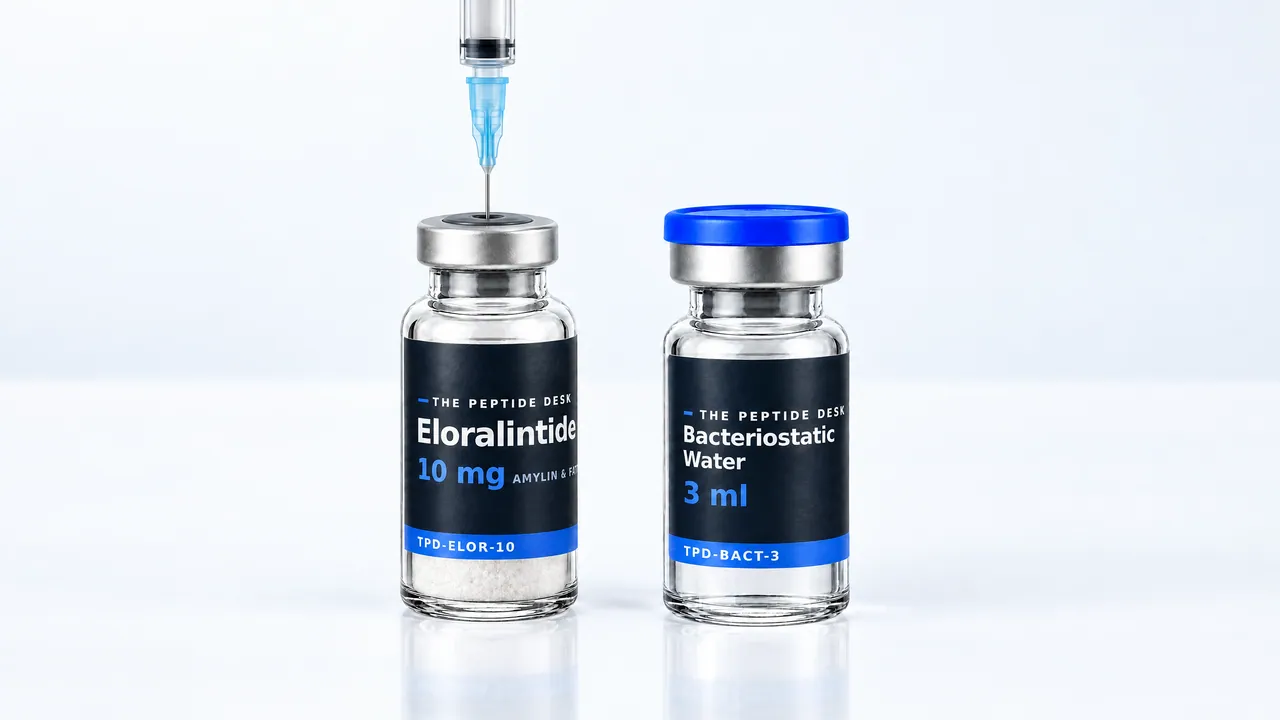
Step by step
Dissolving the powder
Four steps, the same for every vial size.
- 1Wipe the cap
Clean the rubber stopper with an alcohol swab.
- 2Add BAC water
Just add it, it does not matter if it hits the powder directly.
- 3Swirl or shake
Until everything has dissolved, both are fine.
- 4Draw up
With the U-100 insulin syringe.
Injection
The injection is subcutaneous, into the fat layer under the skin, classically the abdomen (keep about two finger-widths clear of the navel), the front and the inner side of the thigh or the back of the upper arm.
Injection
Where and at what angle
Pick a spot or switch the angle. Subcutaneous means: into the fat layer, not the muscle.
Rotate the spot each time, never the same one twice in a row.
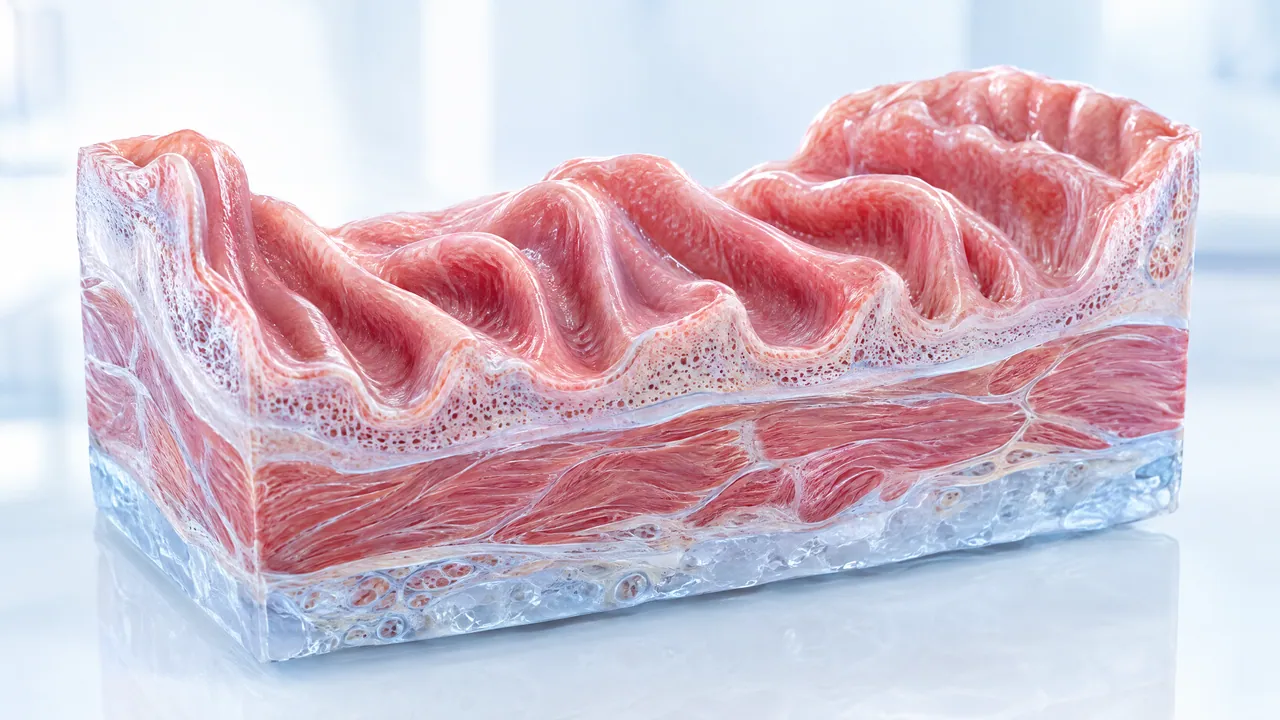
Rule of thumb: where there is more fat under the skin, insert straight at 90 degrees. In lean people with little fat, 45 degrees, so the needle stays in the fat layer. Simplified diagram.
-
Clean the spot with an alcohol swab and let it dry
-
Pinch up a small fold of skin
-
Insert the needle: at 90 degrees where there is more fat under the skin, at 45 degrees in lean people with little fat
-
Inject, slowly or briskly both work, wait a moment, then withdraw
-
Put the needle straight into the sharps container
Rotate the site from week to week. In the phase 1 study, injection site reactions (mostly pain) were more frequent than under placebo from 3mg upwards; rotating sites and a clean injection keep that small.
Use and dosing
Dosing
Dosing, titration and syringe
Loading the dosing information …
- Getting started and stepping up, drawn as a staircase
- Units on the U-100 syringe for every step
- How long one vial lasts
What the research shows
The development paper (Briere 2025) describes the receptor selectivity, the animal data and a single-dose study in 48 healthy volunteers with 0.04 to 12mg: well tolerated up to the highest dose, half-life of 13 to 15 days. Four weeks after a single 12mg dose body weight was 4.4 percent lower. The multiple-dose phase 1 study (Bhattachar 2026) ran for 12 weeks in 100 participants with overweight or obesity; the active groups received 1.2 to 12mg weekly without titration, the rest placebo. Weight fell by 2.6 to 11.3 percent depending on dose, only 8 percent reported nausea and 10 percent diarrhoea.
The phase 2 trial (Billings 2025, The Lancet) ran for 48 weeks in 263 adults with obesity or overweight and no diabetes. Weight fell by 9 percent at 1mg, 12 percent at 3mg, 18 percent at 6mg and 20 percent at 9mg, versus 0.4 percent under placebo. The escalation from 3 to 9mg reached 16 percent, the one from 6 to 9mg 20 percent. The effect was clearly dose-dependent, but the trial was limited to 48 weeks. What happens after that is open.
A review (Sigalov 2026) sums up the cardiovascular data: pulse rate, blood pressure, high-sensitivity CRP and lipids came down in the early studies. The authors single out the falling pulse rate, because GLP-1 agonists tend to raise heart rate. No amylin analogue has a cardiovascular outcomes trial, so the authors explicitly rate these findings as preliminary. The studies with links are in the source block below.
Study results
What the trials measured
Interactive: switch tabs, tap points, show or hide arms. Arms are named relative to each other, no dosing advice.
Weight change after 48 weeks2
Mean change in percent, 263 adults with obesity or overweight without diabetes
Values from the results section of the registry, rounded to whole percent in the abstract (9 to 20 percent). The trial ran for 48 weeks, what happens after that is open.
Share with at least 10 percent weight loss2
After 48 weeks, in percent of participants
Rounded from the values in the registry (for example 82.32 percent). On placebo about 13 in 100 reached it.
Pulse change after 12 weeks3
Mean change in beats per minute, phase 1 with 100 participants
The pulse fell within the first week. Nobody reported symptoms from a pulse that was too slow. GLP-1 agonists, by contrast, tend to raise heart rate. There is no cardiovascular outcomes trial for any amylin analogue.
Research status
Where the research stands
Registered trials with status, participants and results. As of 26 Oct 2026. 6
- Preclinical Cell assays on amylin and calcitonin receptors, rats and monkeys
- Phase 1 12 trials, 5 completed
- Phase 2 5 trials, 2 completed
- Phase 3 7 trials, 0 completed
- Approval not yet
Show all 12 phase 2 and 3 trials on a timelineHide timeline
NCT06143956 · 1,481 participants (planned), started Nov 2023, primary endpoint planned Sept 2027. Tests several agents.
NCT06230523 · 263 participants, started Feb 2024, primary endpoint reached May 2025.
Registry entry ↗ · Results: Billings et al., The Lancet, 2025, ClinicalTrials.gov, NCT06230523, Ergebnisteil
NCT06603571 · 367 participants, started Sept 2024, primary endpoint reached Jul 2026. Tests several agents.
Registry entry ↗ · Results not yet in PubMed
NCT07215559 · 200 participants (planned), started Oct 2025, primary endpoint planned Mar 2027. Tests several agents.
NCT07589608 · 400 participants (planned), started May 2026, primary endpoint planned Sept 2027. Tests several agents.
ENLIGHTEN-2 · NCT07282600 · 1,035 participants (planned), started Dec 2025, primary endpoint planned Jan 2028.
ENLIGHTEN-1 · NCT07321886 · 1,980 participants (planned), started Feb 2026, primary endpoint planned Mar 2028.
ENLIGHTEN-4 · NCT07353931 · 900 participants (planned), started Feb 2026, primary endpoint planned Mar 2028.
ENLIGHTEN-3 · NCT07369011 · 800 participants (planned), started Feb 2026, primary endpoint planned Mar 2028.
ENLIGHTEN-6 · NCT07392190 · 900 participants (planned), started Feb 2026, primary endpoint planned Jun 2028.
AMPLIFY-2 · NCT07881458 · 1,000 participants (planned), started Nov 2026, primary endpoint planned Oct 2029. Tests several agents.
AMPLIFY-1 · NCT07881432 · 2,115 participants (planned), started Dec 2026, primary endpoint planned Oct 2029. Tests several agents.
Bar: start to primary endpoint (planned for running trials). Green = completed, blue = progress until 26 Oct 2026. Phase 1: 12 trials on safety and pharmacokinetics, not shown as bars.
Side effects
Nausea is the most common side effect, but strongly dose-dependent: in phase 2 it was 11 percent at 1mg and 13 percent at 3mg, against 14 percent under placebo. At 6mg it jumped to 64 percent, at 9mg it was 33 percent. Vomiting and diarrhoea were rare in phase 1 (4 and 10 percent). Tolerability at low doses is the real argument for the compound. It only holds as long as the dose stays low.
Fatigue rose with the dose in phase 2: 0 percent at 1mg, 13 percent at 3mg, 29 percent at 6mg, 43 percent at 9mg, against 12 percent under placebo. Add decreased appetite (that is the point), headache and injection site reactions from 3mg upwards. In the phase 1 study, four participants reported low mood, one at 6mg and three at 12mg. The three in the 12mg group stopped treatment. The complaints resolved within two to four days. That is a small but serious signal for high doses and one more reason to stay low.
Because the half-life is around two weeks, side effects do not fade in days after stopping but over weeks. Whoever steps up too fast keeps the nausea for just as long. Long-term data beyond 48 weeks are missing. There are no data on pregnancy, children or pre-existing conditions.
Tolerability
Nausea and fatigue in phase 2
Out of 100 participants per group, how many had the event over 48 weeks.
| Event | Placebo | Lowest level | Second level | Third level | Highest level | Step-up from level 3 to the highest | Step-up from level 2 via 3 to the highest |
|---|---|---|---|---|---|---|---|
| Nausea1 | 14% | 11% | 13% | 64% | 33% | 54% | 25% |
| Fatigue1 | 12% | 0% | 13% | 29% | 43% | 46% | 21% |
In the two lowest levels nausea was at placebo level. In phase 1 gastrointestinal effects were rare (nausea 8, diarrhoea 10, vomiting 4 percent). Four participants reported low mood, three of them at the highest level stopped, the symptoms resolved in two to four days.13
Storage
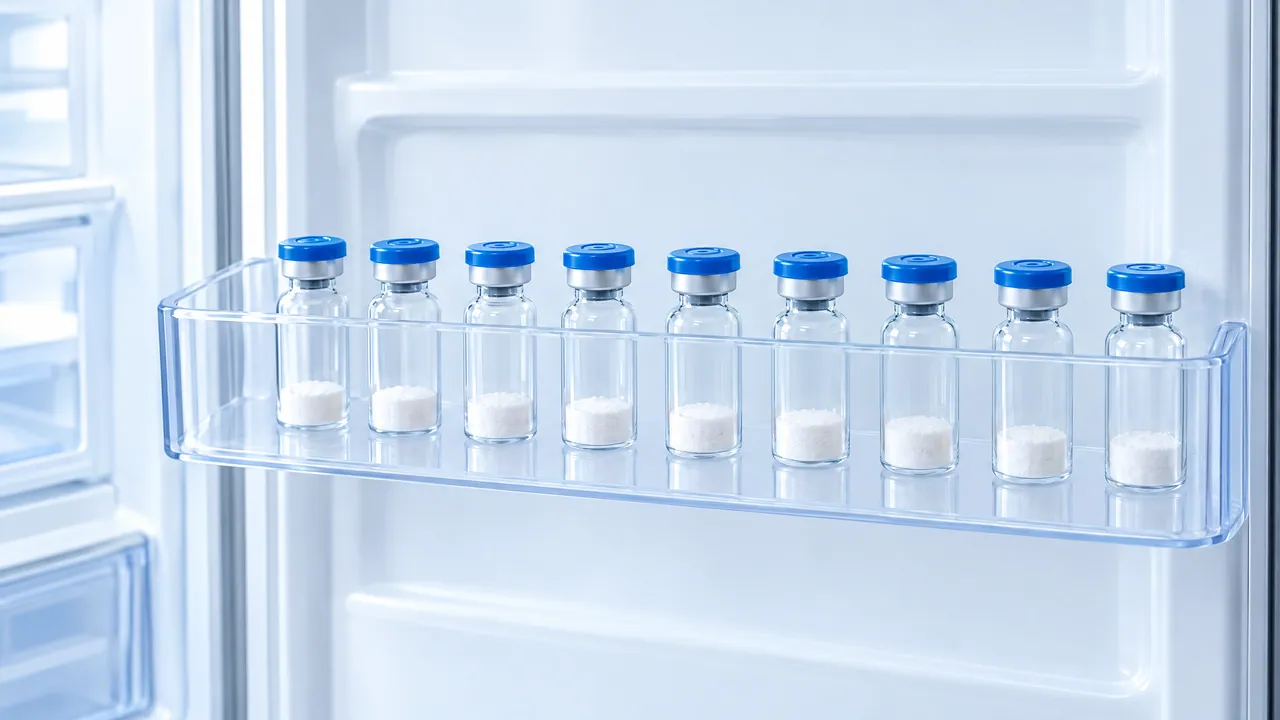
The undissolved powder is robust, normal room temperature (around 20 to 25 degrees) is fine, ideally kept dark and dry. For longer periods it can also go in the fridge.
Once mixed, it keeps for at least 4 to 6 months in the fridge (2 to 8 °C). The bacteriostatic water brings a preservative that keeps the dissolved form stable. With a 10mg vial and 0.5 to 1mg per week, one vial lasts ten to twenty weeks. The solution stays usable long enough for that.
Do not freeze it and do not leave it in the sun. If the solution turns gel-like or lumpy, do not use the vial. A slight cloudiness on its own is no reason to discard it.
Shelf life
How long it keeps
Robust, no fridge needed. Keeps for several months without trouble.
Keeps for at least 4 to 6 months. The bacteriostatic water brings a preservative.
- Keep it dark
- Dissolved: 2 to 8 degrees
- Note the mixing date on the vial