Description
AICAR (5-Aminoimidazole-4-carboxamide-1-β-D-ribofuranoside, Acadesine) is an adenosine analog and activator of AMP-activated protein kinase (AMPK). AMPK is the central energy sensor of the cell: at low ATP/AMP ratio, AMPK switches metabolism from energy use (lipogenesis, protein synthesis) to energy generation (fatty acid oxidation, glucose uptake).
Per study reports AICAR activates AMPK without the need for actual energy depletion. This produces an “exercise mimetic” effect - metabolism behaves as under intensive training. In the landmark Narkar 2008 study (Cell), untrained mice under AICAR over 4 weeks showed 44% increased running endurance vs placebo.
Pharmacokinetically the oral variant is problematic: AICAR has poor oral bioavailability (under 5%) and short half-life. Most preclinical research was done with intraperitoneal administration. Oral AICAR research is therefore less well characterized by design.
Clinically AICAR was tested as Acadesine for preventing perioperative ischemic cardiovascular complications in Phase III studies. Development was stopped due to insufficient efficacy. On the WADA banned list since 2009.
In the recreational community oral AICAR is often combined with Cardarine or Metformin to amplify AMPK activation.
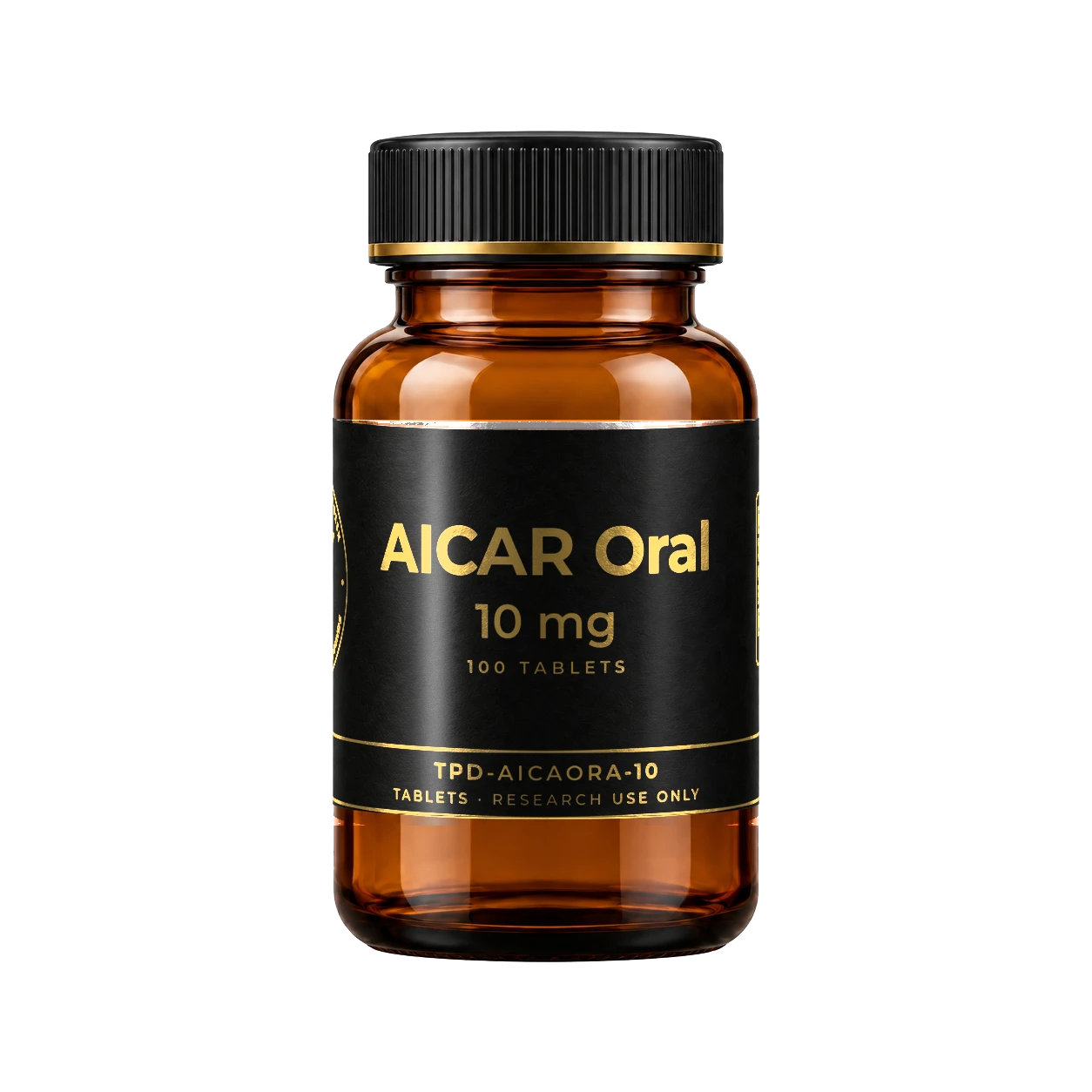
You can order AICAR Oral as tablets in one bottle with 10mg per tablet.
This information is for research and educational purposes only. No medical recommendations.
Risks & Safety
AICAR Oral sits in the mid range of the risk scale. The central open point is less an acute safety risk than the poor oral bioavailability and thin data situation.
Documented in studies and the literature:
- Poor oral bioavailability: AICAR has an oral bioavailability under 5%. Most preclinical research was conducted intraperitoneally - oral AICAR research is less well characterized by design.
- Limited clinical data: clinical development as Acadesine was stopped due to insufficient efficacy.
- No HPG suppression: AICAR is not an AR agonist. No PCT is required.
- WADA banned list: AICAR has been on the banned list for sport since 2009.
Monitoring via bloodwork is recommended. This classification does not replace medical advice. Risk and responsibility for any actual use lie entirely with the buyer.
Studies
- AMPK and PPARδ Agonists Are Exercise Mimetics - Cell 2008, Narkar et al: classic exercise mimetic study, untrained mice on AICAR with markedly increased running endurance.
- AICA riboside increases AMP-activated protein kinase, fatty acid oxidation, and glucose uptake in rat muscle - American Journal of Physiology 1997, Merrill et al: foundational study on AMPK activation by AICAR in skeletal muscle.
- Effects of Acadesine on the Incidence of Myocardial Infarction and Adverse Cardiac Outcomes after Coronary Artery Bypass Graft Surgery - Anesthesiology 1995: clinical trial of acadesine in coronary bypass surgery.
- AMPK: guardian of metabolism and mitochondrial homeostasis - Nature Reviews Molecular Cell Biology 2018, Herzig and Shaw: foundational review on AMPK signaling.