Description
BAM15 (an oxadiazolopyrazine with two 2-fluorophenyl groups) is a protonophore-type mitochondrial uncoupler that was developed in the 2010s as a preclinical compound for investigating obesity and metabolic diseases. Mechanistically BAM15 acts like the older DNP: it makes the inner mitochondrial membrane permeable to protons and thereby uncouples the respiratory chain from ATP synthesis.
Per study reports this means: energy from nutrient oxidation is released as heat instead of converted to ATP. The body has to oxidize more substrate to meet ATP demand - leading directly to increased lipolysis and fatty acid oxidation. In mouse studies (Alexopoulos et al 2020, Nature Communications) BAM15 significantly reduced fat mass without loss of muscle mass or body core temperature rise.
In a direct comparison in mouse liver cells, BAM15 raised cellular respiration at a roughly sevenfold lower concentration than DNP and kept it high across a broad concentration range, while DNP inhibited respiration above 30 µM (Alexopoulos 2020). Unlike DNP, BAM15 does not depolarize the cell’s plasma membrane (Kenwood 2014). Whether this translates into a wider safety window in humans has not been studied.
A second important property: BAM15 activates AMPK via ATP depletion. This brings additional mechanisms into play - glucose uptake, fatty acid oxidation, insulin sensitivity. In mouse studies BAM15 improved the entire metabolic syndrome profile.
In mice BAM15 is orally bioavailable (67 percent), with a half-life of 1.7 hours there (Alexopoulos 2020). No human studies have been published; BAM15 is a preclinical compound.
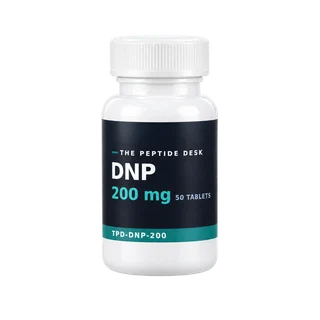
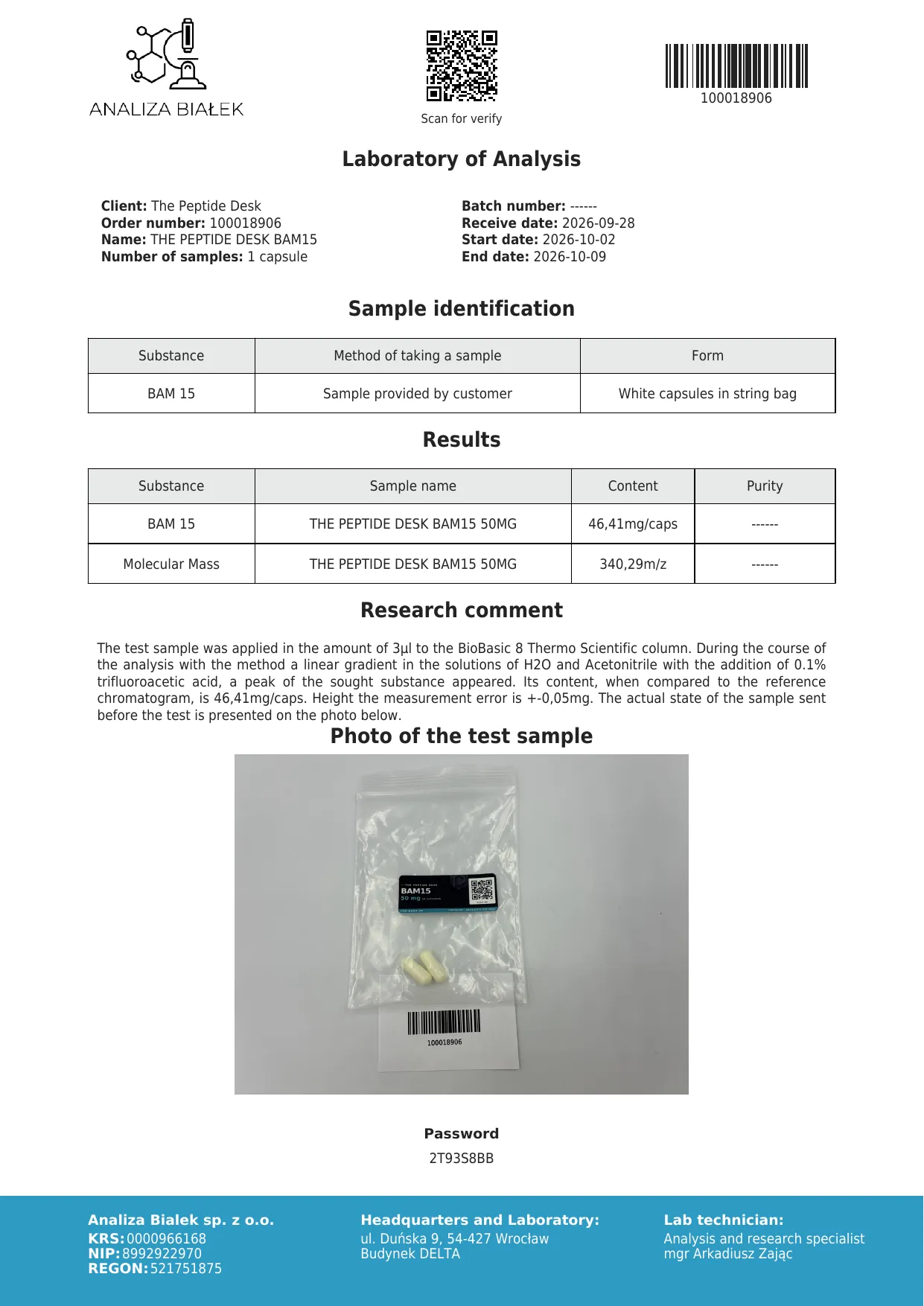
You can order BAM15 as oral capsules in one bottle with 50mg per capsule.
This information is for research and educational purposes only. No medical recommendations.
Risks & Safety
BAM15 sits in the mid range of the risk scale. In animal studies BAM15 changed neither body temperature nor blood markers of toxicity. There are no human data, however. The basic mechanism is the same as with DNP.
Documented in studies and the literature:
- Raised metabolic rate: the uncoupling mechanism releases energy as heat and increases substrate demand - thermogenic activity is part of the mechanism itself.
- Safety window shown only preclinically: in cells BAM15 kept respiration high across a broad concentration range in which DNP already inhibited it. Mice showed no rise in body temperature. Whether this holds in humans has not been studied.
- Hydration and electrolytes: a higher energy turnover means more heat and sweating, so adequate fluid is part of it.
- No human data: no human studies have been published. BAM15 remains a preclinical compound.
Monitoring via bloodwork is recommended. This classification does not replace medical advice. Risk and responsibility for any actual use lie entirely with the buyer.
Studies
- Mitochondrial uncoupler BAM15 reverses diet-induced obesity and insulin resistance in mice - Nature Communications 2020, Alexopoulos et al: mouse study; orally bioavailable, less fat mass without changes in lean mass or body temperature, about sevenfold more potent than DNP in cells.
- Identification of a novel mitochondrial uncoupler that does not depolarize the plasma membrane - Molecular Metabolism 2014, Kenwood et al: original characterization study, documents the mechanism of BAM15 without plasma membrane depolarization.
- BAM15-mediated mitochondrial uncoupling protects against obesity and improves glycemic control - EMBO Molecular Medicine 2020, Axelrod et al: animal study on weight regulation and glycemic control, documents oral availability.
- BAM15 as a mitochondrial uncoupler: a promising therapeutic agent for diverse diseases - Frontiers in Endocrinology 2023, Xiong et al: recent review of the mechanism and investigated indications.