Description
Livagen (Lys-Glu-Asp) is a synthetic tripeptide of the Khavinson bioregulator class with tissue-specific action on liver tissue. The substance was developed at the St. Petersburg Institute for investigating age-related liver function changes.
Per study reports Livagen modulates gene expression in hepatocytes via the Khavinson epigenetic mechanism. Preclinical studies describe effects on liver markers (ALT/AST normalization), albumin synthesis and age-related hepatic aging indicators.
In Russian research literature Livagen is described in aging hepatology setups and as supportive compound in toxically-burdened research setups. International replication remains limited.
Typical application is subcutaneous in 10-20 day courses two to three times per year.
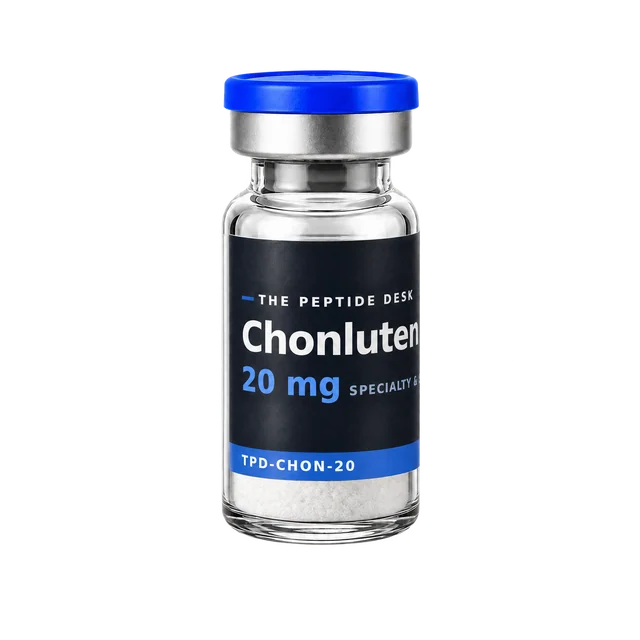
You can order Livagen as lyophilized peptide in 10-pack at 20mg per vial.
This information is for research and educational purposes only. No medical recommendations.
Risks & Safety
Livagen is classified as very mild in the available literature and is among the most well tolerated compounds of the Khavinson bioregulator class. In the available preclinical and limited human studies, no relevant toxic effects have been documented.
Observed in research and reports:
- Injection site: mild redness or transient irritation with subcutaneous use is the most common observation. The tripeptide itself is considered low-reactivity.
- Very thin human data: the data base consists almost entirely of small, Russian-language studies from the Khavinson environment. International replication remains limited. Robust long-term safety data on hepatic use do not exist.
- Course-based pattern: the use described occurs in short 10-20 day courses. No data exist on the safety profile of continuous administration.
This classification does not replace medical advice. Risk and responsibility for any actual use lie entirely with the buyer.
Studies
- Effects of Livagen Peptide on Chromatin Activation in Lymphocytes from Old People - Bulletin of Experimental Biology and Medicine 2002, Khavinson et al: Livagen-specific study of chromatin reactivation in aging human lymphocytes.
- Therapeutic activity of short synthetic peptides Cortagen and Livagen in Drosophila model for neurodegenerative disorders - Parkinsonism and Related Disorders 2007, Savvateeva-Popova et al: model study of Livagen action in the Drosophila model.
- Peptide medicines: past, present, future - Clinical Medicine (Russian Journal) 2020, Khavinson: review of the bioregulator class with tissue-specific endpoints.
- Peptide bioregulation of aging: results and prospects - Biogerontology 2010, Anisimov and Khavinson: aging mechanism review of the bioregulator class.