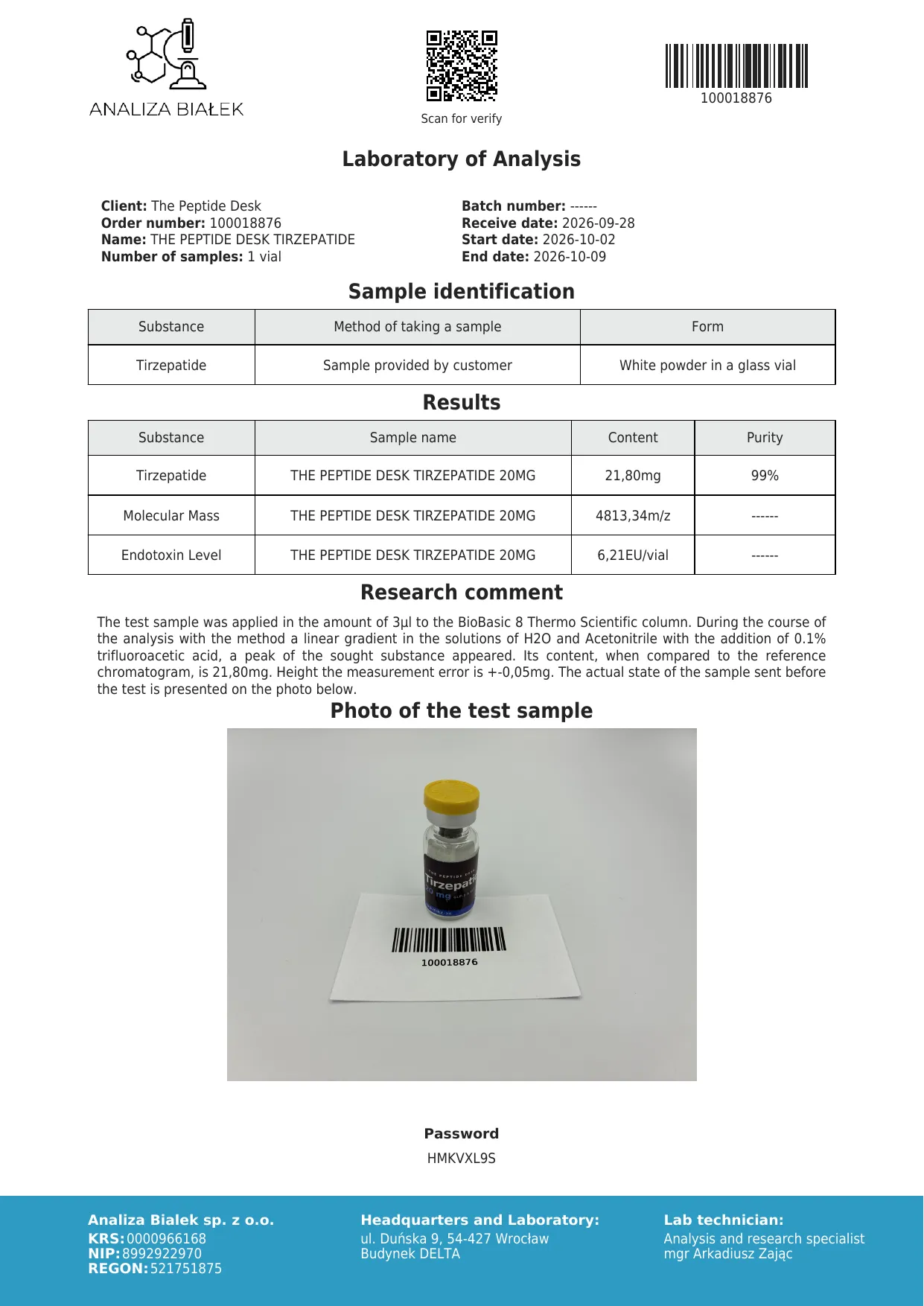
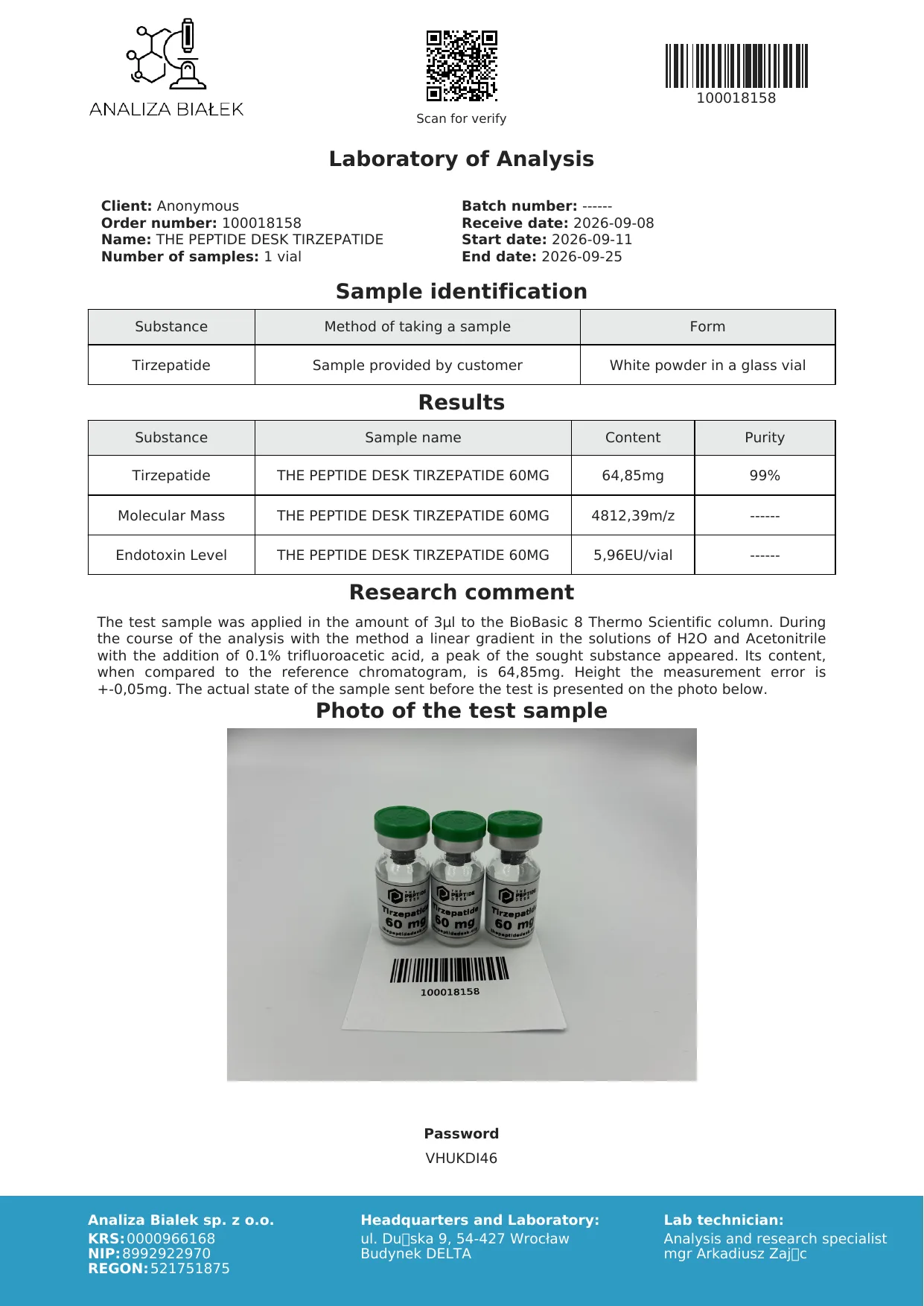

Description
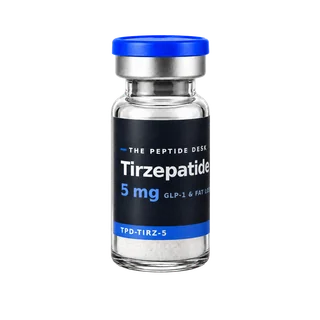
Tirzepatide is a synthetic 39-amino-acid peptide and the first of its class: a dual agonist that simultaneously activates GLP-1 and GIP receptors. While classical GLP-1 mimetics target only one receptor, Tirzepatide combines both mechanisms in a single molecule. In research models, the dual mechanism is associated with markedly more pronounced effects on glucose homeostasis, satiety signaling and lipid metabolism compared to mono-agonists.
In the research context, Tirzepatide is currently the focus of intense investigation. The SURMOUNT trial series represents one of the most extensive Phase 3 datasets of recent years, providing multi-year data on body weight changes, cardiovascular risk markers and metabolic adaptation.
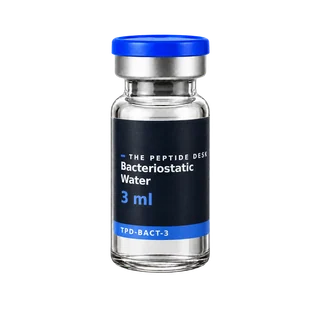
The half-life is approximately five days, allowing weekly dosing in research protocols. The molecule is typically supplied in lyophilized form and reconstituted with bacteriostatic water before use. Stability and bioavailability are among the best-documented properties within the GLP-1/GIP class.
You can order Tirzepatide in 10-vial packs across multiple sizes from 5mg to 120mg per vial. Size selection depends on planned duration and intensity of your research protocol. Larger vial sizes reduce price per milligram significantly.
This information is for research and educational purposes only. No medical recommendations.
Risks & Safety
Tirzepatide is considered generally well tolerated per study reports, although the documented profile is dominated by gastrointestinal effects. In the SURMOUNT datasets, most observations occur at the start of use and during the titration phase.
Observed in studies and user reports:
- Gastrointestinal effects: nausea, vomiting, diarrhea and constipation are the most commonly documented observations, particularly with overly rapid dose escalation. Slow titration markedly reduces the incidence.
- Appetite and fluids: the strongly reduced appetite can lead to decreased food and fluid intake. The literature describes an elevated risk of dehydration.
- Muscle mass: as with other GLP-1/GIP agonists, weight loss in studies involves a portion of muscle mass alongside fat mass.
- Gallbladder and injection site: gallbladder issues during rapid weight loss as well as mild irritation at the injection site are documented.
- Long-term data: beyond the multi-year studies, robust data on very long-term use are lacking.
This classification does not replace medical advice. Risk and responsibility for any actual use lie entirely with the buyer.
Studies
- Tirzepatide for Obesity Treatment and Diabetes Prevention (SURMOUNT-1, 3-year data) - NEJM 2025: Three years of observation in the largest Phase 3 obesity research study using this compound.
- Tirzepatide compared with semaglutide (SURMOUNT-5 post-hoc analysis) - Comparison of cardiovascular risk markers between Tirzepatide and semaglutide after 72 weeks.
- Gastrointestinal tolerability and weight reduction (SURMOUNT-1 to -4) - Pooled analysis on tolerability and correlation with efficacy profiles.
- Tirzepatide after intensive lifestyle intervention (SURMOUNT-3) - Nature Medicine 2023: Effects following prior lifestyle intervention.