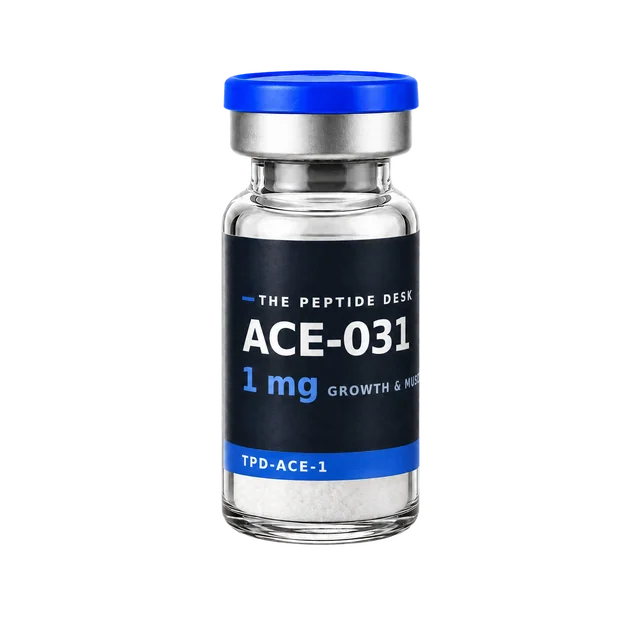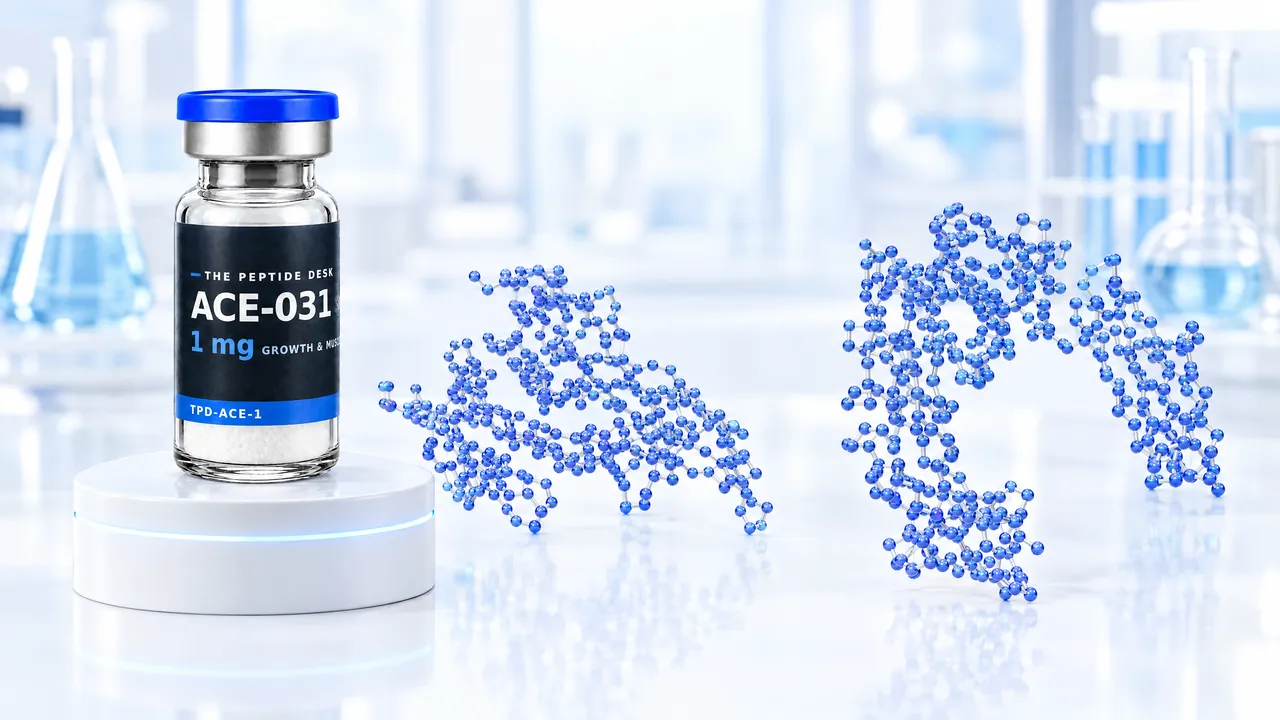
What is ACE-031?
ACE-031 (ramatercept) is a fusion protein that mimics part of the activin receptor IIB and so traps myostatin and related messengers before they take effect. Myostatin is the muscle's natural growth brake, ACE-031 releases that brake.
Important: ACE-031 is not a small peptide but a large protein that was dosed in mg per kilogram of body weight. Clinical development was stopped due to side effects.
Comparison
Myostatin in the lexicon
Which entries relate to myostatin and which take a different route to muscle, as stated in the TPD lexicon. Tap a card to open its entry.
Simplified: ACE-031 traps myostatin, GDF-8 is myostatin itself, IGF-1 variants act via their own receptor. 51
How it works
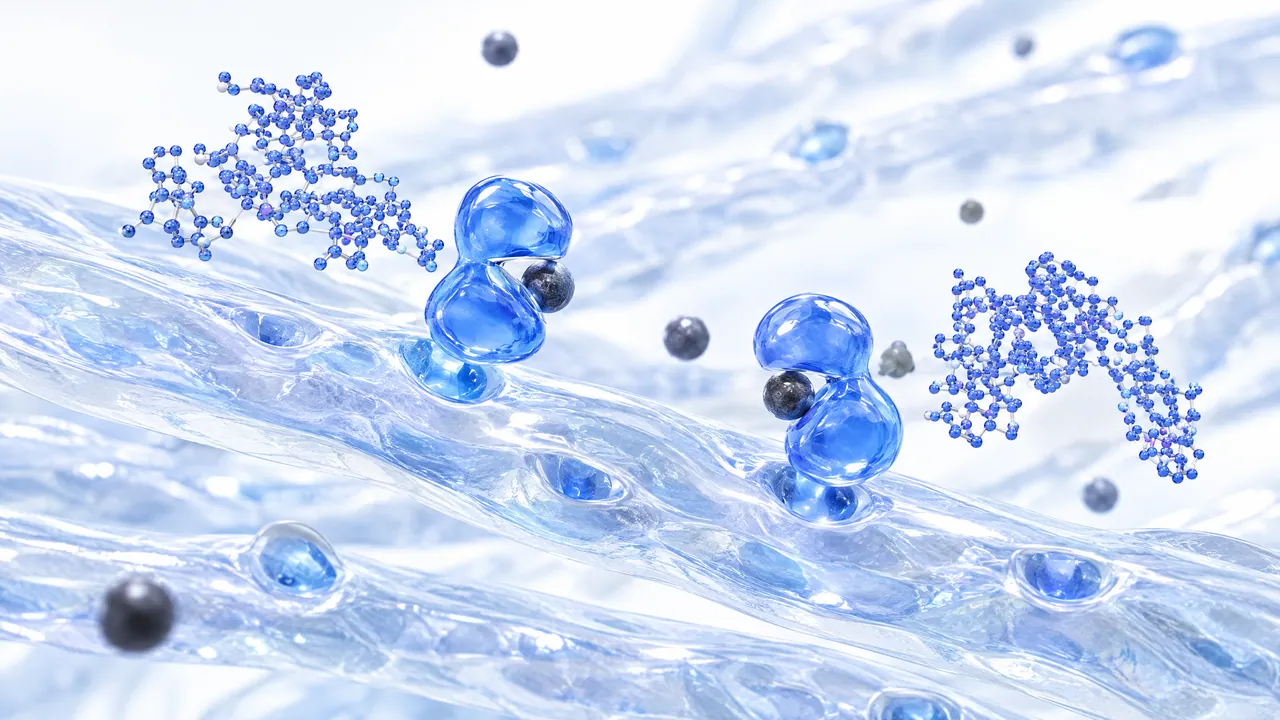
Normally myostatin brakes muscle growth via the ActRIIB receptor. ACE-031 acts like a trap: it catches myostatin and related activins so the braking signal does not reach the receptor. The result in studies was a gain in lean mass.
The catch: the ActRIIB receptor controls not only muscle but also blood vessels, hence the problematic side effects.
Where it acts
Where ACE-031 acted in studies
Tap a point or a card. Colour = myostatin, grey = observed in studies.
- Skeletal muscle
Myostatin trapped, lean mass +3.3% and thigh muscle +5.1% after one dose1
MSTN - Blood vessels
Nosebleeds and widened small vessels, reason the trial was stopped2
Observed in trials - Bone
Blood markers suggest more bone formation, in Duchenne a trend to higher bone density1
Observed in trials - Fat tissue
Trend to less fat mass in Duchenne, not significant2
Observed in trials - Skin
Redness at the injection site as the most common reaction after one dose1
Observed in trials
Targets in the ChEMBL database5
Compound CHEMBL2108674: one recorded mechanism, Inhibitor, traps the messenger.
- Gene
- MSTN
- UniProt
- O14793
- ChEMBL
- CHEMBL3407325
- Action
- Inhibitor, traps the messenger
What you need
Supplies
2 things, numbered as in the picture
Tick off what you already have. Vial and BAC water are our real shop photos at the same size.
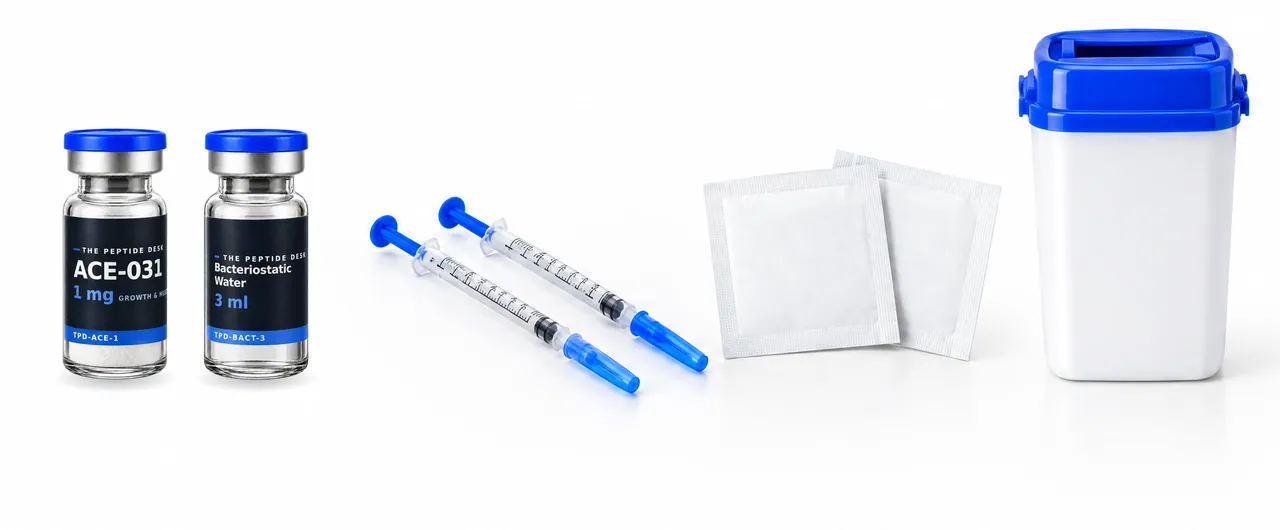
-
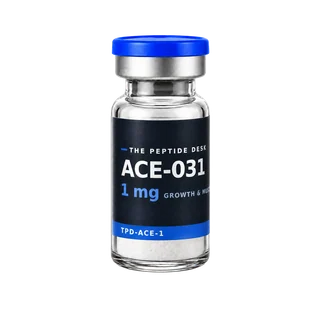
ACE-031 vial
The ACE-031 vial (lyophilized powder).
-
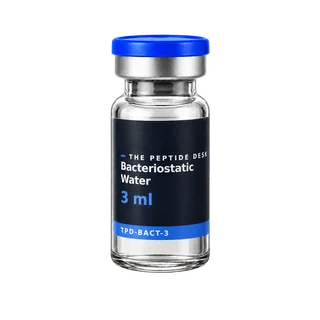
Water and supplies
Bacteriostatic water, insulin syringes, alcohol swabs.
Reconstitution
Use the peptide calculator for concentration and volume. But note: in the studies ACE-031 was dosed in mg per kilogram of body weight, in far higher amounts than small vials provide. For research use there is no established, safe protocol.
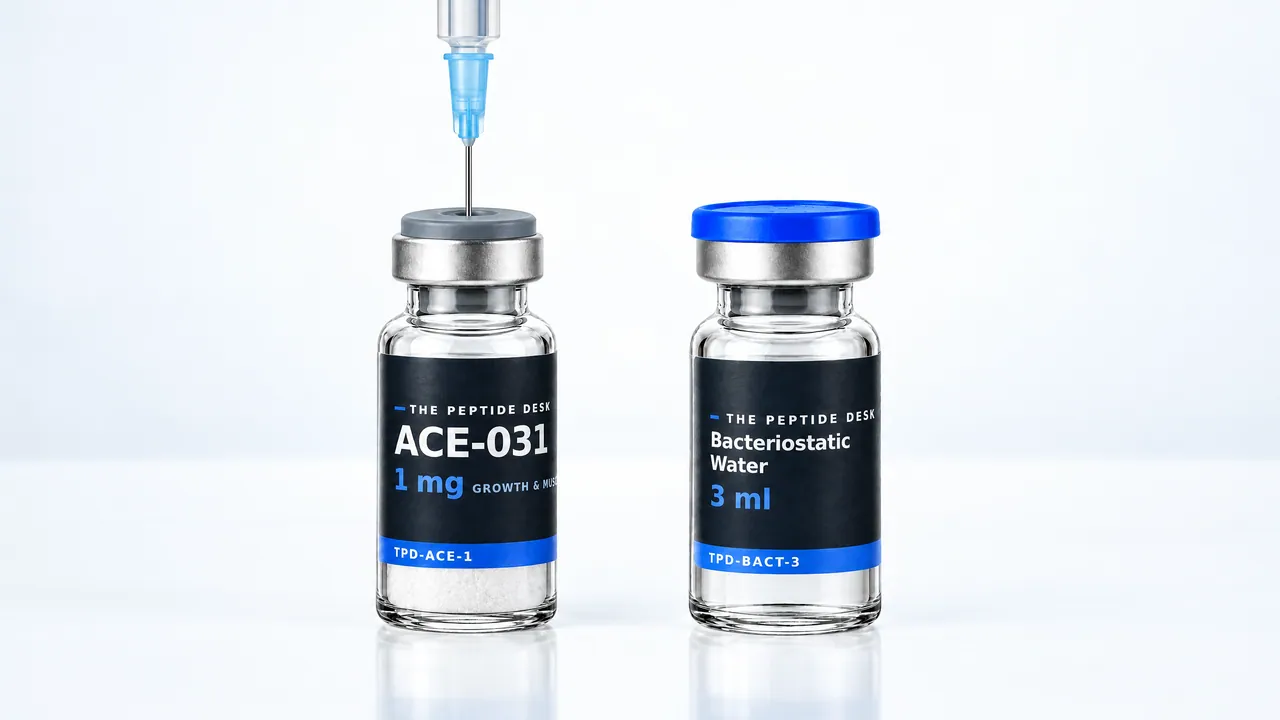
Step by step
Dissolving the powder
Four steps, the same for every vial size.
- 1Wipe the cap
Clean the rubber stopper with an alcohol swab.
- 2Add BAC water
Just add it, it does not matter if it hits the powder directly.
- 3Swirl or shake
Until everything has dissolved, both are fine.
- 4Draw up
With the U-100 insulin syringe.
Dosing
Dosing
Dosing, titration and syringe
Loading the dosing information …
- Getting started and stepping up, drawn as a staircase
- Units on the U-100 syringe for every step
- How long one vial lasts
Injection
ACE-031 was given subcutaneously in the studies. Lacking an established protocol and given the safety record, particular restraint is warranted here.
The injection is subcutaneous, into the fat layer under the skin. Common spots are the abdomen (keep about two finger-widths clear of the navel), the front and the inner side of the thigh, or the back of the upper arm.
The short version:
Injection
Where and at what angle
Pick a spot or switch the angle. Subcutaneous means: into the fat layer, not the muscle.
Rotate the spot each time, never the same one twice in a row.
Rule of thumb: where there is more fat under the skin, insert straight at 90 degrees. In lean people with little fat, 45 degrees, so the needle stays in the fat layer. Simplified diagram.
-
Clean the spot with an alcohol swab and let it dry
-
Pinch up a small fold of skin
-
Insert the needle: at 90 degrees where there is more fat under the skin, at 45 degrees in lean people with little fat
-
Inject slowly, wait a moment, then withdraw
-
Put the needle straight into the sharps container
Rotate the site each time so the tissue does not get irritated. Never the same spot twice in a row.
What the research shows
A phase 1 study (Attie, 2013) showed a dose-dependent rise in lean mass in healthy women, so ACE-031 works. But a study in boys with Duchenne muscular dystrophy (Campbell, 2017) was stopped early after side effects like nosebleeds, gum bleeding and dilated blood vessels appeared.
These vascular side effects are why ACE-031 never reached approval. That should be known before even considering it.
Study results
What the trials measured
Interactive: switch tabs, tap points, show or hide arms. Arms are named relative to each other, no dosing advice.
Muscle after a single dose1
Change at day 29 from baseline, given under the skin
48 healthy postmenopausal women, one dose at ascending levels or placebo. The rise was significant only in the group with the highest study dose. Blood markers suggested changes in bone and fat metabolism as well.

Research status
Where the research stands
ClinicalTrials.gov lists four trials with ACE-031, all from 2008 to 2011. Both phase 2 trials were terminated early, no new trial has been added since. As of 26 Oct 2026. 4
- Preclinical Mice and marmosets: more muscle mass and strength
- Phase 1 2 trials, 2 completed
- Phase 2 2 trials, 0 completed, 2 stopped early
- Phase 3 no registered trial
- Approval not yet
Show all 2 phase 2 trials on a timelineHide timeline
NCT01099761 · 24 participants, started Apr 2010, stopped early Jun 2011.
Registry entry ↗ · Results: Campbell et al., Muscle & Nerve, 2017
NCT01239758 · 11 participants, started Oct 2010, stopped early May 2011.
Bar: start to primary endpoint (planned for running trials). Green = completed, blue = progress until 26 Oct 2026, grey = stopped early. Phase 1: 2 trials on safety and pharmacokinetics, not shown as bars.
Side effects
- Nosebleeds and gum bleeding.
- Dilated small blood vessels (telangiectasia) on the skin.
- These vascular effects led to the stop of clinical development.
Practice
-
Development was stopped for safety reasons, the clearest signal there is.
-
No established, safe dosing protocol.
-
Banned in official competition.

Storage
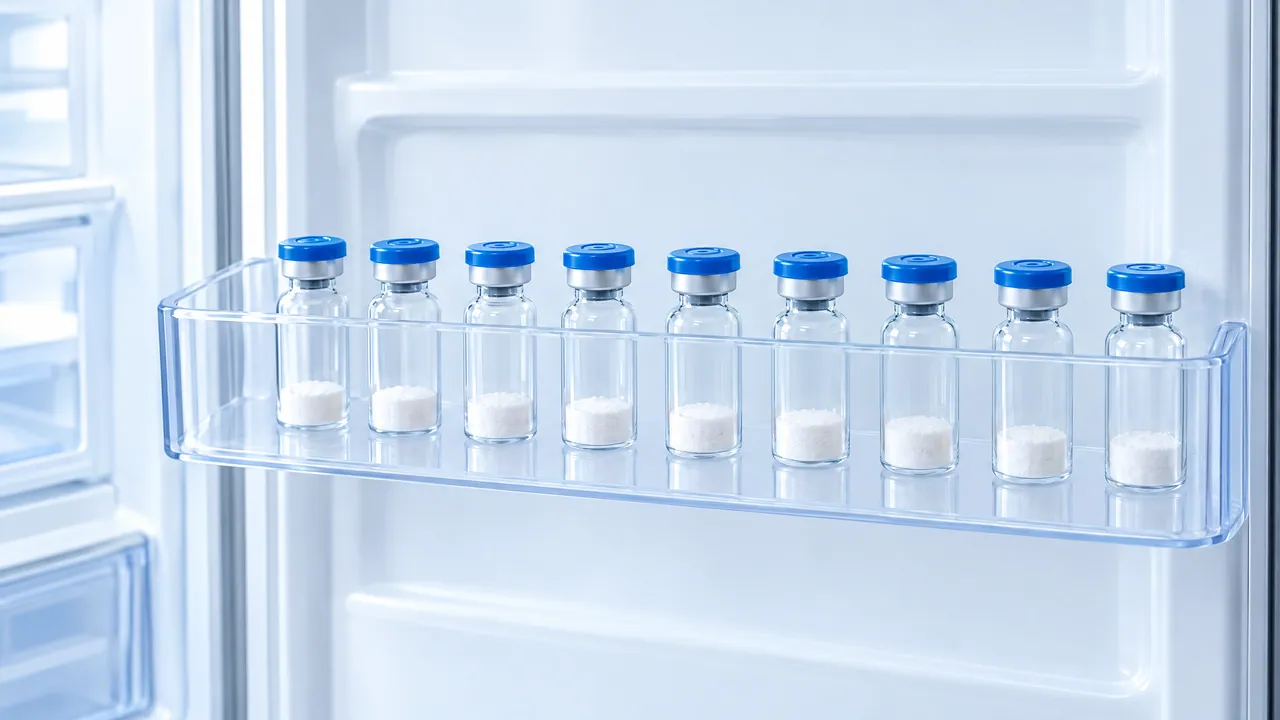
Before mixing the powder is robust, normal room temperature (around 20 to 25 degrees) is fine, ideally kept in the dark. After mixing, keep in the fridge (2 to 8 degrees), do not freeze. It stays good there for at least 4 to 6 months with barely any loss of potency, in practice considerably longer. Swirl or shake to mix, both are fine.
Shelf life
How long it keeps
Robust, no fridge needed.
At least 4 to 6 months with barely any loss of potency. Swirling or shaking to mix are both fine.
- Keep it dark
- Dissolved: 2 to 8 degrees
- Note the mixing date on the vial