This information is for research and educational purposes only. No medical recommendations. Products are not approved for human use. For health questions, consult a doctor.

Lexicon

Dutasteride

The stronger dual DHT blocker - inhibits both 5α-reductase isoenzymes.

2 min read 14 sources

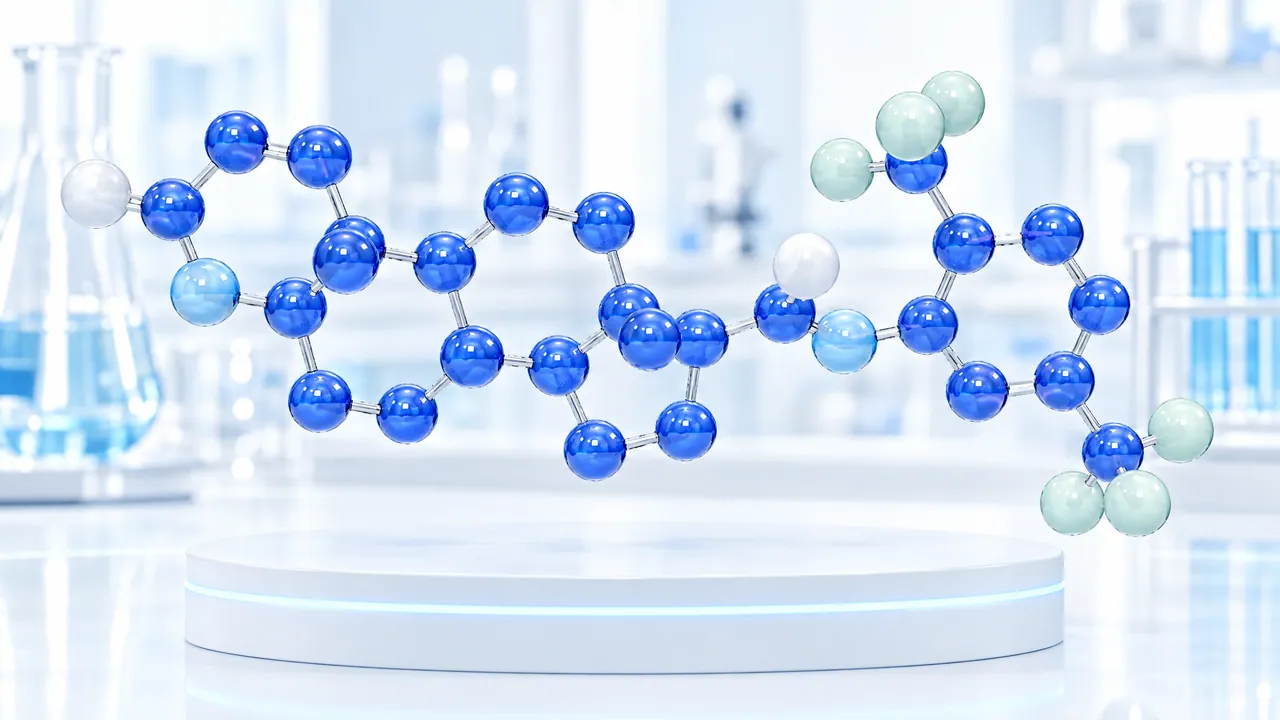
Large glossy blue 3D model of the dutasteride molecule with light green atom groups at one end, floating above a white podium with a blue light ring in a bright lab
Compound approved · in the USA since 2001 (prostate)Lab tested in the shop

Summary

At a glance

Sources checked on 26 Oct 2026

DHT in the blood
-94.7 %

approved dose after 24 weeks, finasteride in the same comparison -70.8%4

More hairs after 6 months
+12.2 hairs/cm²

Phase 3 in hair loss, placebo +4.7 per cm²2

Risk of urinary retention
-57 %

4,325 men with enlarged prostate, 24 months against placebo5

Prostate cancer over 4 years
-22.8 %

relatively fewer diagnoses on biopsy, but aggressive tumours more common in years 3 and 4 (12 against 1)7

  • Dutasteride blocks both forms of 5-alpha reductase, type 1 and type 2. This enzyme converts testosterone into DHT, the hormone behind hereditary hair loss and prostate growth.124
  • In a comparison trial blood DHT fell by 94.7 percent with the approved dose and by 70.8 percent with finasteride, which also varied more.4
  • In hereditary hair loss more and thicker hairs grew within 24 weeks than with finasteride and placebo, in a 6-month phase 3 trial 12.2 instead of 4.7 hairs per square centimetre.32
  • In an enlarged prostate the volume shrank by 25.7 percent and the risk of urinary retention fell by 57 percent. A 4-year trial found fewer prostate cancers but more aggressive tumours.57
  • In the USA dutasteride has been approved for the prostate since 2001, in hair loss it is used off-label. Everything here is the state of research, not a recommendation.11
Profile

Updated June 2026

How long does it stay in the body?

Share left after one dose, calculated with a half-life of ~5 weeks

Half-life ~5 weeks
After 10 weeks: 25 %
Week 5 · 50 %Week 10 · 25 %Week 15 · 12.5 %Week 25 · 3.1 %

Simplified model without an absorption phase, half-life from the TPD lexicon.

Class
5α-reductase inhibitor type 1 and type 2
Use
Oral

1 tablet per day or every other day

Half-life
about 5 weeks
Status
Clinically approved

BPH, off-label for hair

Sizes
0.5 mg

2 sizes in the shop

Contents 15 sections
  1. At a glance
  2. What is dutasteride?
  3. How it works
  4. How to take it
  5. Dosing
  6. Dutasteride vs finasteride - which when?
  7. What the research shows
  8. Research status
  9. Side effects
  10. Important notes
  11. Storage
  12. Related compounds
  13. FAQ
  14. Glossary
  15. Sources

What is dutasteride?

Dutasteride is the more potent and broader sibling of finasteride. While finasteride only inhibits 5α-reductase type 2, dutasteride blocks both known isoenzymes - type 1 and type 2. That lowers blood DHT by about 95% (vs ~70% for finasteride).

Clinically approved for benign prostatic hyperplasia (BPH). Used off-label and very widely for androgenetic hair loss - mostly as second choice when finasteride is insufficient.

How it works

5α-reductase exists in two isoforms:

  • Type 1: mainly in sebaceous glands of the skin and in the liver. NOT inhibited by finasteride.
  • Type 2: mainly in prostate, hair follicles and genitals. Inhibited by both finasteride and dutasteride.

Dutasteride inhibits both - hence the stronger DHT reduction. In studies that often produces a better hair effect in patients where finasteride stalls or is too weak.

Where it acts

Where dutasteride acts

Tap a point or a card. Colour = enzyme, grey = observed in trials.

  1. Scalp and hair follicles

    More and thicker hairs, 12.2 instead of 4.7 per cm² in 6 months2

    5α-R15α-R2
  2. Prostate

    Volume -25.7%, risk of urinary retention -57% in 2 years5

    5α-R2
  3. Blood

    DHT -94.7%, testosterone slightly higher within the normal range4

    Observed in trials
  4. Heart

    Composite heart failure 0.7% against 0.4% on placebo over 4 years7

    Observed in trials

Targets in the ChEMBL database12

Compound CHEMBL1200969: two recorded mechanisms, all Inhibitor.

5-alpha reductase type 1
Gene
SRD5A1
UniProt
P18405
ChEMBL
CHEMBL1787
Action
Inhibitor
5-alpha reductase type 2
Gene
SRD5A2
UniProt
P31213
ChEMBL
CHEMBL1856
Action
Inhibitor
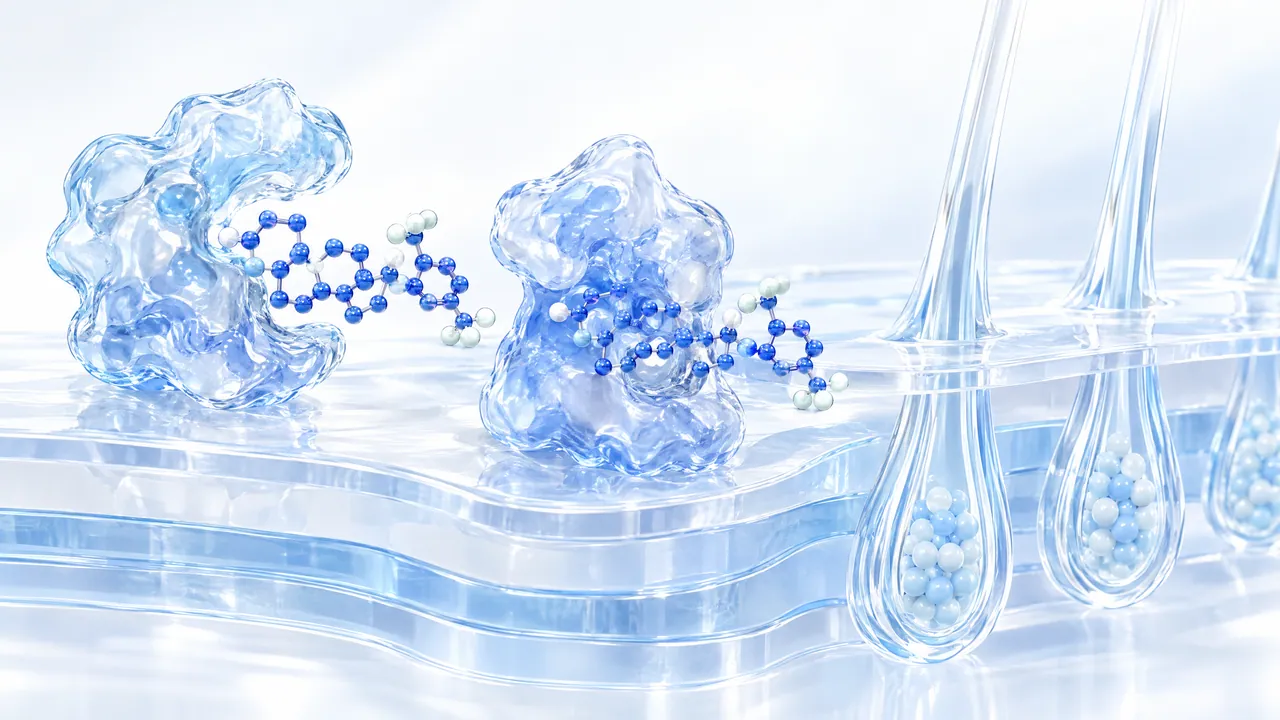
Two transparent blue glass enzyme models with blue 3D molecules docking into them, to the right glass hair follicles with light blue spheres in a layered skin surface
Dutasteride blocks both forms of 5-alpha reductase. Symbolic image.

How to take it

Oral tablet, once daily or every other day. Time of day doesn't matter.

  • 1 tablet with some water.
  • With or without food.
  • Thanks to the very long half-life dutasteride forgives missed doses better than finasteride.
White folding box with the TPD logo next to a blister of ten round white tablets, two loose tablets in front on a bright lab bench
Tablets in a blister. Symbolic image.

Dosing

Dosing

Dosing, titration and syringe

Loading the dosing information …

  • Getting started and stepping up, drawn as a staircase
  • Units on the U-100 syringe for every step
  • How long one vial lasts

Dutasteride vs finasteride - which when?

  • Finasteride first: if you've never done anything yet. Gentler, broader experience base.
  • Switch to dutasteride: if after 9-12 months of finasteride the hair loss doesn't stop or you clearly want more effect.
  • Dutasteride from the start: for very aggressive progression or family history of complete hair loss.

Important: side effect risk is slightly higher with dutasteride because DHT reduction is more complete.

Comparison

One or two enzymes

Dutasteride and finasteride, as described in the TPD lexicon. Tap a card to open its entry.

Blocks type 1 and type 2 Dutasteride 5α-R1 5α-R2 2 of 2 enzymes
Blocks type 2 only Finasteride 5α-R1 5α-R2 1 of 2 enzymes

Simplified: finasteride blocks only type 2 and lowered DHT by 70.8 percent in the comparison, dutasteride blocks both types and lowered DHT by 94.7 percent. 412

What the research shows

Dutasteride has a smaller but convincing data set:

  • Olsen et al. 2006: direct comparison over 24 weeks - hair count rose dose-dependently on dutasteride. Dutasteride 2.5mg per day was superior to finasteride 5mg per day.
  • Eun et al. 2010: confirmed efficacy of 0.5mg per day in androgenetic hair loss over 6 months.

Study results

What the trials measured

Interactive: switch tabs, tap points, show or hide arms. Arms are named relative to each other, no dosing advice.

How much blood DHT falls45

Mean reduction in percent

After 24 weeks4 399 men with enlarged prostate
Finasteride 70.8%
Dutasteride, approved dose 94.7%
Dutasteride, highest study dose 98.4%
After 24 months5 4,325 men, three identical trials
Dutasteride, approved dose 90.2%

With finasteride the reduction varied widely (standard deviation 18.3 percentage points), with dutasteride hardly at all. Testosterone rose slightly in all groups but stayed within the normal range.

Hairs per square centimetre after 6 months2

Increase from baseline, 153 men

Hair count2
Placebo 4.7 /cm²
Dutasteride, approved dose 12.2 /cm²

In a larger trial with 917 men the approved dose grew more and thicker hairs after 24 weeks than finasteride and placebo, side effects were similar in all groups. A meta-analysis of three comparison trials comes to the same result.

Enlarged prostate after 24 months5

Change in percent, 4,325 men, against placebo

Prostate volume5
Dutasteride, approved dose -25.7%
Symptom score5
Dutasteride, approved dose -21.4%
Risk of acute urinary retention5 against placebo
Dutasteride, approved dose -57.0%
Risk of prostate surgery5 against placebo
Dutasteride, approved dose -48.0%

Volume and symptoms as change from baseline, urinary retention and surgery as risk reduction against placebo. Urine flow rose by 2.2 ml per second.

Prostate cancer on biopsy over 4 years7

Share in percent, 6,729 men at increased risk

Cancer detected7
Placebo 25.1%
Dutasteride, approved dose 19.9%
Acute urinary retention7
Placebo 6.7%
Dutasteride, approved dose 1.6%

Cancer shares calculated from the case numbers in the abstract (858 of 3,424 against 659 of 3,305), relative reduction 22.8 percent. Aggressive tumours (Gleason 8 to 10) were more common in years 3 and 4: 12 against 1.

Transparent glass model of bladder and prostate on a wooden base, next to it a stopwatch and a green plant on a bright desk
The largest trials come from prostate research. Symbolic image.

Research status

Where the research stands

Dutasteride has been approved for the prostate since 2001. The list shows the key phase 3 trials on hair loss and the prostate out of 142 registry entries. As of 26 Oct 2026. 13

  1. Preclinical Blocks both forms of 5-alpha reductase
  2. Phase 1 no registered trial
  3. Phase 2 no registered trial
  4. Phase 3 7 trials, 6 completed
  5. Approval in the USA since 2001 (prostate)
8,621 participants in phase 3 Planned figures for running trials Approved: in the USA dutasteride has been marketed as a prescription drug for the enlarged prostate since 20 November 2001 (Drugs@FDA). ChEMBL lists phase 4 as the highest phase. In hair loss it is used outside this approval.11
Show all 7 phase 3 trials on a timelineHide timeline 6 completed 1 running 4 with results
Phase 3

Bar: start to primary endpoint (planned for running trials). Green = completed, blue = progress until 26 Oct 2026.

Side effects

  • Libido loss: somewhat more common than finasteride (about 3-7%), due to stronger DHT suppression.
  • Erectile dysfunction: similar frequency.
  • Breast tenderness / gynecomastia: rarer but documented.
  • Post-finasteride/dutasteride syndrome: very rare, persistent phenomenon after discontinuation.

Due to the 5-week half-life, discontinuation takes unusually long before DHT returns.

Tolerability

Heart failure in the 4-year trial

Out of 100 participants per group, how many had the event over 4 years.

0 of 100 Placebo
1 of 100 Dutasteride, approved dose
Event PlaceboDutasteride, approved dose
Heart failure (composite)7 0%1%

30 against 16 men. Otherwise side effects matched the prostate trials. A meta-analysis in hair loss found a 1.37-fold risk of sexual side effects for dutasteride, not statistically significant (finasteride 1.66-fold).79

Important notes

  • Not for women of childbearing age - teratogenic.
  • PSA test is lowered by about 50% on dutasteride - tell your doctor at prostate screening.
  • Blood donation only 6 months after stopping - long half-life.

Storage

Store dry and protected from light. Keep original container closed, out of reach of children.

Three white tablet bottles and a folded light blue towel on a white shelf
Dry and protected from light in the original container. Symbolic image.

Related

Related compounds

Same enzymes or a different path: all in the TPD lexicon.

FAQ

Common questions about Dutasteride

Short answers, each backed by the sources below.

Is dutasteride approved?

Yes. In the USA it has been approved as a prescription drug for the enlarged prostate since 20 November 2001, ChEMBL lists phase 4 as the highest phase. In hereditary hair loss it is used outside this approval, there are phase 3 trials on this.11122

How does dutasteride differ from finasteride?

Finasteride blocks only 5-alpha reductase type 2, dutasteride both types. In a comparison trial in men with enlarged prostate blood DHT fell by 94.7 percent with the approved dose of dutasteride and by 70.8 percent with finasteride. With finasteride the values also varied much more.4

What do the hair loss trials show?

The first trial with 416 men already showed more hair in a dose-dependent way, the highest dose beat finasteride. In a trial with 917 men the approved dose grew more and thicker hairs after 24 weeks than finasteride and placebo. In a Korean phase 3 trial hair count rose by 12.2 per square centimetre in 6 months, on placebo by 4.7. All trials lasted at most 6 months.132

What does research show for the prostate?

In three identical trials with 4,325 men the prostate shrank by 25.7 percent in 24 months, symptoms fell by 21.4 percent and urine flow rose. The risk of acute urinary retention fell by 57 percent, of surgery by 48 percent. In the CombAT trial the combination with tamsulosin worked better on symptoms over 4 years than either drug alone.56

Does dutasteride lower prostate cancer risk?

In the 4-year REDUCE trial prostate cancer was found less often on dutasteride, 22.8 percent less in relative terms. Aggressive tumours with Gleason 8 to 10, however, were more common in years 3 and 4, 12 against 1. The composite term heart failure was also more common at 0.7 against 0.4 percent.7

Which side effects have been described?

In the prostate trials impotence, reduced libido, breast enlargement and ejaculation disorders occurred more often than on placebo, but rarely overall. Except for breast enlargement they became less frequent over time. A meta-analysis in hair loss found a 1.37-fold risk of sexual side effects for dutasteride, not statistically significant. In direct comparison with finasteride there was no clear difference.8910

Glossary

Terms explained briefly

Dotted words in the text open these explanations directly.

5-alpha reductase
Enzyme that converts testosterone into the stronger DHT. There are type 1 and type 2.
Acute urinary retention
The bladder suddenly cannot be emptied, an emergency.
Benign prostatic hyperplasia (BPH)
Benign growth of the prostate with age that makes urinating harder.
DHT (dihydrotestosterone)
Strong androgen made from testosterone. Drives hereditary hair loss and prostate growth.
Gleason score
Measure of how aggressive a prostate cancer looks under the microscope. Scores of 8 to 10 count as aggressive.
Gynecomastia
Enlargement of the breast gland in men.
Hereditary hair loss
Hair loss caused by a hereditary sensitivity of the hair follicles to DHT.
Off-label
Use of an approved compound for a purpose it is not approved for.
PSA
Prostate-specific antigen, a blood marker for prostate screening.
Teratogenic
Can harm the unborn child.

Evidence

Sources

Show all 14 sourcesHide sources 10 Studies1 Trial registry3 Database checked 26 Oct 2026

Studies

  1. Dutasteride against finasteride in hair loss, 416 men

    Olsen et al., Journal of the American Academy of Dermatology, 2006

    Checked 26 Oct 2026 via doi.org, Crossref, PubMed
  2. Phase 3 in hair loss over 6 months, 153 men

    Eun et al., Journal of the American Academy of Dermatology, 2010

    Checked 26 Oct 2026 via doi.org, Crossref, PubMed, ClinicalTrials.gov
  3. Three doses against finasteride and placebo in hair loss, 917 men

    Gubelin Harcha et al., Journal of the American Academy of Dermatology, 2014

    Checked 26 Oct 2026 via doi.org, Crossref, PubMed, ClinicalTrials.gov
  4. DHT suppression with dutasteride against finasteride

    Clark et al., Journal of Clinical Endocrinology and Metabolism, 2004

    Checked 26 Oct 2026 via doi.org, Crossref, PubMed
  5. Three pivotal trials in enlarged prostate

    Roehrborn et al., Urology, 2002

    Checked 26 Oct 2026 via doi.org, Crossref, PubMed
  6. CombAT: combination with tamsulosin over 4 years

    Roehrborn et al., European Urology, 2010

    Checked 26 Oct 2026 via doi.org, Crossref, PubMed, ClinicalTrials.gov
  7. REDUCE: prostate cancer risk over 4 years

    Andriole et al., New England Journal of Medicine, 2010

    Checked 26 Oct 2026 via doi.org, Crossref, PubMed, ClinicalTrials.gov
  8. Review of efficacy and tolerability

    Evans und Goa, Drugs and Aging, 2003

    Checked 26 Oct 2026 via doi.org, Crossref, PubMed
  9. Meta-analysis: sexual side effects in hair loss

    Lee et al., Acta Dermato-Venereologica, 2019

    Checked 26 Oct 2026 via doi.org, Crossref, PubMed
  10. Meta-analysis: dutasteride against finasteride in hair loss

    Zhou et al., Clinical Interventions in Aging, 2019

    Checked 26 Oct 2026 via doi.org, Crossref, PubMed

Trial registry

  1. Trials on ClinicalTrials.gov

    ClinicalTrials.gov, U.S. National Library of Medicine

    Checked 26 Oct 2026 via ClinicalTrials.gov API v2

Database

  1. US approval (NDA 021319), prescription

    Drugs@FDA, U.S. Food and Drug Administration

    Checked 26 Oct 2026 via openFDA-API
  2. Mechanism and approval in ChEMBL

    ChEMBL, EMBL-EBI (CHEMBL1200969)

    Checked 26 Oct 2026 via ChEMBL
  3. Structure of dutasteride in PubChem

    PubChem, U.S. National Library of Medicine (CID 6918296)

    Checked 26 Oct 2026 via PubChem

In the shop

Dutasteride in the catalog

Sizes, prices and shipping times are on the product page.

To the product