This information is for research and educational purposes only. No medical recommendations. Products are not approved for human use. For health questions, consult a doctor.

Lexicon

Lipo-C FOCUS

A reinforced MIC-plus-L-carnitine variant for more intense cutting phases.

1 min read 12 sources

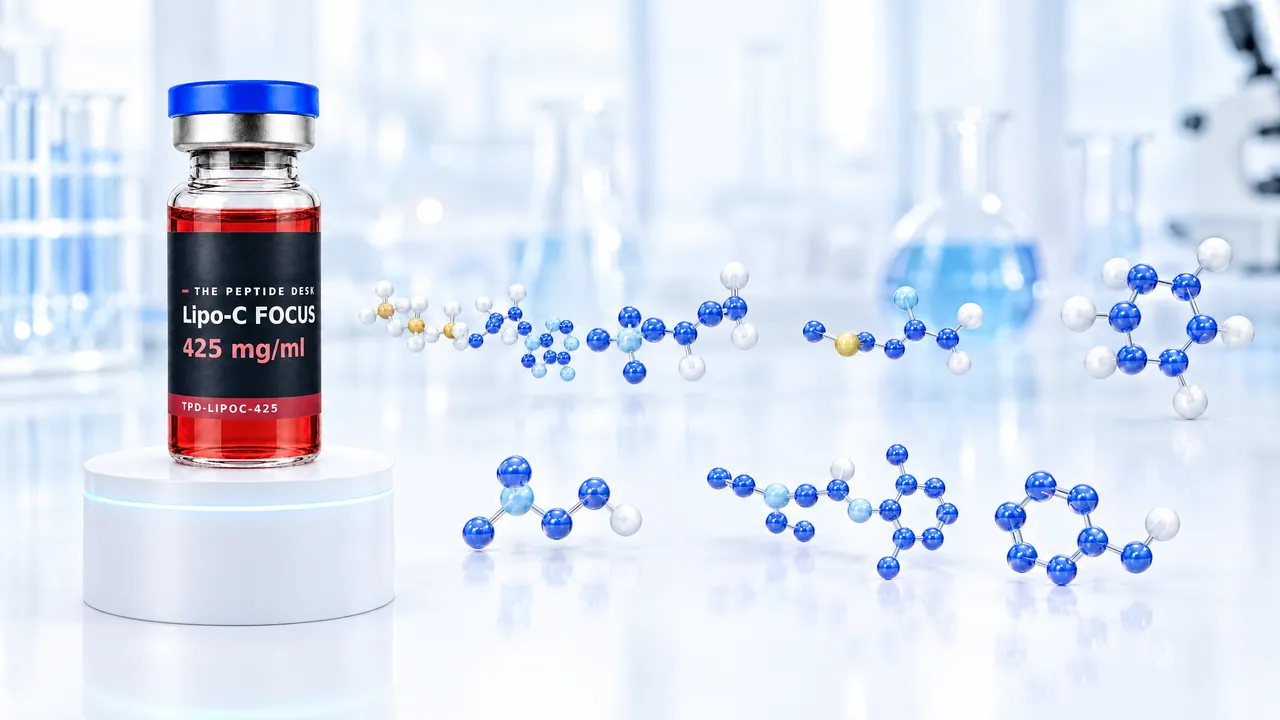
Lipo-C FOCUS glass vial with red solution and the black TPD label on a white podium, next to blue 3D molecule models in a bright lab
No study of its own · not approved

Summary

At a glance

Sources checked on 26 Oct 2026

On the blend itself
0 trials

no trial of methionine, inositol and choline as a blend on ClinicalTrials.gov, as of 26 Oct 202611

Men with organ damage without choline
77 %

fatty liver or muscle damage on a low-choline diet, 26 men in the study1

Carnitine in muscle
+21 %

after 24 weeks, swallowed together with carbohydrate, 14 men4

Weight with L-carnitine
-1.13 kg

meta-analysis of 43 trials, only with overweight, body fat percentage unchanged8

Waist with inositol
-2.36 cm

meta-analysis of 18 trials, low to very low certainty of evidence9

  • According to the entry Lipo-C FOCUS combines methionine, inositol and choline with L-carnitine. The first three help the liver release fat, L-carnitine carries fatty acids into the mitochondria.26
  • ClinicalTrials.gov lists no trial of this blend. The numbers here come from studies on single components.11
  • Without choline in the diet 77 percent of men and 80 percent of postmenopausal women developed a fatty liver or muscle damage.1
  • Swallowed together with carbohydrate, muscle carnitine rose by 21 percent after 24 weeks. Meta-analyses found 1.1 to 1.3 kg more weight loss, only with overweight.478
  • No study shows fat loss from the blend. The entry says it clearly: no replacement for a calorie deficit.11
Profile

Updated June 2026

Class
Lipotropic blend

MIC + cofactors

Use
Subcutaneous or intramuscular
Half-life
component-dependent
Status
Supplement-grade ingredients

thin evidence

Sizes
425mg/ml

1 size in the shop

Contents 12 sections
  1. At a glance
  2. What is Lipo-C FOCUS?
  3. How it works
  4. Use and dosing
  5. What the research shows
  6. Research status
  7. Side effects
  8. Storage
  9. Related compounds
  10. FAQ
  11. Glossary
  12. Sources

What is Lipo-C FOCUS?

Lipo-C FOCUS combines methionine, inositol, choline and L-carnitine at higher concentration. Lipotropic blends are used alongside diet and training to support fat metabolism - they are not a replacement for a calorie deficit and not a magic bullet.

This information is for research and educational purposes only. No medical advice.

Comparison

What is in which blend

Components according to the TPD lexicon. MIC stands for methionine, inositol and choline. Tap a card to open its entry.

Simplified: the amounts per component differ. More components do not automatically mean more effect.

How it works

The components act on fat metabolism: methionine, inositol and choline (MIC) support liver fat transport, L-carnitine mitochondrial fatty acid transport, B vitamins energy metabolism. The effect is supportive, not dramatic.

Where it acts

Where the components act

Tap a point or a card. Colour = component. All from studies on single components, not on the blend.

  1. Liver

    Without choline in the diet many developed a fatty liver1

    MIC
  2. Skeletal muscle

    21 percent more carnitine after 24 weeks, less glycogen use during light exercise4

    L-carnitine
  3. Fat tissue

    No fat gain in 12 weeks, the control group gained 1.8 kg of fat5

    L-carnitine
  4. Gut

    Gut bacteria turn swallowed carnitine and choline into TMA, which becomes TMAO10

    L-carnitineMIC

Targets in the ChEMBL database12

Four recorded mechanisms, type of action on each card.

Methionine adenosyltransferase 1A
Gene
MAT1A
UniProt
Q00266
ChEMBL
CHEMBL5169142
Action
Enzyme, turns methionine into SAM, the main methyl group donor
Choline kinase alpha
Gene
CHKA
UniProt
P35790
ChEMBL
CHEMBL3117
Action
Enzyme, first step from choline to phosphatidylcholine
Carnitine transporter OCTN2
Gene
SLC22A5
UniProt
O76082
ChEMBL
CHEMBL2073693
Action
Transporter, brings carnitine into the cell together with sodium
Carnitine palmitoyltransferase 1, muscle form
Gene
CPT1B
UniProt
Q92523
ChEMBL
CHEMBL2216739
Action
Enzyme, attaches long-chain fatty acids to carnitine so they can enter the mitochondria
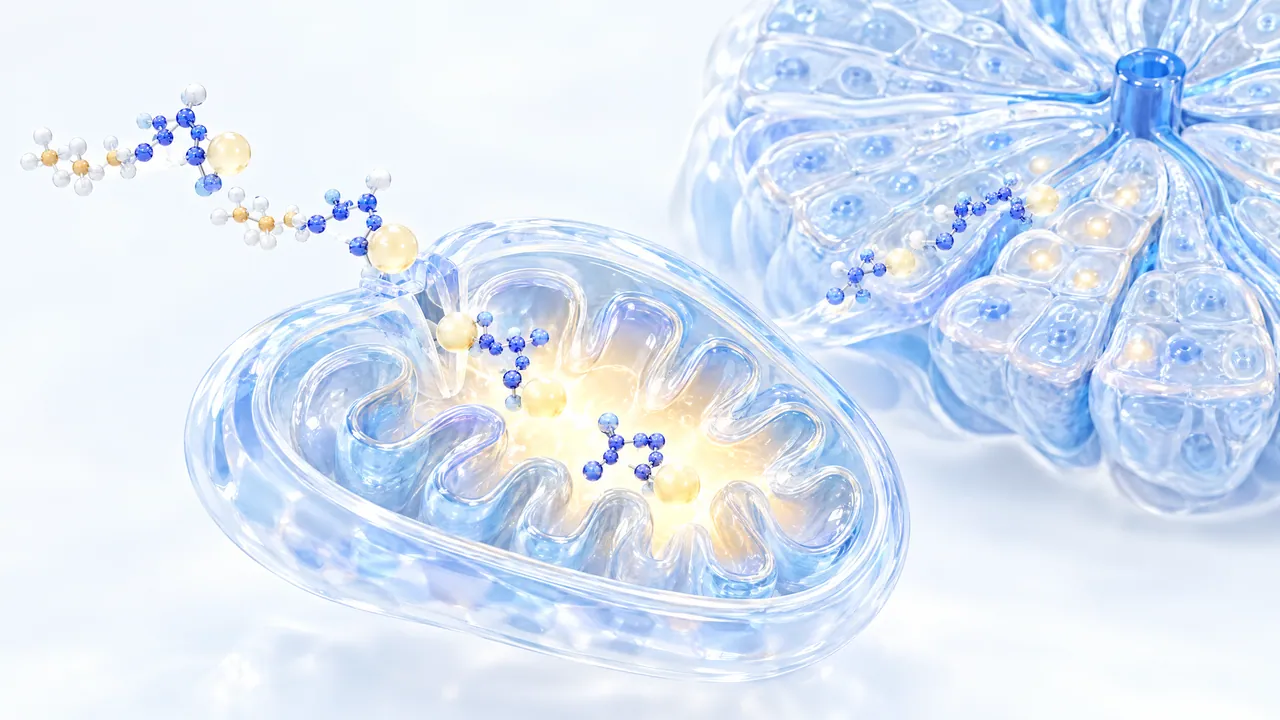
Glass mitochondrion with a folded interior, a chain of blue molecule models and golden spheres leads into it, behind it a larger glass cell structure
L-carnitine carries fatty acids into the mitochondria. Symbolic image.

Use and dosing

Dosing

Dosing, titration and syringe

Loading the dosing information …

  • Getting started and stepping up, drawn as a staircase
  • Units on the U-100 syringe for every step
  • How long one vial lasts
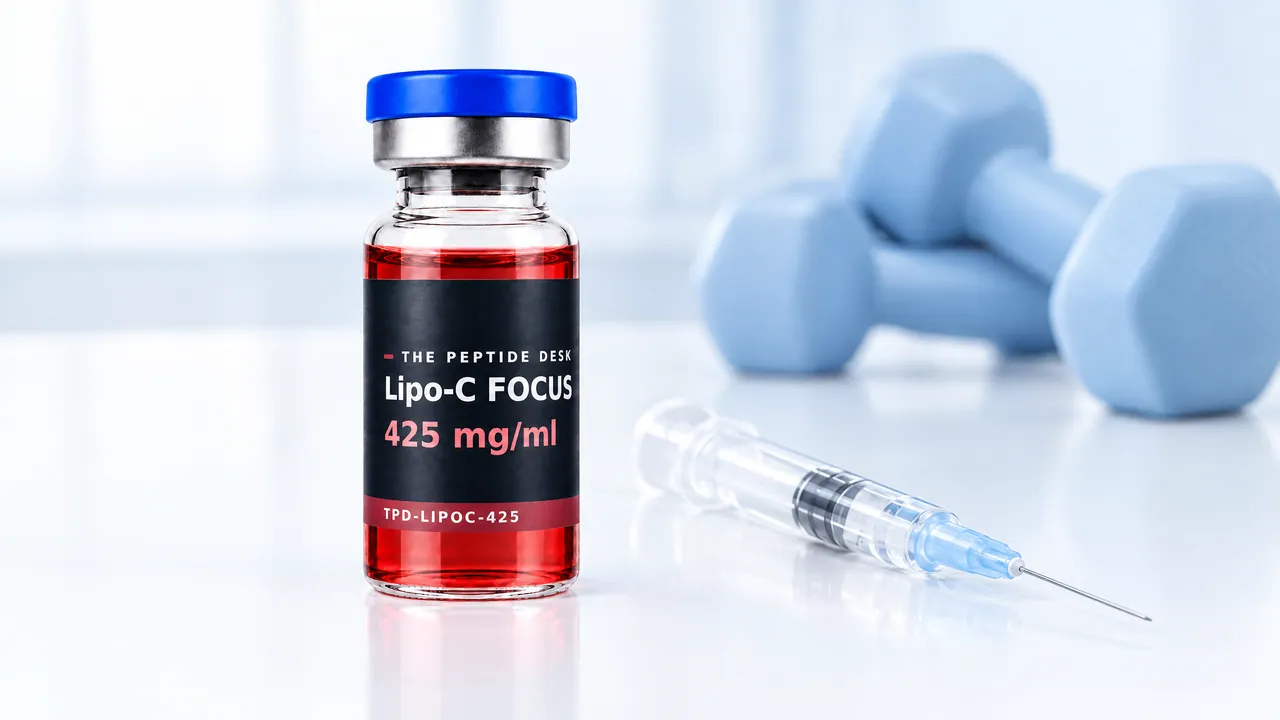
Glass vial with red solution, a blue cap and a black TPD label for Lipo-C FOCUS, a disposable syringe and two light blue dumbbells beside it
Ready-made solution, subcutaneous or intramuscular. Symbolic image.

What the research shows

There is metabolic data for the individual building blocks (choline, carnitine, inositol), but controlled studies on these combined injection blends as a fat-loss agent are largely lacking. Honestly: the evidence is thin, the benefit mainly supportive.

Study results

What the trials measured

Interactive: switch tabs, tap points, show or hide arms. Arms are named relative to each other, no dosing advice.

Organ damage without choline1

Share with fatty liver or muscle damage on a low-choline diet, in percent

Men1 26 people
Low-choline diet 77%
Postmenopausal women1 15 people
Low-choline diet 80%
Premenopausal women1 16 people
Low-choline diet 44%

Controlled diet for up to 42 days. Those who developed organ damage got choline back, after which the values returned to normal. The study shows the need for choline, not the effect of an injection.

Muscle metabolism after 24 weeks4

Change in percent, 14 healthy men

Carnitine in muscle4 compared with the start
Control (carbohydrate only) 0% unchanged
Carnitine with carbohydrate +21%
Output in the 30-minute test4 compared with the start
Control (carbohydrate only) 0% no change
Carnitine with carbohydrate +11%
Glycogen use during light exercise4 compared with control
Carnitine with carbohydrate -55%

L-carnitine was swallowed here together with carbohydrate meant to raise insulin. All effects only appeared after 24 weeks. There is no such study on the blend or on injection under the skin.

Weight loss in meta-analyses78

Difference to the comparison group in kg

Weight, 9 trials7 911 people
With carnitine, difference to control -1.33 kg
Weight, 43 trials8 effect only with overweight
With carnitine, difference to control -1.13 kg
Fat mass, 43 trials8 body fat percentage and waist unchanged
With carnitine, difference to control -1.16 kg

Small effects of L-carnitine alone, not of the blend. In the first analysis the weight loss became smaller with longer duration.

Glass brain and a cluster of yellow fat cells on a white lab bench, next to blue sample racks in front of large windows
Studies exist on single components, not on the blend. Symbolic image.

Research status

Where the research stands

There is no registered trial of the blend. Studies on single components are shown above under the results. As of 26 Oct 2026. 11

  1. Preclinical No study of the blend, components known from nutrition research
  2. Phase 1 no registered trial
  3. Phase 2 no registered trial
  4. Phase 3 no registered trial
  5. Approval not yet
Not approved and no registered trial of the blend. L-carnitine is an approved drug substance as levocarnitine, the other components are nutrients.11

So far there is no registered trial in humans. 11

Side effects

  • Usually well tolerated.
  • Stinging or redness at the injection site possible.
  • Occasional GI discomfort or warmth.

Storage

Store at room temperature, protected from light - no fridge needed. Out of reach of children.

Related

Related compounds

Same components or a different path: all in the TPD lexicon.

FAQ

Common questions about Lipo-C FOCUS

Short answers, each backed by the sources below.

Are there studies on Lipo-C FOCUS itself?

No. As of 26 October 2026 the registry ClinicalTrials.gov lists no trial of methionine, inositol and choline as a blend, nor with L-carnitine. Everything shown here comes from studies on single components.11

What do the components do?

Without choline the liver releases fat less well as lipoprotein and becomes fatty. Methionine supplies methyl groups for the same metabolism. L-carnitine carries long-chain fatty acids into the mitochondria, where they are burned.236

What do studies on choline show?

In a controlled study with 57 adults on a low-choline diet 77 percent of men and 80 percent of postmenopausal women developed a fatty liver or muscle damage, before menopause 44 percent. With choline the values returned to normal.1

What does L-carnitine do in muscle?

Swallowed together with carbohydrate, muscle carnitine rose by 21 percent after 24 weeks. The men then used 55 percent less glycogen during light exercise and performed 11 percent more in the test. When swallowed as a supplement only 5 to 18 percent reaches the blood.46

Does Lipo-C FOCUS help with weight loss?

For the blend this is not proven. L-carnitine alone gave 1.1 to 1.3 kg more weight loss in meta-analyses, only with overweight and without a change in body fat percentage. The entry clearly says such blends are no replacement for a calorie deficit.1178

What is TMAO?

Gut bacteria turn swallowed carnitine and choline into TMA, which becomes TMAO. In mice this promoted deposits in the vessels. In 2,595 people a high carnitine level was linked to more cardiovascular events when TMAO was also high. The study looked at swallowed substances.10

Which side effects are known?

There are no study data on the tolerability of the blend. The entry names stinging or redness at the injection site and occasional stomach complaints or a feeling of heat.11

Glossary

Terms explained briefly

Dotted words in the text open these explanations directly.

Calorie deficit
Taking in less energy than the body uses. Only then does it break down fat.
Fatty acid transport
Long-chain fatty acids only cross the inner envelope of the mitochondria with carnitine. There they are burned.
Fatty liver
Too much fat in the liver cells. Choline deficiency is a known cause.
Glycogen
The storage form of sugar in muscle and liver. Less glycogen use means the muscle uses more fat.
Intramuscular
Injected into the muscle.
Lipotropic
Substances that help the liver process and export fat. They include choline, methionine and inositol.
Meta-analysis
A combined analysis of several studies on the same question. It is only as good as the studies it includes.
MIC
Short for methionine, inositol and choline, the three classic lipotropic components.
Mitochondria
The power plants of the cell. Here energy is made from fat and sugar.
TMAO
Trimethylamine N-oxide. Formed when gut bacteria break carnitine or choline down to TMA, which is then converted further.

Evidence

Sources

Show all 12 sourcesHide sources 10 Studies1 Trial registry1 Database checked 26 Oct 2026

Studies

  1. Choline requirement by sex and menopausal status, controlled diet

    Fischer et al., American Journal of Clinical Nutrition, 2007

    Checked 26 Oct 2026 via doi.org, Crossref, PubMed
  2. Choline metabolism and fatty liver (review)

    Corbin und Zeisel, Current Opinion in Gastroenterology, 2012

    Checked 26 Oct 2026 via doi.org, Crossref, PubMed
  3. Methionine metabolism and liver disease (review)

    Mato et al., Annual Review of Nutrition, 2008

    Checked 26 Oct 2026 via doi.org, Crossref, PubMed
  4. Carnitine with carbohydrate over 24 weeks, muscle metabolism

    Wall et al., Journal of Physiology, 2011

    Checked 26 Oct 2026 via doi.org, Crossref, PubMed
  5. Muscle carnitine, energy expenditure and body fat over 12 weeks

    Stephens et al., Journal of Physiology, 2013

    Checked 26 Oct 2026 via doi.org, Crossref, PubMed
  6. Uptake, distribution and excretion of L-carnitine (review)

    Evans und Fornasini, Clinical Pharmacokinetics, 2003

    Checked 26 Oct 2026 via doi.org, Crossref, PubMed
  7. Carnitine and weight loss, meta-analysis of 9 trials

    Pooyandjoo et al., Obesity Reviews, 2016

    Checked 26 Oct 2026 via doi.org, Crossref, PubMed
  8. Carnitine and body weight, meta-analysis of 43 trials

    Askarpour et al., Pharmacological Research, 2020

    Checked 26 Oct 2026 via doi.org, Crossref, PubMed
  9. Inositol and metabolic markers, meta-analysis of 18 trials

    Delavar et al., Diabetology & Metabolic Syndrome, 2025

    Checked 26 Oct 2026 via doi.org, Crossref, PubMed
  10. Gut bacteria turn carnitine into TMAO (humans and mice)

    Koeth et al., Nature Medicine, 2013

    Checked 26 Oct 2026 via doi.org, Crossref, PubMed

Trial registry

  1. Search on ClinicalTrials.gov (no trial with the blend)

    ClinicalTrials.gov, U.S. National Library of Medicine

    Checked 26 Oct 2026 via ClinicalTrials.gov API v2

Database

  1. MAT1A, CHKA, OCTN2 and CPT1B in UniProt

    UniProt (Q00266, P35790, O76082, Q92523), Target-IDs aus ChEMBL

    Checked 26 Oct 2026 via UniProt REST, ChEMBL API

In the shop

Lipo-C FOCUS in the catalog

Sizes, prices and shipping times are on the product page.

To the product