What is Melanotan 1?
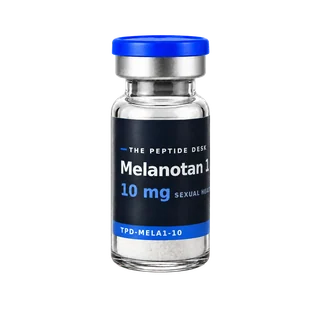
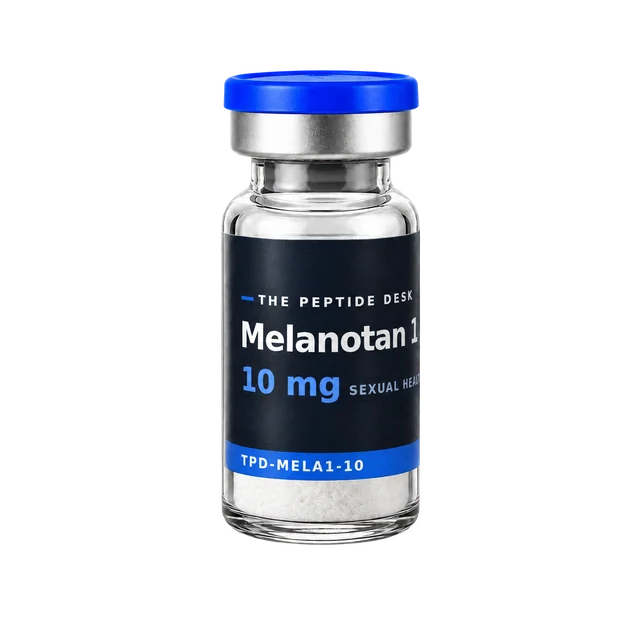
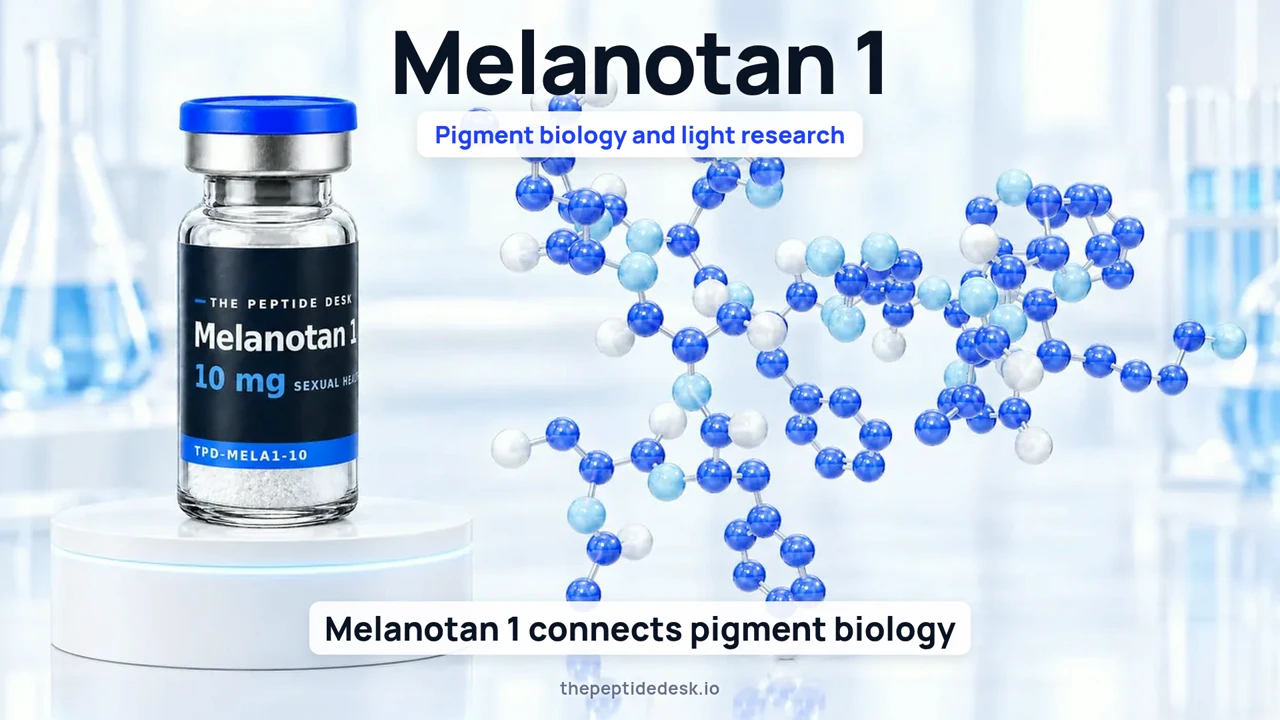
Melanotan 1 is an analogue of the body's own hormone alpha-MSH and is also called afamelanotide. Like Melanotan II it acts on the melanocortin pathways, but more selectively: it mainly works on the MC1 receptor, which controls skin pigmentation. It barely acts on the MC4 receptor, through which Melanotan II produces its effects on libido, appetite and nausea.
That is the practical difference: Melanotan 1 tans similarly but brings far fewer side effects. In medicine the substance is even approved as afamelanotide, though there as a slow-release implant. As a research peptide it is injected subcutaneously and dosed in micrograms. It comes as a freeze-dried powder you dissolve in bacteriostatic water.
Comparison
Melanocortin peptides in the lexicon
Which of the two main melanocortin receptors the peptides address according to the TPD lexicon. MC1R controls pigmentation, MC4R in the brain controls appetite and libido. Tap a card to open its entry.
Simplified: Melanotan II and PT-141 also address further melanocortin receptors. KPV is the end piece of alpha-MSH and acts without these receptors. 129
How it works
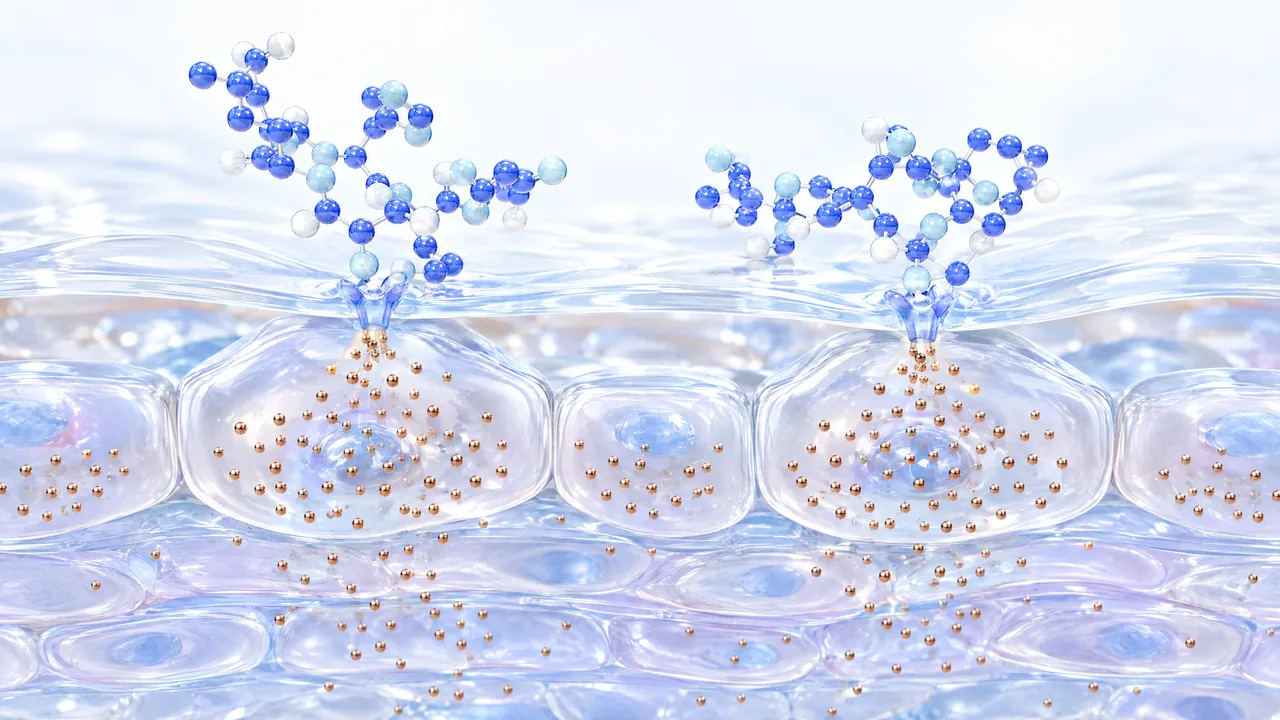
Via the MC1 receptor, Melanotan 1 prompts the skin's melanocytes to make more eumelanin. That is the tanning effect, which in a research context is described even with less UV. Because it barely engages the MC4 receptor, the central effects Melanotan II brings are missing: no pronounced nausea surge, no spontaneous erection complex, no strong appetite suppression.
The half-life is short, shorter than Melanotan II. That is why the approved medical form is a depot implant that releases the substance slowly. The injectable research form is used more frequently accordingly. The key point stays: stronger tanning does not mean the skin is protected from UV damage.
Where it acts
Where Melanotan 1 acts
Tap a point or a card. Colour = receptor, grey = effect seen in trials.
Targets in the ChEMBL database12
Compound CHEMBL441738: one recorded mechanism, agonist with direct binding to the human receptor.
- Gene
- MC1R
- UniProt
- Q01726
- ChEMBL
- CHEMBL3795
- Action
- Agonist, direct binding
What you need
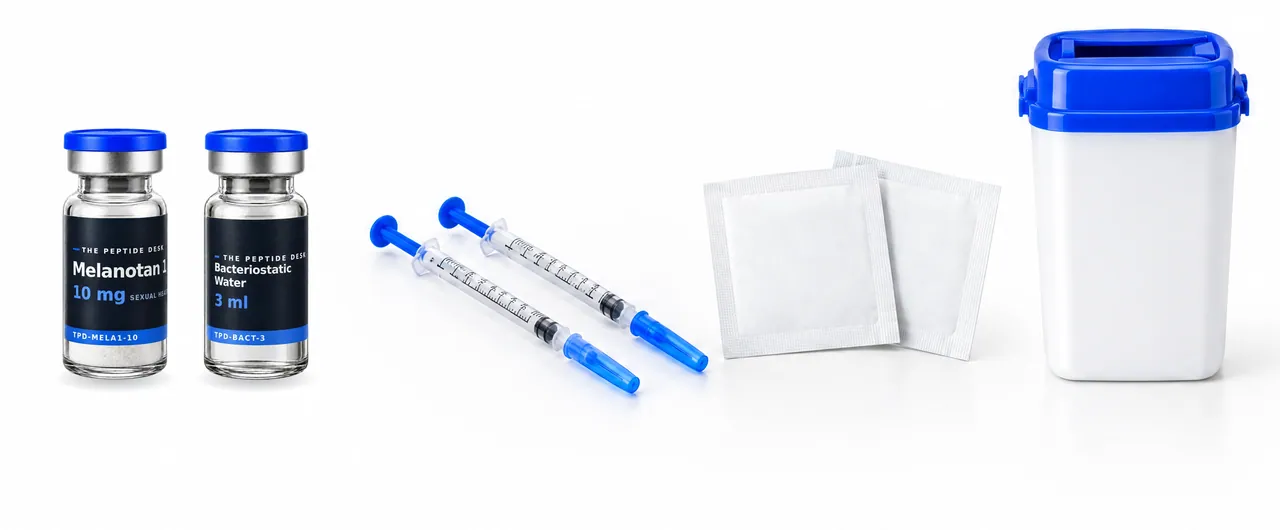
Melanotan 1 is used subcutaneously. You need:
Supplies
5 things, numbered as in the picture
Tick off what you already have. Vial and BAC water are our real shop photos at the same size.
-
Melanotan 1 vial
The Melanotan 1 vial with the freeze-dried powder
-
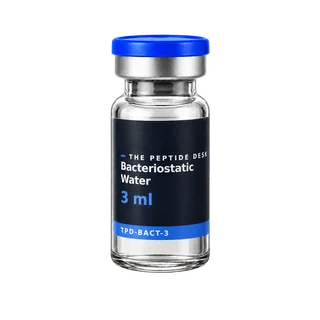
Bacteriostatic water
Bacteriostatic water to dissolve it
-
U-100 insulin syringes
U-100 insulin syringes
-
Alcohol swabs
Alcohol swabs for the vial cap and the skin
-
Sharps container
A sealable sharps container for used needles
As an Amazon associate we earn from qualifying purchases. Links open Amazon - no extra cost for you.
Reconstitution
The powder is dissolved in bacteriostatic water. How much water you add sets the concentration and therefore how many units you draw for your dose on the insulin syringe.
Use the peptide calculator for this: pick the water volume to see the concentration and units per dose. Because it is dosed in small microgram amounts, a not-too-high concentration is practical so the units stay easy to read.
When dissolving, just add the bac water, it does not matter if it hits the powder directly. Then swirl or shake until everything has dissolved, both are fine.
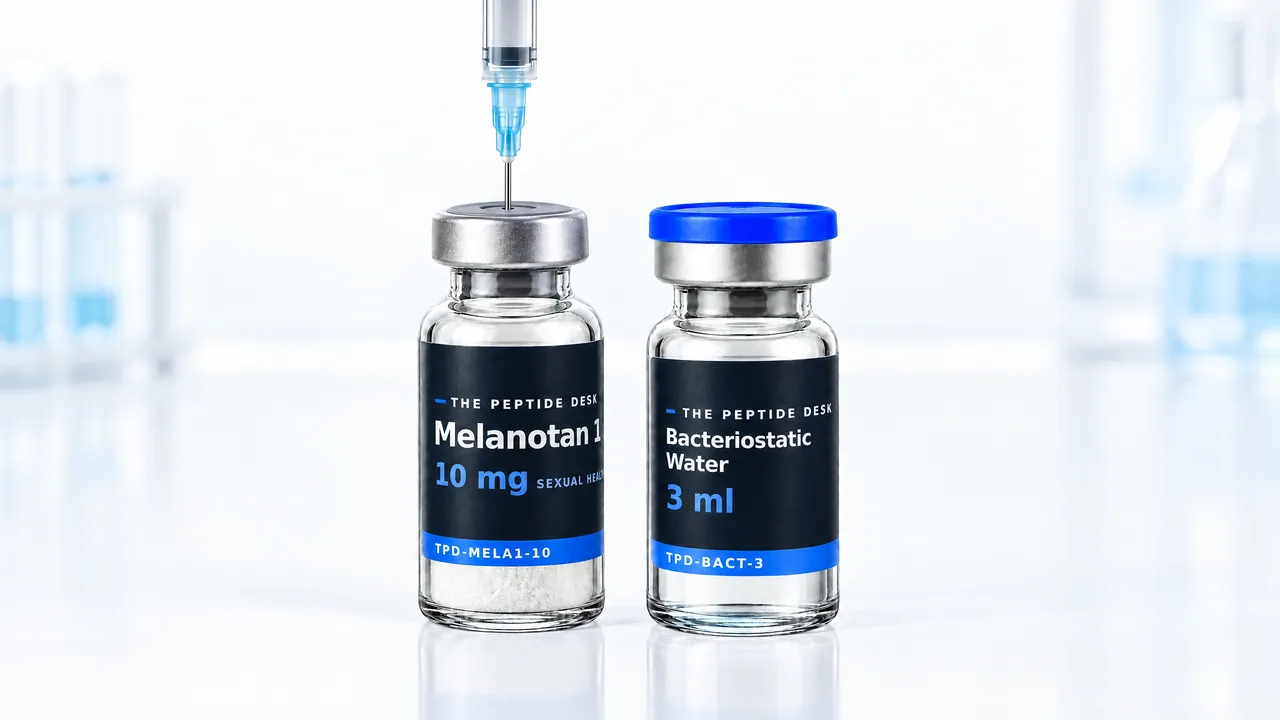
Step by step
Dissolving the powder
Four steps, the same for every vial size.
- 1Wipe the cap
Clean the rubber stopper with an alcohol swab.
- 2Add BAC water
Just add it, it does not matter if it hits the powder directly.
- 3Swirl or shake
Until everything has dissolved, both are fine.
- 4Draw up
With the U-100 insulin syringe.
Injection
The injection is subcutaneous, into the fat layer under the skin, classically the abdomen (keep about two finger-widths clear of the navel), the front and the inner side of the thigh or the back of the upper arm.
Injection
Where and at what angle
Pick a spot or switch the angle. Subcutaneous means: into the fat layer, not the muscle.
Rotate the spot each time, never the same one twice in a row.
Rule of thumb: where there is more fat under the skin, insert straight at 90 degrees. In lean people with little fat, 45 degrees, so the needle stays in the fat layer. Simplified diagram.
-
Clean the spot with an alcohol swab and let it dry
-
Pinch up a small fold of skin
-
Insert the needle: at 90 degrees where there is more fat under the skin, at 45 degrees in lean people with little fat
-
Inject slowly, wait a moment, then withdraw
-
Put the needle straight into the sharps container
Rotate the site each time.
Dosing
Dosing
Dosing, titration and syringe
Loading the dosing information …
- Getting started and stepping up, drawn as a staircase
- Units on the U-100 syringe for every step
- How long one vial lasts
What the research shows
As afamelanotide, Melanotan 1 is by far the best-studied tanning peptide, because it was approved as a medicine. In an approval study (Langendonk, 2015) the afamelanotide implant increased melanin production and photoprotection in patients with a rare light-sensitivity disease. A long-term observation over 115 patients confirmed a favourable safety profile with mostly mild, transient side effects.
These data come from the medical implant context. For pure tanning use by injection they serve as orientation but are research context. The studies with links are in the source block below.
Study results
What the trials measured
Interactive: switch tabs, tap points, show or hide arms. Arms are named relative to each other, no dosing advice.
Dark pigment (eumelanin) in the skin5
Increase over baseline in percent, one week after ten injections under the skin
Measured in skin samples before and after the injections, without a comparison group. The light pigment pheomelanin did not change. Very small study with volunteers of skin types III and IV.
Pain-free time in direct sunlight1
Median in hours, two approval trials with the implant
Medians from the abstract. The two trials counted time in light differently and are not directly comparable. In the EU trial there were 77 light reactions with the implant, 146 with placebo.
Repigmented skin after 168 days6
Share in percent, vitiligo, 55 participants
Values according to the abstract (33.26 and 48.64 percent). The benefit was clearer in darker skin types (IV to VI), in skin type III there was no significant difference.
Research status
Where the research stands
From the first injections in volunteers to approval as an implant: the registered trials with afamelanotide, with status, participants and results. The early studies with injected solution took place before the registry. As of 26 Oct 2026. 11
- Preclinical Developed from alpha-MSH, first injections in volunteers
- Phase 1 3 trials, 3 completed
- Phase 2 9 trials, 9 completed
- Phase 3 6 trials, 5 completed
- Approval as an implant, EU since 2014
Show all 15 phase 2 and 3 trials on a timelineHide timeline
NCT04425746 · 16 participants, started Aug 2008, primary endpoint reached May 2009.
Registry entry ↗ · Results not yet in PubMed
NCT00859534 · 5 participants, started Dec 2008, primary endpoint reached Jun 2009.
Registry entry ↗ · Results not yet in PubMed
NCT01097044 · 77 participants, started Apr 2010, primary endpoint reached Apr 2011.
Registry entry ↗ · Results not yet in PubMed
NCT04943159 · 3 participants, started Aug 2010, primary endpoint reached Mar 2011.
Registry entry ↗ · Results not yet in PubMed
NCT01382589 · 15 participants, started Sept 2011, primary endpoint reached Jul 2012.
Registry entry ↗ · Results not yet in PubMed
NCT04525157 · 21 participants, started Jun 2014, primary endpoint reached Feb 2016.
Registry entry ↗ · Results not yet in PubMed
NCT04962503 · 6 participants, started Jun 2021, primary endpoint reached Feb 2022.
Registry entry ↗ · Results not yet in PubMed
NCT05854784 · 6 participants, started Mar 2023, primary endpoint reached Dec 2023.
Registry entry ↗ · Results not yet in PubMed
NCT06388642 · 28 participants, started Mar 2024, primary endpoint reached Oct 2024.
Registry entry ↗ · Results not yet in PubMed
NCT04053270 · 100 participants, started May 2007, primary endpoint reached Dec 2009.
Registry entry ↗ · Results not yet in PubMed
NCT00979745 · 74 participants, started Sept 2009, primary endpoint reached May 2011.
Registry entry ↗ · Results: Langendonk et al., New England Journal of Medicine, 2015
NCT04704713 · 31 participants, started May 2010, primary endpoint reached Dec 2010.
Registry entry ↗ · Results not yet in PubMed
NCT04578496 · 16 participants, started Jul 2011, primary endpoint reached Feb 2014.
Registry entry ↗ · Results not yet in PubMed
NCT01605136 · 93 participants, started May 2012, primary endpoint reached Jul 2013.
Registry entry ↗ · Results: Langendonk et al., New England Journal of Medicine, 2015
NCT06109649 · 200 participants (planned), started Oct 2023, primary endpoint planned Dec 2025.
Bar: start to primary endpoint (planned for running trials). Green = completed, blue = progress until 26 Oct 2026. Phase 1: 3 trials on safety and pharmacokinetics, not shown as bars.
Side effects
Melanotan 1 is noticeably better tolerated than Melanotan II, mainly because the MC4 effects are missing. Mostly mild, transient things are reported: slight nausea or headache at the start, injection-site reactions. The spontaneous erection and nausea complex of Melanotan II is practically absent here.
One important difference from Melanotan II: the new or changing moles that are a concern with Melanotan II do not show up the same way with Melanotan 1. The skin tans overall, which is the intended effect. Keeping a general eye on your skin never hurts, though.
Tolerability
Side effects in the approval trials
Out of 100 participants per group, how many had the event up to month 6.
| Event | Placebo implant | Afamelanotide implant |
|---|---|---|
| Implant site reaction9 | 10% | 21% |
| Nausea9 | 14% | 19% |
| Fatigue9 | 3% | 6% |
| Darker skin9 | 0% | 4% |
Values from the US prescribing information (125 versus 119 participants). In a long-term observation over up to 8 years with 115 patients there were only mild side effects, mainly nausea.92
Practice
A few things that matter:
-
Start low, even though Melanotan 1 is milder than Melanotan II.
-
Be careful with UV
The tan does not reliably protect against UV damage, so do not overdo sun or tanning beds.
-
Keep a general eye on your skin, even though the mole changes typical of Melanotan II are not an issue here.
-
In phases rather than continuously.
Storage
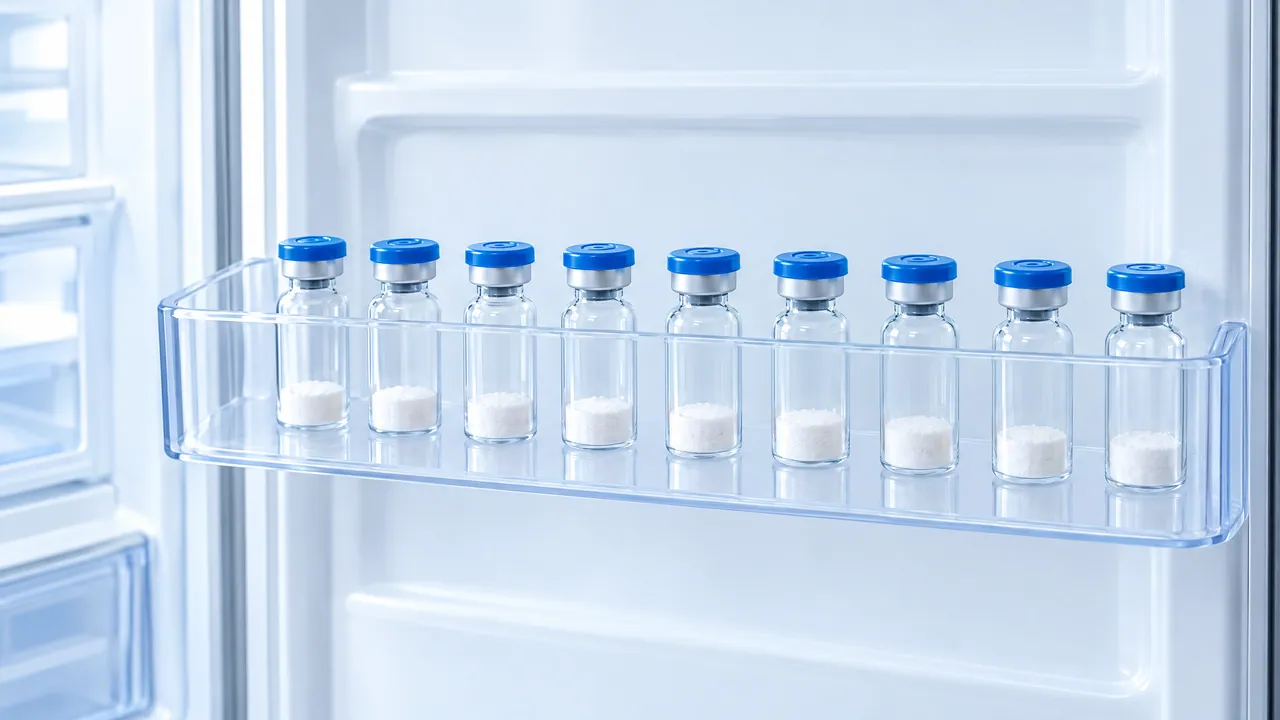
The undissolved powder is robust, normal room temperature (around 20 to 25 degrees) is fine, ideally kept in the dark. The reconstituted solution goes into the fridge (2 to 8 degrees) and stays stable there for at least 4 to 6 months with barely any loss of potency, in practice considerably longer. The bacteriostatic water brings a preservative that keeps the dissolved form stable for longer.
Shelf life
How long it keeps
Robust, no fridge needed. Keeps for several months without trouble.
At least 4 to 6 months with barely any loss of potency. The bacteriostatic water brings a preservative.
- Keep it dark
- Dissolved: 2 to 8 degrees
- Note the mixing date on the vial