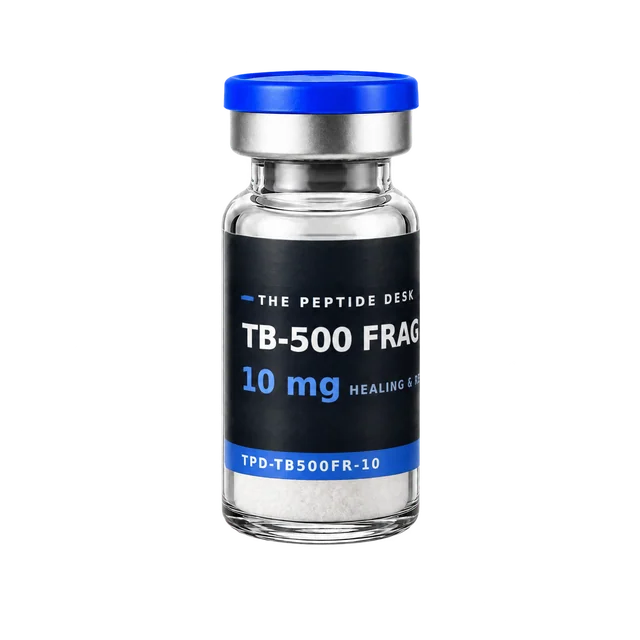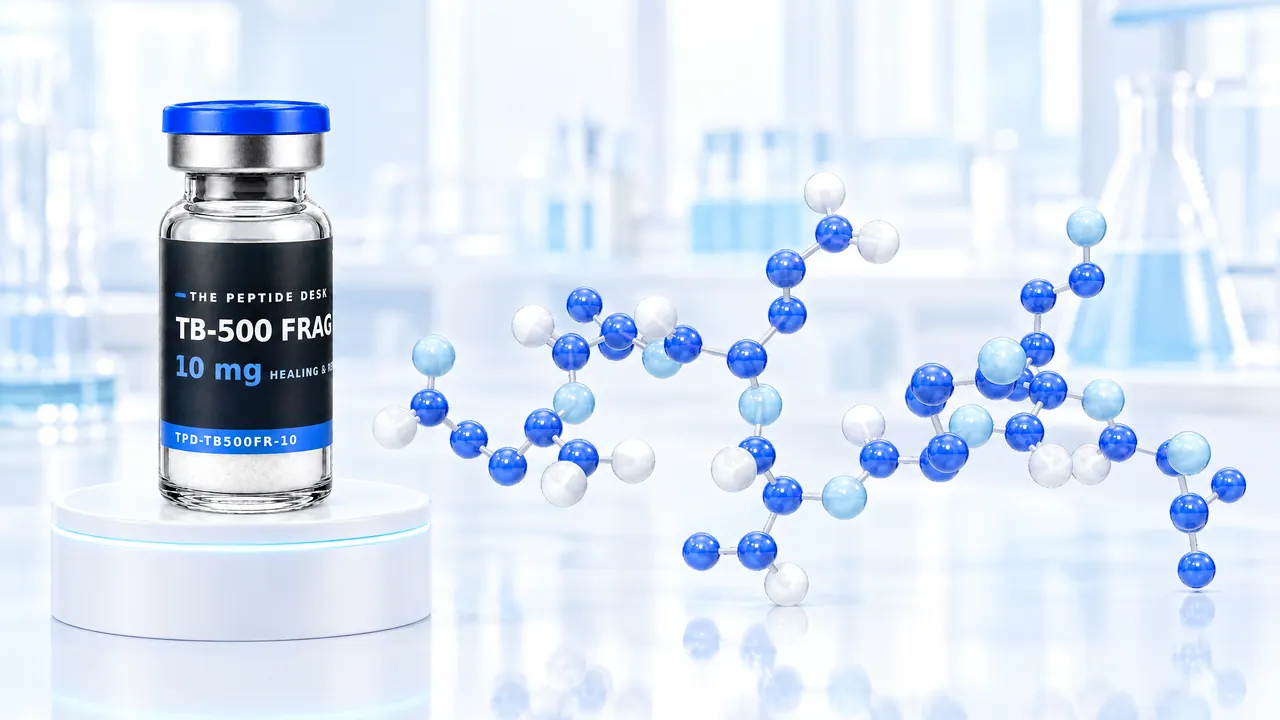
What is TB-500 FRAG?
TB-500 FRAG is the active piece of thymosin beta-4 (Tβ4), an endogenous protein strongly involved in tissue regeneration. The fragment is meant to deliver the regenerative core of the effect: better healing, cell migration and new vessel formation.
Comparison
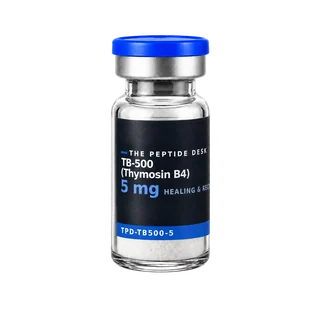
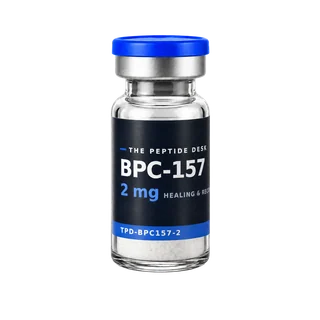
Thymosin beta-4 and its pieces
The whole molecule, its fragments and the blends in the TPD lexicon. Tap a card to open its entry.
How it works
Thymosin beta-4 acts via actin binding on cell migration, the formation of new blood vessels (angiogenesis) and the dampening of inflammation. The fragment carries the section central to these effects and is therefore used for recovery of tendons, muscles and connective tissue.
Where it acts
Where the fragment acted in studies
Tap a point or a card. All from cell assays and mice.
Known targets3
Compound PubChem CID 10169788 (LKKTETQ): one described target, The fragment is the actin-binding site of thymosin beta-4. Soluble actin blocked the effect in the cell assay.
- Gene
- ACTB
- UniProt
- P60709
- ChEMBL
- CHEMBL2062353
- Action
- The fragment is the actin-binding site of thymosin beta-4. Soluble actin blocked the effect in the cell assay
What you need
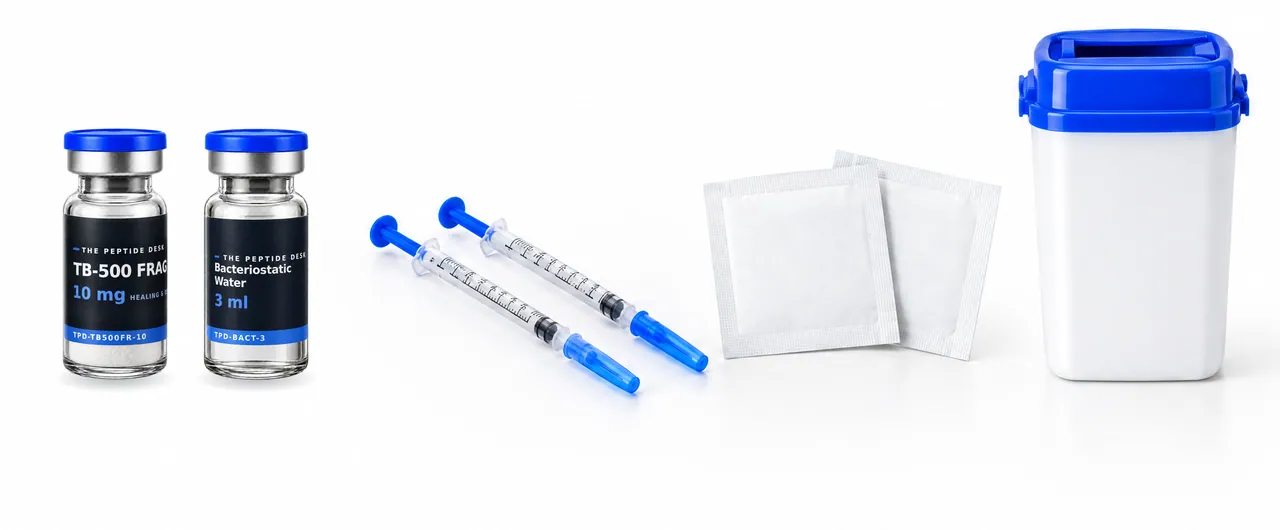
Supplies
2 things, numbered as in the picture
Tick off what you already have. Vial and BAC water are our real shop photos at the same size.
-
TB-500 FRAG vial
The TB-500 FRAG vial (lyophilized powder).
-
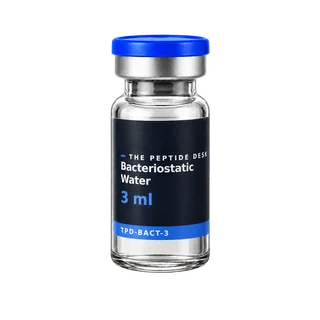
Water and supplies
Bacteriostatic water, U-100 insulin syringes, alcohol swabs.
Reconstitution
Use the peptide calculator. A 5mg vial with 2ml water gives 2.5mg per ml, 2.5mg is then 100 units on the U-100 syringe. Just add the water to the vial and let it dissolve.
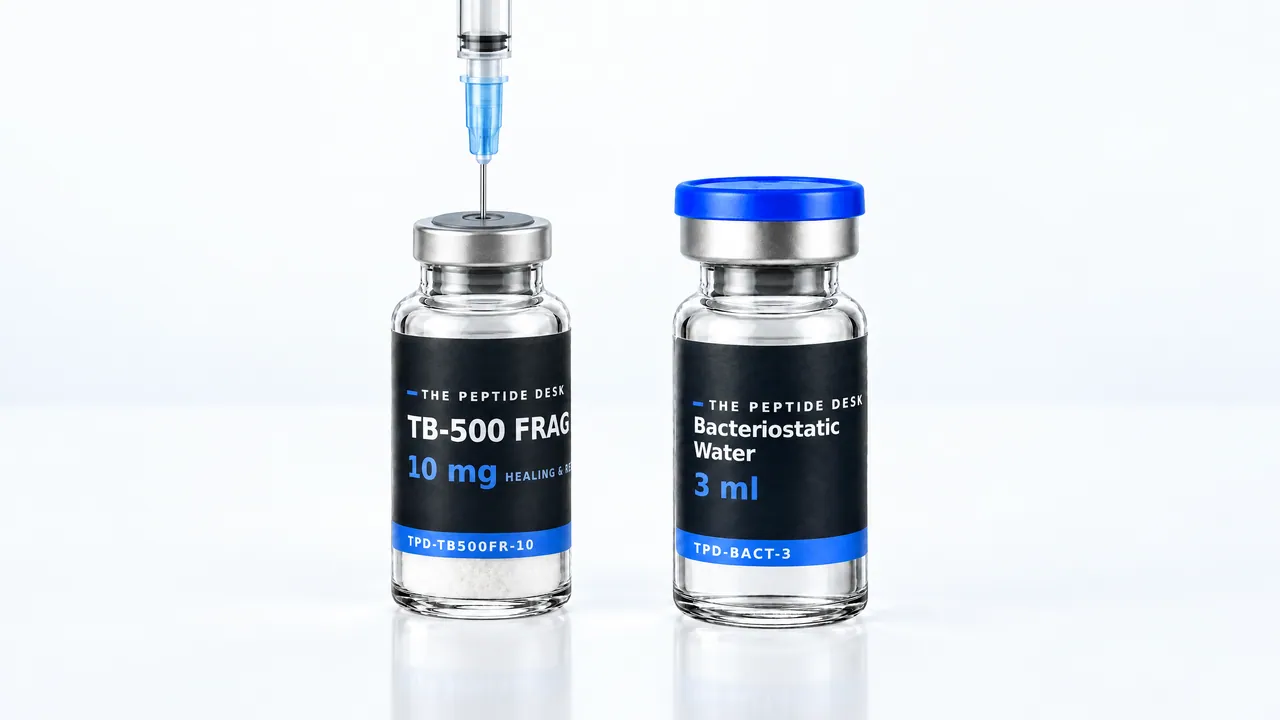
Step by step
Dissolving the powder
Four steps, the same for every vial size.
- 1Wipe the cap
Clean the rubber stopper with an alcohol swab.
- 2Add BAC water
Just add it, it does not matter if it hits the powder directly.
- 3Swirl or shake
Until everything has dissolved, both are fine.
- 4Draw up
With the U-100 insulin syringe.
Dosing
Dosing
Dosing, titration and syringe
Loading the dosing information …
- Getting started and stepping up, drawn as a staircase
- Units on the U-100 syringe for every step
- How long one vial lasts
Injection
The injection is subcutaneous, into the fat layer under the skin. Common spots are the abdomen (keep about two finger-widths clear of the navel), the front and the inner side of the thigh, or the back of the upper arm.
The short version:
Injection
Where and at what angle
Pick a spot or switch the angle. Subcutaneous means: into the fat layer, not the muscle.
Rotate the spot each time, never the same one twice in a row.
Rule of thumb: where there is more fat under the skin, insert straight at 90 degrees. In lean people with little fat, 45 degrees, so the needle stays in the fat layer. Simplified diagram.
-
Clean the spot with an alcohol swab and let it dry
-
Pinch up a small fold of skin
-
Insert the needle: at 90 degrees where there is more fat under the skin, at 45 degrees in lean people with little fat
-
Inject slowly, wait a moment, then withdraw
-
Put the needle straight into the sharps container
Rotate the site each time so the tissue does not get irritated. Never the same spot twice in a row.
What the research shows
Thymosin beta-4 itself is well described (overview: Crockford, 2010) and accelerated wound healing and new vessel formation in preclinical models (Malinda, 1999). For the isolated fragment in humans the data is thinner, the regenerative mechanism comes from Tβ4 research.
Study results
What the trials measured
Interactive: switch tabs, tap points, show or hide arms. Arms are named relative to each other, no dosing advice.
Skin wounds with whole thymosin beta-42
More than in the saline control group, in percent
Values according to the abstract, measured with the whole molecule, not with the fragment. With the fragment alone a study in old mice showed similar wound healing as with thymosin beta-4, the abstract gives no figures.
Thymosin beta-4 and its active sites5
Length in amino acids
According to the review by Sosne 2010 the effects on vessels, wound healing and cell migration sit in the LKKTETQ section. The anti-inflammatory effect belongs to Ac-SDKP at the start of the molecule, so not to this fragment.
Research status
Where the research stands
No real trial on the fragment is listed on ClinicalTrials.gov. Human trials exist only for whole thymosin beta-4, which is a different substance. As of 26 Oct 2026. 6
Side effects
- Generally well tolerated, mainly local reactions at the injection site.
- Solid long-term human data are missing.
- As with regenerative factors, a growth-promoting signal is theoretically critical with pre-existing growths.
Storage
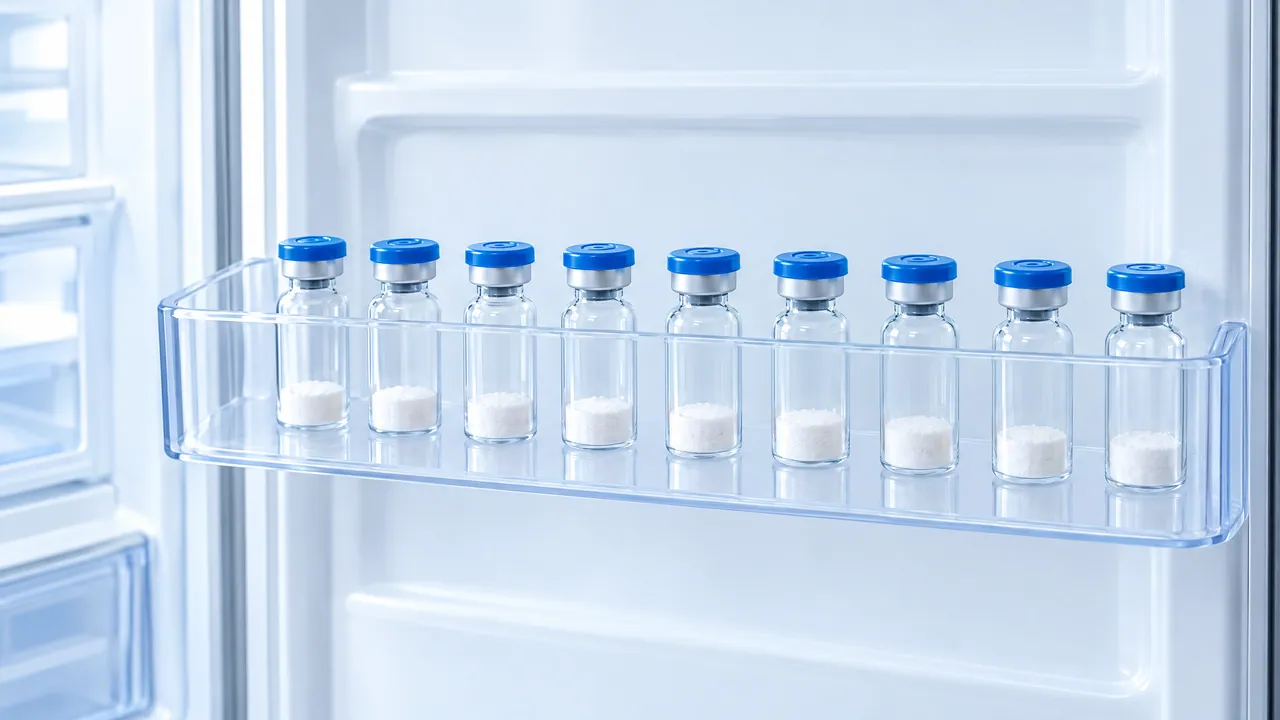
Before mixing the powder is robust, normal room temperature (around 20 to 25 degrees) is fine, ideally kept in the dark. After mixing, keep in the fridge (2 to 8 degrees), do not freeze. It stays good there for at least 4 to 6 months with barely any loss of potency, in practice considerably longer. Swirl or shake to mix, both are fine.
Shelf life
How long it keeps
Robust, no fridge needed.
At least 4 to 6 months with barely any loss of potency.
- Keep it dark
- Dissolved: 2 to 8 degrees
- Note the mixing date on the vial