Description
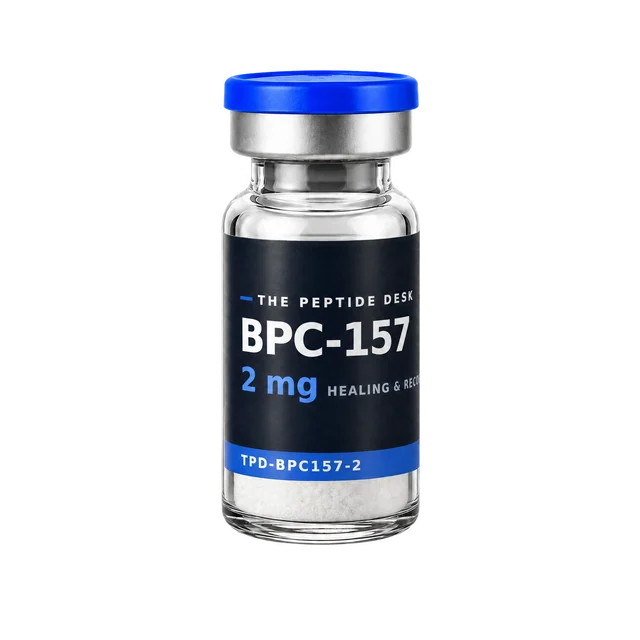
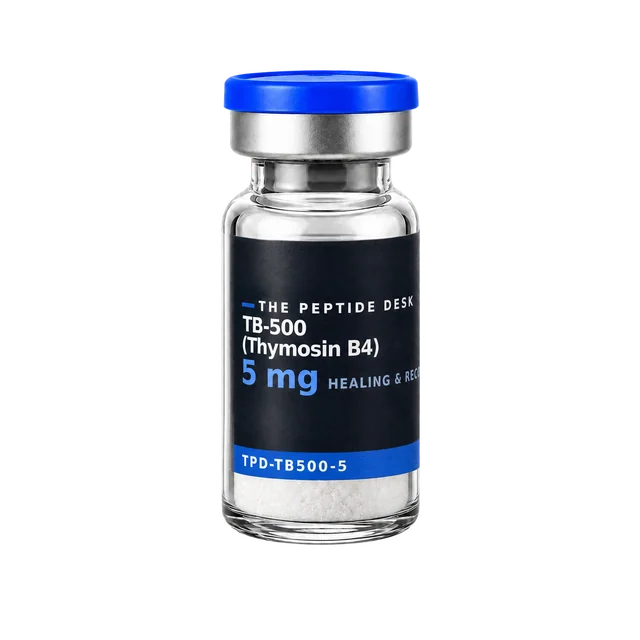
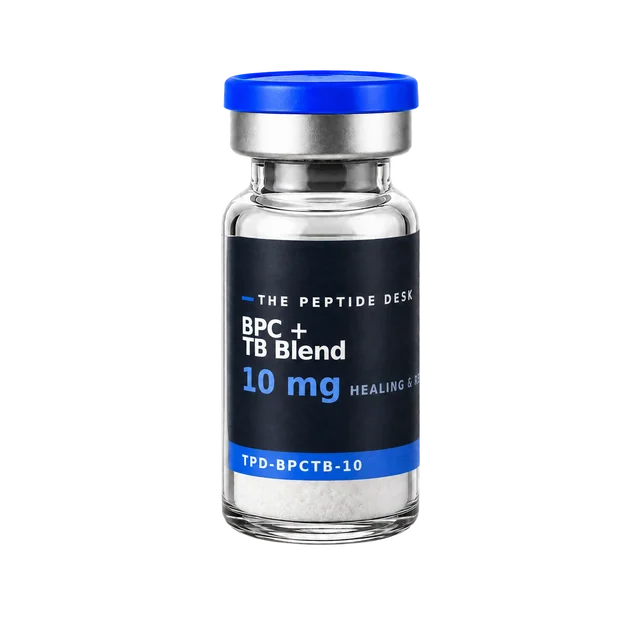
This blend combines three research compounds from three different approaches to tissue regeneration in a single injectable vial: Cartalax, the tripeptide Ala-Glu-Asp (AED) from the class of Khavinson bioregulators, TB-500, the synthetic form of the endogenous protein thymosin beta-4, as well as BPC-157, a 15-amino-acid pentadecapeptide derived from a protective protein in gastric juice. Each vial contains 20 mg: 10 mg Cartalax, 5 mg TB-500 and 5 mg BPC-157.
The three components act at different points. In research from the Saint Petersburg Institute of Bioregulation and Gerontology, Cartalax is described as a short peptide that, according to this work, reaches the cell nucleus and epigenetically influences gene expression in cartilage cells (chondrocytes). In cell cultures the AED peptide increased the proliferation of chondrocytes from young and old rats. Review articles associate it with a normalization of age-related inflammation and cell senescence markers in cartilage. TB-500 binds the structural protein actin inside the cell and in preclinical models promotes cell migration, new blood vessel formation and wound healing. In studies BPC-157 acts via the nitric oxide axis and angiogenesis; in tendon fibroblasts it promoted outgrowth, survival under oxidative stress as well as cell migration, probably via the FAK-paxillin pathway.
What needs framing honestly: there are no clinical data on precisely this combination of Cartalax, TB-500 and BPC-157 in one vial. The evidence stems from the individual compounds and is almost entirely preclinical. For Cartalax the work comes almost exclusively from the Khavinson group. Independent international confirmation is missing. On combining BPC-157 and TB-500, a study on the sutured Achilles tendon of the rat found that both individual compounds improved tissue structure while the combination brought no additional benefit. The fixed 2:1:1 ratio cannot be adjusted separately.
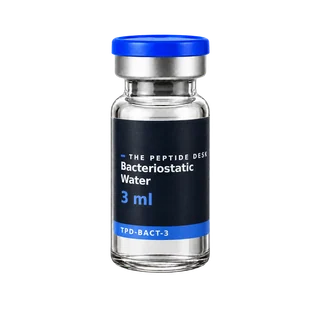
You receive this blend as a research compound in 10 vials of 20 mg per vial (10 mg Cartalax plus 5 mg TB-500 plus 5 mg BPC-157) as a lyophilizate for reconstitution with bacteriostatic water, on request also as a single vial from the express range. The format is intended for experimental research approaches.
This information is for research and educational purposes only. Not medical advice.
Risks & Safety
All three components are classified as well tolerated in the available literature. The data on all three are thin and come mostly from animal and cell models; there are no dedicated safety data for the combination.
Observed in studies and user reports:
- Injection site: mild redness, itching or temporary irritation at the injection site are the most common observations with subcutaneous use.
- New blood vessel formation: TB-500 and BPC-157 promote angiogenesis in preclinical models. Whether this poses a risk in existing tumors or a history of cancer has not been studied. The literature advises caution in this context.
- Thin human data: robust human studies on dosing, duration and safety are largely missing for BPC-157 and TB-500. The Cartalax data come almost exclusively from small, Russian-language papers of a single research group.
- Fixed ratio: the amount of all three components rises and falls together. Anyone wanting to keep one component lower cannot do so with this blend.
- No long-term data: there are no data on the safety profile of longer or repeated use of the combination.
This classification does not replace medical advice. Risk and responsibility for any actual use lie entirely with the buyer.
Studies
- Peptides of cartilage tissue: regulation of chondrocyte proliferation, geroprotection and prospects for use in osteoarthrosis - Vrach 2023: Work on the Cartalax component: at an effective concentration of 200 ng/ml the AED peptide increased the number of chondrocytes 1.4 to 1.8-fold in cultures from young rats and 1.6 to 2.1-fold in cultures from old rats compared with the control.
- Peptide Regulation of Cell Differentiation - Stem Cell Reviews and Reports 2020: Review by the Khavinson group on the mechanism of short peptides such as AED, which according to the authors pass the cell and nuclear membranes and regulate gene expression epigenetically.
- The promoting effect of pentadecapeptide BPC 157 on tendon healing involves tendon outgrowth, cell survival, and cell migration - Journal of Applied Physiology 2011: Work on the BPC-157 component: in rat tendon fibroblasts BPC 157 promoted outgrowth from tendon explants, survival under oxidative stress and cell migration, probably via the FAK-paxillin pathway.
- Thymosin beta4 accelerates wound healing - Journal of Investigative Dermatology 1999: Work on the thymosin β4 component: in a rat wound model thymosin β4 increased re-epithelialization by up to 61% over control, with more collagen deposition and new blood vessel formation.
- Effects of BPC-157 and TB-500 on Achilles tendon healing in rats: A histopathological and biomechanical study - Joint Diseases and Related Surgery 2026: Direct comparison in a rat model of the sutured Achilles tendon: TB-500 and the combination significantly improved histological scores, BPC-157 alone only showed a trend. The combination brought no additional benefit over the individual compounds.