Description
Prostamax (Lys-Glu-Asp) is a synthetic tripeptide of the Khavinson bioregulator class with tissue-specific action on prostate tissue. The substance was developed at the St. Petersburg Institute for investigating age-related prostate changes.
Per study reports Prostamax modulates gene expression in prostate epithelial cells via the Khavinson epigenetic mechanism. Preclinical studies describe effects on prostate-specific markers, cell proliferation control and reduction of age-related hyperplasia indicators in animal models.
In Russian research literature Prostamax is described in benign prostatic hyperplasia (BPH) research setups as supportive compound, often as course in 10-20 day cycles over years.
Typical application is subcutaneous in 10-20 day courses two to three times per year.
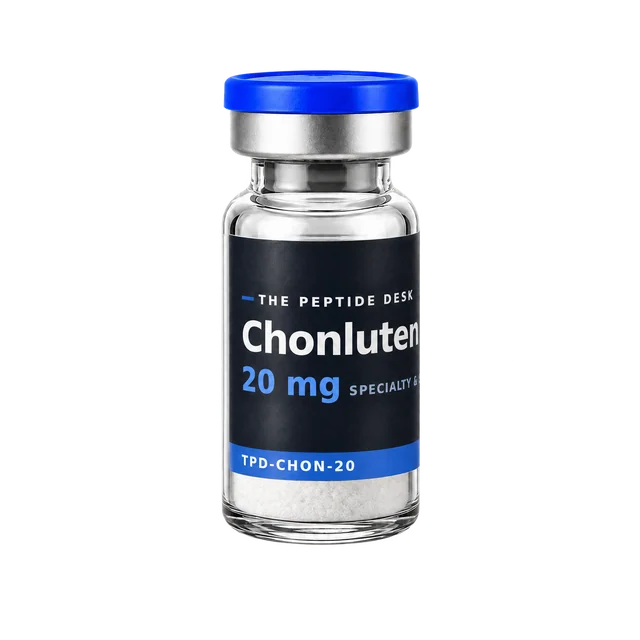
You can order Prostamax as lyophilized peptide in 10-pack at 20mg per vial.
This information is for research and educational purposes only. No medical recommendations.
Risks & Safety
Prostamax is classified as very mild in the available literature and is among the most well tolerated compounds of the Khavinson bioregulator class. In the available preclinical and limited human studies, no relevant toxic effects have been documented.
Observed in research and reports:
- Injection site: mild redness or transient irritation with subcutaneous use is the most common observation. The tripeptide itself is considered low-reactivity.
- Very thin human data: the data base consists almost entirely of small, Russian-language studies from the Khavinson environment. Independent peer-reviewed replication and robust long-term safety data on prostate use are absent.
- Course-based pattern: the use described occurs in short 10-20 day courses over years. No data exist on the safety profile of fully continuous administration.
This classification does not replace medical advice. Risk and responsibility for any actual use lie entirely with the buyer.
Studies
- Peptide Regulation of Aging: 35-Year Research Experience - Bulletin of Experimental Biology and Medicine 2009, Khavinson and Anisimov: long-term review of tissue-specific Khavinson peptides including prostate-related bioregulators in aging models.
- Effects of Short Peptides on Lymphocyte Chromatin in Senile Subjects - Bulletin of Experimental Biology and Medicine 2004, Khavinson, Lezhava and Malinin: epigenetic effect of short peptides on chromatin structure, the basis of the Khavinson mechanism.
- Comparison of the Effects of KE and AED Peptides on Functional Activity of Human Skin Fibroblasts during Their Replicative Aging - Bulletin of Experimental Biology and Medicine 2020, Fridman et al: KE peptide reduces NF-kB and TGF-beta in replicative cell aging.
- Peptide bioregulators: A new class of geroprotectors, report 2. The results of clinical trials - Advances in Gerontology 2014, Khavinson, Kuznik and Ryzhak: clinical results on prostate and andrological Khavinson peptides.