This information is for research and educational purposes only. No medical recommendations. Products are not approved for human use. For health questions, consult a doctor.

Lexicon

Adipotide

An experimental peptidomimetic that attacks the blood supply of fat tissue, with impressive animal data and serious kidney toxicity.

2 min read 6 sources

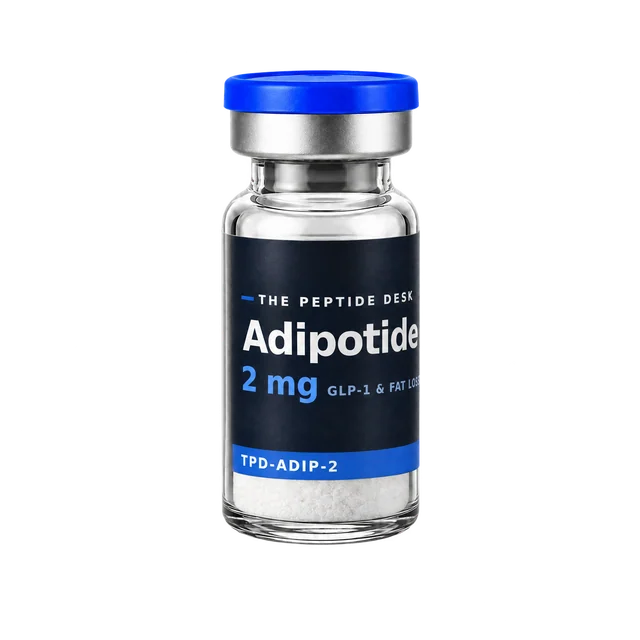
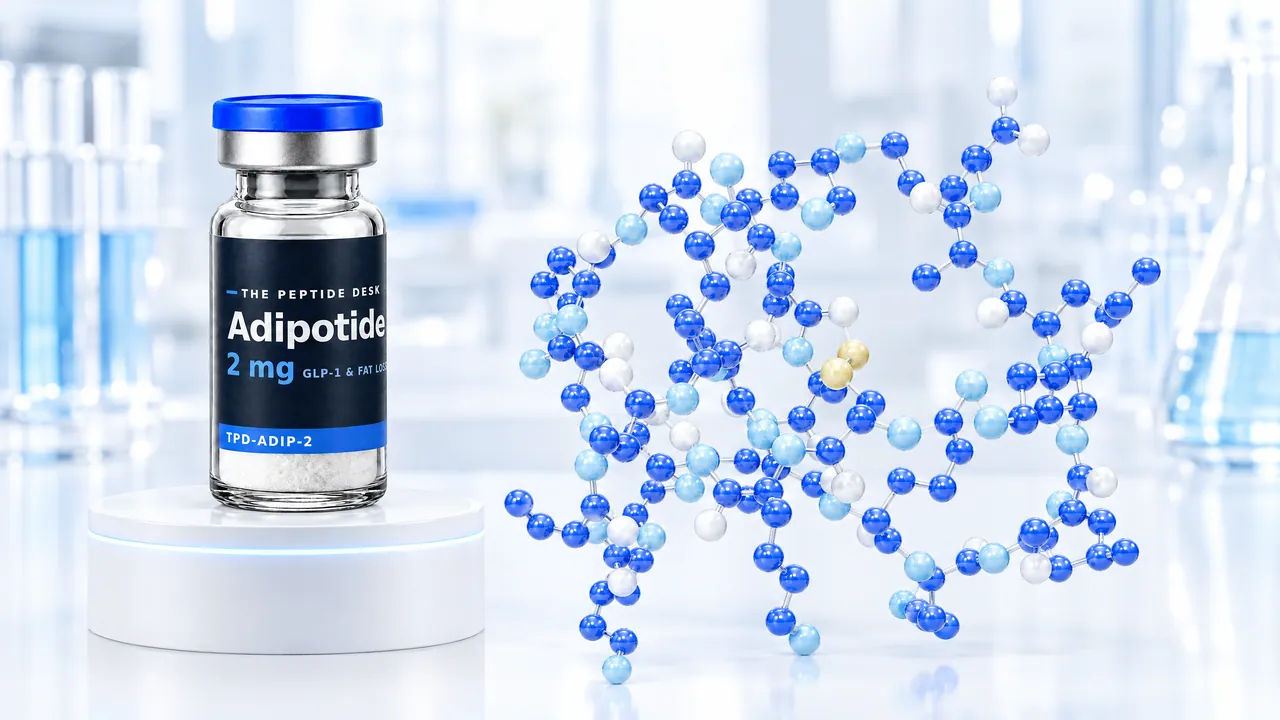
Vial with white powder, a blue cap and a black TPD label for Adipotide on a white podium, next to it a large, branched molecule model of blue and white glass spheres in a bright lab
Phase 1 started, stopped · not approved

Summary

At a glance

Sources checked on 26 Oct 2026

Less body fat (monkeys)
38.7 %

by the end of the study, control group 14.8 percent, measured by DEXA1

Lower insulin index
48.5 %

insulinogenic index in monkeys, control group +33.8 percent1

Treated in the main study
10 monkeys

obese rhesus monkeys, plus 5 control animals, 28 days of dosing1

Only human trial
4 participants

phase 1, stopped at the request of the investigator, no results published4

  • Adipotide is a peptidomimetic made of a targeting part (CKGGRAKDC) and a part that triggers cell death. It is meant to destroy the blood vessels of white fat tissue.12
  • The targeting part binds to prohibitin, which is found on the vessels of white fat. In obese mice fat tissue regressed this way.2
  • In obese rhesus monkeys body fat fell by 38.7 percent by the end of the study versus 14.8 percent in the control group. The insulin index fell by 48.5 percent.1
  • The main side effect was a dose-dependent disturbance of the kidney tubules with sugar and protein in the urine. It mostly resolved after stopping.1
  • A phase 1 trial in humans was stopped with 4 participants and no results exist. Everything here is research, not a recommendation.4
Profile

Updated May 2026

Class
Peptidomimetic

prohibitin-targeted

Use
Subcutaneous

in mg

Half-life
short
Status
Development stopped over kidney toxicity
Sizes
2 to 10 mg

3 sizes in the shop

Contents 16 sections
  1. At a glance
  2. What is Adipotide?
  3. How it works
  4. What you need
  5. Reconstitution
  6. Dosing
  7. Injection
  8. What the research shows
  9. Research status
  10. Side effects
  11. Practice
  12. Storage
  13. Related compounds
  14. FAQ
  15. Glossary
  16. Sources

What is Adipotide?

Adipotide is an experimental peptidomimetic that takes a radically different route than GLP-1 agents: instead of dampening appetite, it specifically attacks the blood vessels that supply white fat tissue and triggers targeted cell death there. Without supply, the fat depot shrinks.

Honestly and importantly up front: clinical development was stopped over kidney toxicity. This is not a harmless fat-loss compound.

Comparison

Three ways to target fat tissue

Compounds from the TPD lexicon with different approaches, as described there. Tap a card to open its entry.

Simplified from the lexicon entries. There is no direct comparison in a study. 1

How it works

Adipotide binds prohibitin, a protein unusually abundant on the blood vessels of white fat tissue. Via an attached cell-death-triggering part it specifically destroys these vessels. The fat tissue loses its blood supply and regresses.

Where it acts

Where adipotide acted in studies

Tap a point or a card. Colour = prohibitin, grey = observed. All from animal studies.

  1. White fat tissue

    Cell death in the vessels of white fat, fat depots shrank (mice, monkeys)1

    Prohibitin
  2. Kidney

    Dose-dependent disturbance of the kidney tubules, sugar and protein in the urine, mostly reversible (monkeys)1

    Observed in trials
  3. Blood sugar

    Better glucose tolerance in mice after just two to three days, independent of weight (peptide built on the same principle)3

    Observed in trials

Known targets2

Compound PubChem CID 163360068: one described target, Docking site of the targeting part on fat vessels, not an agonist.

Prohibitin 1
Gene
PHB1
UniProt
P35232
ChEMBL
CHEMBL4295750
Action
Docking site of the targeting part on fat vessels, not an agonist
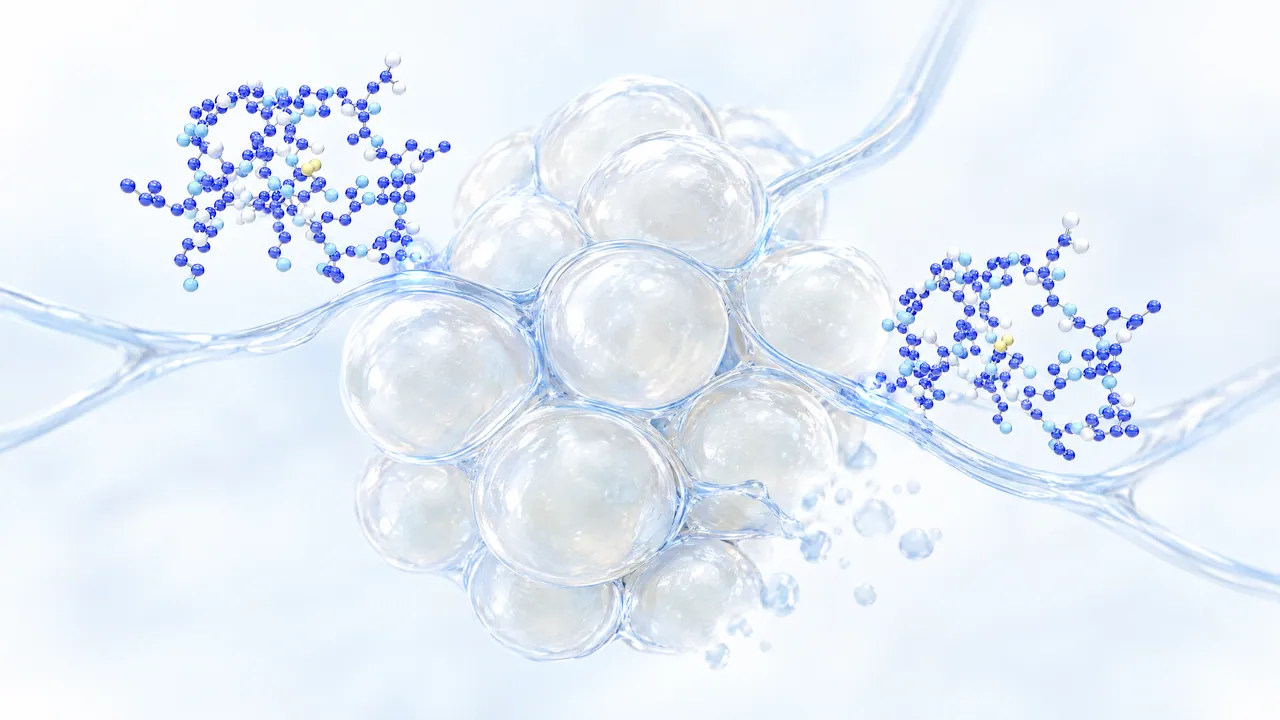
Cluster of pale glass spheres as fat cells, laced with fine glass vessels that two blue molecules dock onto
The target is the vessels, not the fat cells themselves. Symbolic image.

What you need

Supplies

2 things, numbered as in the picture

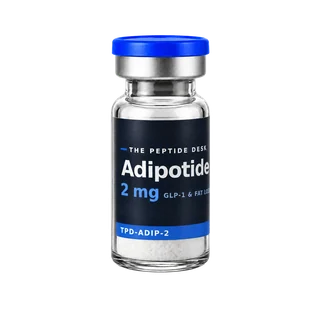
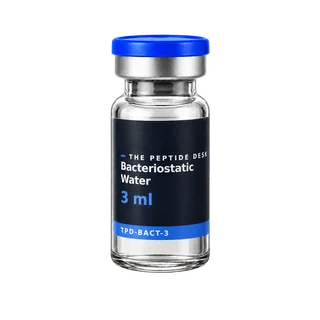
Tick off what you already have. Vial and BAC water are our real shop photos at the same size.
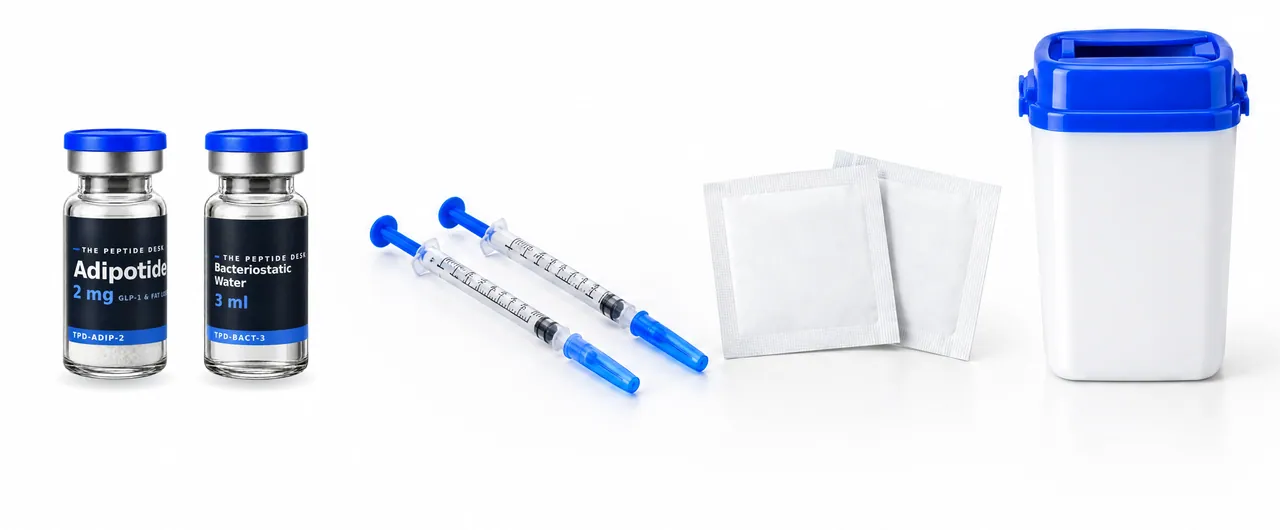
Adipotide vial and bacteriostatic water at the same size with the black TPD label, next to two U-100 insulin syringes, two alcohol swabs and a sharps container with a blue lid
  1. Adipotide vial

    The adipotide vial (lyophilized powder).

    In the shop
  2. Water and supplies

    Bacteriostatic water, U-100 insulin syringes, alcohol swabs.

    In the shop

Reconstitution

Use the peptide calculator. A 2mg vial with 2ml water gives 1mg per ml. Just add the water to the vial and let it dissolve.
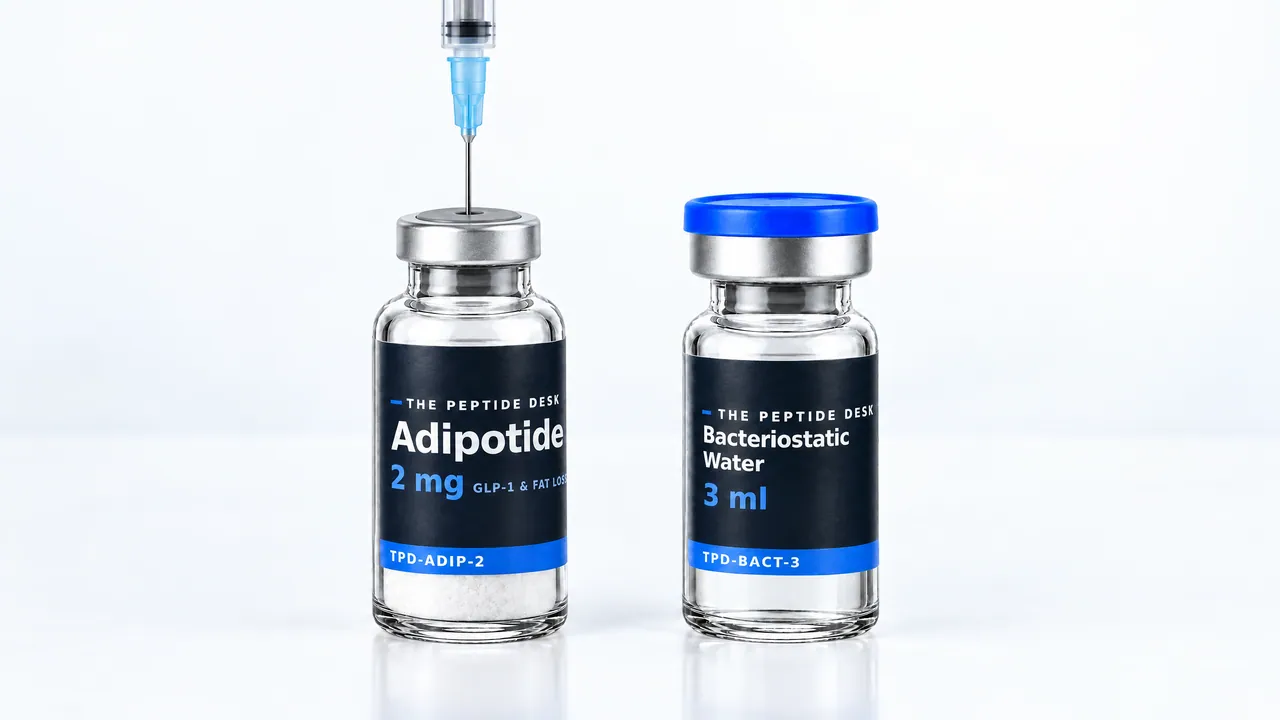
Step by step

Dissolving the powder

Four steps, the same for every vial size.

  1. 1Wipe the cap

    Clean the rubber stopper with an alcohol swab.

  2. 2Add BAC water

    Just add it, it does not matter if it hits the powder directly.

  3. 3Swirl or shake

    Until everything has dissolved, both are fine.

  4. 4Draw up

    With the U-100 insulin syringe.

Less water higher concentration fewer units on the syringe Example: 2 mg + 2 ml = 1 mg/ml

Dosing

Dosing

Dosing, titration and syringe

Loading the dosing information …

  • Getting started and stepping up, drawn as a staircase
  • Units on the U-100 syringe for every step
  • How long one vial lasts

Injection

Adipotide was given subcutaneously in the animal studies. Given the safety record, particular restraint is warranted here.

The injection is subcutaneous, into the fat layer under the skin. Common spots are the abdomen (keep about two finger-widths clear of the navel), the front and the inner side of the thigh, or the back of the upper arm.

The short version:

Injection

Where and at what angle

Pick a spot or switch the angle. Subcutaneous means: into the fat layer, not the muscle.

Rotate the spot each time, never the same one twice in a row.

90°More fat under the skin

Rule of thumb: where there is more fat under the skin, insert straight at 90 degrees. In lean people with little fat, 45 degrees, so the needle stays in the fat layer. Simplified diagram.

  1. Clean the spot with an alcohol swab and let it dry

  2. Pinch up a small fold of skin

  3. Insert the needle: at 90 degrees where there is more fat under the skin, at 45 degrees in lean people with little fat

  4. Inject slowly, wait a moment, then withdraw

  5. Put the needle straight into the sharps container

Rotate the site each time so the tissue does not get irritated. Never the same spot twice in a row.

What the research shows

A widely noted study (Barnhart, Kolonin, 2011) showed about 11 percent weight loss in 28 days in obese monkeys, with improved insulin resistance. The catch was in the same study: changes in kidney function appeared. Exactly this kidney toxicity is why adipotide never moved beyond the experimental stage.

Study results

What the trials measured

Interactive: switch tabs, tap points, show or hide arms. Arms are named relative to each other, no dosing advice.

Body fat of obese rhesus monkeys1

Change from baseline, in percent

Total body fat (DEXA)1 4 weeks of dosing plus 4 weeks of follow-up, 10 versus 5 animals
Control (saline) -14.8%
Adipotide -38.7%
Abdominal fat (MRI)1 End of dosing, value given only for the adipotide group
Adipotide -17.5%

Values from the full text. The weight of the treated monkeys fell by 7.4 to 14.7 percent, that of the control animals changed by +1.0 to -3.5 percent. The study gives no mean for this. Monkeys, not humans.

Insulin resistance of obese rhesus monkeys1

Change in the insulinogenic index, in percent

Insulinogenic index1 Main study, 10 versus 5 animals
Control (saline) +33.8%
Adipotide -48.5%

Values from the full text. A high index means a lot of insulin at normal blood sugar. The study reads the decrease as better insulin sensitivity.
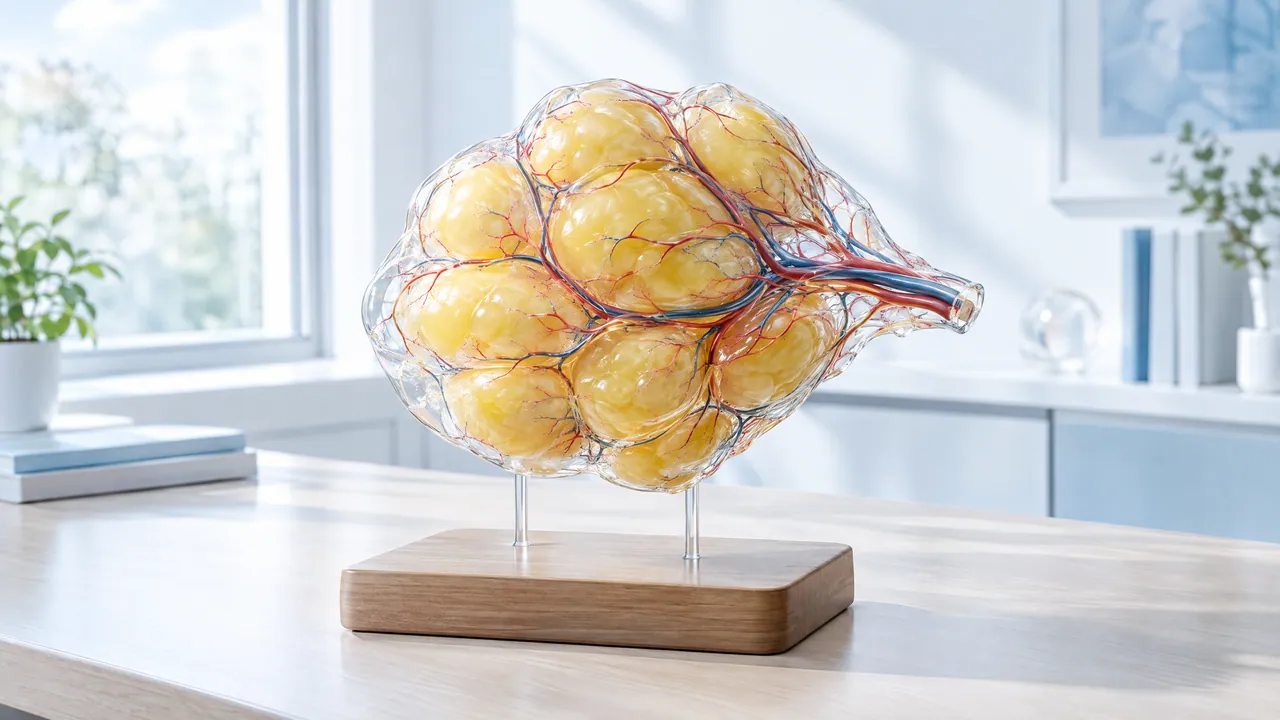
Glass fat lobule with yellow fat cells and fine red and blue vessels on a wooden stand in a bright study
Results come only from animal studies. Symbolic image.

Research status

Where the research stands

No trial is registered under the name adipotide. The search finds a phase 1 trial from the same clinic as the monkey study with the compound prohibitin-TP01 in men with prostate cancer and obesity. It ended with 4 participants and no results have been published. As of 26 Oct 2026. 5

  1. Preclinical Mice, rats and three monkey species
  2. Phase 1 1 trial, 0 completed, 1 stopped early
  3. Phase 2 no registered trial
  4. Phase 3 no registered trial
  5. Approval not yet
Not approved. Development did not get past phase 1. The registry gives the reason for stopping only as the investigator's request.4

Apart from 1 phase 1 trial there is no registered trial in phase 2 or later. 5

Side effects

  • Kidney toxicity (changes in proximal tubule function), the central stop reason.
  • Nausea, fluid-balance changes.
  • No solid human safety data.

Practice

  1. The kidney toxicity is real and the reason for the development stop, take it seriously.

  2. No established, safe dosing protocol.

  3. Clearly experimental, when in doubt fall back on proven alternatives (GLP-1).

Light table with a carafe and a glass of water, a bowl of fresh vegetables, a pair of running shoes and a closed notebook

Storage

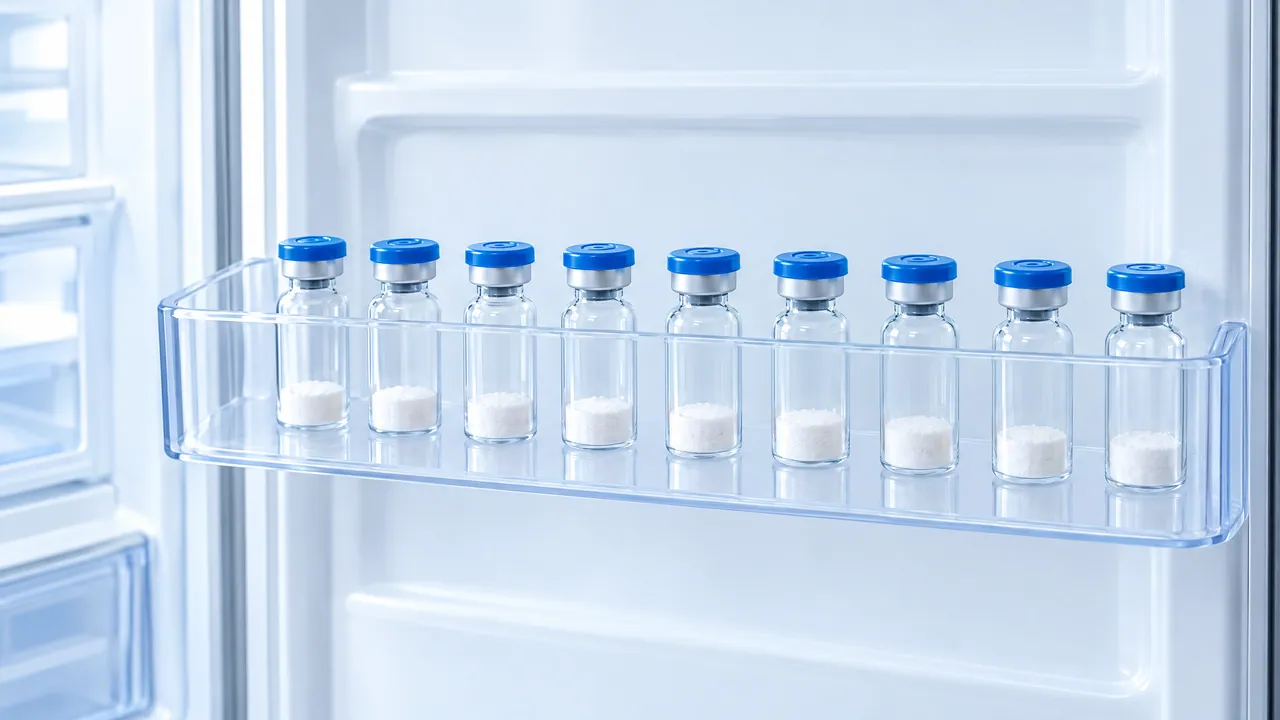
Before mixing the powder is robust, normal room temperature (around 20 to 25 degrees) is fine, ideally kept in the dark. After mixing, keep in the fridge (2 to 8 degrees), do not freeze. It stays good there for at least 4 to 6 months with barely any loss of potency, in practice considerably longer. Swirl or shake to mix, both are fine.

Shelf life

How long it keeps

Undissolved (powder) Room temperature, around 20 to 25 degrees, dark

Robust, no fridge needed. Best kept in the dark.

Dissolved (mixed) Fridge, 2 to 8 degrees, do not freeze

At least 4 to 6 months with barely any loss of potency. The bacteriostatic water brings a preservative.

  • Keep it dark
  • Dissolved: 2 to 8 degrees
  • Note the mixing date on the vial
Nine vials with white powder and blue caps in the door shelf of a bright fridge
Powder dark at room temperature, once dissolved into the fridge (2 to 8 degrees), stable there for at least 4 to 6 months. Symbolic image.

Related

Related compounds

A different path: all in the TPD lexicon.

FAQ

Common questions about Adipotide

Short answers, each backed by the sources below.

Has adipotide been studied in humans?

Hardly. No trial is registered under the name adipotide. The same clinic as the monkey study registered a phase 1 trial with the compound prohibitin-TP01. It ended with 4 participants at the request of the investigator and no results have been published.4

How does adipotide work?

The targeting part CKGGRAKDC was found because it homes to the vessels of white fat in mice. There it binds to prohibitin. The attached part triggers programmed cell death in these vessel cells. Without blood supply the fat regresses.21

What did the monkey study show?

In the main study 10 obese rhesus monkeys received adipotide for 28 days and 5 received saline. The weight of the treated animals fell by 7.4 to 14.7 percent. Body fat fell by 38.7 percent versus 14.8 percent by the end of the study, the insulin index by 48.5 percent. The animals ate less during this time.1

Which side effects are known?

In monkeys adipotide damaged the kidney tubules depending on the dose: sugar and protein in the urine, slightly raised creatinine and signs of dehydration at the highest dose. Most values returned to normal within 28 days after stopping, one animal per study kept a residual change. There are no human data.1

Did lean animals lose weight too?

No. Lean rhesus monkeys lost no weight with adipotide. The authors therefore suspect that the effect in primates depends on obesity.1

What do the mouse studies show?

In obese mice white fat regressed and metabolism returned to normal. A peptide built on the same principle improved glucose tolerance in mice on a high-fat diet after just two to three days, independent of weight and food intake.23

Glossary

Terms explained briefly

Dotted words in the text open these explanations directly.

Creatinine
A breakdown product from muscle that the kidney excretes. If it rises in the blood, the kidney works less well or excretes it more slowly.
DEXA
An X-ray scan with two energies that measures fat, muscle and bone in the body separately.
Insulinogenic index
The ratio of insulin to blood sugar. A high value with normal sugar points to insulin resistance.
Kidney tubules
Fine tubes in the kidney that take sugar, protein and salts back from the primary urine. If they are disturbed, these substances end up in the urine.
Lyophilisate
Freeze-dried powder. Without water a peptide keeps much longer.
Peptidomimetic
A compound built like a peptide but with altered building blocks. In adipotide the cell death part uses the mirror-image form of the amino acids (D-form).
Programmed cell death
The orderly self-destruction of a cell, also called apoptosis. Adipotide triggers it in the vessel cells of fat tissue.
Prohibitin
A protein that is abundant on the blood vessels of white fat tissue. The targeting part of adipotide docks there.
Subcutaneous
Into the fat layer just under the skin.
White fat tissue
The typical storage fat under the skin and in the abdomen, as opposed to brown fat, which produces heat.

Evidence

Sources

Show all 6 sourcesHide sources 3 Studies2 Trial registry1 Database checked 26 Oct 2026

Studies

  1. Adipotide in obese monkeys: weight, fat, insulin and kidney

    Barnhart et al., Science Translational Medicine, 2011

    Checked 26 Oct 2026 via doi.org, Crossref, PubMed, PMC (Volltext)
  2. Targeted ablation of fat tissue via prohibitin (mice)

    Kolonin et al., Nature Medicine, 2004

    Checked 26 Oct 2026 via doi.org, Crossref, PubMed
  3. Rapidly better glucose tolerance after targeting fat vessels (mice)

    Kim et al., Diabetes, 2012

    Checked 26 Oct 2026 via doi.org, Crossref, PubMed

Trial registry

  1. Phase 1 trial of prohibitin-TP01 in the registry

    ClinicalTrials.gov, M.D. Anderson Cancer Center

    Checked 26 Oct 2026 via ClinicalTrials.gov API v2
  2. Search on ClinicalTrials.gov (adipotide without results, prohibitin with one trial)

    ClinicalTrials.gov, U.S. National Library of Medicine

    Checked 26 Oct 2026 via ClinicalTrials.gov API v2

Database

  1. Structure of adipotide in PubChem

    PubChem, U.S. National Library of Medicine (CID 163360068)

    Checked 26 Oct 2026 via PubChem

In the shop

Adipotide in the catalog

Sizes, prices and shipping times are on the product page.

To the product